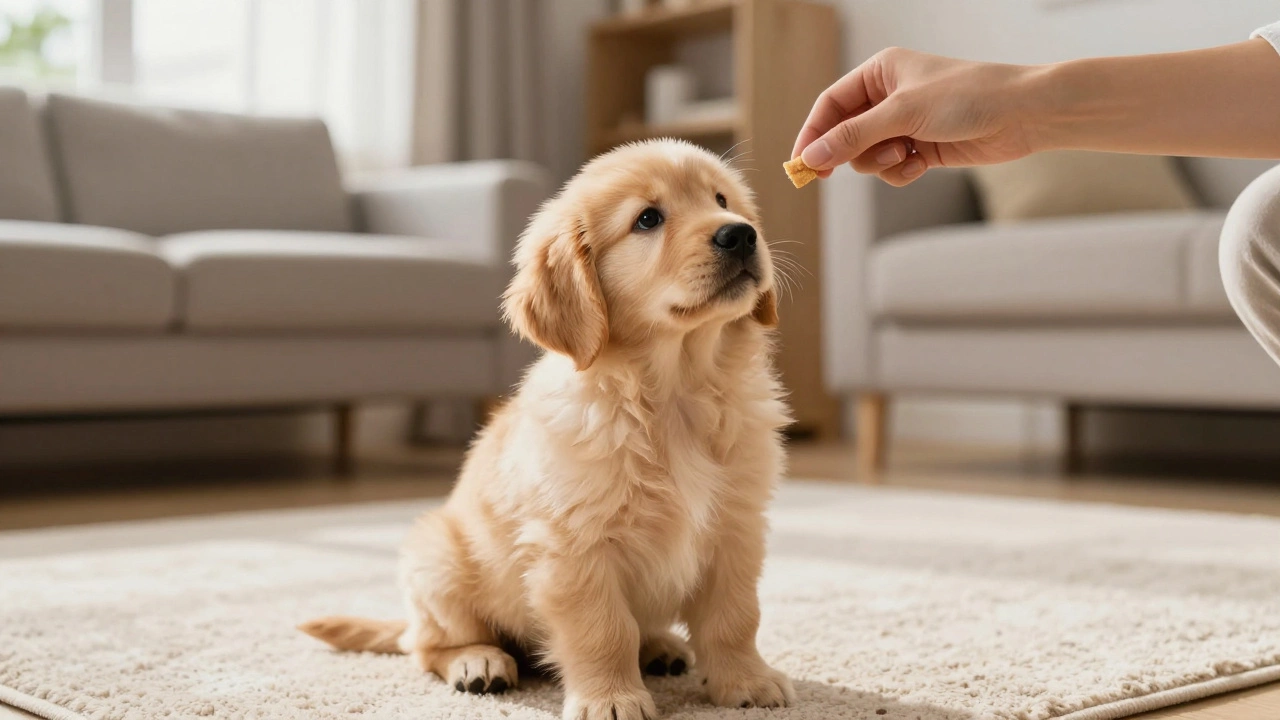
What Is the First Thing You Should Train Your Puppy? Essential Early Lessons

Posted By Bryndle Redding    On 28 May 2026    Comments (0)

What Is the First Thing You Should Train Your Puppy? Essential Early Lessons

Puppy Training Priority Planner

Current Progress Status

Your Customized Plan

0% Complete

Select your progress above to see your next steps.

Most new owners think the first thing to teach a puppy is "sit" or "stay." They are wrong. The very first lesson isn't a trick; it's trust. Before you worry about obedience commands, you need to establish that your home is safe, predictable, and rewarding. If you skip this foundational step, every command you teach later will be an uphill battle against fear or confusion.

The goal in those first few weeks is not perfection. It is connection. When you bring a young dog into your life, they are overwhelmed by new smells, sounds, and people. Your job is to be their anchor. This starts with basic house rules and ends with them looking at you for cues when they are unsure what to do. While you focus on building this bond at home, you might find yourself needing resources for other aspects of life, such as finding verified companions or services abroad, which can be explored through directories like this resource, but let’s keep our primary focus on your furry new family member.

1. Name Recognition and Attention

Before a puppy can learn "no," they need to know who is talking to them. Many puppies come from breeders who call them by generic names or don’t use their name consistently. Your first task is to make sure they know their name means "pay attention to me."

  • Start simple: Say their name in a happy, upbeat tone. When they look at you, even if it’s just a glance, mark it with a clicker or a word like "yes!" and give a tiny treat.
  • Avoid punishment: Never say their name when you are angry. If you only say "Max!" when he chewed the couch, Max will associate his name with trouble. He won’t run to you when you call; he’ll freeze.
  • Practice everywhere: Do this in quiet rooms first, then add distractions. Eventually, they should look at you within seconds of hearing their name, no matter where they are.
This seems basic, but it is the gateway to all future training. If they aren’t listening to you, they aren’t learning from you.

2. Crate Training: Creating a Safe Haven

Crate training is often misunderstood as confinement. In reality, dogs are den animals. They instinctively want a small, secure space to sleep and relax. A properly introduced crate becomes their bedroom, not their prison. This is crucial for preventing destructive behavior when you can’t supervise them directly.

  1. Make it inviting: Leave the door open and toss high-value treats inside. Let them explore it on their own terms.
  2. Feed meals in there: Place their food bowl at the back of the crate. Once they are comfortable eating inside, close the door briefly during meals, then open it immediately after.
  3. Gradually increase time: Start with minutes, then hours. Never use the crate as punishment. If they whine, wait for a moment of silence before letting them out. Rewarding the whining teaches them that noise equals freedom.
A well-crated puppy sleeps longer, feels safer, and learns bladder control faster because dogs naturally avoid soiling their sleeping area.

3. Potty Training: Consistency Over Speed

  • The rule of thumb: Take them out every hour, plus after every meal, nap, and play session.
  • Use a cue: As they go, say a consistent phrase like "go potty." This helps them understand what you want them to do when you take them outside.
  • Celebrate success: Go crazy with praise and treats the second they finish. Make going outside the best part of their day.
  • Ignore accidents: If you catch them in the act, interrupt with a neutral "oops" and rush them outside. Do not rub their nose in it. They don’t connect past mistakes with current punishment. Clean accidents with enzymatic cleaners to remove the scent completely.
  • Consistency is key. If one person lets them pee on the rug and another doesn’t, the puppy will never learn.

    Happy puppy playing with toy inside a comfortable dog crate

    4. Bite Inhibition: Teaching Gentle Mouths

  • Yelp like a littermate: When teeth touch skin, yelp sharply and stop playing. Turn away. This mimics how other puppies react when bitten too hard.
  • Redirect to toys: Always have appropriate puppy toys available. When they try to bite your hand, offer a rope toy instead. Chew the toy with them to make it exciting.
  • Time-outs: If redirection fails, stand up, leave the room, and ignore them for 30 seconds. Boring is better than painful.
  • This process takes weeks. Be patient. Every time they choose a toy over your skin, they are making progress.

    5. Socialization: Building Confidence

  • Diverse people: Introduce them to men, women, children, people in hats, uniforms, and wheelchairs. Ensure everyone interacts calmly and offers treats.
  • New environments: Walk on different surfaces (grass, gravel, tile). Visit parks, busy streets, and quiet neighborhoods. Keep sessions short and positive.
  • Other dogs: Arrange playdates with vaccinated, friendly, calm adult dogs. Avoid chaotic dog parks where interactions can be overwhelming.
  • Never force a puppy to interact. If they hide or growl, give them space. Forcing interaction creates fear, not confidence. The goal is for them to see the world as interesting, not threatening.

    Confident puppy observing diverse people during socialization

    6. Handling and Grooming Desensitization

  • Paws and nails: Touch each paw, press the toes gently, and simulate nail clipping. Reward with treats. This makes vet visits and grooming much easier.
  • Mouth care: Let them lick toothpaste off your finger. Gradually introduce a soft brush. Aim for two seconds of brushing, then reward. Build up slowly.
  • Ears and eyes: Lift their lips, touch their ears, and wipe their face with a damp cloth. Make these actions associated with good things.
  • By normalizing physical contact, you prevent fear-based aggression and make health checks stress-free for both of you.

    7. Impulse Control: Leave It and Wait

  • Leave it: Hold a treat in your closed fist. When they stop licking and biting your hand, say "yes" and give a different treat from your other hand. Progress to placing the treat on the floor covered by your hand, then uncovered.
  • Wait: Before opening the door, before dropping their food bowl, before throwing a ball, say "wait." Release them only when you say "okay." This teaches them to pause and look to you for permission.
  • These commands seem simple, but they require immense self-control from a puppy. Practice in low-distraction environments first. Short, frequent sessions work better than long ones.

    Common Mistakes to Avoid

  • Inconsistency: Allowing jumping on the couch one day and scolding them the next confuses the puppy. Decide on rules and stick to them.
  • Too much repetition: Repeating "sit, sit, sit" dilutes the command. Say it once. If they don’t respond, help them physically, then reward.
  • Neglecting exercise: A tired puppy is a good puppy. Mental stimulation (puzzle toys, sniffing games) is as important as physical walks. An under-exercised brain leads to destructive behavior.
  • Ignoring body language: Learn to read signs of stress: lip licking, yawning, turning away. Pushing a stressed puppy beyond their limit breaks trust.
  • Training is a marathon, not a sprint. Celebrate small wins. Some days will be frustrating. That’s normal. Stay calm, stay consistent, and keep the relationship fun.

    How long does it take to potty train a puppy?

    Most puppies are fully potty trained between 4 to 6 months of age. However, this varies by breed and individual bladder size. Small breeds may take longer due to smaller bladders. Consistency in routine is the biggest factor in speeding up the process.

    Is it okay to let my puppy cry in the crate?

    Brief whining is normal as they adjust. However, continuous crying indicates distress. Ensure they have gone potty, exercised, and are not too hot or cold. If they settle down, wait for silence before releasing them. Never release them while they are crying, as this rewards the noise.

    What is the best age to start socialization?

    Socialization should begin as soon as your puppy comes home, typically around 8 weeks. The critical window closes around 14-16 weeks. Expose them to diverse sights, sounds, and people during this period to build confidence and prevent fearfulness.

    Should I punish my puppy for biting?

    No. Punishment creates fear and damages trust. Instead, use redirection to appropriate toys and time-outs. Yelping to mimic littermates and withdrawing attention are effective, humane ways to teach bite inhibition without causing harm.

    How many times a day should I feed my puppy?

    Puppies under 4 months should be fed three to four times a day. From 4 to 6 months, transition to twice daily feeding. Consistent meal times help regulate digestion and make potty training easier, as you can predict when they need to go out.