Puppy Sleeping Habits: What’s Normal and What to Watch For
When you bring home a new puppy, one of the first things you notice is how much they sleep. Puppy sleeping habits, the natural patterns of rest and recovery in young dogs. It’s not laziness—it’s biology. Puppies need sleep to grow their brains, strengthen their muscles, and process everything they’ve learned in their first few weeks. A healthy puppy can sleep 18 to 20 hours a day, often in short bursts. This isn’t a phase they’ll outgrow overnight—it’s a core part of their development. If your pup is napping on the floor, curled up in a ball, or sprawled out like a starfish, that’s all normal. Their body is working hard, and rest is how they recharge.
But not all sleep is the same. Puppy sleep patterns, the cycles of deep rest and light dozing that shift as puppies grow. These patterns change as your pup gets older. Newborns sleep almost constantly, while by 12 weeks, they start to develop longer stretches of deep sleep, usually after play or feeding. Puppy sleep duration, how long a puppy rests in a single session. Most puppies nap for 30 minutes to 2 hours at a time, then wake up ready to explore, eat, or potty. If your pup sleeps for 6 hours straight without waking, that’s fine—unless they’re lethargic, hard to rouse, or acting off when awake. Then it’s time to check with your vet. Puppy sleep position, how a puppy lies down when resting. Curling up tight? That’s instinct—they’re protecting their belly, just like wild pups. Spreading out? They’re warm and feel safe. Sleeping right next to your bed? That’s trust. Their body knows you’re their safe place. And if they twitch, whine, or paddle their legs while asleep? That’s REM sleep. They’re dreaming—probably about chasing squirrels or sniffing grass.
But here’s what most owners miss: puppy sleeping habits can tell you more than just how tired they are. A sudden change in sleep—sleeping more, waking up scared, or refusing to lie down—can signal pain, anxiety, or illness. If your puppy used to nap peacefully and now seems restless at night, think about recent changes: a new home, loud noises, a new pet, or even a change in food. Puppy sleep anxiety, distress that disrupts normal rest due to fear or insecurity. It’s real. And it often shows up in sleep. A cuddle toy, a quiet corner, or a consistent bedtime routine can make a huge difference. You don’t need fancy gear—just calm, consistency, and a little patience.
What you’ll find in the posts below isn’t just a list of articles—it’s a practical guide to understanding your puppy’s rest. From why they need a cuddle toy to how their sleep connects to their behavior, training, and overall health, every post here answers real questions from real owners. No fluff. No guesses. Just clear, vet-backed insights to help you support your pup’s sleep—and your own peace of mind.
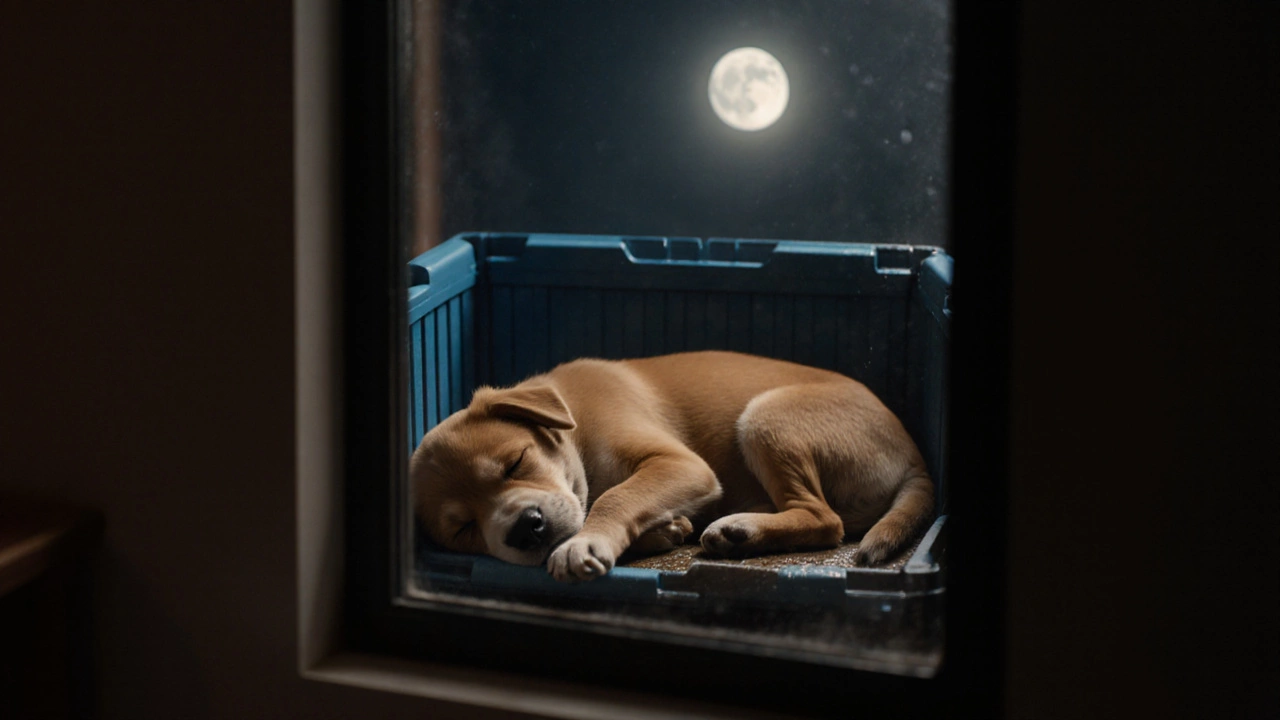
Posted By Bryndle Redding On 30 Nov 2025 Comments (0)
Will a Puppy Pee in a Crate at Night? Here’s What Really Happens
Puppies often pee in their crates at night-not out of disobedience, but because their bladders aren't fully developed. Learn why it happens, how to prevent it, and what to do when accidents occur.
READ MORE