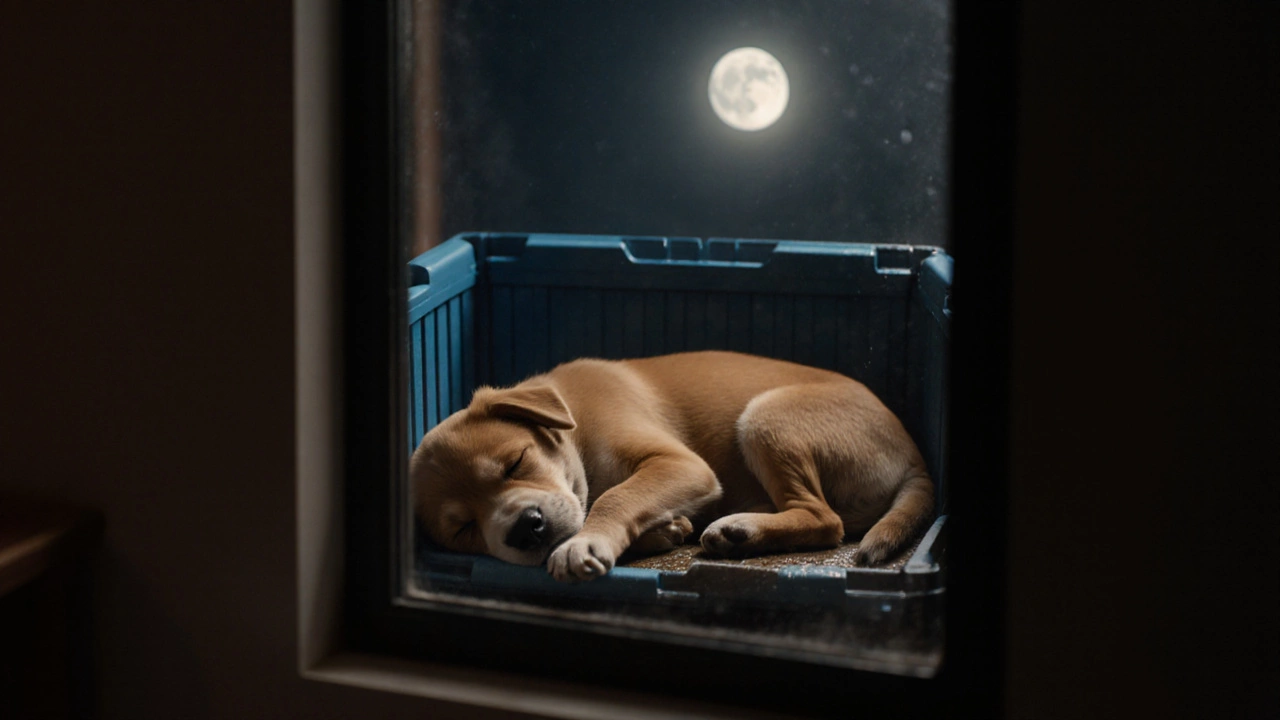
It’s 2 a.m. You hear a soft squish. Your heart drops. Your puppy, who slept peacefully for three hours, just peed in the crate. You’re tired. You’re frustrated. You’re wondering: Will a puppy pee in a crate at night? The short answer? Yes-sometimes. But it’s not because they’re being bad. It’s because they’re still learning.
Why Do Puppies Pee in Their Crates at Night?
Puppies under six months old don’t have full bladder control. Their tiny bodies are still growing. A 10-week-old puppy can hold urine for about 2 hours at most. By 4 months, that might stretch to 4-5 hours. But even then, accidents happen. It’s biology, not rebellion. Many owners think crating is a punishment. It’s not. A crate is a den-a safe, cozy space where your puppy feels secure. But if you leave them in there too long, they’ll go where they are. That’s not disobedience. It’s survival. Some puppies pee because they’re anxious. New sounds, new smells, being alone in the dark-it’s overwhelming. Others pee because they drank too much water before bed. Or because they didn’t get a proper potty break right before bedtime.How Long Can a Puppy Really Hold It?
There’s a simple rule: One hour per month of age, up to 8 hours max. So a 3-month-old puppy can hold it for about 3 hours. A 5-month-old? About 5 hours. That doesn’t mean they should be left that long. It means that’s the outer limit before accidents become likely. Most puppies under 6 months will need at least one potty break during the night. Even adult dogs sometimes need to go out after midnight if they’ve had a big drink or eaten late. Don’t expect your 12-week-old pup to sleep through the night like a human.What You Can Do to Prevent Nighttime Accidents
You can’t stop a puppy’s body from needing to go. But you can set them up for success.- Stop water 2 hours before bedtime. If you give water at 7 p.m., take it away by 9 p.m. This gives their bladder time to empty before sleep.
- Take them out right before bed. Don’t just walk them. Wait. Let them sniff, circle, and really go. If they don’t go within 5 minutes, wait 10 more minutes and try again.
- Use a smaller crate. A crate that’s too big gives them space to pee in one corner and sleep in another. They’re den animals-they’ll avoid soiling if the space is snug. Use a divider if needed.
- Don’t react with anger. Yelling or punishing after an accident teaches them to fear you, not to hold it. Clean it up calmly with an enzymatic cleaner. The smell will lure them back if it’s not gone.
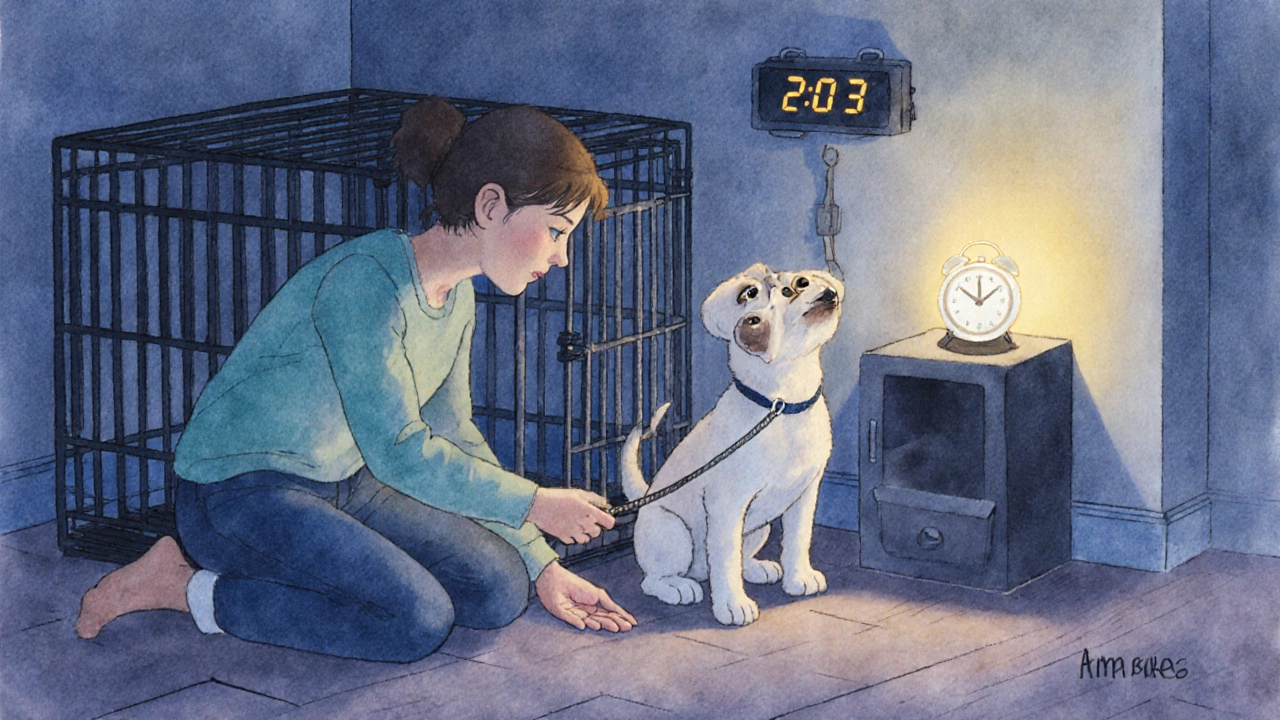
- Set an alarm. If your puppy is 3 months old, set a 4-hour alarm. Get up, take them out quietly, praise them, and go back to bed. No play. No treats. Just business.
When to Worry: Medical Reasons for Nighttime Peeing
If your puppy is older than 6 months and still peeing in the crate regularly, something else might be going on.- Urinary tract infection (UTI): Frequent small pees, straining, licking the genital area. Puppies can get UTIs easily.
- Diabetes or kidney issues: Excessive thirst, big volumes of urine, weight loss. These are rare but serious.
- Anal gland issues or neurological problems: Less common, but can cause loss of control.
What Doesn’t Work (And Why)
You’ve probably heard these tips:- “Put a towel down so they’ll sleep on it.” Nope. They don’t care. They’ll pee on the towel anyway.
- “Use pee pads in the crate.” That teaches them it’s okay to pee where they sleep. You’re undoing house training.
- “Let them sleep in your bed.” Fine if that’s your goal-but it doesn’t solve crate training. You’re just moving the problem.
- “They’ll learn if you ignore it.” They will not. Puppies don’t connect punishment with past actions. They need structure, not silence.
Real-Life Example: How One Family Fixed It
A family in Wellington had a 4-month-old Labrador mix who peed every night. They tried everything: bigger crate, less water, more walks. Nothing worked. Then they started setting an alarm for 2 a.m. They took the pup out on a leash, waited quietly, praised softly, and went back to bed. After three nights, the puppy started holding it until 5 a.m. By week two, they didn’t need the alarm anymore. The key? Consistency. Not perfection. They didn’t stop the accidents overnight. They just stopped making them worse.How to Know You’re Making Progress
Progress isn’t zero accidents. Progress is:- Accidents getting less frequent
- Longer stretches between pees
- Your puppy whining or scratching at the crate before they need to go
- They go outside quickly and eagerly when taken out
When Can You Expect Full Nighttime Control?
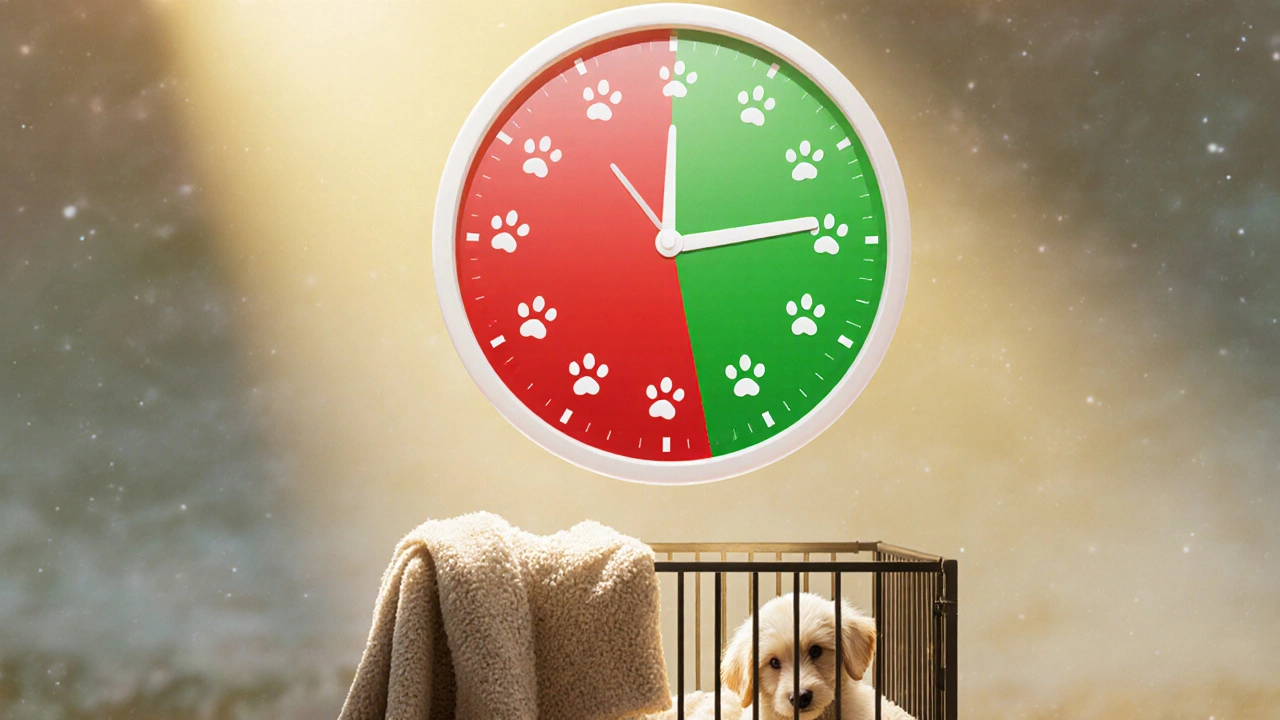
Most puppies develop full bladder control between 6 and 9 months. Some take longer, especially small breeds or those with anxiety. But by 12 months, nearly all dogs can sleep through the night without accidents-if they’ve had consistent training. Don’t rush it. Don’t compare your puppy to others. Every dog learns at their own pace. One pup might be dry by 5 months. Another might need until 8. Both are normal.Final Thought: It’s Not About the Crate
The crate isn’t the problem. The problem is expecting a baby animal to do something their body isn’t ready for. You wouldn’t expect a 6-month-old human toddler to sleep 8 hours without a diaper. Don’t expect that from your puppy. Your job isn’t to stop accidents. Your job is to guide your puppy through this phase with patience, routine, and kindness. They’re learning. You’re learning too.Why does my puppy pee in the crate even after going outside?
They might not have fully emptied their bladder. Puppies often do a quick pee and think they’re done. Wait 5-10 minutes after going outside. Let them sniff around. If they don’t go, try again. Also, check if they drank water right before bed-too much fluid can overwhelm their small bladder.
Should I use puppy pads in the crate at night?
No. Puppy pads teach your puppy it’s okay to relieve themselves where they sleep. That defeats the purpose of crate training, which is to build a clean, safe space. If you need pads, use them in a larger, supervised area like a playpen-not inside the crate.
Is it normal for a 6-month-old puppy to still pee at night?
It’s not uncommon, but it’s not ideal. Most puppies can hold it through the night by 5-6 months. If yours still pees, check their water intake, crate size, and whether they’re getting enough potty breaks. Also, rule out medical issues like a UTI. Consistency and an overnight alarm can help reset their routine.
How do I clean pee from the crate so my puppy doesn’t go there again?
Use an enzymatic cleaner, not vinegar or ammonia. Enzymatic cleaners break down the urine proteins so the smell is completely gone. Regular cleaners just mask the odor, and your puppy will still smell it and think it’s a bathroom spot. Spray it, let it sit for 10 minutes, then wipe it up. Repeat if needed.
Can anxiety cause a puppy to pee in the crate?
Yes. Puppies can feel stressed when left alone, especially in a new environment. Signs include whining, pacing, trembling, or peeing right after being placed in the crate. Try leaving a piece of your clothing inside for comfort. Play calming music. Make sure the crate is in a quiet, low-traffic area. Gradual desensitization helps-leave the door open during the day so they see it as a safe space, not a prison.
Next Steps: What to Do Tonight
If your puppy peed in the crate last night:- Don’t scold them. Clean the crate with an enzymatic cleaner.
- Stop water 2 hours before bedtime.
- Take them out right before bed-and wait. Let them go fully.
- Check the crate size. If they have room to pee and sleep apart, make it smaller.
- Set an alarm for 4 hours after bedtime. Get up. Take them out. Praise quietly. Go back to sleep.