Puppy Potty Schedule & Bladder Calculator
Enter Your Puppy's Details
Bladder Capacity Estimate
Based on the "1 hour per month of age" rule:
Your puppy can hold it for approximately:
-- hours
Recommended Daily Routine
| Time | Activity | Type |
|---|---|---|
| Click "Generate My Schedule" to see results | ||
There is nothing quite as discouraging as stepping out of the shower, only to find a warm puddle on your bathroom tile. Or worse, discovering a fresh mess hidden behind the sofa after you thought you had done everything right. If you are wondering how do you stop a puppy from peeing and pooping in the house, you are not alone. It is the single most common struggle for new dog owners. The good news? Puppies are not trying to be naughty. They simply lack the physical maturity and mental understanding to hold it until they are outside. With the right routine, patience, and a bit of science, you can turn those indoor accidents into a thing of the past.
The Biology Behind the Mess
Before you can fix the problem, you have to understand why it happens. Many owners mistake a puppy’s accident for defiance. In reality, it is usually a biological limitation. A young puppy has very little control over their bladder and bowels. Think of it like trying to ask a toddler to wait three hours to use the toilet. Their muscles just aren’t developed enough yet.
A general rule of thumb for puppy bladder capacity is that a puppy can hold their urine for one hour for every month of age, up to about six or seven months. So, an eight-week-old puppy (two months old) might only be able to hold it for two hours. An eighteen-week-old puppy might manage three hours. This doesn't mean you should leave them alone for that long, but it gives you a realistic expectation. If you expect a ten-week-old pup to hold it through a four-hour workday without a break, you are setting them up for failure.
Furthermore, puppies often signal when they need to go by sniffing the floor intensely, circling, or whining. These signals are subtle and easy to miss if you are distracted by your phone or cooking dinner. Missing these cues leads to accidents, which reinforces the bad habit of eliminating indoors.
Building an Ironclad Schedule
If biology is the enemy, consistency is your weapon. The most effective way to stop indoor accidents is to create a rigid schedule. Puppies thrive on predictability. When they know exactly when they will eat, play, and go outside, their bodies adjust to that rhythm.
| Time | Activity | Potty Opportunity? |
|---|---|---|
| 6:30 AM | Wake up | Yes |
| 7:00 AM | Breakfast | No (wait 15 mins) |
| 7:15 AM | Go Outside | Yes |
| 9:00 AM | Playtime/Training | No |
| 10:30 AM | Go Outside | Yes |
| 12:00 PM | Lunch | No (wait 15 mins) |
| 12:15 PM | Go Outside | Yes |
| 2:00 PM | Nap/Crate Time | No |
| 4:00 PM | Go Outside | Yes |
| 6:00 PM | Dinner | No (wait 15 mins) |
| 6:15 PM | Go Outside | Yes |
| 8:00 PM | Final Play Session | No |
| 9:30 PM | Go Outside | Yes |
| 10:00 PM | Crate/Bedtime | No |
Notice the pattern? Every time the puppy eats, plays, wakes up, or finishes a nap, they go outside immediately. This removes the guesswork. You are not waiting for them to tell you; you are proactively taking them to their designated spot.
The Power of the Crate
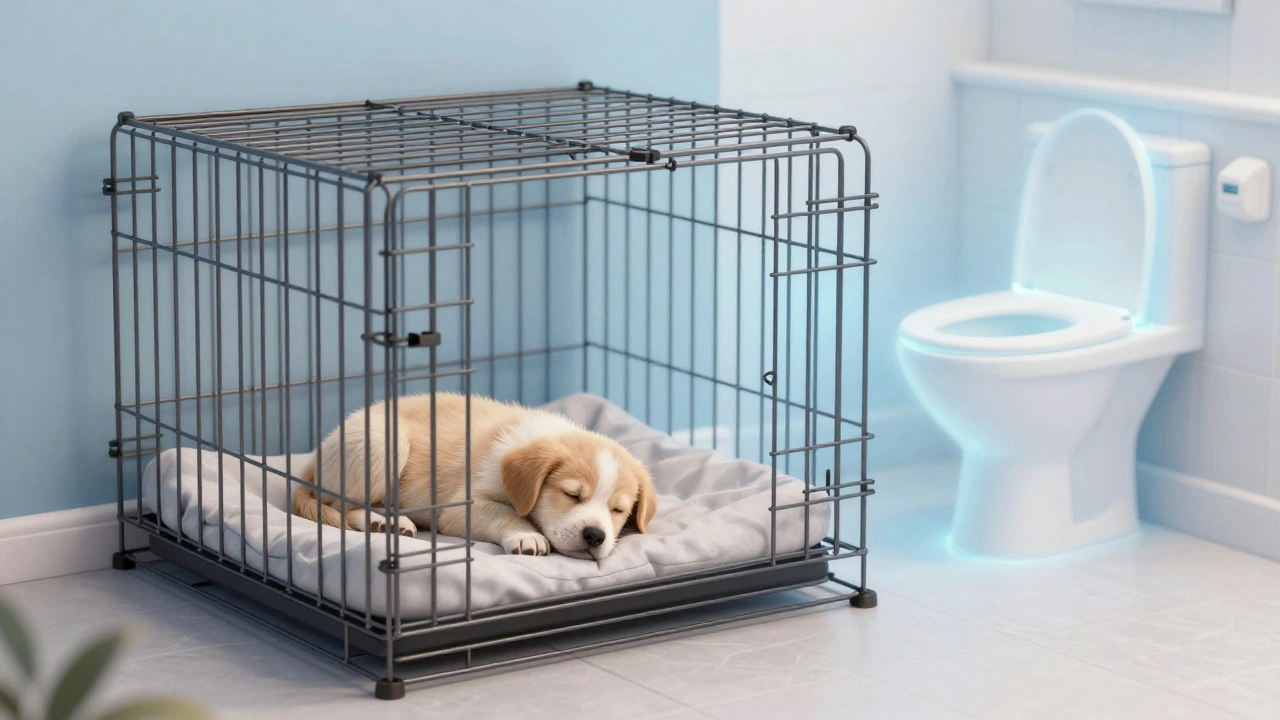
One of the most misunderstood tools in puppy training is the crate. Some people feel guilty using one, thinking it is cruel. However, dogs are den animals. By nature, they prefer to sleep in a clean, confined space and will avoid soiling where they rest. This instinct is your best friend during house training.
When you are not actively supervising your puppy-whether you are sleeping, working, or just watching TV-they should be in their crate. The crate size matters immensely. If the crate is too big, the puppy will learn to use one corner as a bathroom and the other as a bedroom. You want the crate to be just large enough for them to stand up, turn around, and lie down comfortably. If you buy a crate that grows with the dog, use a divider to make the space smaller initially.
Crate training does not replace supervision; it complements it. When the puppy comes out of the crate, take them directly to the potty spot. Do not let them run around the house first. The transition should be: Crate → Outside → Potty → Reward → Play.
Supervision and Interrupting Accidents
Even with a crate, there will be times when the puppy is loose in the house. During these times, you must supervise them like a hawk. Tethering your puppy to your waist with a long leash is a great trick. It keeps them close and prevents them from sneaking off to the rug.
What happens when you catch them in the act? Stay calm. Do not yell. Do not rub their nose in it. Yelling scares the puppy and may cause them to hide to eliminate next time, which makes the problem worse. Instead, make a neutral noise like "Oops!" or clap once to interrupt the behavior. Immediately pick them up or grab their leash and rush them outside to the designated spot. If they finish going outside, praise them enthusiastically and give a high-value treat.
The goal is to teach them that finishing the job outside results in joy, while starting inside results in interruption and moving to the correct location.
Cleaning Up the Evidence
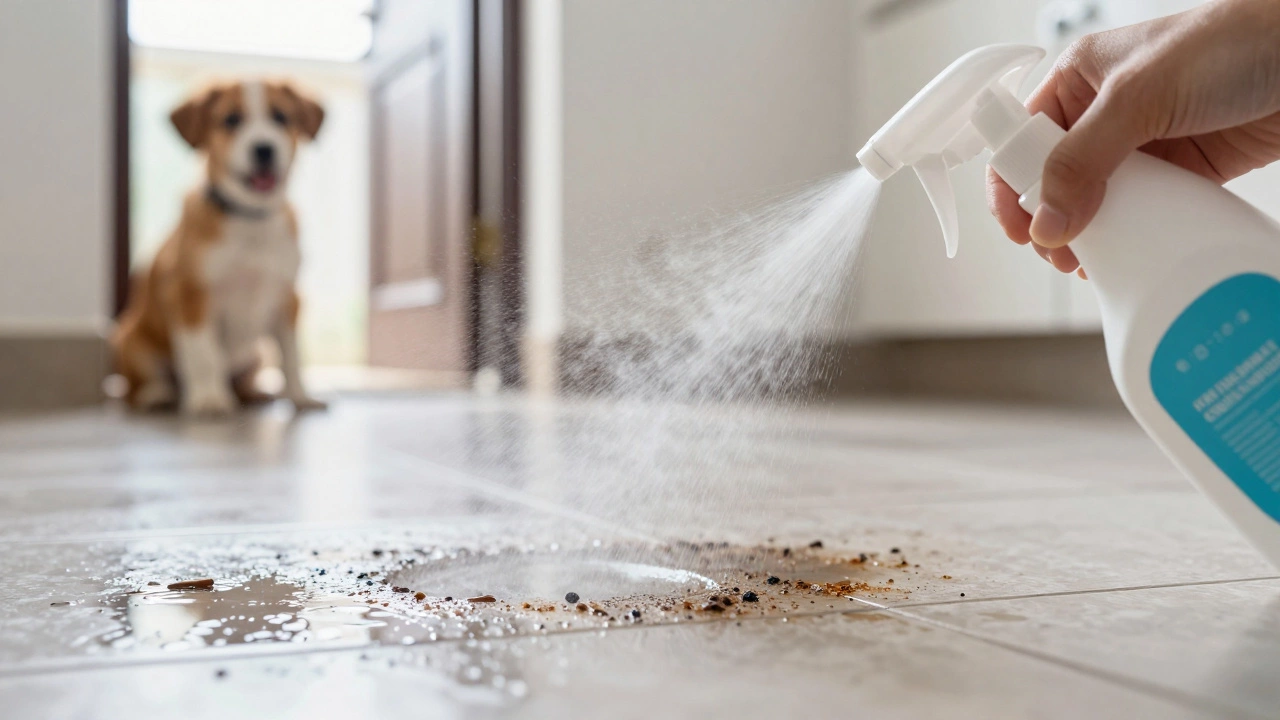
This step is critical and often overlooked. Dogs have an incredible sense of smell. If you clean up an accident with regular household cleaners or even plain water, you might remove the visible stain, but the scent molecules remain. To a human nose, the floor smells clean. To a puppy, it smells like a toilet. They will return to that exact spot to add to their previous deposit.
You need an enzymatic cleaner. These cleaners contain enzymes that literally digest the organic matter in urine and feces, breaking down the odor-causing proteins at a molecular level. Regular detergents mask the smell; enzymatic cleaners destroy it. Apply the cleaner generously, let it soak according to the bottle's instructions, and then blot dry. Repeat if necessary. If you skip this step, no amount of training will stop the puppy from revisiting that spot.
Rewarding Success
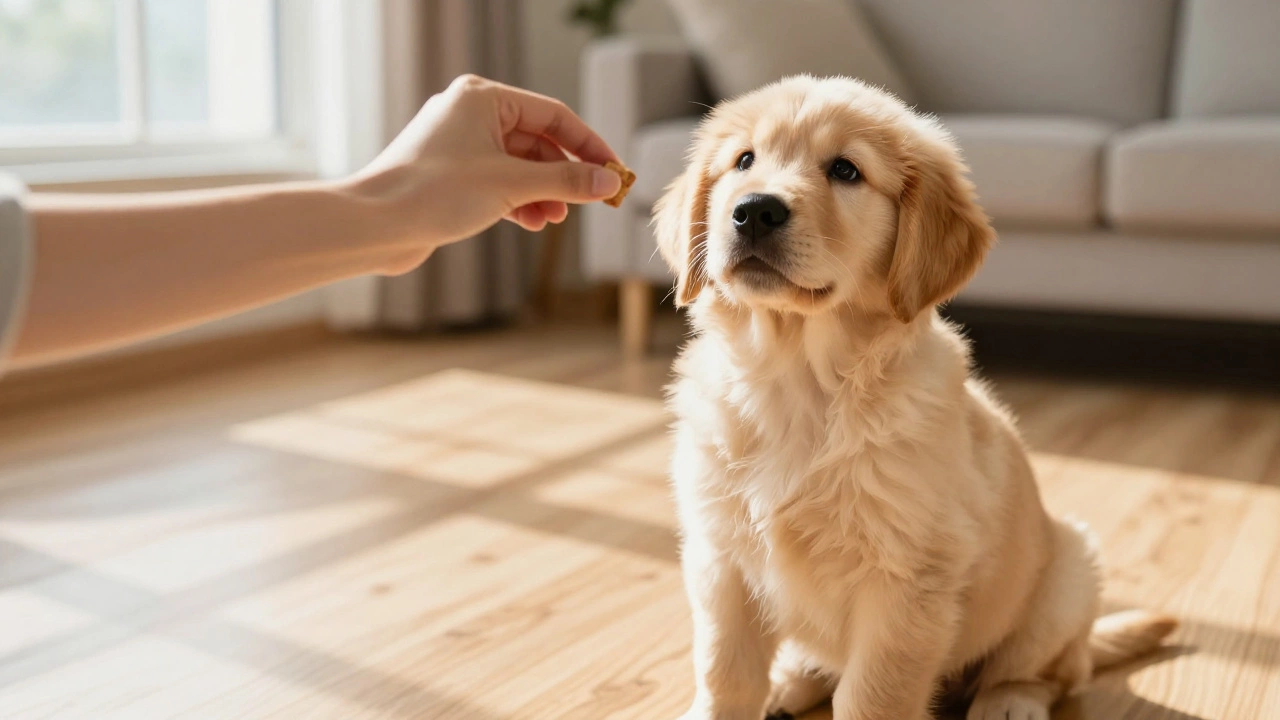
Positive reinforcement is the gold standard in modern dog training. When your puppy eliminates in the correct spot outside, you need to celebrate as if they just won the lottery. Use a happy voice, pet them gently, and offer a small, tasty treat immediately after they finish. Timing is key. The reward must happen within seconds of the action so the puppy connects the behavior (peeing outside) with the consequence (treats and praise).
Over time, you can phase out the treats and rely more on verbal praise and affection, but in the beginning, food is a powerful motivator. This creates a positive association with going outside. The puppy starts to think, "Oh, I pee here? Cool, now I get cheese!"
Common Pitfalls to Avoid
- Punishing after the fact: If you find a mess five minutes later, do not punish the puppy. They cannot connect the punishment with the action. They will only learn that you are scary when you appear.
- Inconsistent spots: Always take the puppy to the same patch of grass or area outside. Familiar scents encourage them to go.
- Letting them roam free too soon: Freedom is earned. Start with small areas under supervision and gradually expand as they prove reliable.
- Ignoring medical issues: If your puppy was previously trained and suddenly starts having accidents, or if they seem to strain without producing much urine, see a vet. Urinary tract infections are common in puppies and can mimic house training regression.
Patience is the Final Ingredient
House training is not a linear process. There will be good days and bad days. Growth spurts, changes in diet, stress, or even rainstorms can cause temporary setbacks. Stay consistent with your schedule, keep cleaning thoroughly, and keep rewarding success. Most puppies are fully house trained between four and six months of age, though some larger breeds may take longer. Remember, you are teaching a living creature a complex skill. Mistakes are part of the learning curve, not a sign of failure.
How long does it take to house train a puppy?
Most puppies are reliably house trained between 4 to 6 months of age. However, full bladder control can take up to a year for some breeds, especially larger ones. Consistency is key; rushing the process often leads to longer training times.
Should I put my puppy in a timeout for peeing inside?
No. Timeouts or yelling are ineffective and can damage your bond. Instead, interrupt the behavior calmly if caught in the act, take them outside immediately, and reward them if they finish there. If you find the mess later, simply clean it up with an enzymatic cleaner.
Why does my puppy pee when I get home?
This is called "excitement urination." It is an involuntary response to high arousal levels. To manage this, ignore your puppy for the first few minutes when you walk in. Keep greetings low-key and calm. Once they settle down, take them outside to relieve themselves.
Can I use pee pads instead of going outside?
Pee pads can be useful for apartment dwellers or seniors who cannot take a dog out frequently. However, they often confuse puppies because they learn that it is okay to pee on soft surfaces indoors. If you use pads, place them far from the crate and eventually move them closer to the door to transition to outdoor elimination.
What is the best age to start house training?
You should start house training the day you bring your puppy home, typically around 8 weeks of age. Early establishment of routines helps prevent bad habits from forming. Even though their bladder control is limited, they can learn where the appropriate place to go is.