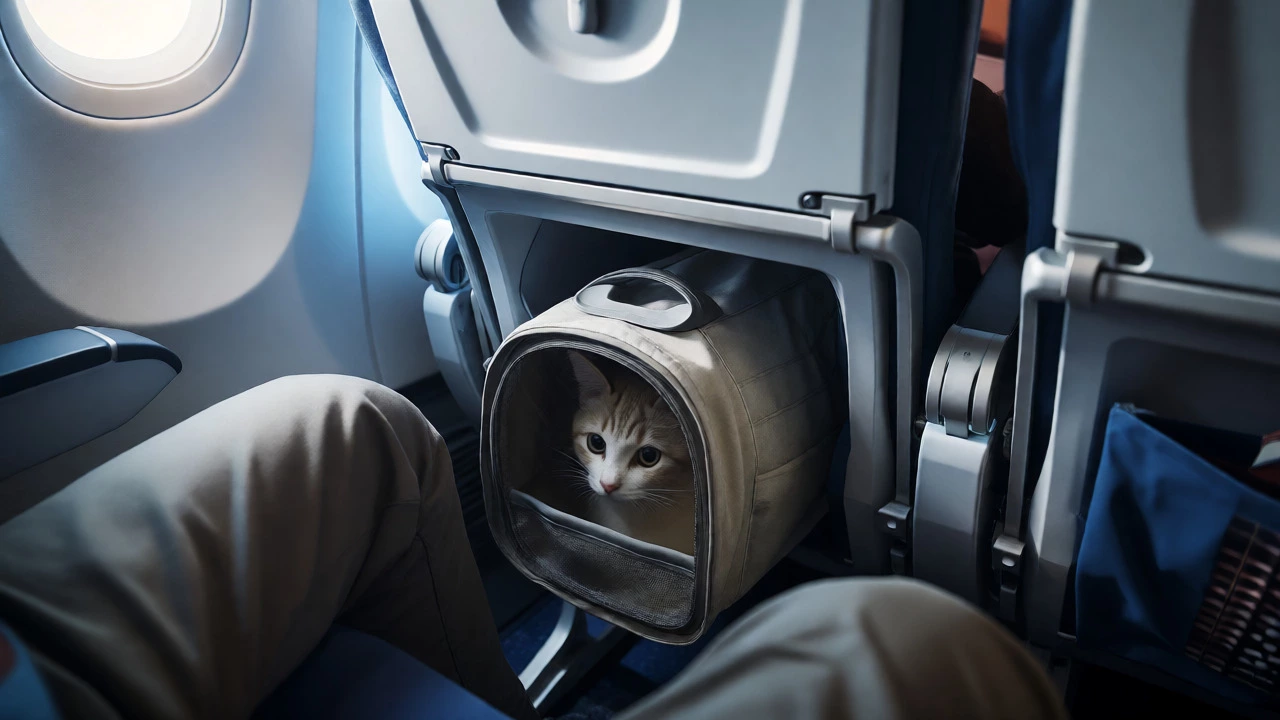
In-Cabin Pet Carrier Fit Checker
Enter your carrier's external dimensions to see which airlines allow it in the cabin. Remember: most airlines require soft-sided carriers to be stowed under the seat, not on your lap.
Carrier Dimensions (External)
Safety & Comfort Tips
- Soft-sided carriers are preferred by most airlines as they can compress slightly.
- Your pet must be able to stand up, turn around, and lie down comfortably.
- During takeoff and landing, the carrier MUST be under the seat in front of you.
- Do not place the carrier on your lap during critical phases of flight.
Enter your carrier dimensions to check compatibility with major airlines.
You’re at the gate, ticket in hand, cat purring softly inside her soft-sided carrier. You think, "Surely, I can just hold this little bundle on my lap for the three-hour hop to Auckland?" It’s a logical thought. After all, you’re paying for your seat, and the carrier is small. But here’s the hard truth that trips up many first-time pet flyers: you generally cannot keep your pet carrier on your lap during a flight. While it feels intuitive, most major airlines have strict safety regulations that require carriers to be stowed under the seat in front of you for the entire duration of the flight.
This rule isn’t about being difficult or ignoring your comfort. It’s rooted in aviation safety standards set by bodies like the Federal Aviation Administration (FAA) in the US and similar authorities globally, such as the Civil Aviation Authority (CAA) in New Zealand. In an emergency landing or sudden turbulence, a loose object-or a squirming animal-on your lap becomes a projectile. That’s why understanding the specific mechanics of in-cabin pet travel is crucial before you book. This guide breaks down exactly what happens to your carrier, which airlines might bend the rules, and how to make the under-seat experience bearable for both you and your furry co-pilot.
The Under-Seat Mandate: Why Your Lap Is Off-Limits
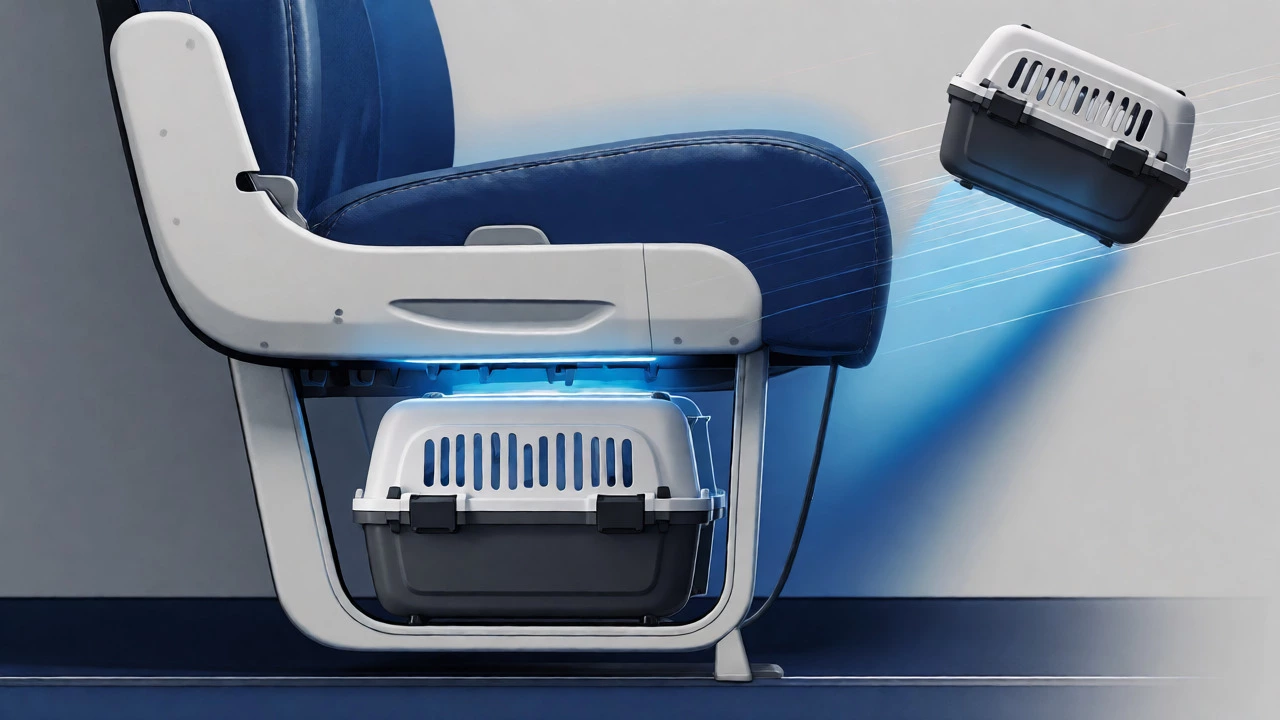
Airline safety protocols treat every piece of carry-on luggage, including pet carriers, as potential debris if not secured. When you are seated, the space under the seat in front of you is the only designated storage area for personal items that remain accessible but secure. If you were to place your carrier on your lap, two things happen: you block the aisle evacuation path, and you compromise your own ability to brace yourself during turbulence.
Consider the physics of a sudden drop. A 5kg cat in a soft carrier has momentum. On your lap, that momentum hits your knees or chest. Under the seat, the carrier is contained within a rigid structure-the seat frame itself. Most airlines, including Qantas, Air New Zealand, Delta, and United, explicitly state in their contracts of carriage that carriers must fit completely under the seat. If it doesn’t fit, you likely need a different carrier size or a larger aircraft with more pitch.
There is a rare exception: some ultra-small pets in very compact, non-rigid bags *might* be allowed on laps during cruising altitude on certain regional flights, but this is inconsistent. Never assume this applies to your flight unless you have written confirmation from the specific airline. Even then, you’ll be asked to stow it during takeoff and landing.
Measuring Up: Will Your Carrier Actually Fit?
Before worrying about where it sits, ensure it fits under the seat at all. This is the number one reason passengers get denied boarding or forced to check their pets into cargo. Airlines don’t just guess; they use metal sizers at the gate, similar to those used for standard carry-ons.
Here’s how to measure correctly:
- Soft-sided carriers: Measure the length, width, and height when fully packed. Do not compress the sides artificially. The airline measures the maximum external dimensions.
- Rigid crates: These are less forgiving. Check the internal clearance of the seat pocket on your specific aircraft type (e.g., Boeing 737 vs. Airbus A320). Seat pitch varies significantly even within the same airline.
- The "Wiggle Room" Rule: Your pet needs to stand up, turn around, and lie down comfortably. If they are cramped, they will stress, and stressed pets smell and move erratically, making the under-seat situation worse.
| Airline | Max Dimensions (L x W x H) | Type Allowed |
|---|---|---|
| Air New Zealand | 46cm x 34cm x 28cm | Soft-sided only |
| Qantas | 48cm x 34cm x 28cm | Soft-sided only |
| Delta Air Lines | 18" x 11" x 11" (approx. 46x28x28 cm) | Soft or Hard |
| United Airlines | 17.5" x 12" x 7.5" (soft) | Soft preferred |
Notice the trend? Soft-sided carriers are almost universally preferred because they can compress slightly to slide under tight seats. Rigid plastic crates rarely fit under economy seats on modern narrow-body jets.
Comfort Strategies for the Under-Seat Experience
If your carrier is under the seat, how do you keep your pet calm? The confined space can feel claustrophobic for animals, especially cats who are sensitive to vibration and noise. Here are practical tactics that work better than trying to cuddle them on your lap.
First, use a pheromone spray. Products like Feliway (for cats) or Adaptil (for dogs) mimic natural calming scents. Spray the blanket inside the carrier 15 minutes before boarding. This creates a familiar scent profile that counters the sterile, recycled air of the cabin.
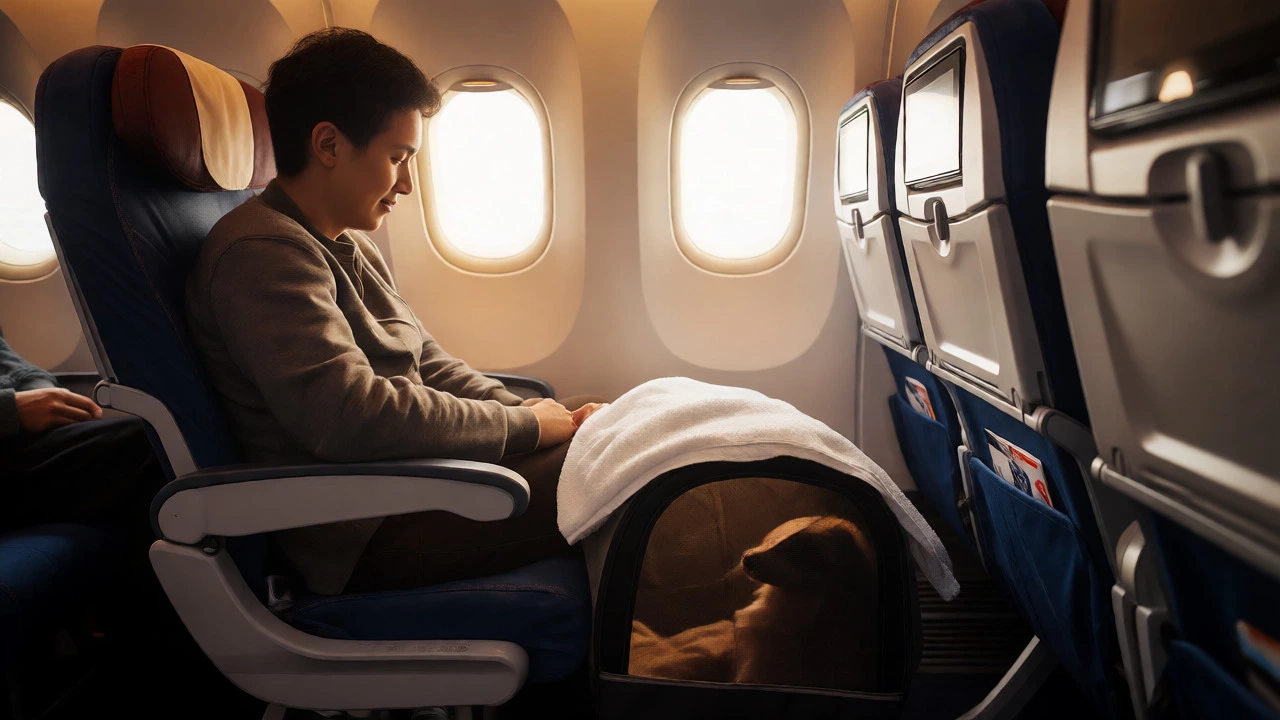
Second, cover the carrier. A light towel draped over the top and sides blocks out visual stimuli. For a dog watching other passengers’ legs kick the seat, this reduces anxiety. Just ensure the bottom remains open for airflow and that you can peek in easily without disturbing the setup.
Third, manage the temperature. Under-seat areas can get cold due to air conditioning vents directed downward. Line the bottom of the carrier with a warm, absorbent pad. Avoid heavy blankets that might shift and block ventilation slots.
What Happens If You Try Anyway?
Let’s say you sneak the carrier onto your lap after takeoff. What’s the risk? Cabin crew are trained to enforce safety. If they see a carrier on a lap, they will ask you to stow it immediately. Refusal could lead to a formal warning or, in extreme cases, being deemed a safety hazard.
Moreover, consider the passenger next to you. If your cat decides to wiggle out of an unzipped carrier on your lap, you’ve now got an escape artist in the aisle. Retrieving a frightened animal from under rows of seats is stressful for everyone involved. Keeping the carrier zipped and stowed protects your pet from bolting and keeps the cabin orderly.
International Variations: Does It Change Across Borders?
While the "under-seat" rule is global among major carriers, enforcement varies. In some European budget airlines, space is so limited that pets might be charged extra or restricted entirely. In contrast, some Asian carriers offer premium economy seats with extra legroom, allowing slightly larger carriers to fit under the seat more comfortably.
In New Zealand, domestic flights on Air New Zealand typically allow one pet per passenger in the cabin, provided the combined weight of pet and carrier is under 7kg (varies by route). Always check the specific route restrictions. Flights to remote islands often have smaller aircraft with tighter constraints.
Alternatives When Space Is Too Tight
If your pet is too large for under-seat storage, or if you simply want them closer, consider these options:
- Purchase an Extra Seat: Some airlines allow you to buy a seat for your pet’s carrier. You strap the carrier into the adjacent seat using the seatbelt. This gives your pet its own space and allows you to interact with them more freely, though you still can’t hold them on your lap during critical phases of flight.
- Cargo Hold (Manifest): For larger dogs, checking them into pressurized, temperature-controlled cargo is safer and often cheaper than buying an extra seat. Ensure they have a proper IATA-compliant crate.
- Ground Transport: For short hops, driving might be less stressful for anxious pets than navigating airport security and cabin pressure changes.
Remember, the goal is a safe arrival. While holding your pet on your lap sounds cozy, the reality of aviation safety makes the under-seat spot the only viable option for most travelers. Plan ahead, measure twice, and pack a patience kit.
Can I put my pet carrier on my lap during takeoff and landing?
No. During takeoff, landing, and any time the seatbelt sign is on, all carry-on items, including pet carriers, must be stowed under the seat in front of you. This is a strict FAA and international aviation safety regulation to prevent injury during sudden deceleration or turbulence.
Which airlines allow pets on laps during cruise?
Very few major commercial airlines officially permit this. Some regional or charter services might allow small pets in soft bags on laps during cruising altitude, but this is not standard. Always verify with the specific airline’s contract of carriage before assuming it’s allowed.
What if my pet carrier doesn’t fit under the seat?
If your carrier doesn’t fit the airline’s specified dimensions, you may be required to check your pet into the cargo hold. To avoid this, use a soft-sided carrier that can compress slightly, or purchase an extra seat for the carrier if the airline permits it.
Is it safe to unzip the carrier while the plane is flying?
Generally, no. Pets should remain enclosed in their carrier for the entire flight. Unzipping risks the animal escaping into the cabin, which is dangerous for the pet, disruptive for other passengers, and difficult for crew to manage. Use a mesh window or peek-through flap instead.
Do service animals follow the same lap rules?
Service animals (dogs trained to perform tasks for individuals with disabilities) typically sit at the handler’s feet, not on laps. Emotional Support Animals (ESAs) are now largely treated as pets by most major airlines, meaning they must also stay in carriers under the seat.