Sleep Quality Impact Calculator
This tool estimates how much your dog's bed-sharing affects your sleep quality based on scientific data from the article.
Your Sleep Impact Assessment
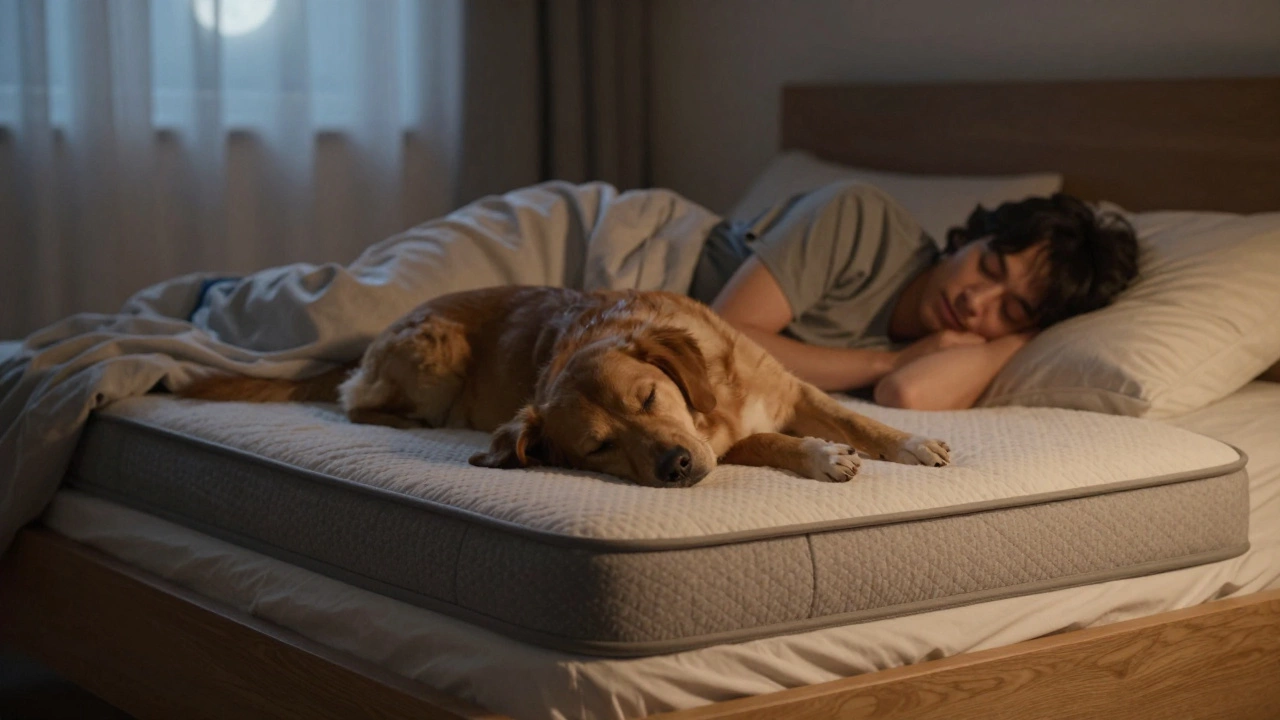
It’s cozy. It’s comforting. And yes, your dog looks so sweet curled up beside you under the blankets. But if you’re letting your dog sleep in your bed regularly, you might be trading comfort for health risks you didn’t know existed. This isn’t about being picky or overly clean-it’s about real, measurable impacts on your sleep, your immune system, and even your dog’s behavior.
Your sleep quality drops, even if you don’t notice it
Studies from the Mayo Clinic show that people who let their dogs sleep in the bedroom-but not on the bed-sleep just fine. But those who share the bed with their dogs? Their sleep efficiency drops by an average of 12%. That means you’re spending more time awake or in light sleep, even if you think you’re sleeping through the night.
Dogs move. They shift positions. They snore. They stretch. They get up to drink water or scratch at the door. These small movements, repeated every hour, break your deep sleep cycles. You won’t remember waking up, but your body does. Over time, that adds up to chronic fatigue, brain fog, and even mood swings.
One woman in Wellington told me she kept her Labrador on the bed for years because he "kept her warm." But after switching him to a dog bed next to the bed, she started waking up refreshed for the first time in five years. No magic. Just better sleep architecture.
Your allergies might be worse than you think
Dog dander isn’t just on their fur. It’s in their saliva, their skin flakes, and the dust they kick up as they roll around. When they sleep on your bed, that dander settles into your pillow, sheets, and mattress-right where your face spends eight hours a night breathing it in.
If you have allergies, you might blame pollen or dust mites. But a 2023 study in the Journal of Allergy and Clinical Immunology found that people with dog allergies who shared a bed with their pets had 30% higher levels of IgE antibodies-the markers of allergic reaction-than those who kept dogs out of the bedroom entirely.
Even if you don’t sneeze or itch, your immune system is still reacting. Over time, this low-grade inflammation can make you more sensitive to other allergens, worsen asthma symptoms, or trigger eczema flare-ups.
Your dog’s behavior can change in unexpected ways
Dogs don’t see beds the way we do. To them, a bed is a resource. And if they’re allowed to sleep on yours, they may start to think they own it. That’s not just about dominance-it’s about boundaries.
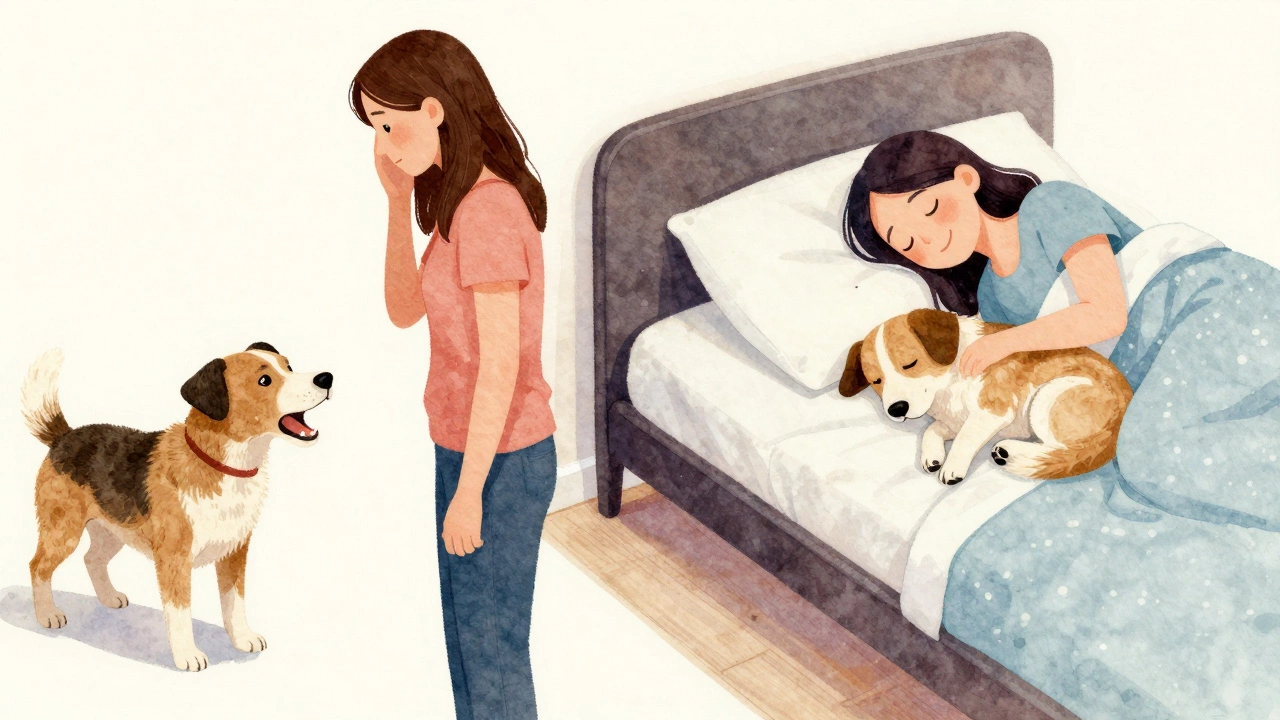
One owner in Christchurch noticed her rescue terrier started growling when she tried to get into bed. He wasn’t aggressive-he was just confused. "This is my spot now," he seemed to say. That’s not normal dog behavior. It’s learned.
When you let your dog sleep on your bed, you’re unintentionally giving them access to your personal space during their most vulnerable state. That can blur social lines. It can make them less responsive to commands. It can even trigger resource guarding, where they become protective of your bed, your blankets, or even your side of the mattress.
Hygiene isn’t just about dirt-it’s about bacteria and parasites
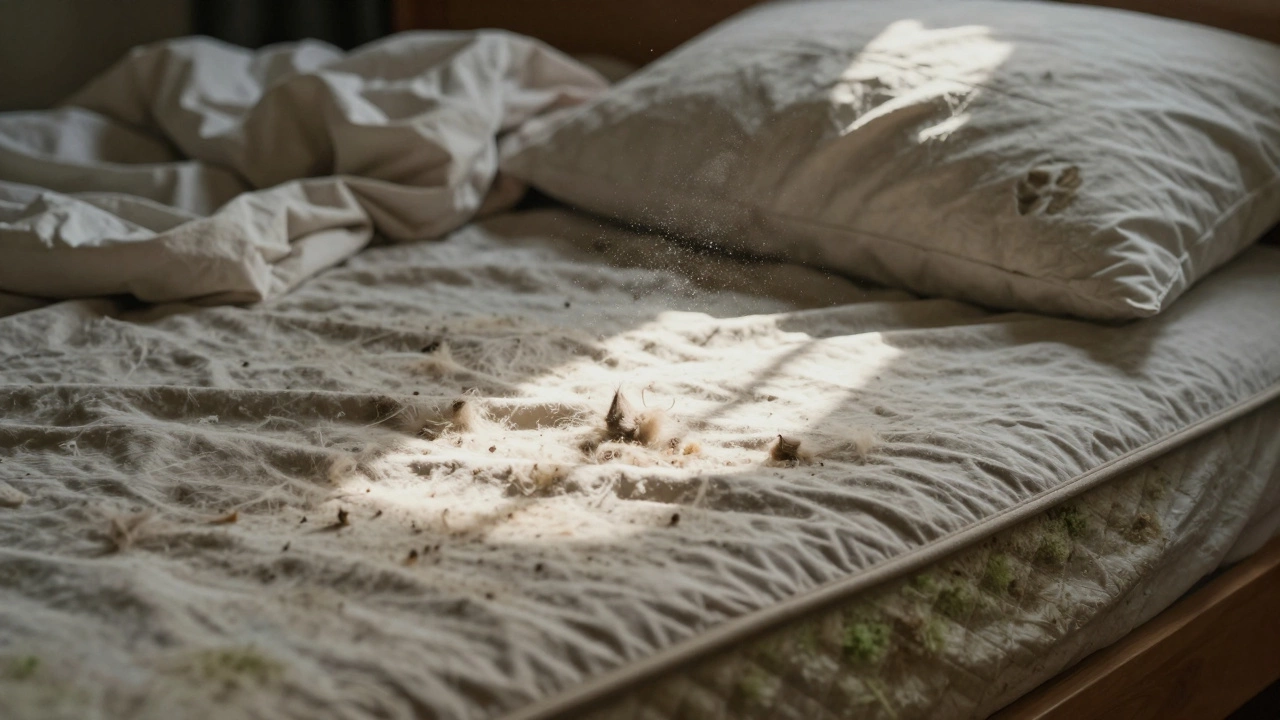
Let’s be blunt: dogs lick their paws, sniff other animals’ butts, roll in grass that’s been peed on, and then climb into your bed. Their fur carries bacteria like Salmonella, Giardia, and Staphylococcus. These aren’t rare. They’re common in outdoor dogs.
A 2024 study from the University of Auckland tested bedding from 50 homes where dogs slept on the bed. Over 70% had detectable levels of fecal bacteria. Ten percent had parasites like roundworm eggs-something that can cause serious illness in humans, especially kids or older adults.
It’s not that your dog is dirty. It’s that their natural behaviors don’t match your bedroom’s hygiene standards. Your bed is meant for rest, not microbial exchange.
Your mattress won’t thank you
Dog fur, dander, and oils build up in your mattress over time. Even with regular washing, your mattress absorbs odors and allergens. Most mattresses last 7-10 years. With a dog sleeping on it, that lifespan can drop to 5 years-or less.
Memory foam and hybrid mattresses are especially vulnerable. They trap heat and moisture, creating the perfect environment for dust mites and mold. And once those are in there? They’re nearly impossible to fully remove without replacing the mattress entirely.
One mattress manufacturer in Wellington told me they’ve seen a 40% increase in warranty claims from customers who let their dogs sleep on the bed. The damage isn’t always visible. But the smell? The stains? The allergic reactions? Those show up fast.
There’s a better way to give your dog comfort
You don’t have to choose between love and health. There are simple, effective alternatives that keep your bond strong without the downsides.
- Get your dog a high-quality orthopedic bed. Dogs with joint issues (like Labs, German Shepherds, or older dogs) need support. A good bed costs less than a new mattress.
- Place it right next to your bed. Your dog still feels close to you. You still get uninterrupted sleep.
- Use a bed with a removable, washable cover. Wash it weekly. It’s easier than washing your sheets every three days.
- Try a dog bed with a slight elevation. It keeps them off cold floors and away from drafts.
- Some dogs prefer heated beds in winter. Others like cooling gel pads in summer. Match it to their needs.
One owner I spoke with replaced her dog’s old blanket with a raised orthopedic bed and added a nightlight. Within a week, her dog stopped whining at night. She slept better. And her dog? He looked more rested than ever.
It’s not about control-it’s about care
Letting your dog sleep in your bed isn’t cruel. But it’s not always kind, either. True care means thinking about what’s best for both of you-not just what feels good in the moment.
Your dog doesn’t need your bed to feel loved. They need consistency, safety, and comfort. A dedicated bed with your scent on it, placed near you, does all that without the risks.
It’s not about saying no. It’s about saying yes-to better sleep, better health, and a longer, happier life for both of you.