Puppy Sleep Safety Checker
Check Your Puppy's Sleep Safety
Determine if it's safe to wake your sleeping puppy based on veterinary guidelines and sleep science
Ever seen a puppy curled up in a ball, tiny paws twitching, softly snoring? It’s tempting to reach over and nudge them awake-maybe to play, to eat, or just because they look so cute. But here’s the truth: waking a sleeping puppy can harm their growth, stress their nervous system, and even affect their behavior for months. It’s not just about being polite. It’s biology.
Why puppies need so much sleep
Puppies sleep 18 to 20 hours a day. That’s not laziness. That’s work. While they’re dozing, their brains are wiring new connections. Their muscles are growing. Their immune systems are strengthening. Every nap is a building block for a healthy adult dog.Studies from the University of California, Davis show that puppies who get interrupted sleep during critical development phases (between 8 and 16 weeks) show higher levels of cortisol-the stress hormone-than those who sleep uninterrupted. High cortisol over time can lead to anxiety, fearfulness, and even weakened immunity.
Think of it like this: your toddler doesn’t wake up mid-nap and expect to jump straight into a math test. Puppies aren’t any different. Their brains are in overdrive, processing everything they’ve learned since birth-how to chew, how to bark, how to read your face. Interrupting that process doesn’t just annoy them. It slows their development.
The science behind puppy dreams
You’ve probably noticed your puppy’s legs twitching or their ears flicking while they sleep. That’s REM sleep-the same stage humans experience when dreaming. In puppies, REM cycles are longer and more frequent than in adult dogs. That’s because their brains are actively organizing memories, practicing movements, and rehearsing survival behaviors.Waking them during REM can cause confusion, disorientation, or even aggression. A 2022 study published in the Journal of Veterinary Behavior tracked 127 puppies over six months. Those frequently woken during sleep were 3.2 times more likely to react fearfully to sudden noises or unexpected touches by the time they turned one year old.
It’s not that they’re being “bad” when they snap or growl after being startled awake. Their nervous system hasn’t had time to transition from deep rest to alertness. They’re not mad at you-they’re scared.
What happens when you wake a puppy on purpose
Some people wake puppies to “train them to be tough” or “get them used to being handled.” That’s a myth. Here’s what actually happens:- Increased anxiety: Puppies learn to associate sleep with danger. They become hypervigilant, waking at every sound.
- Disrupted circadian rhythm: Puppies need consistent sleep schedules to regulate hormones. Random wake-ups throw off their internal clock.
- Reduced learning ability: Sleep consolidates memory. Interrupted sleep means they forget commands, potty training cues, and social skills faster.
- Physical stunting: Growth hormone is released almost entirely during deep sleep. Interrupting that cycle can mean slower muscle and bone development.
One breeder in Ohio reported that puppies routinely woken during naps took 30% longer to master basic commands like “sit” and “come.” By the time they were six months old, they were still easily startled by household noises-vacuum cleaners, doorbells, even clapping.
When is it okay to wake a puppy?
There are exceptions. You’re not a monster if you wake them in these cases:- They need to go potty: Puppies under 12 weeks can’t hold it for more than 2-3 hours. If they’ve been sleeping for 4+ hours and you know they need to go, gently carry them outside. Don’t shake or yell.
- They’re in danger: If they’re near a heater, choking on a toy, or having a seizure, wake them immediately.
- They’re crying and restless for over 10 minutes: Sometimes, puppies wake from nightmares. If they’re whimpering, panting, or trembling, speak softly and gently stroke their back. Don’t grab them.
In all these cases, wake them slowly. Talk in a calm voice. Let them open their eyes before you move them. Never yank them up by the collar or splash water on them.
How to create a safe sleep environment
Prevention is easier than repair. Here’s how to help your puppy sleep like a pro:- Keep their bed in a quiet corner-away from TVs, foot traffic, and loud appliances.
- Use a white noise machine or soft music to mask sudden sounds.
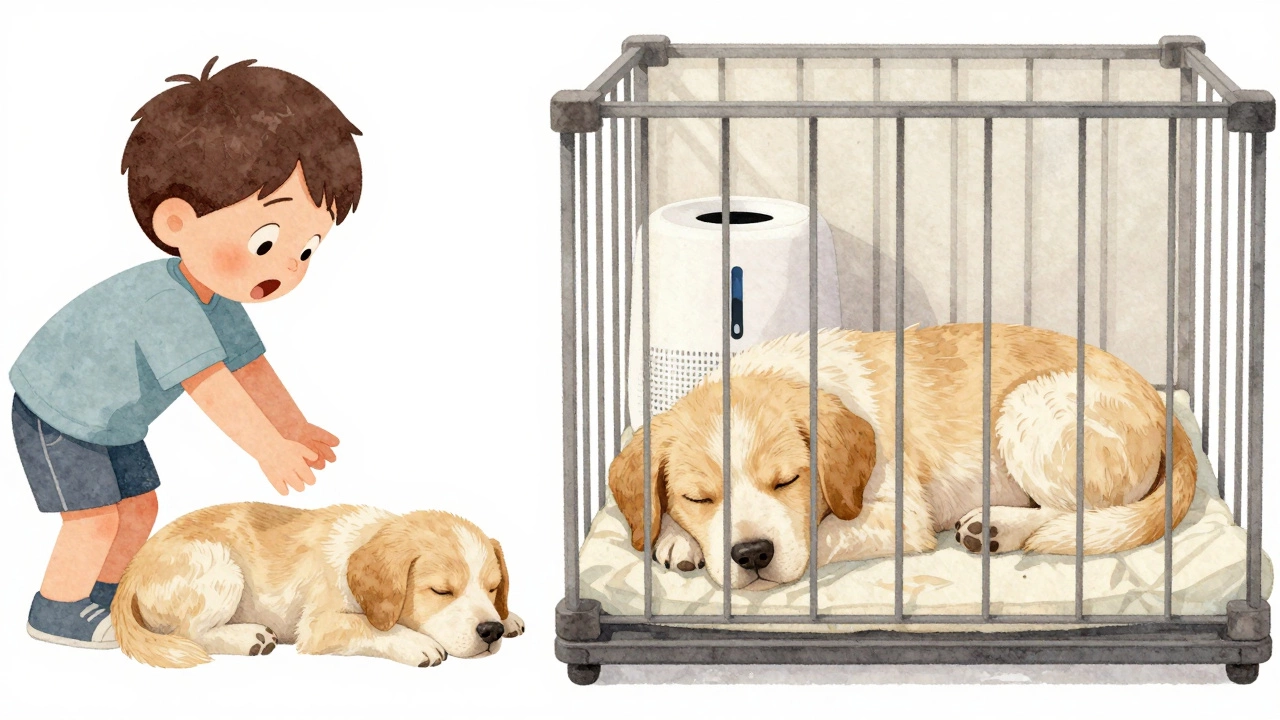
- Don’t let kids or guests pet or play with them while they’re sleeping.
- Establish a bedtime routine: potty, cuddle, dim lights, quiet time.
- Use a crate or enclosed bed if they’re prone to wandering or accidents. It gives them a sense of security.
Many owners think a puppy should sleep in their bed to “bond.” But that often leads to more interruptions. Puppies need space to rest undisturbed. Bonding happens during play, training, and feeding-not by forcing them to sleep where you sleep.
What to do if you’ve already been waking your puppy
If you’ve been waking your puppy regularly, don’t panic. Dogs are resilient. But you need to fix it now.- Stop waking them unless it’s an emergency.
- Track their sleep patterns for a week. Note how long they nap, when they wake up, and if they seem tired during the day.
- Offer more structured playtime during daylight hours. A tired puppy is a better sleeper.
- If they’re still anxious or jumpy after 3-4 weeks, consult a certified dog behaviorist.
One client I worked with woke her puppy 5-7 times a night because she thought he was “too quiet.” After just two weeks of letting him sleep through the night, his anxiety dropped. Within a month, he was calmer, learned commands faster, and stopped barking at shadows.
Final reminder: Sleep is not optional
Puppies aren’t small adults. They’re growing machines powered by sleep. Every hour they spend napping is an hour their body uses to become stronger, smarter, and more emotionally stable.Respect their rest. Let them curl up. Let them twitch. Let them dream.
If you’ve ever felt guilty for not playing with them while they slept-don’t. You’re not missing out. You’re giving them the best gift you can: time to grow up right.