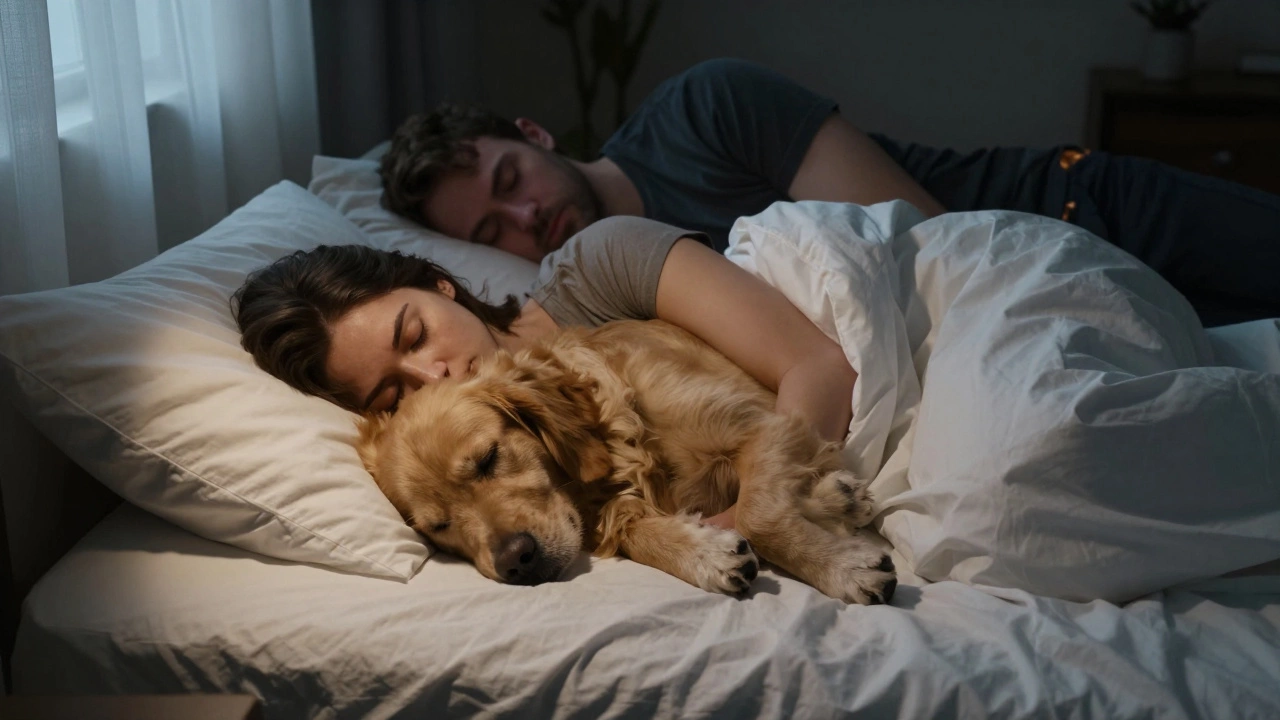
It happens late at night when the lights are off. You drift off, half-asleep, and your dog decides to turn you into a living mattress. Meanwhile, your husband sits on the other side of the bed, largely ignored by the four-legged roommate. It stings a little. You start wondering what you did differently, or if something is wrong with your marriage. The short answer is no, nothing is wrong with your relationship. Dog Sleeping Behavior is often misunderstood as pure favoritism, but it is actually rooted in complex sensory processing and safety mechanisms. Many owners mistake this for jealousy, but dogs operate on a completely different frequency regarding comfort and security.
The Science Behind The Cuddle
Canine preference isn't usually about love; it is about utility. Your dog is constantly scanning their environment for stability. When they choose you over your partner, they are often responding to subtle cues that neither of you notices. The dog’s brain prioritizes survival instincts even during sleep cycles. They associate certain people with resource security or stress relief. In many homes, one person handles the high-value tasks like opening food cans or administering medication, while the other handles the low-value tasks like filling the water bowl.
This creates a distinct hierarchy in the dog's mind. If you are the one who opens the kibble bag, your scent becomes linked to survival needs. When the dog seeks warmth at night, your skin temperature combined with your scent profile triggers a relaxation response. Studies on Oxytocin Release show that dogs release higher levels of bonding hormones when gazing at or touching their primary caregiver. This chemical rush makes them want to physically maintain contact to keep those levels stable through the night.
Scent And Familiarity Play A Huge Role
Dogs experience the world primarily through smell. Your scent signature changes based on what you eat, where you walk, and even your menstrual cycle if applicable. If you work from home or spend significantly more time in the yard, your clothes absorb more outdoor odors that signal 'safe territory.' Conversely, if your husband commutes and spends hours in cars or offices, his scent might carry unfamiliar chemical compounds that make him less comforting in the bedroom environment.
Imagine walking into a room that smells strongly of a place you've been before versus a sterile hotel lobby. The dog reacts similarly. Your natural scent might simply be more recognizable as 'home' compared to your spouse's scent, which changes daily depending on external exposure. This doesn't mean they dislike your spouse; they just prefer the consistency of your odor profile. Over time, this preference hardens into a sleeping habit.
| Factor | Impact Level | Description |
|---|---|---|
| Scent Consistency | High | More predictable smells reduce anxiety |
| Resource Control | Medium | Who provides food/treats dictates authority |
| Stress Response | High | Dogs gravitate towards calm body language |
| Temperature | Low | Physical warmth contributes to comfort seeking |
Pack Dynamics And Security
In the wild, Pack Dynamics dictate proximity to protect against threats. Your dog views your household as its pack. During vulnerable states like sleep, they position themselves against the member who appears most capable of monitoring dangers. If you tend to stay up later watching TV or scrolling on your phone, your eyes remain open longer, mimicking guard duty. Even if you aren't awake fully, the subconscious perception of vigilance matters.
Your husband might sleep much deeper or snore heavily, which subconsciously signals vulnerability to the dog. Animals interpret loud breathing or deep slumber as a lack of awareness. They naturally move away from potential risks, even within their own den. By sleeping next to you, they are essentially stationing their internal alarm system next to the person who seems most alert. This is an evolutionary leftover that serves little purpose in modern apartments, yet the instinct remains robust.
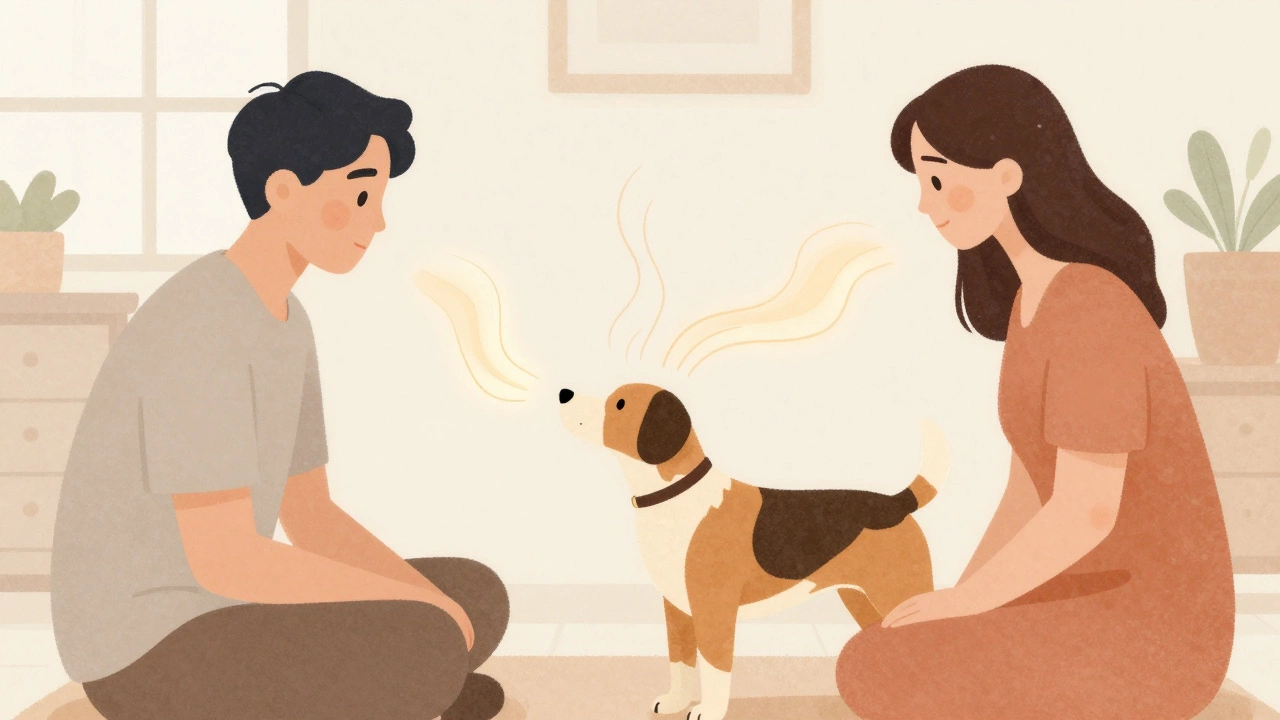
Anxiety And Emotional Regulation
Separation Anxiety can manifest as extreme clinginess toward one specific person. While full-blown panic attacks involve destructive behavior, milder forms show up as physical dependence. If your dog has experienced abandonment or rough handling in the past, they latch onto the safest available option. Often, this is the person who soothes them most gently during vet visits or thunderstorms.
If your husband disciplines the dog strictly-perhaps using a stern tone or firm corrections-the dog might avoid him during rest periods to prevent confrontation. You might accidentally reinforce the negative association by intervening and giving treats or soothing praise when he corrects the pup. This triangle reinforces the idea that you are the buffer against stress. The dog sleeps on you to minimize cortisol spikes that occur near the source of tension.
Physical Comfort And Sleep Quality
Besides psychology, there are purely physical reasons for this arrangement. Consider your mattress setup. Does your side of the bed sag more? Is your body heat regulation different? Some dogs are exceptionally sensitive to fabric textures. If you wear cotton t-shirts to bed and your husband wears wool socks or synthetic materials, friction against their fur influences their comfort level.
Also consider age. Older dogs suffer from arthritis or joint pain. They seek soft surfaces. If you have thicker bedding under your side of the mattress, or if your movements create a softer surface, they migrate there for relief. It isn't about rejecting your husband; it is about finding the cushioned spot that eases their physical ache.
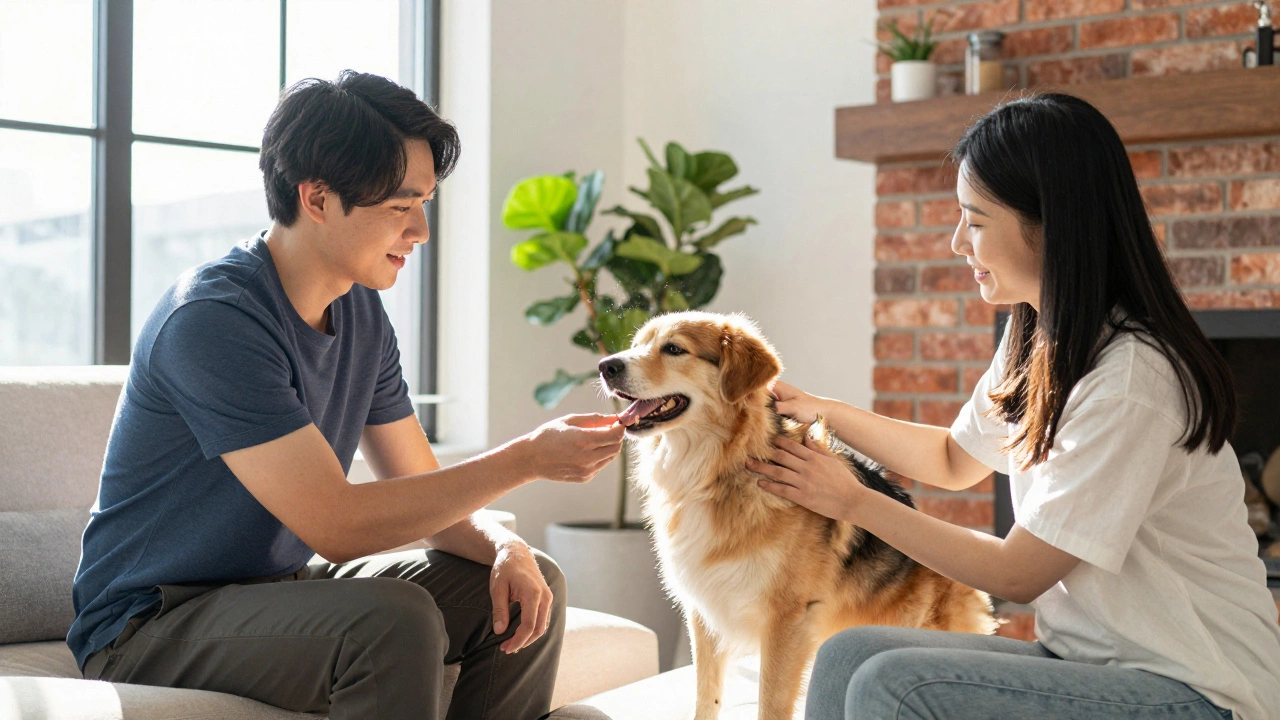
How To Balance The Bond
Correcting a strong preference takes patience but yields better family harmony. Start by ensuring your husband controls high-value resources. Instead of you tossing the food, hand it over to him for dinner time. He should be the one responsible for morning walks and evening play sessions. This reprograms the association loop. The goal is to break the link between 'You = Food/Safety' and 'Husband = Neutral/Boundary Setter.'
- Rotate Bedtime Rituals: Alternate nights where you put the dog to sleep in the main area rather than jumping straight into the marital bed.
- Calm Discipline: Ensure corrections happen away from sleep times so resting doesn't equal fear.
- Shared Attention: Sit together on the couch. If the dog comes to you, pass a treat to your husband and have him toss it to the dog without eye contact initially.
- Change Scents: Swap shirts for a week so the dog gets used to mixing your husband's scent into the 'safe zone' of the bedroom.
Another method involves using Positive Reinforcement. Train your husband to give favorite toys only during quiet bonding time. If the dog realizes that being near the spouse brings joy consistently, the exclusive attachment diminishes. Do not force the dog to sleep with the husband if they resist; allow small steps toward independence. Eventually, they may choose a dog bed in the center of the room, happy to access either human freely.
Is It Normal Or A Red Flag?
Most of the time, sleeping preference is benign. However, watch for signs that the attachment is unhealthy. If the dog growls when your husband tries to pet them, or if they become aggressive when separated from you, that shifts from preference to guarding. Possessive aggression often stems from insecurity.
You should see balanced energy levels. Ideally, the dog greets both partners enthusiastically upon returning home. If the dog ignores your husband entirely, regardless of the setting, run a behavioral assessment. It indicates a social gap that could widen into obedience issues later. Early intervention prevents the formation of strict hierarchies that exclude humans from command structures.
Does my dog love me more than my husband?
Not necessarily. Dogs express affection through proximity, which is often practical. They might trust you more for comfort, but that does not equate to a lack of love for your partner.
Should I stop letting the dog sleep on me?
Stopping abruptly can cause anxiety. Instead, gradually introduce a dog bed nearby or alternate who provides the comfort during settling down routines.
Could this be separation anxiety?
Yes, clinging to one specific person overnight is a symptom. Watch for distress behaviors like whining or pacing when alone.
Will changing who feeds the dog help?
Yes, food control strongly influences perceived status. Having your husband handle meals can shift the dog's reliance.
Is this normal for puppies?
Absolutely. Puppies imprint quickly on whoever handles them most during critical growth phases. Habits form easily early on.
Understanding these dynamics helps manage expectations. You don't need to compete for affection. The dog finds safety in your presence, not because your husband is unlovable, but because the specific chemistry of your relationship allows them to lower their guard. With intentional effort to bridge the connection, that bond can expand to include everyone in the house equally.