
Puppy Freedom Readiness Checker
Evaluate your puppy's current habits to see if they are ready for full house access or if you should stick to a restricted environment.
Quick Takeaways for Puppy Freedom
- Most puppies aren't ready for full free roaming until they are 6 to 8 months old.
- House training consistency is the biggest indicator of readiness.
- 'Puppy proofing' is a requirement, not a suggestion, before granting access.
- Supervised freedom is always safer than unsupervised freedom.
- Gradual access to rooms prevents overwhelming the pup and the owner.
The Reality of the "Magic Age"
You'll hear some people say 4 months and others say a year. The reality is that puppy free roam age is the point at which a young dog can navigate a home without causing significant damage or having accidents. For many, this happens around the 6-month mark, but it depends heavily on the breed and the individual dog's maturity.
Think of it like a toddler. Just because a child can walk doesn't mean you let them wander the house alone with a glass vase nearby. Puppies are driven by exploration and an intense need to put everything in their mouths. This biological urge to chew and explore doesn't just vanish overnight. If you give a 12-week-old puppy full access to your living room, you're essentially giving a tiny, furry wrecking ball a playground.
The House Training Benchmark
The most critical factor in deciding when a puppy can free roam is their bladder control. A puppy's Urinary Bladder is small and their muscles aren't fully developed. If they can't signal you that they need to go out, or if they still have "surprise" accidents every few days, they aren't ready to roam.
You know they are getting close when you notice a pattern: they go outside every single time and they've stopped having accidents for at least two to three weeks straight. If you're still fighting a battle with the carpet, sticking to a Crate Training routine is your best bet. A crate isn't a prison; it's a safe space that teaches the puppy that certain areas are for sleeping and others are for doing their business.
| Metric | Not Ready | Almost Ready | Ready to Roam |
|---|---|---|---|
| Accidents | Daily or multiple times a week | Once every few days | Zero accidents for 14+ days |
| Chewing | Destroys furniture/shoes | Chews occasionally; redirects well | Only chews designated toys |
| Bladder Control | Cannot hold it for 2 hours | Can hold it with supervision | Holds it reliably during naps |
| Attention | Ignores "leave it" commands | Responds 50% of the time | Reliably obeys basic boundaries |
The Danger of the "Boredom Bite"
When a puppy gets too much freedom too soon, they get bored. Boredom leads to destructive behavior. This is where Destructive Chewing becomes a major household problem. A puppy roaming a house without a job will find a job-usually by shredding your favorite sneakers or tasting the corner of the coffee table.
To avoid this, you need to implement a "tiered access" system. Instead of going from a crate to the whole house, start with one room. Once they prove they can behave in the kitchen, give them the living room. This gradual expansion keeps them from feeling overwhelmed and allows you to monitor their behavior in smaller, manageable chunks.
Essential Puppy Proofing Strategies
Even if your puppy is 7 months old and mostly house-trained, you shouldn't just let them loose without a plan. Puppy Proofing is the process of removing hazards and temptations from the dog's reach. It's not just about your stuff; it's about their safety.
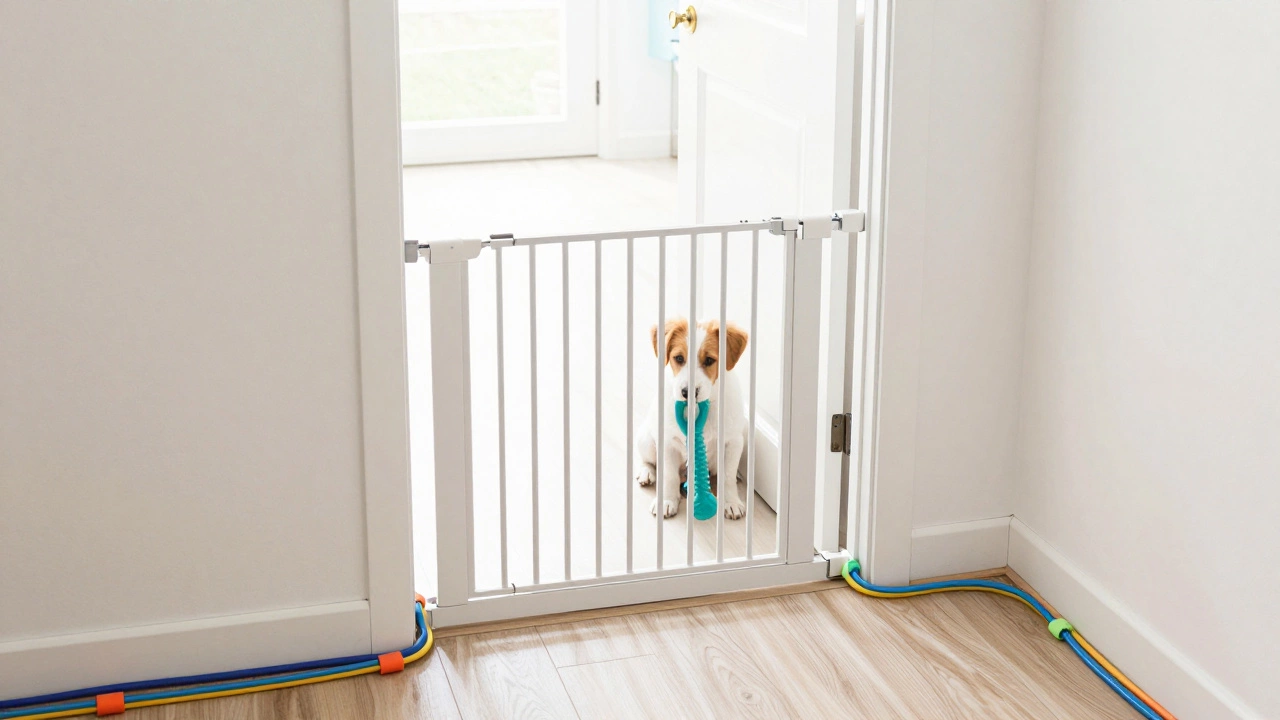
Start by getting on your hands and knees. See the world from their level. You'll notice that the loose wire behind the TV looks like a great chew toy, and the cleaning supplies under the sink are within easy reach. Use baby gates to block off dangerous areas, like the laundry room or the stairs, and use cord protectors for any electronics.
- Electrical Cords: Use plastic conduits or hide them behind furniture.
- Toxic Plants: Move lilies, azaleas, or philodendrons to high shelves or outside.
- Small Objects: Clear away coins, hair ties, and LEGOs that could cause intestinal blockages.
- Chemicals: Store bleach, detergents, and pesticides in locking cabinets.
The Role of Mental Stimulation
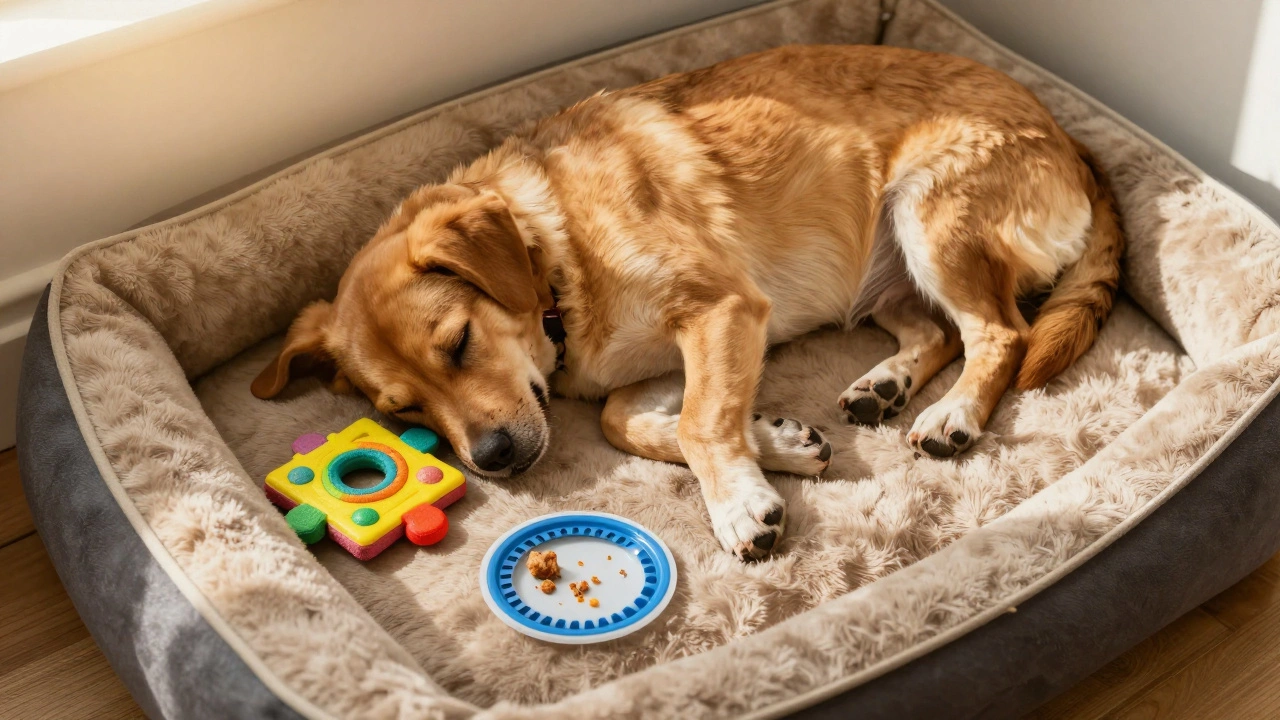
If you want a puppy that can roam freely without causing chaos, you have to tire them out. A tired puppy is a well-behaved puppy. This is where Mental Stimulation comes into play. Physical exercise like walking is great, but mental work is what actually exhausts their brain.
Try using a Puzzle Toy or a Lickimat. These tools force the puppy to concentrate and work for their food. If you spend 15 minutes doing a training session with "sit," "stay," and "down" before letting them roam, they are far more likely to nap than to chew your baseboards.
Managing the Transition Period
Once you decide they are ready, don't just walk away. Start with "supervised freedom." This means the puppy is out of the crate, but you are in the room and actively watching them. If you see them eyeing a shoe, redirect them to a toy immediately. This reinforces the rule that toys are for chewing, and shoes are not.
As they continue to succeed, you can move to "intermittent supervision." This is where you might leave the room for five minutes to grab a drink, then come back. If you return and nothing has been destroyed, they've passed another test. Eventually, you'll reach a point where you can leave them alone for an hour without a second thought.
What if my puppy starts having accidents again after I let them roam?
This is a common sign that the puppy is overwhelmed or that the freedom was granted too soon. When this happens, simply "reset" the boundaries. Go back to a more restricted area or a crate for a few days until the pattern of success is restored. Consistency is key; if you allow an accident to happen without a correction or a change in management, the puppy thinks the living room is now a valid bathroom.
Does the breed of the dog affect when they can free roam?
Absolutely. High-energy or working breeds, like Border Collies or Huskies, often have a higher drive to explore and chew, which might mean they need more management for longer. Conversely, some smaller, calmer breeds might settle in sooner. Regardless of the breed, the behavioral benchmarks (house training and chewing control) remain the same.
Can I use a playpen instead of a crate for free roaming?
Yes, a playpen is an excellent middle ground. It provides more room than a crate but keeps the puppy contained in a safe, puppy-proofed zone. This is a great way to transition a puppy from the crate to the whole house, as it allows them to practice independence without the risk of them wandering into a dangerous part of the home.
How do I stop a puppy from chewing furniture when they roam?
Redirect and reward. The moment you catch them chewing something they shouldn't, say a firm "no" or "ah-ah," and immediately give them a chew toy. When they start chewing the toy, praise them enthusiastically. You can also use a pet-safe bitter spray on furniture corners to make the taste unpleasant, which acts as a deterrent while they are learning.
Is it okay to let a puppy roam while I'm sleeping?
Generally, no. Even the most house-trained puppies can have accidents at night or decide to explore the house in the dark. Until your dog is fully mature (usually after a year) and has a proven track record of overnight reliability, keeping them in a crate or a designated puppy room at night is the safest choice for your home and your dog.
Next Steps for New Puppy Owners
If you're not sure where your puppy stands, start with a "test run." Give them 30 minutes of supervised freedom in a room you've already puppy-proofed. If they spend that time chewing toys and relaxing, you're on the right track. If they immediately go for the curtains, it's time to go back to the crate or playpen for a bit longer.
Remember, the goal isn't just to have a dog that doesn't pee on the floor; it's to build a relationship based on trust. When you set clear boundaries and provide the right toys, you're teaching your puppy how to be a good citizen in your home. Be patient, stay consistent, and let the freedom happen in stages.