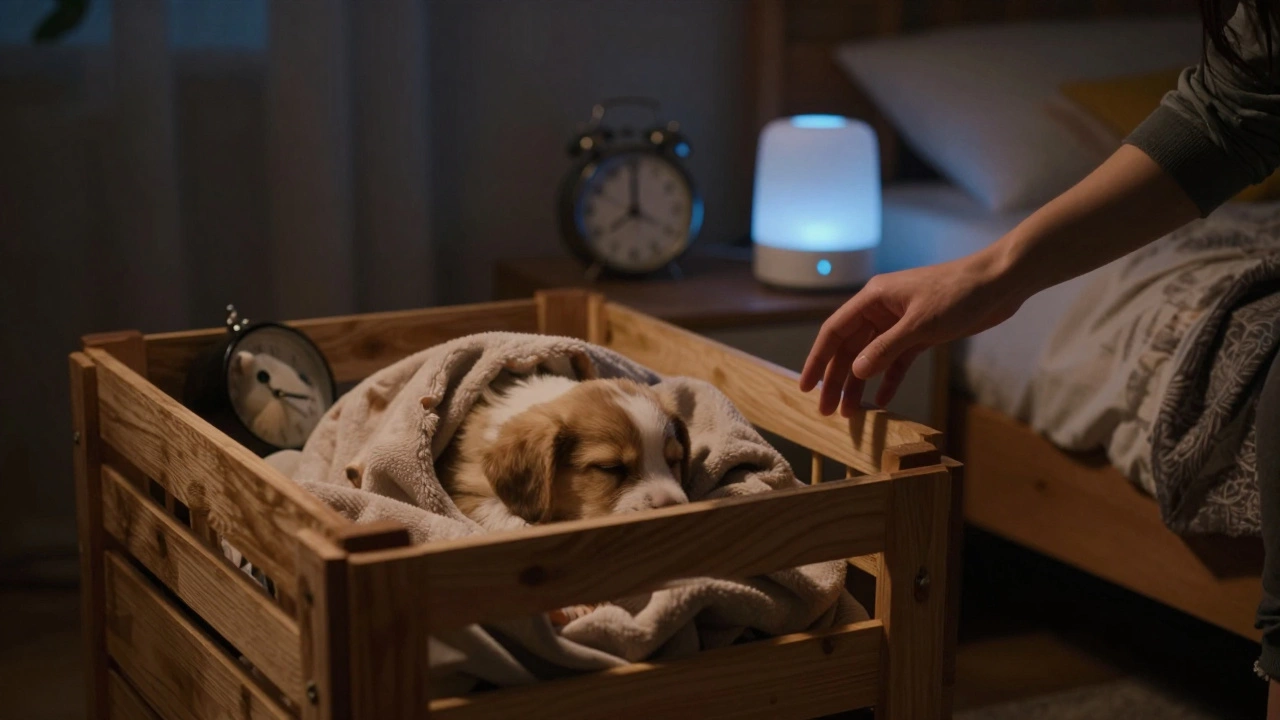
Bringing home a new puppy is exciting - until 3 a.m. rolls around and you’re wide awake listening to tiny whimpers coming from the crate. It’s not just you. Most first-time puppy owners feel the same panic: is my puppy scared? Is something wrong? Should I comfort them? The truth is, crying at night is normal. But ignoring it completely or rushing in every time can make things worse. The goal isn’t to silence the crying - it’s to help your puppy learn to sleep through the night on their own.
Why Does Your Puppy Cry at Night?
Puppies don’t cry because they’re being dramatic. Their cries are communication. Think of it like a human baby crying - it’s their way of saying, "I need help." Most new puppies cry at night for one of four reasons:- They’re lonely. Puppies spent their first 8 weeks with their littermates and mom. Suddenly being alone in a quiet room? It’s overwhelming.
- Their bladder is full. A 10-week-old puppy can only hold it for about 3 hours. If they’re crying right after bedtime, they likely need to go out.
- The crate feels unsafe. If the crate is too big, too cold, or too far from you, they’ll feel exposed.
- They’re overstimulated or tired. A day full of new sights, sounds, and people can leave them wired - not sleepy.
What NOT to Do
It’s tempting to pick up your crying puppy, carry them to your bed, or turn on the lights. But here’s what happens when you do:- You teach them that crying = attention.
- You disrupt their natural sleep cycle.
- You make it harder for them to learn independence.
Step-by-Step: How to Help Your Puppy Sleep Through the Night
Step 1: Set up the right sleeping space Your puppy’s crate should be cozy, not huge. Too much space? They might start using one corner as a bathroom. Use a divider if needed. Line the bottom with a soft blanket, and add a stuffed toy that smells like their littermates (if you can get one from the breeder). A ticking clock or a low-volume white noise machine can mimic the sound of a heartbeat - it’s surprisingly calming. Step 2: Tire them out before bedtime A tired puppy is a quiet puppy. But don’t just play fetch. Mix it up:- 15 minutes of training (sit, stay, come - use treats as rewards)
- 10 minutes of sniffing games (hide treats around the room)
- 10 minutes of gentle cuddle time
How Long Does This Last?
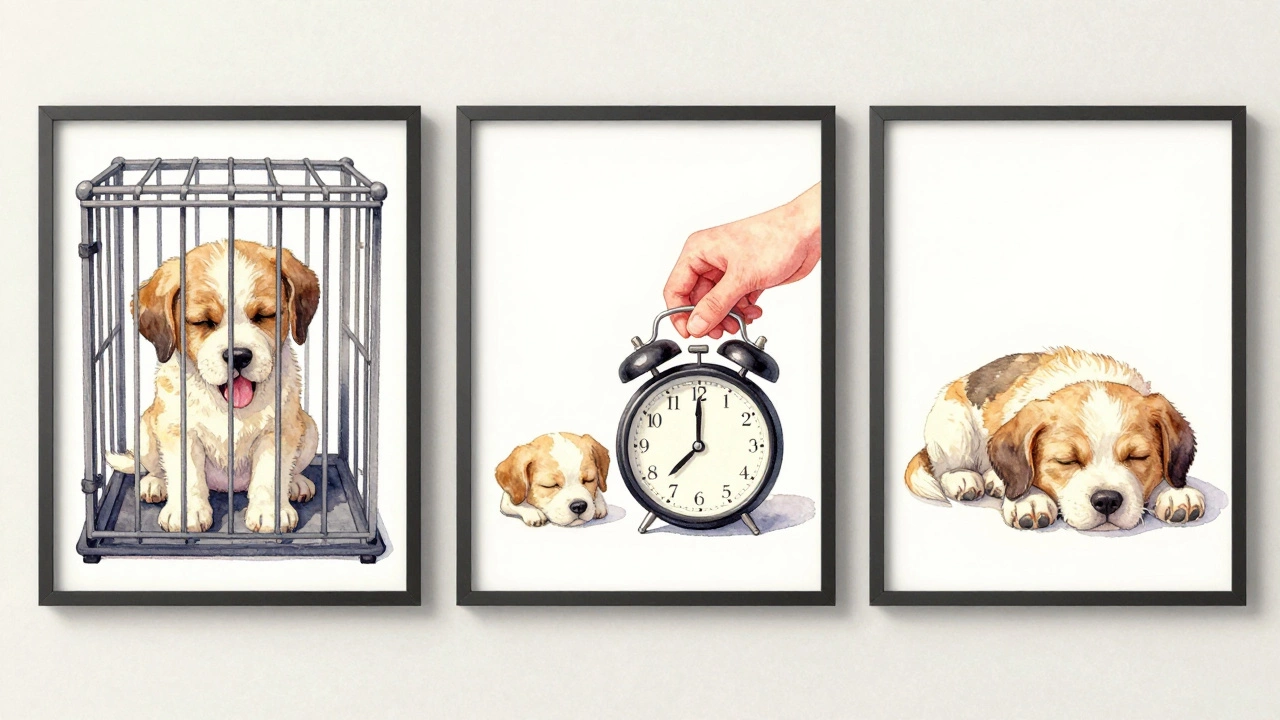
Most puppies stop crying at night within 3-7 days if you’re consistent. Some take two weeks. That’s normal. The key is not giving in. If you let them sleep in your bed on night 5, you’re resetting the clock. One dog trainer in Christchurch told me about a 12-week-old Labrador who cried for 14 nights straight. The owner didn’t give in. On night 15? Silence. The next night? The puppy curled up and slept for 7 hours. No whining. No barking. Just peace.When to Worry
Crying is normal. But if your puppy is:- Howling nonstop for over 30 minutes
- Shivering, panting, or drooling excessively
- Refusing to eat or drink the next day
- Has diarrhea or vomiting
What About Puppy Beds or Warmers?
You don’t need a heated pad, a special bed, or a $100 sound machine. A simple blanket, a stuffed toy, and a quiet room are enough. I’ve seen puppies sleep peacefully on cardboard boxes lined with old towels. It’s not about luxury - it’s about routine and safety.Final Tip: Be Patient
Your puppy isn’t trying to ruin your sleep. They’re scared, confused, and learning. Every night they stay quiet, they’re building confidence. Every time you wait before responding, you’re teaching them they’re safe - even when you’re not right there. It won’t be perfect. There will be nights you’re tempted to give in. That’s okay. Just get back on track the next night. Consistency beats perfection every time.Should I let my puppy sleep in my bed?
It’s fine to let your puppy sleep in your bed - if you’re okay with it being a long-term habit. But if you plan to move them out later, don’t start with bed-sharing. It’s much harder to change the rule after they’ve gotten used to it. For the first few weeks, keep them in a crate near your bed. Once they’re sleeping quietly for 5+ nights in a row, you can consider moving them to their own room.
My puppy cries only when I leave the room. Is this separation anxiety?
In puppies under 6 months, crying when you leave the room is usually not true separation anxiety - it’s loneliness or lack of routine. True separation anxiety shows up as destructive behavior, excessive drooling, or accidents when left alone for more than 2 hours. If your puppy cries only when you’re not in the room but sleeps quietly when you’re nearby, focus on crate training and gradual alone-time practice. Don’t rush to label it as anxiety - most puppies outgrow this with consistency.
How often should I take my puppy out at night?
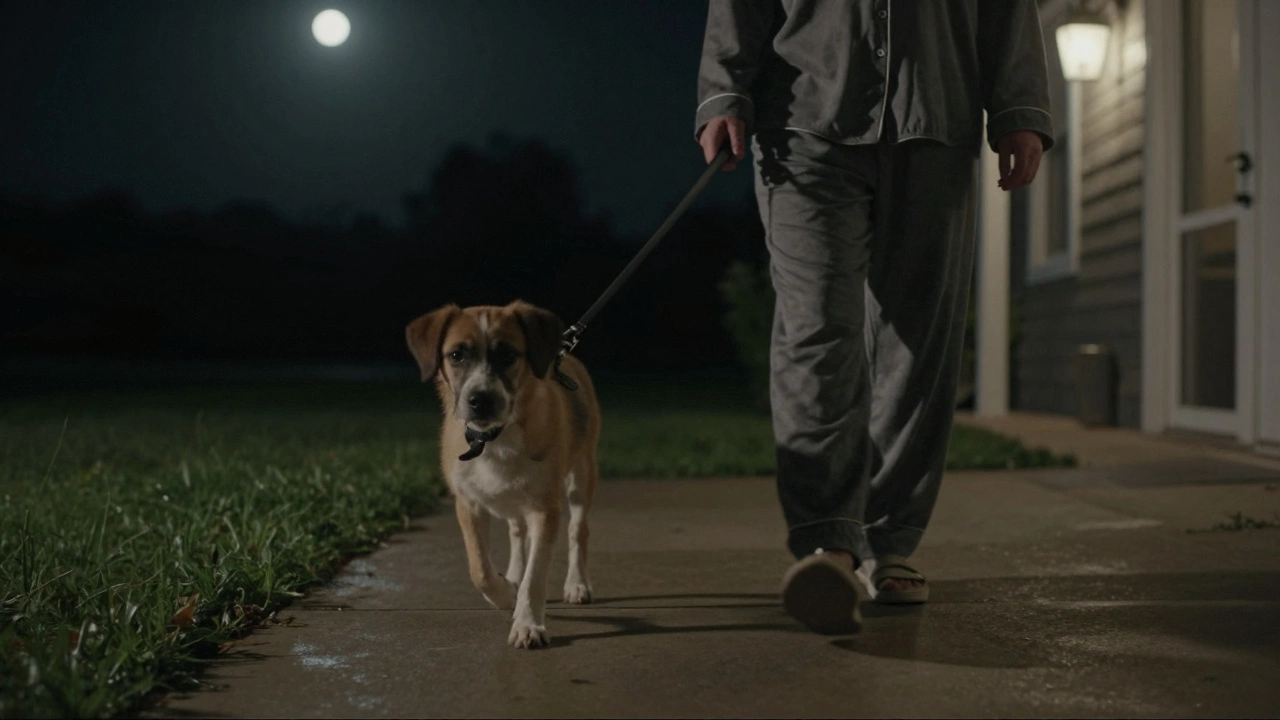
A general rule: puppies can hold their bladder for their age in months plus one hour. So a 3-month-old (12 weeks) can hold it for about 4 hours. If you put them to bed at 10 p.m., they’ll likely need to go by 2 a.m. That’s normal. Take them out quietly, keep it boring, and put them right back. After 4-5 nights, most puppies will start sleeping through until morning.
Can I use a baby monitor to check on my puppy?
Yes - but only if you use it to listen, not to react. A baby monitor lets you hear if your puppy is whining or barking without rushing in. If you hear a single cry, wait 5 minutes. If it turns into a howl, then go check. Avoid checking every little sound - that teaches them to cry louder to get your attention. The monitor is a tool to help you stay calm, not to monitor every whimper.
What if my puppy cries after I move their crate out of the bedroom?
This is normal. Moving the crate is a change, and puppies notice changes. If they cry, go through the same steps: wait 5 minutes, then check. Take them out if needed, then put them back. Don’t move the crate back. Instead, keep the routine consistent. Most puppies adjust within 2-3 nights. If they cry for more than 5 nights, check for environmental changes - noise, temperature, or a new pet in the house.