Dog Food Ingredient Checker
Check Your Dog Food Ingredients
Enter ingredients in order (comma-separated). The tool analyzes if the first ingredient meets quality standards as explained in the article.
Important: The first ingredient should be real meat (e.g., Chicken, Beef, Salmon) not meat meal, by-products, or fillers. See the article for details.
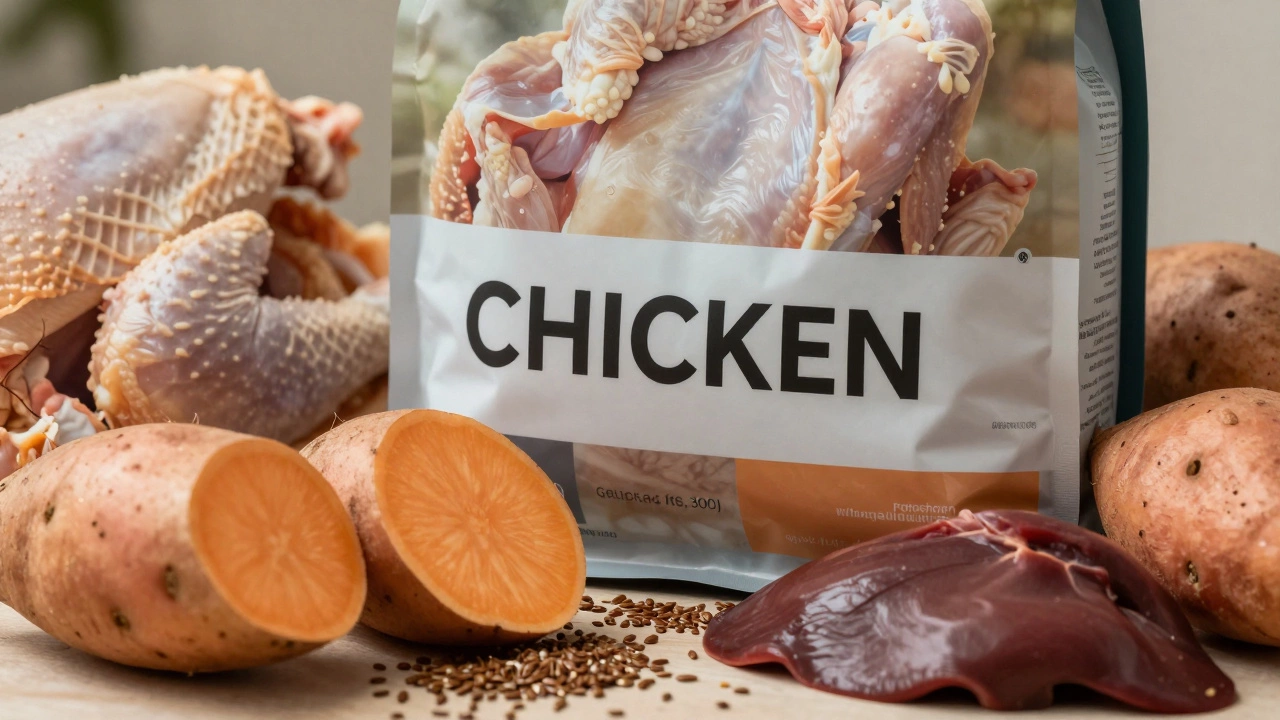
When you look at a bag of dog food, what’s the first thing you check? Probably the price. Then maybe the brand. But the most important thing-the one thing that tells you if this food will actually keep your dog healthy-is the first ingredient. And it’s not complicated: it should be meat.
Not meat meal. Not chicken by-product. Not corn or soy or wheat. Real, whole meat. The kind you’d recognize if you saw it on your dinner plate.
Why the First Ingredient Matters
Dog food labels list ingredients by weight before cooking. That means the heaviest ingredient goes first. If you see “chicken” at the top, that’s a good sign. But if you see “ground corn” or “corn gluten meal,” that’s a red flag. Dogs aren’t designed to live on starches. Their ancestors ate prey-muscle, organs, bones, and a little bit of plant matter from the stomachs of herbivores. Modern dogs still have the same digestive system. They need animal protein to thrive.
A 2023 study from the University of Illinois looked at over 200 commercial dog foods and found that diets with real meat as the first ingredient had significantly higher digestibility scores. Dogs on those diets had better stool quality, shinier coats, and fewer digestive upsets. It wasn’t a fluke. It was biology.
What Counts as “Meat”?
Not all meat is created equal. Here’s what to look for:
- Chicken - whole muscle meat, not meal
- Beef - listed as “beef” or “beef liver”
- Salmon - whole fish, not fish meal
- Lamb - especially good for dogs with sensitivities
- Duck - a great alternative protein source
Watch out for vague terms like “meat” or “animal protein.” Those are loopholes. The label has to say which animal. “Chicken meal” is okay if it’s the second ingredient, but never the first. Meal is concentrated protein, yes-but it’s processed. If the first ingredient is meal, it usually means the manufacturer didn’t use enough fresh meat to make it to #1.
What About Vegetables and Grains?
They’re not evil. Carrots, sweet potatoes, peas, and brown rice can add fiber and vitamins. But they shouldn’t be the star. Think of them as supporting actors. If you see a list like this:
- Ground corn
- Chicken by-product meal
- Whole wheat
- Beef fat
- Corn gluten meal
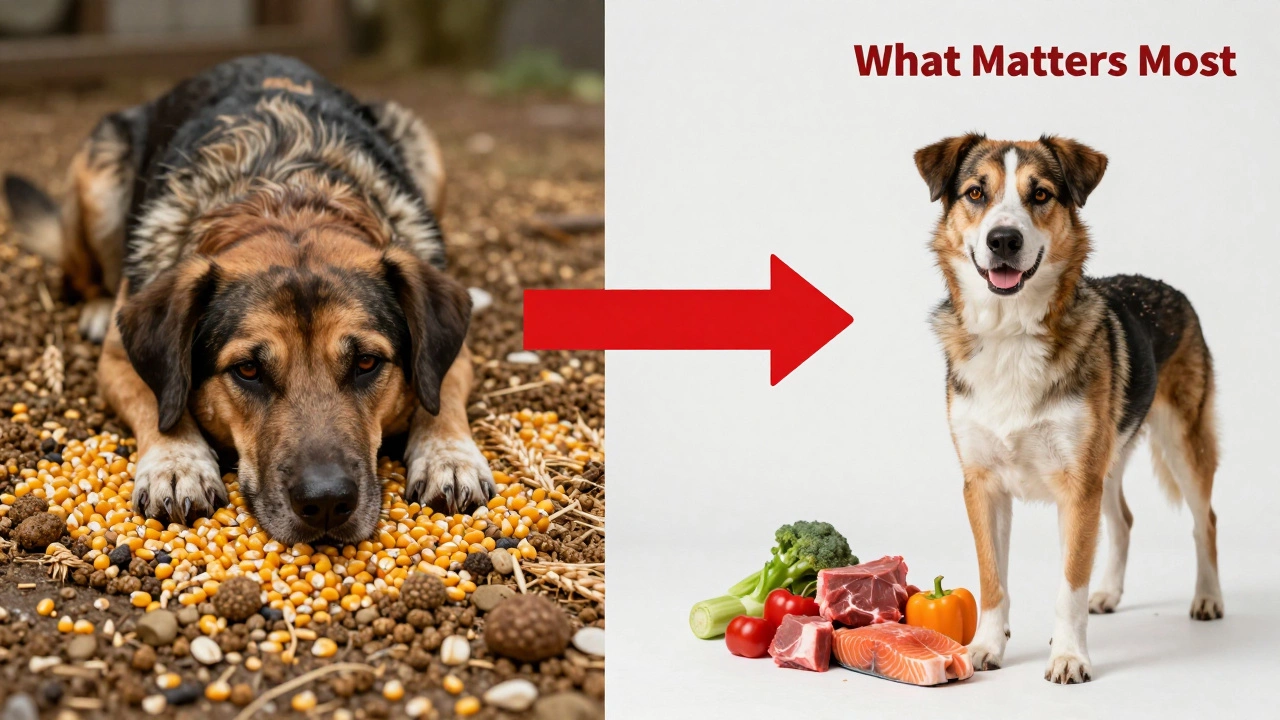
That’s not dog food. That’s a cheap filler with just enough protein to meet minimum legal standards. Your dog will eat it, sure. But their body won’t absorb it well. They’ll need to eat more to get the same nutrition. And over time, that can lead to weight gain, dull fur, or even allergies.
Real-World Example: What I Feed My Dog
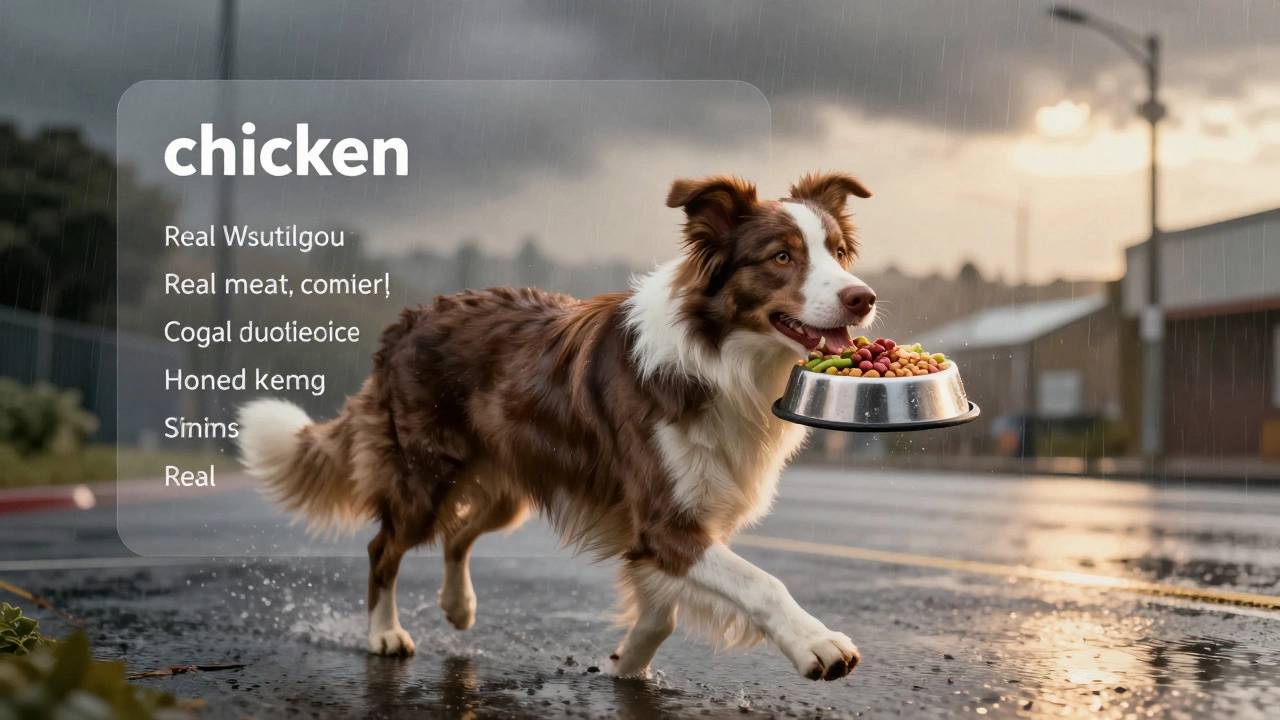
I live in Wellington, where it rains half the year, and my border collie, Rusty, needs energy to keep moving. I switched his food three years ago after a vet told me his bloodwork showed low protein levels. His old food had “chicken by-product meal” as the first ingredient. I switched to a brand with “chicken” as the first ingredient, followed by chicken liver, sweet potato, and flaxseed. Within six weeks, his coat stopped shedding so much. His energy picked up. His vet said his albumin levels were back in range.
It wasn’t magic. It was protein.
How to Read the Label Like a Pro
Here’s your quick checklist:
- First ingredient = single animal protein (chicken, beef, salmon, etc.)
- No “by-products,” “meat meal,” or “animal digest” in the top three
- Carbohydrates like corn, wheat, or soy should be after protein sources
- Avoid artificial preservatives like BHA, BHT, or ethoxyquin
- Look for “AAFCO statement” - it means the food meets nutritional standards
And don’t be fooled by marketing. “Grain-free” doesn’t mean better. Many grain-free foods just swap rice for peas and lentils-which can be just as bad if they’re the main ingredient. The goal isn’t to avoid grains. The goal is to avoid filling your dog’s bowl with stuff they can’t digest well.
What If You Can’t Afford Premium Food?
You don’t need to spend $60 a bag. But you do need to be smart. Look for smaller brands that list real meat first. Some of the best options come from local producers who make small batches. I’ve found a few in Wellington that use New Zealand lamb and free-range chicken. They’re not flashy, but they’re honest. You can often find them at vet clinics or local pet stores.
Or, if you’re up for it, try mixing in a little cooked chicken or salmon into your dog’s current food. Even 20% extra protein can make a difference. It’s not a full fix, but it’s a step.
What Happens When You Get It Right?
Dogs with real meat as their main ingredient show it. Their coats shine. Their breath stays fresh. Their stools are firm and small. They don’t beg for food at the table because they’re actually full-nutritionally, not just physically. And they live longer. A 2024 study from the Royal Veterinary College in the UK tracked over 12,000 dogs and found those fed diets with meat as the primary ingredient lived an average of 1.5 years longer than those fed grain-heavy formulas.
That’s not a coincidence. It’s science.
Final Thought: It’s Not About Price. It’s About Priority.
The number one ingredient in dog food should never be a question. It should be obvious. If you’re reading a label and you have to guess what’s in there, walk away. The best dog food doesn’t hide behind fancy packaging or buzzwords. It’s simple: real meat first. Everything else is just seasoning.
Your dog doesn’t need a gourmet meal. They need real food. And that starts with one word: chicken. Or beef. Or salmon. Whatever the animal is-just make sure it’s the first thing on the list.
Is chicken the best first ingredient for all dogs?
Chicken is a great option for most dogs because it’s widely available, affordable, and highly digestible. But it’s not the only good choice. Dogs with allergies may do better with lamb, duck, or fish. The key isn’t the type of meat-it’s that the first ingredient is a single, identifiable animal protein. Avoid blends like “poultry” or “meat” because they’re vague and often lower quality.
Can a dog food with meat as the first ingredient still be bad?
Yes. Just because meat is first doesn’t mean the whole formula is healthy. Some brands use high-quality meat but then load the rest of the bag with cheap fillers like corn syrup, artificial colors, or excessive fat. Always check the next five ingredients. If you see sugar, dextrose, or unpronounceable additives, it’s still not ideal. Look for whole foods: vegetables, fruits, and healthy fats like fish oil or flaxseed.
What about raw or homemade dog food?
Raw and homemade diets can work, but they require careful planning. Dogs need calcium, taurine, and certain vitamins that aren’t naturally found in muscle meat alone. Many homemade diets are deficient, leading to long-term health issues. If you’re considering raw, talk to a veterinary nutritionist. Most commercial foods with real meat as the first ingredient are safer and more balanced for the average pet owner.
Why do some vets recommend grain-inclusive dog food?
Because grains aren’t the enemy. Whole grains like brown rice and oats provide fiber and energy, especially for active dogs. The problem isn’t grains-it’s when they’re used as the main ingredient instead of protein. Vets recommend grain-inclusive foods when they’re balanced with high-quality meat. The issue is when grain replaces meat, not when it complements it.
How do I know if my dog’s food is working?
Look at three things: coat, energy, and stool. A healthy dog has a glossy coat, steady energy throughout the day, and small, firm, dark stools. If your dog is lethargic, scratching constantly, or has loose or smelly poop, the food might not be right. Give any new food at least 4-6 weeks to see changes. Don’t switch too often-your dog’s gut needs time to adjust.