Puppy Toy Selector
Recommended Toys
That moment when you bring a new puppy home is equal parts magical and chaotic. You’re trying to bond, they are trying to figure out if your favorite leather loafers are edible, and somewhere in the middle, you realize you need a strategy for play. But what kind of toys do puppies like the most? It isn’t just about keeping them entertained; it’s about supporting their physical development, soothing sore gums, and teaching them what is acceptable to chew on.
Puppies are not small adults. Their teeth are coming in, their attention spans are measured in seconds, and their instincts are wired for biting and mouthing. Choosing the wrong toy can lead to boredom, destructive habits, or even injury. Getting it right means understanding the different types of play and matching the toy to your puppy’s specific needs at this stage of life.
The Teething Phase: Why Texture Matters
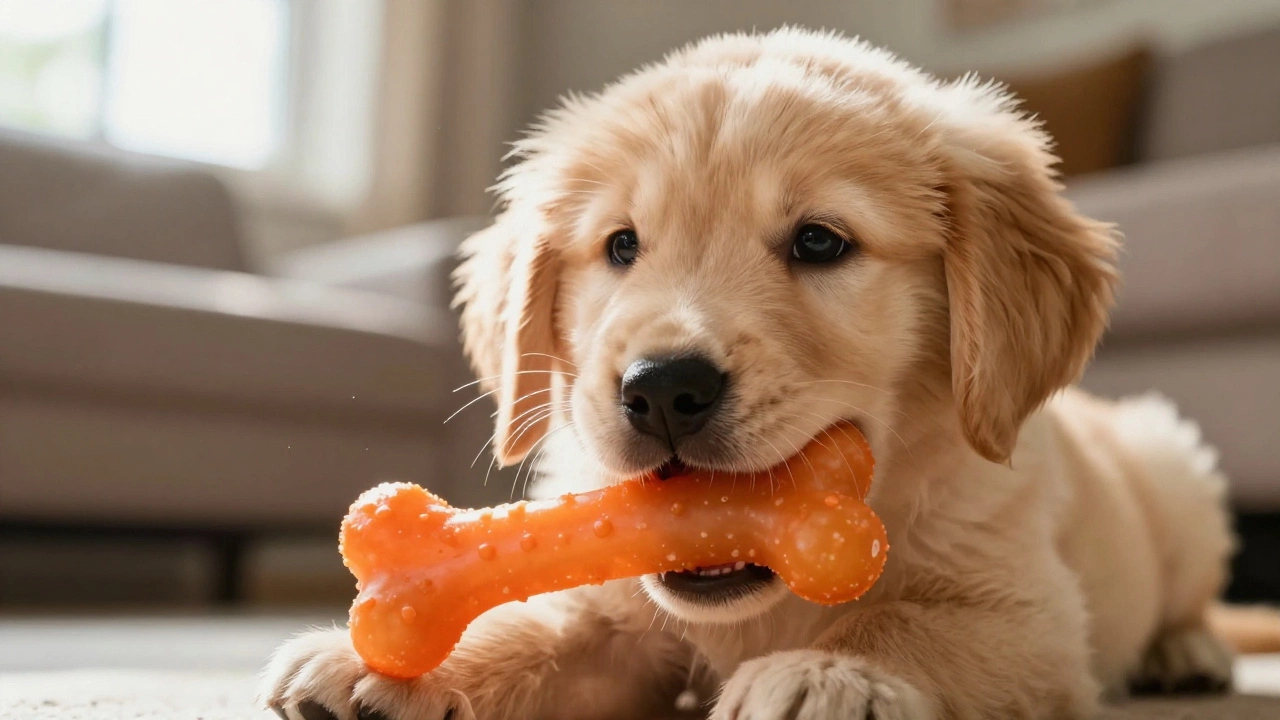
If your puppy is between three and six months old, they are likely teething. This process is uncomfortable, similar to how human babies feel when their first teeth erupt. Your puppy will seek out objects to gnaw on to relieve the pressure in their gums. During this window, the best toys are those that offer varying textures and temperatures.
Rubber Chew Toys are durable, flexible items designed to withstand aggressive chewing while massaging gums. Look for toys made from natural rubber or soft silicone. These materials provide enough resistance to satisfy the urge to chew without damaging emerging adult teeth.A simple trick many owners use is freezing these toys. A frozen rubber toy acts as a cold compress for inflamed gums. It also extends the playtime significantly because the puppy has to work harder to get the kibble or treats inside. Brands like Kong are industry standards here, but any solid, non-toxic rubber ring or bone shape works well. Avoid anything too hard, like antlers or nylon bones, which can crack puppy teeth.
Social Bonding: The Power of Plush and Squeakers
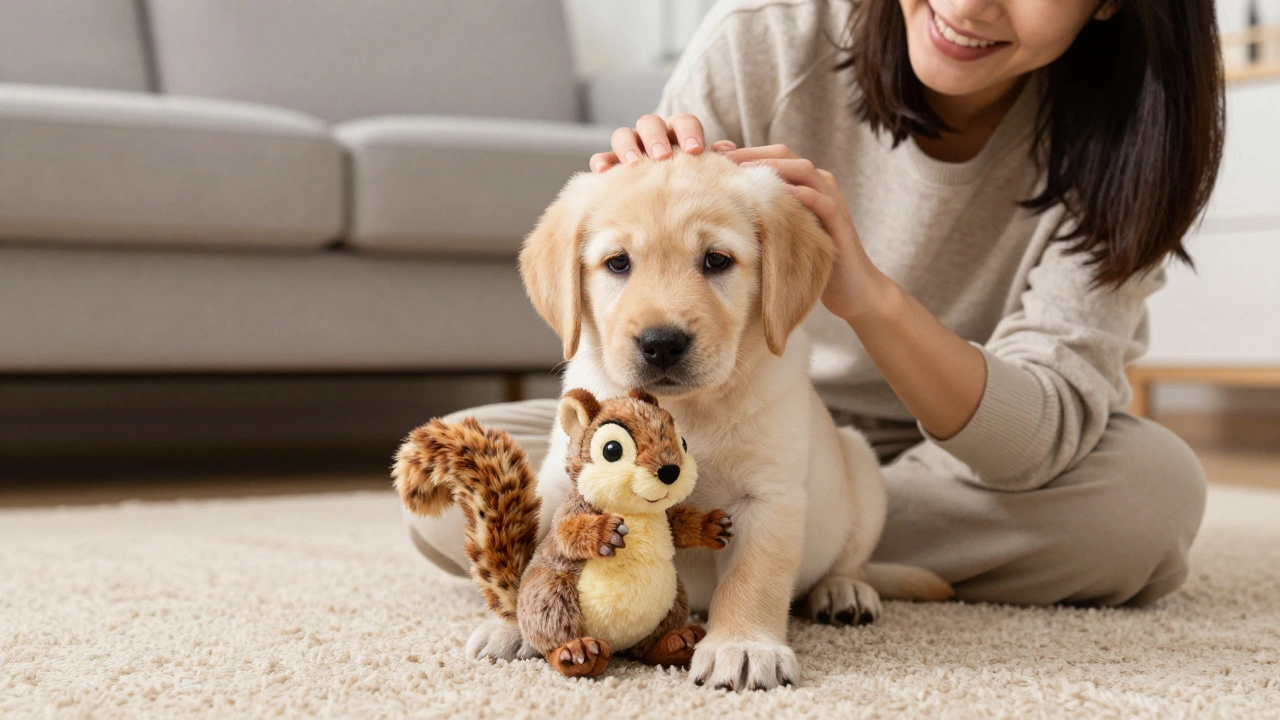
While chew toys handle the biological need to gnaw, plush toys address the social and comfort needs. Many puppies develop an attachment to a specific soft toy, carrying it around like a security blanket. This is normal and healthy behavior. However, not all plush toys are created equal.
For gentle retrievers or lap-dog breeds, a standard plush toy with a squeaker is perfect. The squeak triggers their prey drive, encouraging them to shake and bite, which mimics hunting behavior. For power chewers, however, plush toys are often a disaster waiting to happen. If your puppy rips the stuffing out within minutes, switch to a "tough plush" hybrid-these have reinforced stitching and no loose squeakers that can be swallowed.
Always supervise play with plush toys. If a part breaks off, remove the toy immediately. Ingesting stuffing or plastic squeakers can cause intestinal blockages, which are expensive and dangerous to fix.
Mental Stimulation: Interactive and Puzzle Toys
Puppies get bored easily. Boredom leads to mischief, and mischief leads to shredded curtains. Interactive toys bridge the gap between physical exercise and mental fatigue. A tired brain is just as important as a tired body.
| Toy Type | Best For | Skill Developed |
|---|---|---|
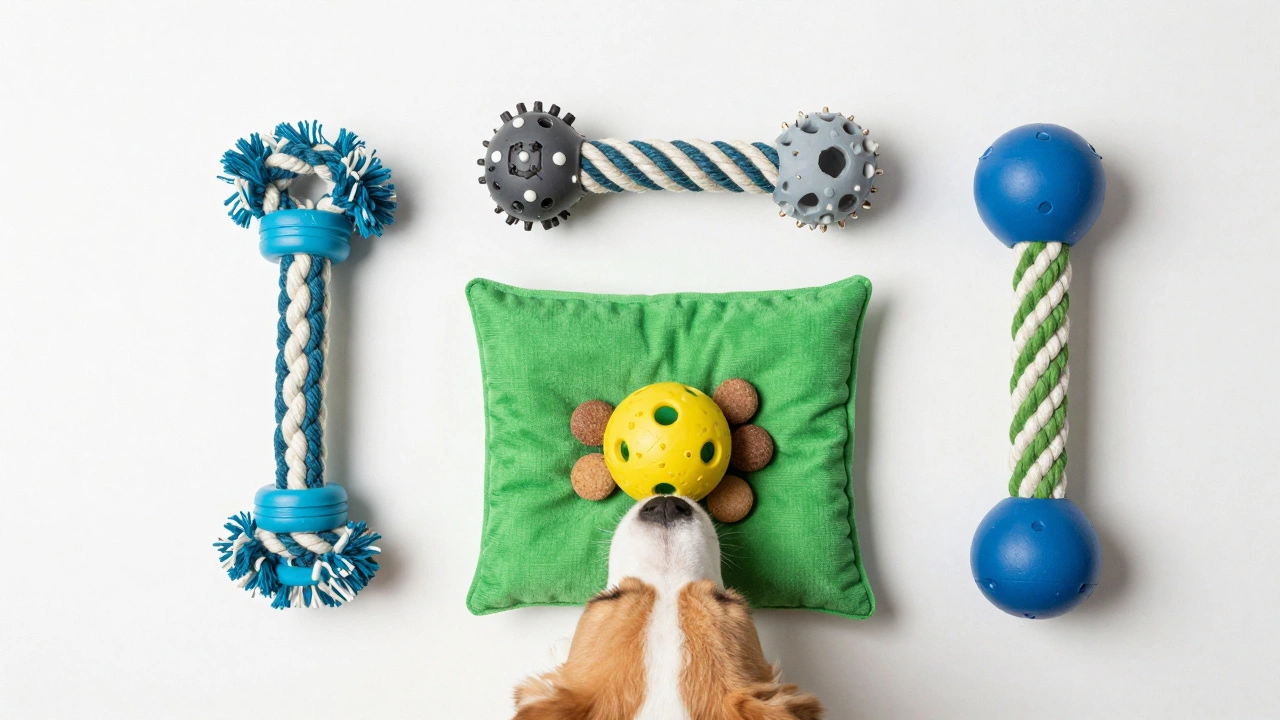
| Treat Dispenser Balls | High-energy breeds | Problem-solving, persistence |
| Snuffle Mats | Nose-focused dogs (Hounds, Terriers) | Scent tracking, calmness |
| Sliding Puzzle Boards | Intelligent breeds (Border Collies, Poodles) | Cognitive flexibility |
Treat dispenser balls are excellent for turning mealtime into playtime. Instead of eating out of a bowl, the puppy has to roll the ball to release a few kibble pieces. This slows down eating, which helps prevent bloat in deep-chested breeds, and keeps them engaged for longer. Snuffle mats are another fantastic option. They mimic the natural foraging behavior of dogs. By hiding treats in the fabric strips, you encourage your puppy to use their nose, which is incredibly calming for anxious pups.
Retrieval Games: Fetch and Tug
Most puppies love to chase. Fetch satisfies this instinct and provides great cardiovascular exercise. When choosing a fetch toy, consider size and durability. Tennis balls are popular, but the felt covering can wear down quickly and create choking hazards if ingested. Solid rubber balls or durable rope toys are safer alternatives.
Tug-of-war is often misunderstood. Many people think it encourages aggression, but when played correctly, it teaches impulse control. The key is to set rules: if teeth touch skin, the game stops. Use a dedicated tug toy with handles so your hands stay away from the puppy’s mouth. This game strengthens the bond between you and your dog and gives them a controlled outlet for their jaw strength.
Safety First: What to Avoid
Not every toy sold in stores is safe for puppies. Some products contain toxic materials, small detachable parts, or designs that pose choking risks. Here is a checklist of red flags:
- Small Parts: Eyes, noses, or buttons that can be ripped off and swallowed.
- Hard Materials: Antlers, hooves, or hard nylon that can fracture teeth.
- Toxic Fillings: Some plush toys are filled with Styrofoam beads, which are harmful if ingested.
- Elastic Bands: Rope toys with elastic cords can cause internal injuries if swallowed.
Always check the manufacturer’s weight and age recommendations. A toy meant for a large adult dog might be too heavy or too large for a small puppy, posing a swallowing risk. Conversely, a toy for a tiny breed might be too easy for a Labrador puppy to destroy.
Rotating Toys to Maintain Interest
You don’t need fifty toys for one puppy. In fact, having too many options can overwhelm them. A good rule of thumb is to keep three to five toys out at a time and rotate the rest every week. When a toy disappears for a while and then reappears, it feels new again. This strategy saves money and keeps play sessions exciting.
Observe your puppy’s preferences. Does he prefer shaking things? Then focus on plush toys with squeakers. Does she prefer carrying things? Then sturdy rubber rings or frisbees might be better. Tailoring the selection to their personality ensures they actually engage with the toys rather than ignoring them.
DIY and Household Alternatives
In a pinch, you can make safe toys from household items. Empty cardboard boxes are great for crinkling and batting around. Clean cotton t-shirts can be knotted together to make a tug rope. Always supervise these DIY toys, as they lack the durability of commercial products. Never give your puppy socks, underwear, or clothing with buttons, as these are major choking hazards.
Remember, the goal of play is connection and development. Whether you choose a high-tech puzzle feeder or a simple rubber bone, the most important ingredient is your involvement. Playing with your puppy teaches them how to interact with the world and with you, laying the foundation for a happy, well-adjusted adult dog.
Can I give my puppy a real bone?
No, you should avoid giving cooked bones, as they splinter and can cause serious internal injuries. Raw bones may be safer under veterinary guidance, but they carry risks of bacterial contamination and dental fractures. Synthetic chew toys are generally safer and more hygienic alternatives.
How do I know if a toy is too hard for my puppy?
Use the "tooth test." If you can write your name on the toy with a pen, it is too hard for your puppy’s teeth. Additionally, if the toy does not flex slightly when squeezed, it may pose a risk of tooth fracture during vigorous chewing.
Is it okay to leave toys out unsupervised?
Only if the toys are indestructible and appropriate for the puppy’s size. Soft plush toys, ropes, and toys with squeakers should always be supervised to prevent ingestion of stuffing or small parts. Rotate toys daily to maintain safety and interest.
Why does my puppy only want to chew on my shoes?
Shoes smell like you, which is comforting, and they have a satisfying texture for teething. To redirect this behavior, offer a designated chew toy whenever you see them going for your shoes. Make the toy more appealing by adding peanut butter or freezing it, and consistently praise them for choosing the correct item.
At what age can puppies start playing fetch?
Puppies can start short fetch sessions as early as eight weeks old, but keep them brief to protect their developing joints. Avoid high-impact jumping until they are older. Focus on rolling toys back and forth initially to build coordination and recall without excessive strain.