
Dog Protein Suitability Checker
Find the Safest Protein for Your Dog
Select your dog's profile below to get a vet-aligned recommendation.
Recommended Profile
Vet-Aligned--
Why this works:
--
Key Benefits:
Watch Out For:
You stand in the pet food aisle, staring at a wall of bags. One promises 'premium chicken,' another boasts 'grain-free lamb,' and a third highlights 'wild-caught salmon.' You want what’s best for your dog, but the labels are confusing, and the internet is full of conflicting advice. The truth is, there isn’t one single safest protein for every dog on the planet. However, there are clear winners when it comes to digestibility, safety records, and nutritional balance.
For the vast majority of healthy dogs, chicken remains the gold standard. It is highly digestible, affordable, and packed with essential amino acids. But if your dog has allergies or sensitivities, that same chicken might be the problem. Understanding which protein source fits your specific dog requires looking beyond marketing buzzwords and focusing on biological compatibility, processing methods, and individual health needs.
The Gold Standard: Why Chicken Is Usually the Safest Bet
When veterinarians talk about safe, reliable proteins, Chicken is the most commonly recommended protein source for dogs due to its high bioavailability and low allergen risk for the general population. Bioavailability refers to how easily your dog’s body can absorb and use the nutrients from the food. Chicken scores exceptionally high here. Most dogs break down chicken muscle meat with minimal effort, leaving little waste and maximizing energy uptake.
Chicken is also incredibly consistent. Unlike some exotic meats that vary wildly in quality depending on the season or region, commercial-grade chicken used in reputable dog foods undergoes strict safety testing. This consistency reduces the risk of contamination, such as Salmonella is a bacterial infection that can cause severe gastrointestinal distress in both dogs and humans. While raw chicken carries risks, properly cooked and processed chicken in kibble or canned food is virtually free from this threat.
Furthermore, chicken provides a complete amino acid profile. Dogs need nine essential amino acids that they cannot produce themselves, including taurine and arginine. Chicken contains all of these in the right ratios. For a growing puppy or an active adult, this means better muscle maintenance, stronger immune function, and healthier skin and coat without needing expensive supplements.
Beef: The Muscle Builder With Caveats
If chicken is the reliable daily driver, Beef is a dense, iron-rich protein source that supports muscle growth and energy levels in dogs. Beef is richer in zinc and iron than chicken, making it excellent for dogs who need a boost in stamina or those recovering from illness. Many owners choose beef because their dogs seem to enjoy the richer flavor, which can be helpful for picky eaters.
However, beef comes with two main caveats. First, it is more likely to trigger allergic reactions than chicken. Beef allergy is one of the top three food allergies in dogs, alongside chicken and wheat. If your dog scratches excessively, has recurrent ear infections, or suffers from chronic diarrhea, beef might be the culprit rather than the cure.
Second, beef is often higher in fat. While fat is necessary for energy, too much of it can lead to weight gain or pancreatitis, especially in smaller breeds like Pomeranians or Dachshunds. When choosing beef-based foods, look for lean cuts or formulas labeled 'light' if your dog tends to pack on pounds easily.
Novel Proteins: The Solution for Allergic Dogs
What happens when chicken and beef don’t work? This is where Novel proteins are uncommon meat sources that a dog has not been exposed to before, reducing the risk of allergic reaction. become critical. A novel protein is simply a meat source your dog hasn't eaten regularly in the past. Common options include venison, duck, rabbit, kangaroo, and bison.
Venison is a lean, wild game meat that serves as an excellent alternative for dogs with poultry or beef allergies. Venison is particularly popular because it is leaner than beef and less common in standard diets, meaning most dogs haven't developed sensitivities to it. It’s also rich in B vitamins, which support metabolism.
Duck is another strong contender. It is slightly fattier than venison but still easier to digest than beef for many sensitive stomachs. Rabbit is perhaps the purest option; it is extremely lean and hypoallergenic, often used in veterinary prescription diets for severe cases. If your dog has been diagnosed with a food intolerance, switching to a limited-ingredient diet featuring a novel protein like duck or rabbit is usually the first step vets recommend.
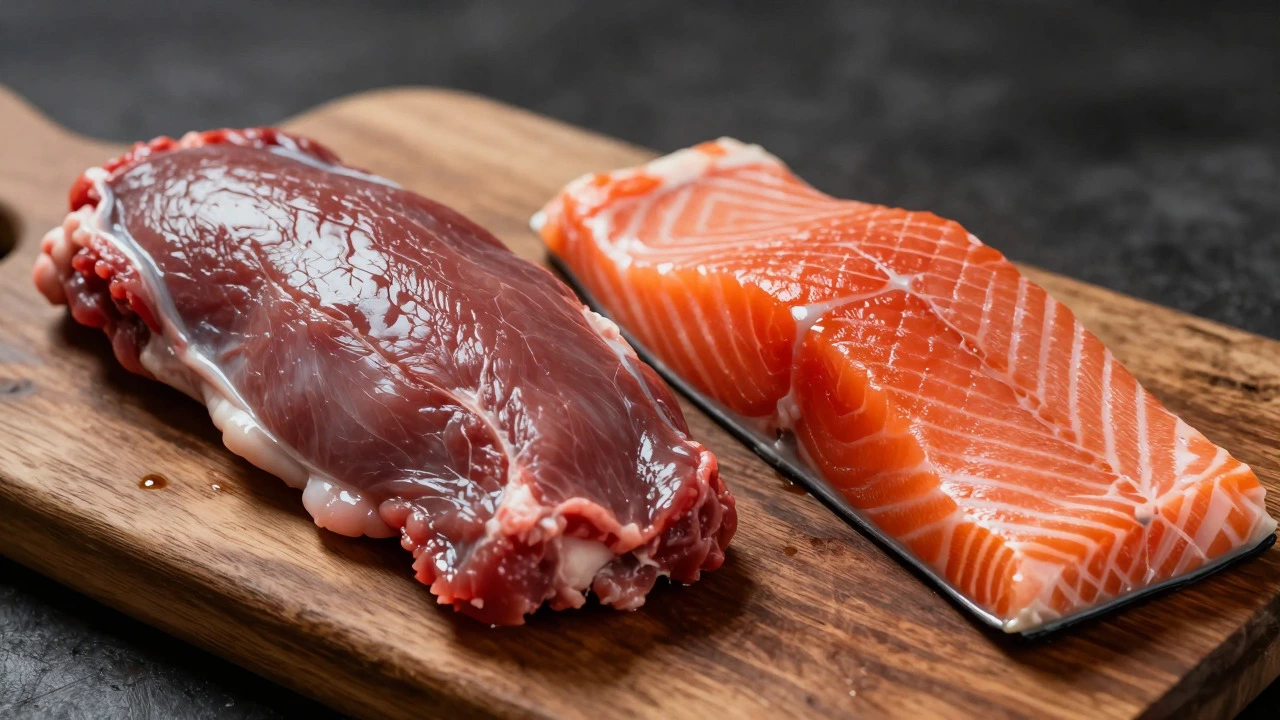
Fish: The Omega-Rich Alternative
Fish isn't just a treat; it’s a serious dietary protein. Salmon is a fatty fish rich in Omega-3 fatty acids that reduce inflammation and improve coat health in dogs. Salmon is unique because it offers dual benefits: high-quality protein and anti-inflammatory fats. The Omega-3s (EPA and DHA) help soothe arthritic joints, calm itchy skin, and support brain health in aging dogs.
Whitefish, such as cod or hake, is another safe option. These are leaner than salmon and have a mild flavor that most dogs accept easily. They are also lower in mercury risk compared to larger predatory fish, provided they come from sustainable sources. Fish-based diets are ideal for dogs with inflammatory conditions or those who need a break from red meat and poultry.
Plant-Based Proteins: Safe or Risky?
With the rise of veganism, some owners wonder if plant-based proteins are safe for dogs. Technically, yes, but with major reservations. Dogs are facultative carnivores, meaning they can survive on plants but thrive on meat. Plant proteins like soy, pea, and lentil lack certain amino acids in sufficient quantities unless heavily supplemented.
Soy is controversial. While non-GMO soy is generally safe and highly digestible, it is a common allergen. Pea protein has gained popularity in grain-free diets, but it has been scrutinized in relation to Dilated Cardiomyopathy (DCM), a heart condition linked to certain grain-free ingredients. While the link isn't fully proven, many vets advise caution with high-pea-protein diets unless medically necessary. For most dogs, animal-based proteins remain safer and more biologically appropriate.
Comparing Top Protein Sources for Dogs
| Protein Source | Digestibility | Allergy Risk | Best For | Key Nutrient Benefit |
|---|---|---|---|---|
| Chicken | High | Low (General) | Most healthy dogs | Balanced amino acids |
| Beef | Medium-High | Medium | Active dogs, muscle building | Zinc, Iron |
| Venison | High | Very Low | Allergic dogs | B Vitamins, Lean protein |
| Salmon | High | Low | Skin/coat issues, arthritis | Omega-3 Fatty Acids |
| Rabbit | Very High | Very Low | Severe allergies, sensitive stomachs | Hypoallergenic purity |
| Soy | Medium | High | Vegan diets (supplemented) | Affordability |

Red Flags: Proteins to Approach With Caution
Not all proteins are created equal, and some carry hidden dangers. Raw diets, while popular, introduce significant risks. Raw feeding is a diet consisting of uncooked meat, bones, and organs that carries risks of bacterial contamination and nutritional imbalance. Unless you are following a strictly formulated recipe from a veterinary nutritionist, raw meat can harbor Salmonella, E. coli, and Listeria. These bacteria can make your dog sick and even spread to your family.
Another concern is 'meat by-products.' While the term sounds scary, regulated by-products like liver, lungs, and spleen are actually nutritious and safe. However, vague terms like 'animal digest' or 'poultry meal' without specifying the source can indicate lower quality. Always look for named sources, such as 'chicken meal' rather than just 'meat meal.'
Also, beware of excessive fillers disguised as protein. Some cheap brands use corn gluten meal or wheat gluten to boost protein numbers on the label. While these provide protein, they are hard for dogs to digest and offer poor nutritional value compared to true meat sources.
How to Choose the Right Protein for Your Dog
Selecting the safest protein isn't just about picking the most expensive bag. It’s about matching the food to your dog’s life stage, activity level, and health history. Here is a simple decision framework:
- Healthy Adult Dog: Stick with high-quality chicken or turkey. These are cost-effective, digestible, and nutritionally complete.
- Puppy: Prioritize highly digestible proteins like chicken or lamb to support rapid growth. Ensure the food meets AAFCO standards for growth.
- Senior Dog: Consider salmon or whitefish. The added Omega-3s help with joint pain and cognitive decline, while the lighter protein is easier on aging kidneys.
- Active/Working Dog: Beef or venison provides the dense calories and muscle-repairing amino acids needed for high exertion.
- Food Allergy Sufferer: Work with your vet to identify triggers. Once known, switch to a novel protein like duck, rabbit, or kangaroo in a limited-ingredient diet.
Always transition slowly. Mix the new food with the old over 7-10 days to avoid digestive upset. Watch for changes in stool consistency, energy levels, and coat shine. These are your real-time indicators of whether the protein is working for your dog.
Understanding Labels: What Really Matters
Marketing language can obscure the truth. Phrases like 'made with real chicken' don't guarantee chicken is the primary ingredient. In the US and many other regions, ingredients are listed by weight before cooking. Moisture-heavy ingredients like fresh meat may appear first but contribute less dry matter than concentrated meals.
Look for 'named' proteins. Instead of 'meat,' you should see 'chicken,' 'beef,' or 'salmon.' Also, check the guaranteed analysis. A good dog food will have a crude protein content between 20% and 30% for adults, and higher for puppies. Remember, percentage alone doesn't tell the whole story; source matters more. Ten percent named chicken meal is often superior to twenty percent generic 'animal protein.'
Finally, trust reputable brands. Companies that employ board-certified veterinary nutritionists and conduct feeding trials are investing in safety. They test for contaminants, ensure nutritional balance, and monitor long-term health outcomes. This diligence makes their products significantly safer than budget brands cutting corners on sourcing and testing.
Is chicken really the safest protein for all dogs?
For the majority of dogs without specific allergies, yes. Chicken is highly digestible, widely available, and nutritionally balanced. However, for dogs with poultry allergies, it is the worst choice. Always consider your dog's individual health history.
What is the best protein for dogs with allergies?
Novel proteins like venison, duck, rabbit, or kangaroo are best. These are meats most dogs haven't been exposed to, reducing the likelihood of an allergic reaction. Hydrolyzed protein diets, where the protein is broken down into tiny particles, are also effective for severe cases.
Can dogs eat plant-based proteins safely?
Yes, but they require careful formulation. Plant proteins like soy and peas are less bioavailable than animal proteins. Vegan diets must be supplemented with taurine, L-carnitine, and Vitamin B12 to prevent deficiencies. Consult a vet before switching to a plant-based diet.
Is raw protein safer than cooked kibble?
Generally, no. Cooked kibble from reputable brands is safer due to heat treatment that kills bacteria like Salmonella and E. coli. Raw diets carry higher risks of bacterial contamination and nutritional imbalances unless meticulously prepared by experts.
How do I know if my dog is allergic to a protein?
Signs include chronic itching, ear infections, hot spots, vomiting, or diarrhea. The only way to confirm a food allergy is through an elimination diet trial, where you feed a novel protein exclusively for 8-12 weeks under veterinary supervision.