
Vitamin D Dosage Calculator for Dogs
How Much Vitamin D Does Your Dog Need?
Vitamin D is crucial for your dog's bone health, muscle function, and heart rhythm. This calculator determines the safe daily dosage based on your dog's weight. Always consult your veterinarian before supplementing.
Dosage Results
Safe Daily Dosage:
-- IU
Based on AAFCO standards (1,000 IU per 10 kg body weight)Toxicity Risk:
Important Safety Information
DO NOT EXCEED the calculated safe dosage. Vitamin D toxicity can occur at just 2-3x the safe amount and may cause kidney damage, vomiting, and lethargy.
Never use human supplements - they often contain dangerously high vitamin D levels and may include toxic ingredients like xylitol.
Signs of toxicity appear within 12-48 hours: vomiting, increased thirst, weakness, and kidney failure. Contact your veterinarian immediately if you suspect poisoning.
There’s no single vitamin that does it all for your dog, but if you had to pick one that keeps the whole system running, it’s vitamin D. Unlike humans, dogs can’t make enough of it from sunlight alone. Their bodies rely on diet to get the right amount-and getting it wrong can lead to serious problems.
Why Vitamin D Matters More Than You Think
Vitamin D isn’t just about bones. It’s the master regulator of calcium and phosphorus in your dog’s bloodstream. Without enough, their muscles can’t contract properly, their heart rhythm gets shaky, and their bones start to soften. Too much? That’s just as dangerous-it can cause kidney damage, vomiting, lethargy, and even death.
Most commercial dog foods are formulated to hit the sweet spot. But if your dog eats homemade meals, scraps, or low-quality kibble, they could be falling short. A 2023 study from the University of Edinburgh tracked 1,200 dogs on home-prepared diets and found that 37% had dangerously low vitamin D levels-even when their owners thought they were feeding "balanced" meals.
What Happens When Dogs Don’t Get Enough
Early signs of vitamin D deficiency are subtle. Your dog might seem slower to get up in the morning, avoid jumping onto the couch, or limp after a walk. These aren’t just signs of aging-they could be early indicators of rickets in puppies or osteomalacia in adults. Their jawbones may weaken, teeth loosen, or their spine curve unnaturally.
One real case from a vet clinic in Wellington involved a 9-month-old Labrador who stopped playing fetch. X-rays showed his leg bones were bending under his own weight. His diet? Homemade chicken and rice with occasional table scraps. No supplements. No fortified food. His vitamin D level was below 10 ng/mL-normal is 30-100.
Can Dogs Get Vitamin D from Sunlight?
No. Dogs have fur. Their skin doesn’t convert sunlight into vitamin D like ours does. Even if your dog spends all day in the backyard, they’re not making any. That’s a myth that gets repeated too often. The vitamin D they need comes from their food.
Some pet owners think giving their dog fish oil or cod liver oil will solve everything. While those contain vitamin D, they’re not reliable sources. The amount varies wildly between brands, and too much can push your dog into toxicity. Cod liver oil also has high levels of vitamin A, which can cause bone issues on its own if overused.
What Foods Actually Contain Vitamin D for Dogs
Not all sources are equal. The best natural sources are:
- Fatty fish: salmon, sardines, mackerel (cooked, no seasoning)
- Beef liver (in small amounts-once a week max)
- Egg yolks (from pasture-raised chickens)
- Fortified dog food (look for "vitamin D3" on the label)
Plant-based sources like mushrooms or spinach? Useless. Dogs can’t convert plant-based vitamin D2 into the active form they need. Stick to animal-based sources.
How Much Is Too Much?
The safe upper limit for adult dogs is about 1,000 IU per 10 kg of body weight per day. That’s roughly 10,000 IU for a 100-pound dog. But here’s the catch: toxicity can happen with just 2-3 times that amount in a single dose.
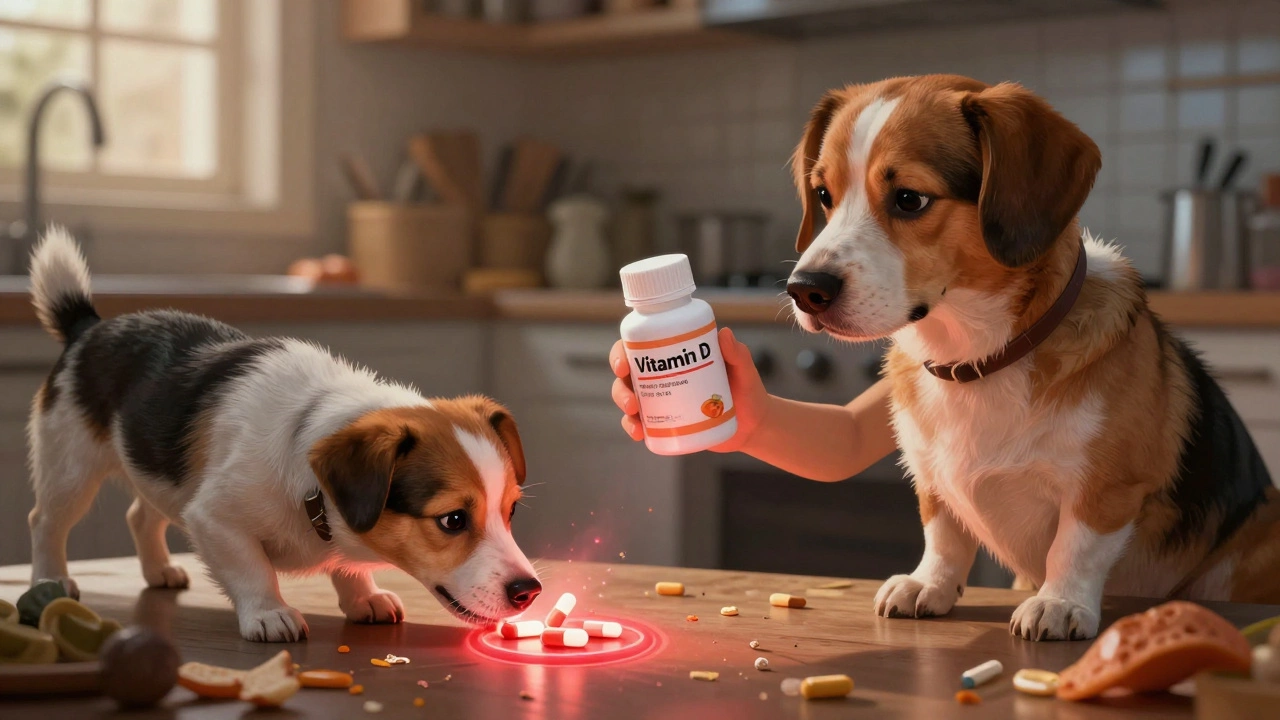
Most cases of vitamin D poisoning come from accidental ingestion of human supplements. A single 5,000 IU pill can poison a small dog. One 10,000 IU capsule can kill a medium-sized one. Vets in New Zealand saw a 40% spike in vitamin D poisoning cases between 2022 and 2025-mostly because owners thought "more is better" and left pills within reach.
Symptoms of toxicity show up within 12-48 hours: vomiting, loss of appetite, increased thirst and urination, weakness, and eventually kidney failure. If you suspect your dog swallowed a supplement, go to the vet immediately. There’s no home remedy.
Should You Give Your Dog a Vitamin Supplement?
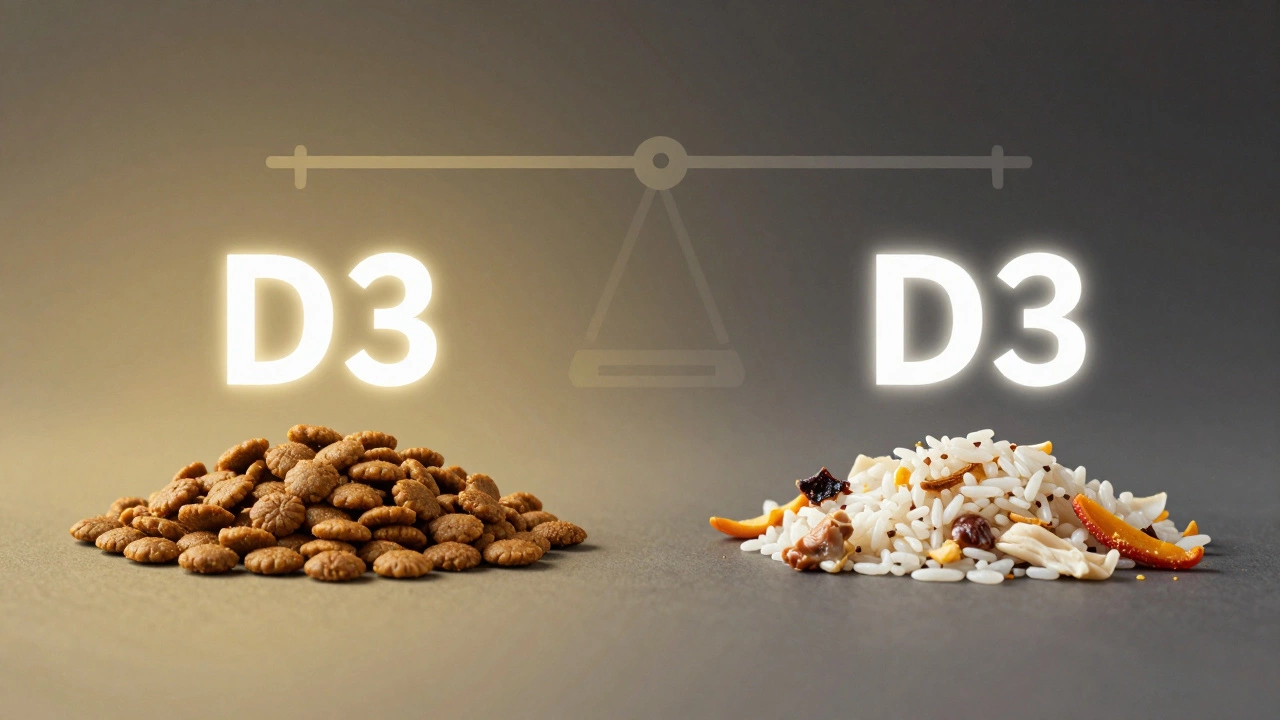
If you feed a complete and balanced commercial dog food-yes, even the cheaper brands-your dog likely doesn’t need extra vitamins. The AAFCO standards require all major brands to meet minimum vitamin levels, including D.
But if you cook for your dog, you need a supplement. Not just any one, though. Look for a vet-formulated canine multivitamin that includes vitamin D3 (not D2), calcium, and phosphorus in the right ratios. Brands like VetriScience or Nutramax are commonly recommended by veterinarians in New Zealand and Australia.
Never use human multivitamins. They often contain xylitol (deadly to dogs), iron (toxic in high doses), or vitamin D levels that are 10-50 times too high.
When to Talk to Your Vet
Call your vet if your dog:
- Has been on a homemade diet for more than a few weeks
- Is losing weight despite eating well
- Shows signs of muscle weakness or limping
- Has been exposed to human supplements
Your vet can run a simple blood test to check 25-hydroxyvitamin D levels. It costs around $80-$120 in New Zealand and gives you a clear picture of where your dog stands. Don’t guess. Don’t rely on online forums. This isn’t a trial-and-error situation.
The Bottom Line
Vitamin D isn’t the only important vitamin for dogs-B vitamins, vitamin E, and vitamin K all play critical roles. But without enough D, the rest can’t work properly. It’s the linchpin. Most dogs get it right from good-quality kibble. If you’re cooking, you’re responsible for filling the gap. And if you’re ever unsure, a blood test is cheaper than a hospital bill.
Don’t assume your dog is fine because they look healthy. Their bones and heart are working behind the scenes-and they’re only as strong as their vitamin levels.
Can dogs get vitamin D from sunlight like humans?
No. Dogs have fur that blocks the UV rays needed to produce vitamin D in their skin. Unlike humans, they must get all their vitamin D from food. Sunlight exposure doesn’t help, no matter how long they spend outside.
Is vitamin D3 better than vitamin D2 for dogs?
Yes. Dogs can only use vitamin D3 (cholecalciferol), which comes from animal sources like fish oil or liver. Vitamin D2 (ergocalciferol), found in plants and some supplements, is not effectively converted by dogs and provides little to no benefit.
Can I give my dog human vitamin D supplements?
Never. Human vitamin D supplements often contain doses hundreds or thousands of times higher than what a dog needs. Even one pill can cause poisoning. Many also contain xylitol or other ingredients toxic to dogs. Always use vet-approved canine-specific supplements.
What are the signs of vitamin D toxicity in dogs?
Signs include vomiting, loss of appetite, increased thirst and urination, lethargy, weakness, and in severe cases, kidney failure. Symptoms usually appear within 12 to 48 hours after ingestion. If you suspect poisoning, go to the vet immediately-this is a medical emergency.
Do all commercial dog foods have enough vitamin D?
Yes, if they meet AAFCO standards. Reputable brands formulate their food to include the minimum required vitamin D levels. Check the label for "vitamin D3" listed in the ingredients. If you’re feeding a premium or grain-free brand, it’s even more likely to be properly balanced. Homemade diets are the main risk.