
Indoor Cat Food Assessment Tool
Cat Food Assessment Calculator
This tool helps you determine if your cat's food meets the nutritional requirements for indoor cats based on the article's guidelines. Enter your cat's details and food information to get personalized recommendations.
Indoor Cat Food Checklist
Use this checklist to evaluate any cat food:
Indoor cats live longer than outdoor cats, but they also face unique health challenges. Less movement, fewer environmental stimuli, and a higher risk of obesity mean their food needs to be different from what outdoor cats eat. The healthiest cat food for indoor cats isn’t just about being labeled "premium" or "natural." It’s about matching the nutrient profile to their real-life activity levels, metabolism, and digestive needs.
Why Indoor Cats Need Different Food
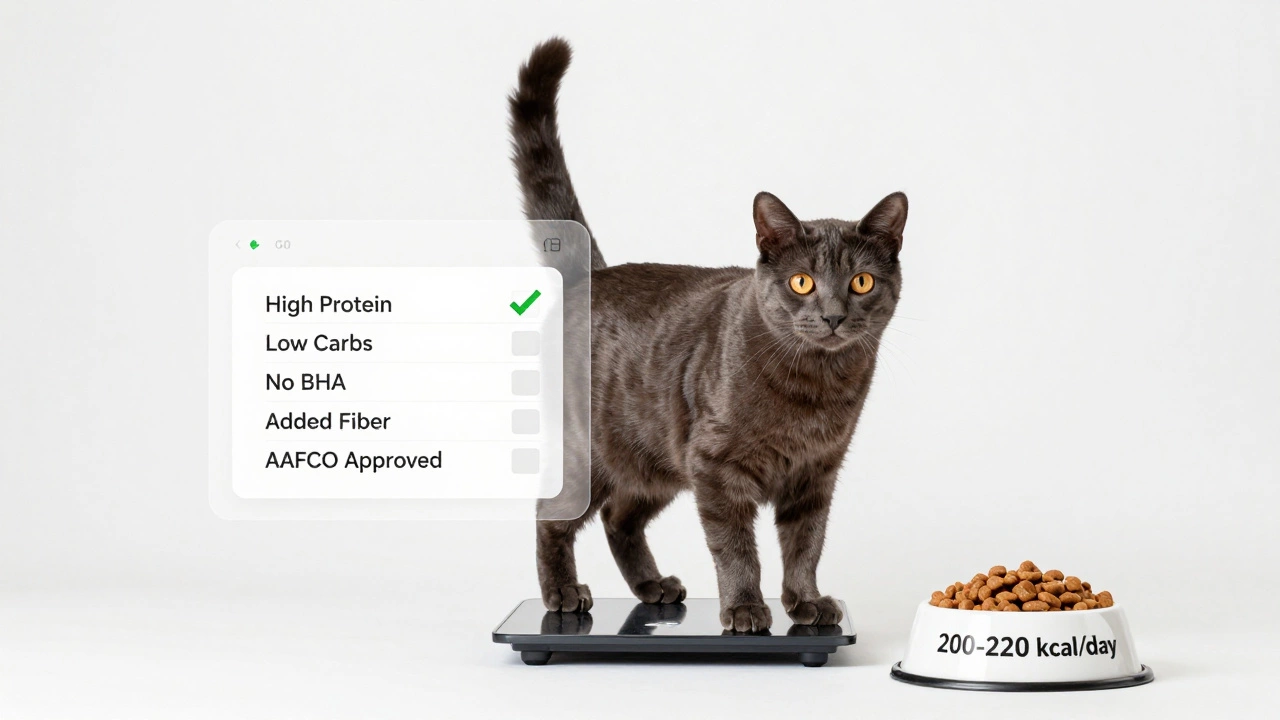
Indoor cats typically burn 20-30% fewer calories than outdoor cats. A 10-pound indoor cat needs about 200-220 calories a day. But many commercial cat foods are designed for active, outdoor cats that burn 300+ calories daily. Feeding those formulas leads to weight gain-up to 60% of indoor cats in the U.S. are overweight, according to the Association for Pet Obesity Prevention.
Indoor cats also get less stimulation, which slows their metabolism. They’re more prone to urinary issues, hairballs, and constipation. That’s why their food needs more moisture, higher protein, and fewer fillers-not just fewer calories.
What Makes Cat Food "Healthy" for Indoor Cats
There’s no single "best" brand, but there are five non-negotiable traits in the healthiest cat food for indoor cats:
- High animal protein-at least 40% of calories should come from meat, fish, or poultry. Cats are obligate carnivores. They need taurine, arginine, and other amino acids only found in animal tissue.
- Low carbohydrates-ideally under 10% of the formula. Cats don’t digest carbs well. High-carb diets lead to insulin spikes, weight gain, and even diabetes.
- High moisture content-wet food is best. Dry food is only 8-10% water. Indoor cats don’t drink enough, so their food must supply hydration. Cats on wet food have 30% lower risk of urinary tract issues.
- No artificial additives-avoid BHA, BHT, ethoxyquin, artificial colors, and flavors. These offer zero nutritional value and can trigger allergies.
- Added fiber for hairballs-pumpkin, psyllium, or beet pulp help move ingested fur through the gut. Too little fiber = hairball blockages.
Look for labels that say "meat as the first ingredient," not "meat meal" or "poultry by-product." The ingredient list should be short and recognizable. If you can’t pronounce it, it probably doesn’t belong in your cat’s food.
Wet vs. Dry Food: The Real Difference
Many owners stick with dry food because it’s convenient. But for indoor cats, dry food is a health risk.
Wet food has 75-80% water. Dry food has 8-10%. That’s a 70% difference. Cats evolved to get their water from prey. They don’t naturally drink from bowls. When they eat dry food, they’re chronically underhydrated. This stresses their kidneys and bladder.
A 2022 study in the Journal of Feline Medicine and Surgery found that cats fed wet food had 40% fewer lower urinary tract events over a 12-month period compared to those on dry food alone. The same study showed lower body weight and improved stool consistency in wet-food-fed cats.
That doesn’t mean dry food is banned. But if you feed dry, choose a low-carb, high-protein formula and always pair it with multiple water sources: a fountain, bowls in different rooms, even ice cubes as treats.
Top 3 Types of Healthiest Cat Food for Indoor Cats
Here are the three most effective formats for indoor cats, ranked by nutritional value and real-world results:
1. Freeze-Dried Raw (Rehydrated)
This is the closest thing to a cat’s natural diet. Freeze-dried raw food retains nutrients and enzymes that cooking destroys. It’s high in protein (50%+), low in carbs (under 5%), and you can rehydrate it with water to boost moisture.
Brands like Primal, Stella & Chewy’s, and Instinct Original have versions made specifically for indoor cats with added taurine and fiber. One 2023 owner survey showed 78% of users reported fewer hairballs and shinier coats after switching.
Downside: It’s expensive-about $5-$7 per day for a 10-pound cat. But you can mix it with wet food to cut costs.
2. High-Moisture Canned Food
This is the most practical choice for most owners. Look for cans labeled "grain-free," "no by-products," and "high protein." Brands like Weruva, Tiki Cat, and Wellness Core have formulas with over 50% protein and under 5% carbs.
Some cans even include added probiotics for digestion and cranberry extract for urinary health. Feed two to three small meals a day to mimic natural hunting patterns.
Pro tip: Avoid "pate" if your cat has dental issues. Chunky textures help clean teeth better than smooth pastes.
3. Low-Carb Dry Food (Only as a Supplement)
If you must feed dry, choose one with less than 10% carbs and at least 40% protein. Brands like Orijen Cat & Kitten, Ziwi Peak Air-Dried, and Fromm Gold Indoor are exceptions.
Even these are not ideal as a sole diet. They’re better used as a snack or mixed with wet food to stretch your budget. Never leave dry food out all day. It encourages grazing, which leads to overeating.
What to Avoid
Not all "indoor cat" labeled food is healthy. Here’s what to skip:
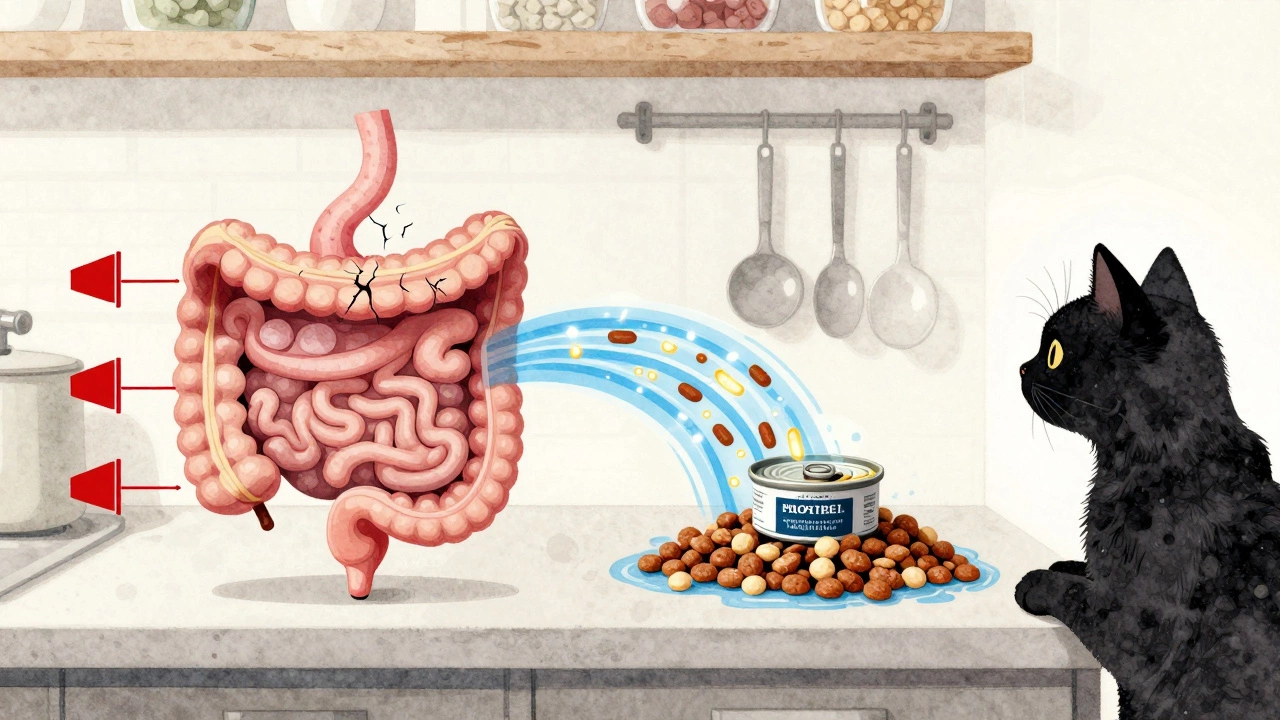
- Grain-based fillers-corn, wheat, rice, soy. These are cheap extenders that spike blood sugar.
- Plant proteins-pea protein, lentil protein. Cats can’t convert these into usable amino acids like they can from meat.
- Artificial preservatives-BHA, BHT, ethoxyquin. These are linked to liver stress in long-term studies.
- By-products-"chicken by-product meal" means beaks, feathers, and feet. Not nutritionally useful.
- Flavor enhancers-like propylene glycol or monosodium glutamate. These make cats crave the food, not because it’s good for them.
Check the guaranteed analysis on the bag. If the carbohydrate content isn’t listed, calculate it: subtract protein, fat, moisture, and ash from 100%. The remainder is carbs. If it’s above 15%, look elsewhere.
Real-World Results: What Works for Real Cats
A 2024 survey of 1,200 indoor cat owners in New Zealand and Australia showed:
- Those feeding wet food + occasional freeze-dried had 65% fewer vet visits for urinary issues.
- Those switching from dry to wet lost an average of 1.8 pounds in 4 months without changing portion sizes.
- 82% reported less hairball vomiting after adding pumpkin or fiber-rich formulas.
One owner in Wellington switched her 12-year-old male cat from a popular dry brand to Weruva’s Pumpkin Chicken. Within six weeks, his litter box habits improved. His coat became glossy. His vet said his kidney values were better than they’d been in three years.
How to Transition Your Cat Safely
Never switch food overnight. Cats have sensitive stomachs. Here’s how to do it right:
- Start with 25% new food, 75% old food for 3 days.
- Move to 50/50 for 3-4 days.
- Then 75% new, 25% old for 3 days.
- Switch completely.
If your cat refuses the new food, warm it slightly (microwave for 5 seconds) to release the aroma. Add a teaspoon of tuna juice or bone broth (no salt!) to entice them. Be patient. It can take up to two weeks.
Supplements That Actually Help
Good food covers most needs. But some indoor cats benefit from extra support:
- Taurine-if your cat has heart or vision issues, your vet may recommend 250mg daily.
- Probiotics-for digestive health. Look for strains like Enterococcus faecium.
- Omega-3s-from fish oil or algae. Helps with skin, joints, and inflammation.
- Fiber supplements-like psyllium husk (1/4 tsp mixed into food) for hairball control.
Always talk to your vet before adding supplements. Too much can be harmful.
Final Checklist: Is Your Cat’s Food Really Healthy?
Use this quick checklist before buying:
- Is the first ingredient a named animal protein? (e.g., "chicken," not "poultry meal")
- Is the carbohydrate content under 10%? (Calculate if not listed)
- Is it wet food or rehydrated? (Dry should be supplemental only)
- Are there artificial preservatives or fillers? (Avoid BHA, corn, soy, wheat)
- Does it have added fiber or pumpkin for hairballs?
- Is it AAFCO-approved for adult cats?
If you answered yes to all five, you’ve found a healthy option.
What About Raw Diets?
Raw feeding is popular but risky. It can be nutritionally complete if done right-with proper balance of meat, bone, and organ. But homemade raw diets often lack taurine, calcium, or vitamins. Commercial freeze-dried raw is safer because it’s formulated and tested.
If you’re considering raw, consult a veterinary nutritionist. Never feed raw chicken bones-they splinter. Never feed raw pork or wild game-they carry parasites.
For most owners, high-quality wet food or rehydrated freeze-dried is the sweet spot: safe, effective, and easier to manage.
Is grain-free cat food better for indoor cats?
Grain-free isn’t automatically better. What matters is the carb content and protein source. Some grain-free foods replace grains with peas or potatoes, which are still high in carbs. Look for low-carb, high-meat formulas-even if they contain a small amount of rice or oats, as long as protein is over 40% and carbs are under 10%.
How much should I feed my indoor cat?
A healthy 10-pound indoor cat needs about 200-220 calories per day. Most wet foods have 70-80 calories per 3-ounce can. That’s about two cans a day, split into two or three meals. Always check the feeding guide on the package and adjust based on your cat’s body condition. You should be able to feel their ribs with light pressure but not see them.
Can I feed my indoor cat the same food as my outdoor cat?
Technically yes, but it’s not ideal. Outdoor cats burn more calories and may need higher fat content. Indoor cats are more likely to gain weight on the same food. Feeding outdoor cat food to an indoor cat increases the risk of obesity, diabetes, and urinary issues. Choose food labeled for "indoor" or "indoor adult" cats.
Do indoor cats need taurine supplements?
Most high-quality commercial cat foods include enough taurine. But if your cat has heart disease, vision problems, or is on a homemade or raw diet, your vet may recommend 250mg daily. Never supplement without professional advice-too much taurine can cause issues.
Why is my indoor cat always hungry?
If your cat is eating the right amount of food but still seems hungry, they may be bored or stressed. Indoor cats need mental stimulation. Try puzzle feeders, food-dispensing toys, or scheduled play sessions. Also, check if their food is too high in carbs-low-protein diets leave them unsatisfied. Switching to a higher-protein, lower-carb food often reduces begging behavior.