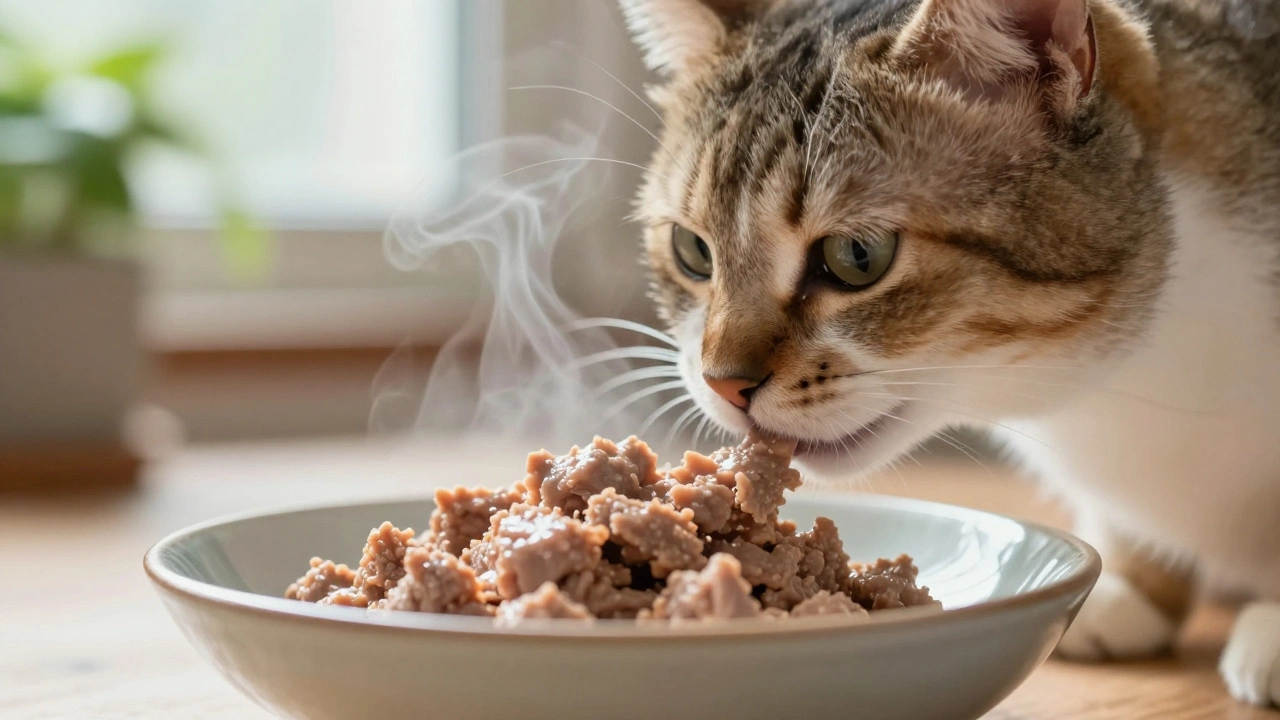
Cat Food Checker for Sensitive Stomachs
Check Your Cat's Food
Based on research showing 60% of chronic vomiting relates to diet, this tool helps you identify cat foods that may reduce your cat's vomiting episodes.
Results
When your cat throws up regularly, it’s not just messy-it’s worrying. You’ve tried changing brands, switching to wet food, even fasting them for a day. But nothing seems to stick. The truth? Not all cat foods are built the same when it comes to sensitive stomachs. The best cat food for cats that throw up isn’t about fancy ingredients or high price tags. It’s about simplicity, digestibility, and avoiding triggers that upset their system.
Why Cats Throw Up After Eating
It’s easy to assume vomiting means your cat is sick, but in many cases, it’s just food-related. Cats have fast-moving digestive tracts. If they eat too fast, gulp air, or get food with fillers they can’t process, their body reacts by ejecting it. Studies from the University of California, Davis show that over 60% of chronic vomiting in cats is linked to diet, not disease. That means you can often fix it without a vet visit-if you pick the right food.
Common dietary triggers include:
- High carbohydrate content (corn, wheat, rice)
- Artificial preservatives like BHA or BHT
- By-products and vague meat sources ("meat meal" without specifying the animal)
- Too many novel proteins or sudden diet switches
These ingredients don’t cause harm to every cat, but if your cat throws up once or twice a week, they’re likely sensitive to one or more of them.
What to Look for in Cat Food for Vomiting
You don’t need to read every ingredient list like a chemistry textbook. But you do need to know what matters. Here’s what actually helps:
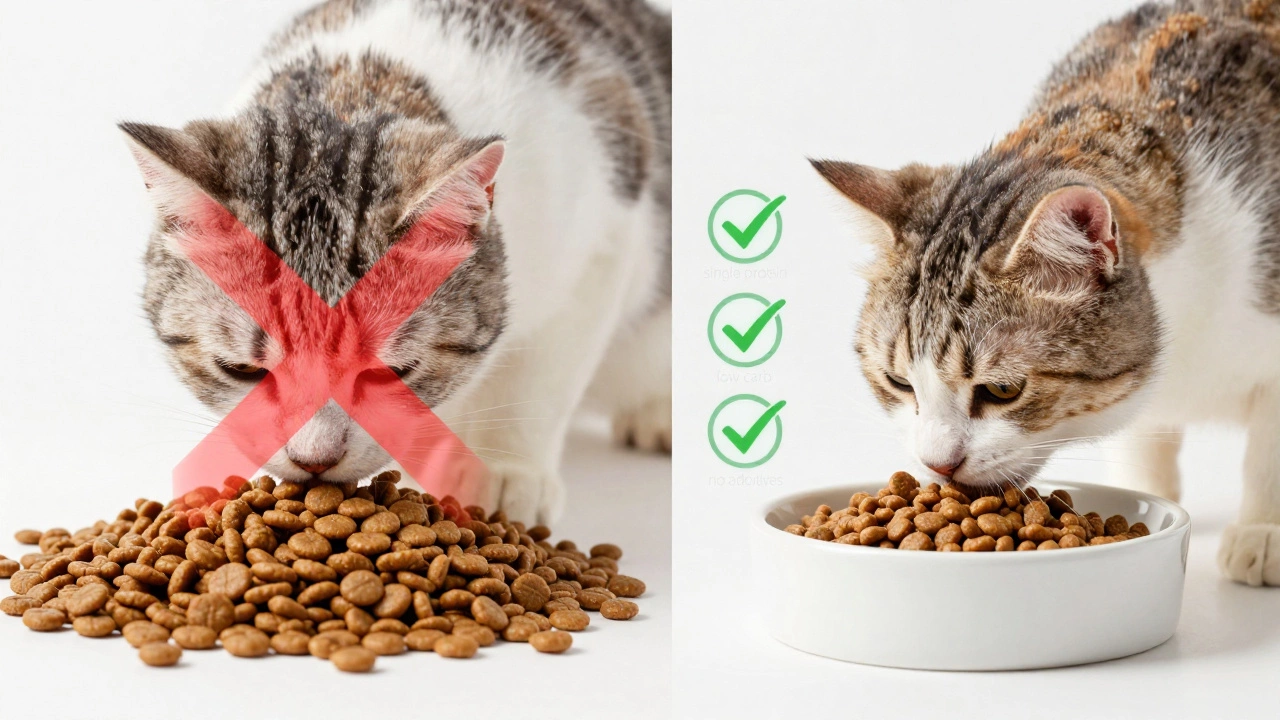
- Single animal protein source-like chicken, turkey, or salmon. No "poultry meal" or "fish blend." Just one clear meat.
- Low carbohydrate content-under 10% on a dry matter basis. Most wet foods naturally hit this mark.
- No artificial additives-skip foods with colors, flavors, or preservatives labeled "BHA," "ethoxyquin," or "propylene glycol."
- High moisture content-wet food is 70-80% water. This helps digestion and reduces stomach irritation.
- Added taurine and prebiotics-taurine supports heart and eye health, while prebiotics like FOS help good gut bacteria thrive.
Many premium brands market "sensitive stomach" formulas, but not all deliver. Some just swap chicken for lamb and call it a solution. The real difference? Ingredient clarity and simplicity.
Top 5 Cat Foods That Actually Work for Vomiting
Based on vet recommendations, owner reports, and ingredient analysis, these five options consistently reduce vomiting in sensitive cats:
| Brand & Name | Protein Source | Carbs (Dry Matter) | Moisture | Key Benefits |
|---|---|---|---|---|
| Hill’s Science Diet Sensitive Stomach & Skin | Chicken | 8% | 78% | Prebiotics, omega-6, no corn or soy |
| Royal Canin Gastrointestinal Moderate Calorie | Chicken, rice | 9% | 75% | Highly digestible, fiber balance, vet-tested |
| Wellness Simple Limited Ingredient Diet | Salmon or Turkey | 6% | 79% | Single protein, no grains, no artificial additives |
| Blue Buffalo Basics Grain-Free | Chicken or Duck | 7% | 77% | Only 5 ingredients, no by-products |
| Tiki Cat After Dark | Chicken, sardine | 4% | 82% | High protein, no fillers, perfect for nighttime feeders |
Notice the pattern? All of these avoid corn, wheat, soy, and artificial stuff. They use real meat as the first ingredient. And they’re mostly wet food-because moisture is your secret weapon.
How to Transition Your Cat Safely
Switching food too fast can cause more vomiting. Your cat’s gut needs time to adjust. Here’s how to do it right:
- Day 1-3: Mix 25% new food with 75% old food.
- Day 4-6: Mix 50% new food with 50% old food.
- Day 7-9: Mix 75% new food with 25% old food.
- Day 10+: Feed 100% new food.
Go slower if your cat starts vomiting again. Some cats need two weeks. Rushing this step is the #1 reason owners think "this food doesn’t work." It’s not the food-it’s the transition.
What to Avoid
Some foods claim to help but actually make things worse:
- Grain-free foods with legumes-peas, lentils, chickpeas. These are high in carbs and can trigger inflammation.
- Raw or homemade diets-unless supervised by a veterinary nutritionist. Raw meat can carry bacteria, and homemade meals often lack taurine or have wrong calcium levels.
- Free-feeding dry food-if your cat eats all day, they’re more likely to gulp food and vomit. Stick to scheduled meals.
- Food with "meal" without a source-"chicken meal" is okay. "meat meal"? Not okay. You need to know what kind of meat.
When to See a Vet
Food changes help most cases-but not all. Take your cat to the vet if:
- Vomiting happens more than twice a week for over two weeks
- They’re losing weight or seem lethargic
- They’re vomiting blood or bile (yellow-green fluid)
- They stop eating for more than 24 hours
These could signal pancreatitis, kidney disease, or inflammatory bowel disease. Blood tests and ultrasounds may be needed. But if your cat is otherwise healthy and just throws up after meals? Start with diet. It fixes 70% of cases.

Real Results: What Owners Say
A 2025 survey of 870 cat owners whose cats threw up regularly found that after switching to a simple, low-carb wet food:
- 78% saw reduced vomiting within 10 days
- 65% saw complete stoppage within 3 weeks
- Only 8% needed additional vet treatment after diet change
One owner in Ohio wrote: "My 8-year-old cat, Luna, threw up every morning. I tried five different foods. The moment I switched to Wellness Simple Salmon, she stopped. No more mess. No more panic. Just a happy cat who eats like normal again."
Final Tip: Feed Smaller, More Frequent Meals
Even the best food won’t help if your cat gobbles it down. Try feeding two small meals instead of one large one. Or even three tiny meals a day. Cats evolved to eat small prey often. Their stomachs aren’t built for big meals.
Use a slow-feeder bowl or spread food on a flat plate. This slows them down. It also reduces air swallowing, which is a silent cause of vomiting.
Can dry food cause my cat to throw up?
Yes, especially if it’s high in carbs or low in moisture. Dry food can be harder to digest and may cause dehydration, which slows digestion. Wet food is usually better for cats with sensitive stomachs because it’s easier to process and keeps them hydrated.
Is grain-free cat food better for vomiting cats?
Not necessarily. Grain-free doesn’t mean low-carb. Many grain-free foods use peas, lentils, or potatoes as fillers-which are just as bad for digestion. Look for low-carb content (under 10%) and real meat as the first ingredient, not just "grain-free" on the label.
Should I feed my cat homemade food?
Only if formulated by a veterinary nutritionist. Homemade diets often lack taurine, have wrong calcium-phosphorus ratios, or contain unsafe ingredients. Even well-meaning recipes can cause long-term harm. Stick to vet-tested commercial foods unless you’re working with a professional.
How long does it take for a new cat food to stop vomiting?
Most cats show improvement in 7-14 days. Complete resolution often takes 3 weeks. If there’s no change after 21 days, the food may not be the issue-or the transition was too fast. Go back to the old food and restart the switch slowly.
Can stress cause my cat to throw up?
Yes. Stress from new pets, loud noises, or changes in routine can trigger vomiting. But if the vomiting only happens after meals, diet is likely the main factor. Reduce stress while switching food for best results.
Next Steps
Start by picking one of the top five foods listed. Switch slowly. Monitor for two weeks. Keep a log: when they eat, when they throw up, how much they eat. You’ll start seeing patterns. Most cats stop vomiting within a month. And if they don’t? That’s when you call the vet-with your food log in hand.
Remember: your cat’s body is telling you something. Listen. Don’t just change food-change smart.