
Crate Syndrome Symptom Checker
Check the behaviors you observe when your dog is in their crate. This tool helps distinguish between normal fussing and potential crate syndrome based on specific symptoms.
Assessment Score
Based on weighted symptom severity.
Analysis Complete
Please check at least one symptom to receive an analysis.
Recommended Next Steps:
You bring home a fluffy new puppy, buy the perfect crate, and start using it for potty training. It seems like a win-win: your floors stay clean, and your pup has a safe den. But then you notice something off. The moment you close that door, the happy tail wags stop. Instead of settling down, your dog starts pacing, whining, or even chewing through the metal bars. You might think they just need more time to adjust, but what if it’s not just fussiness? What if your crate is actually causing psychological distress?
This condition is known as crate syndrome. Unlike standard separation anxiety, which triggers when a dog is left alone, crate syndrome is specifically tied to the confinement of the crate itself. It’s a learned helplessness where the dog associates the crate with panic rather than security. If you’re seeing your dog lose bladder control in the crate despite being house-trained, or if they seem terrified of the space they’re supposed to love, you aren’t imagining things. Understanding this distinction is critical because treating crate syndrome requires a different approach than general anxiety management.
The Psychology Behind Confinement Stress
Dogs are pack animals with a natural instinct to keep their sleeping area clean. This instinct is why crates work so well for housebreaking. However, crate syndrome occurs when that instinct gets overwhelmed by fear. Imagine being locked in a small room every time you make a mistake or whenever your owner leaves. Eventually, you’d dread entering that room. For dogs, the crate becomes a signal of isolation. When a dog suffers from this, their cortisol levels spike immediately upon entry. They don’t settle; they wait. And waiting in a state of high alert is exhausting and damaging to their mental health.
It’s vital to distinguish this from simple boredom. A bored dog might chew a toy. A dog with crate syndrome chews the crate. The difference lies in the intensity and the context. If your dog only panics when the crate door is shut, but relaxes when free-roaming in the same room, the confinement is the trigger. This specific association can develop quickly, especially if the crate was introduced too abruptly or used as punishment.
Key Symptoms: Is It Crate Syndrome or Anxiety?
How do you know for sure? Look for these specific behavioral markers. General separation anxiety often includes destructive behavior anywhere in the house, but crate syndrome keeps the destruction localized to the crate area. Here’s what to watch for:
- Excessive Vocalization: Continuous barking or howling that doesn’t taper off after ten minutes. Normal adjustment fussing fades; syndrome-driven panic escalates.
- Self-Injury: Broken teeth, bloody lips, or raw noses from biting the bars. This is a red flag that the dog is trying to escape at all costs.
- Loss of Bladder/Bowel Control: If a fully house-trained adult dog suddenly has accidents inside the crate, it’s likely stress-induced, not a medical issue or regression.
- Panting and Drooling: These are physical signs of acute stress. If you see drool pooling on the crate floor, your dog is in distress.
- Hyper-Vigilance: The dog stands rigidly, staring at the door, refusing to lie down even when tired.
If you check off three or more of these boxes, you are likely dealing with crate syndrome. Ignoring it can lead to long-term behavioral issues, making future travel or vet visits incredibly difficult.
Common Triggers That Create Negative Associations
Crate syndrome rarely happens overnight. It’s usually the result of a few common mistakes during the introduction phase. First, many owners use the crate as a "time-out" zone. If your dog jumps on the counter and you put them in the crate, the crate becomes associated with correction, not rest. Second, leaving a puppy in a crate for too long is a major culprit. Puppies have limited bladder control and social needs. An eight-hour shift in a crate for an eight-week-old puppy isn’t just unfair; it’s traumatic.
Another trigger is size. A crate that is too large allows the dog to eliminate in one corner and sleep in another, defeating the purpose of house training and creating confusion. Conversely, a crate that is too small feels claustrophobic. The ideal crate size allows the dog to stand up, turn around, and lie down comfortably, but no more. If the space is wrong, the comfort is wrong.
Finally, lack of positive reinforcement plays a huge role. If you throw treats in and walk away without building any positive connection, the crate remains neutral or negative. Dogs need to learn that good things happen inside the crate, not just that it’s where they go when you leave.
How to Break the Cycle of Fear
Reversing crate syndrome takes patience. You cannot force a scared dog to love a crate. You have to rebuild the association from scratch. Start by removing the crate from its usual spot if possible, or simply open the door permanently for a week. Let the dog explore it freely. Toss high-value treats inside randomly throughout the day. Do not ask them to go in. Just let them discover that the crate is a source of snacks.
Once they are voluntarily entering for treats, begin closing the door for extremely short durations-just two seconds. Open it before they react. Gradually increase this time. If they show signs of stress, you’ve moved too fast. Go back to the previous step. This desensitization process can take weeks. Rushing it will reset your progress.
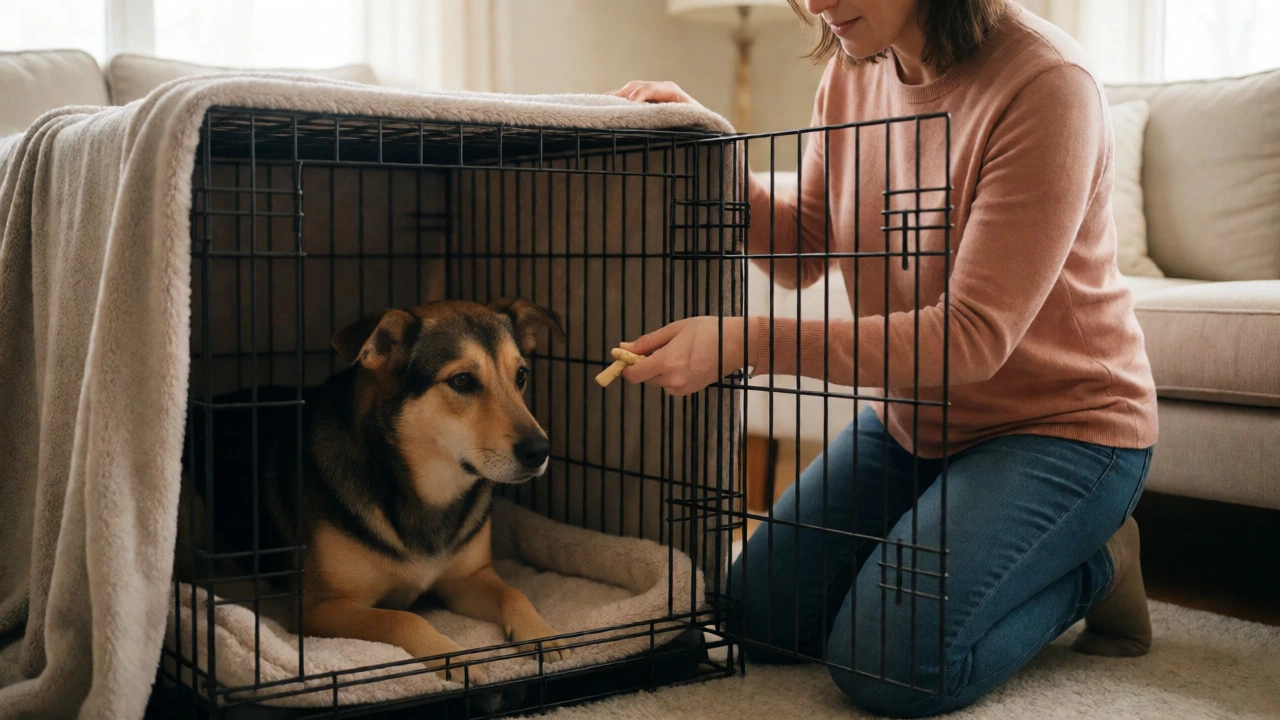
Consider changing the environment around the crate. Covering part of the crate with a breathable blanket can create a darker, den-like feel that reduces visual stimuli. Playing soft classical music or white noise can also mask household sounds that might trigger alertness. Ensure the crate is placed in a low-traffic area but still within earshot of family activity. Total isolation worsens the syndrome; quiet companionship helps.
Alternatives to Crating for Anxious Dogs
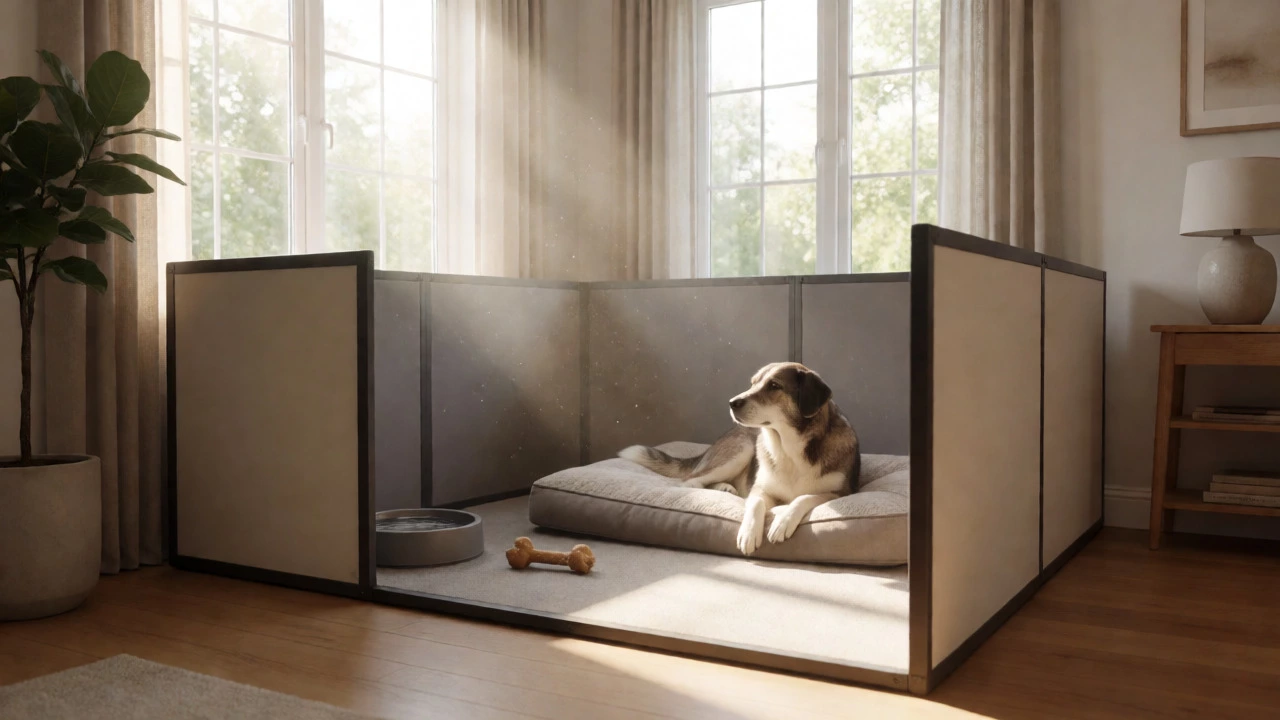
If desensitization fails, or if your schedule simply doesn’t allow for long hours of supervision, you might need to rethink confinement entirely. Not every dog thrives in a crate. Some dogs are better suited for exercise pens (x-pens). An x-pen provides more space, allowing the dog to move, play, and change positions, which significantly lowers stress levels compared to a static crate.
| Option | Best For | Risk Factor | Cost |
|---|---|---|---|
| Wire Crate | Travel, House Training | High (if misused) | $50-$150 |
| X-Pen | Anxious Dogs, Puppies | Low | $40-$100 |
| Door Gate | Supervised Rest | Low | $20-$60 |
| Soft-Sided Crate | Car Travel, Light Chewing | Medium (Escape risk) | $30-$80 |
For dogs with severe crate syndrome, a combination of baby gates and a designated "safe zone" with a comfortable bed often works best. This gives them autonomy while keeping them contained. Remember, the goal is safety and cleanliness, not imprisonment. If the crate causes more harm than good, switch tools.
Preventing Crate Syndrome in New Puppies
If you haven’t started yet, prevention is easier than cure. Introduce the crate gradually over several days. Feed meals near the crate, then inside it. Never use the crate for punishment. Keep initial crating sessions short-under thirty minutes-and release the dog before they get restless. This teaches them that the crate is temporary and predictable.
Exercise is also key. A tired dog is a calm dog. Ensure your puppy gets adequate physical and mental stimulation before crating. Puzzle toys stuffed with peanut butter or frozen kibble can keep them occupied and associate the crate with rewarding activities. By respecting their limits and prioritizing positive associations, you protect their mental health and ensure the crate remains a useful tool rather than a source of trauma.
Can crate syndrome be cured completely?
Yes, most dogs can recover with patient desensitization and counter-conditioning. It typically takes several weeks to months depending on the severity. Consistency is crucial; rushing the process often leads to setbacks.
Is it okay to leave my dog in a crate for 8 hours?
Generally, no. Adult dogs should not be crated for more than 4-6 hours at a stretch. Puppies under six months old need breaks every 1-2 hours. Leaving a dog crated for a full workday without a break is a primary cause of crate syndrome and urinary tract issues.
My dog stops crying when I leave. Does he still have crate syndrome?
Not necessarily. Crying is a sign of active distress. If he stops crying but appears lethargic, refuses to eat, or has accidents, he may have entered a state of "learned helplessness," which is still a symptom of severe confinement stress. Monitor his body language closely.
Should I cover the crate to help with anxiety?
For some dogs, yes. Covering three sides of the crate with a light blanket can reduce visual overstimulation and mimic a den. However, for other dogs, covering the crate increases feelings of entrapment. Test it briefly and observe if your dog settles faster or tries to pull the blanket off.
What is the difference between crate syndrome and separation anxiety?
Separation anxiety is triggered by the absence of the owner, regardless of location. Crate syndrome is triggered by the confinement itself. A dog with separation anxiety might destroy the door frame when you leave, while a dog with crate syndrome will only panic when the crate door is closed, even if you are in the next room.