Dog Pawing Decoder
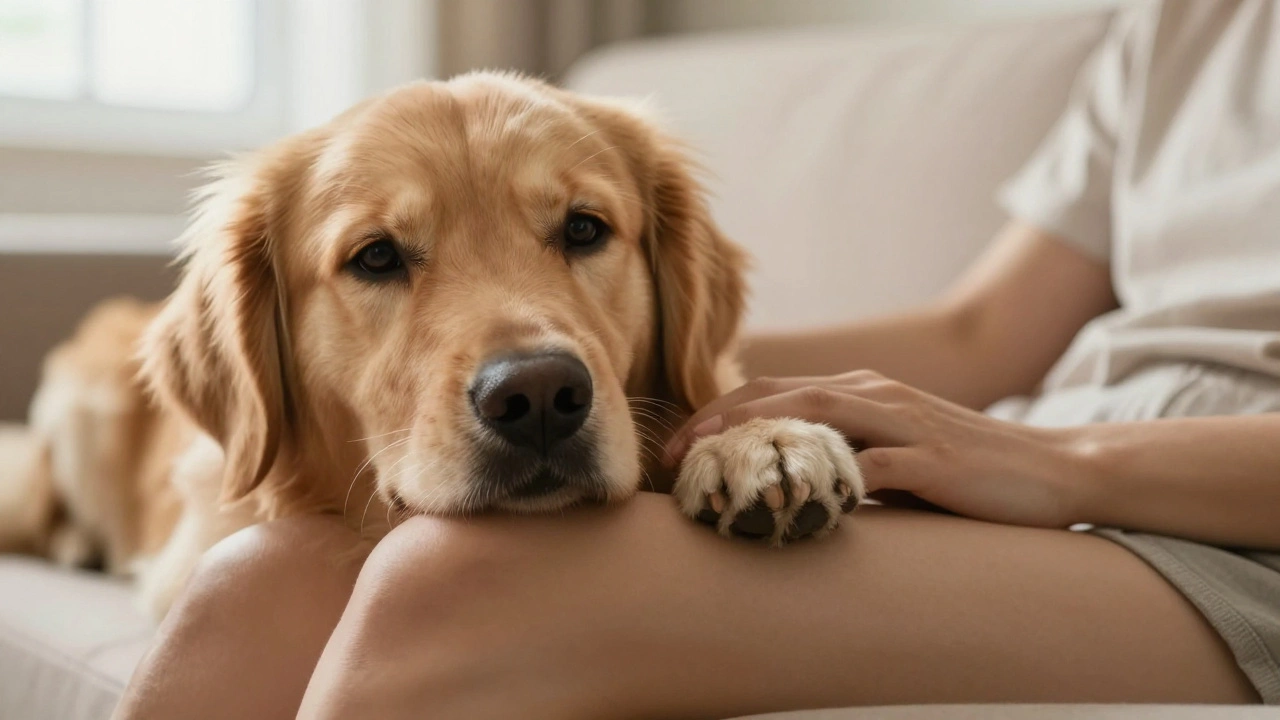
You’re sitting on the couch, scrolling through your phone or reading a book, and suddenly you feel a heavy weight resting on your leg. You look down to see your dog staring at you with soulful eyes, their paw firmly planted on your knee or thigh. It’s a moment that feels intimate, almost human-like in its gesture of connection. But what is actually going on in your dog’s mind? Is it love? Is it a demand for food? Or are they trying to tell you something else entirely?
Understanding why dogs put their paws on us requires looking beyond simple affection. While it is often a sign of bonding, this behavior is part of a complex communication system that includes hierarchy, attention-seeking, anxiety, and even medical issues. By decoding these signals, you can respond appropriately and strengthen your relationship with your pet.
The Science of Canine Touch
Dogs are tactile creatures. Unlike humans, who rely heavily on verbal language, dogs are social animals that communicate primarily through body language, scent, and touch. Physical contact releases oxytocin, the "love hormone," in both dogs and humans. This biochemical reaction strengthens the bond between you and your pet. When your dog places a paw on you, they are initiating physical contact to trigger this positive feedback loop.
However, context is everything. A gentle rest of the paw while you are cuddling has a different meaning than a persistent, nudging paw when you are walking away. To understand the message, you need to observe the entire body, not just the limb. Tail position, ear placement, eye contact, and vocalizations all provide clues.
Affection and Bonding Signals
The most common reason your dog puts a paw on you is simply because they like you. In dog social structures, grooming and touching are ways to maintain social cohesion. When your dog rests a paw on your leg while you are relaxing together, they are essentially saying, "I am comfortable here, and I want to be close to you."
- Soulful Eye Contact: If the paw is accompanied by soft, steady eye contact, this is a clear sign of trust and affection. Studies have shown that mutual gaze between dogs and owners increases oxytocin levels in both parties.
- Relaxed Body Posture: Look for loose muscles, a wagging tail (especially a full-body wiggle), and ears in a neutral position. These indicate that the dog is calm and content.
- Leaning In: Sometimes the paw is followed by the dog leaning their whole body against you. This is a request for more physical closeness and reassurance.
This type of pawing is usually gentle and intermittent. The dog may lift the paw after a few seconds, then place it back down. It’s a way of checking in with you, ensuring you are still present and available for interaction.
Attention-Seeking Behavior
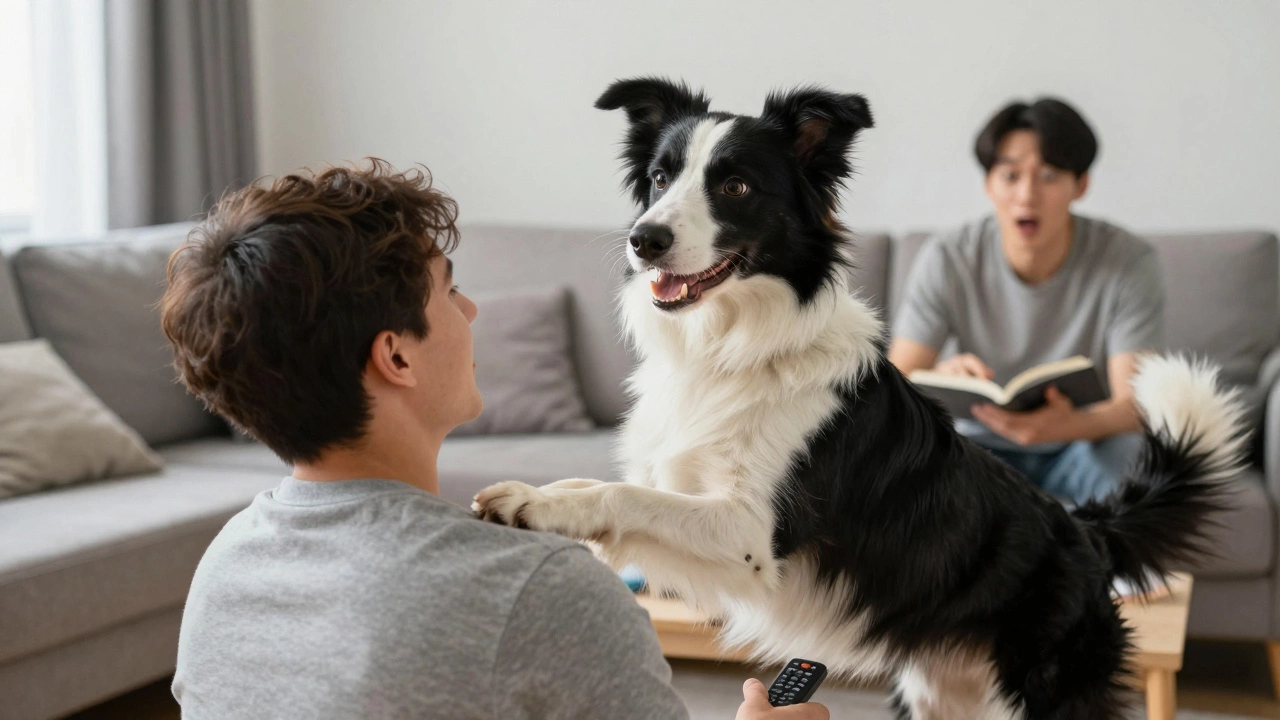
Not every paw on the leg is a romantic gesture. Often, it is a calculated move to get your attention. Dogs are smart; they learn quickly which behaviors yield results. If you have ever laughed, talked to your dog, or given them a treat when they placed a paw on you, they have learned that this action works.
This behavior becomes problematic when it turns into harassment. If your dog repeatedly paws at you while you are working, eating, or trying to sleep, they are likely bored or under-stimulated. Here is how to distinguish attention-seeking from affection:
- Persistence: Affectionate pawing stops if you ignore it. Attention-seeking pawing escalates. The dog may start nudging harder, whining, or standing up to place both front paws on you.
- Timing: Does the pawing happen right before walk time, mealtime, or playtime? If so, the dog is associating the gesture with a specific reward.
- Focus: An attention-seeking dog will stare intently at your face or hands, waiting for a reaction. An affectionate dog is more likely to relax once the contact is made.
To stop unwanted attention-seeking, avoid rewarding the behavior with eye contact or speech. Instead, turn your body away or stand up and leave the room briefly. This teaches the dog that pawing does not guarantee engagement.
Anxiety and Reassurance Seeking
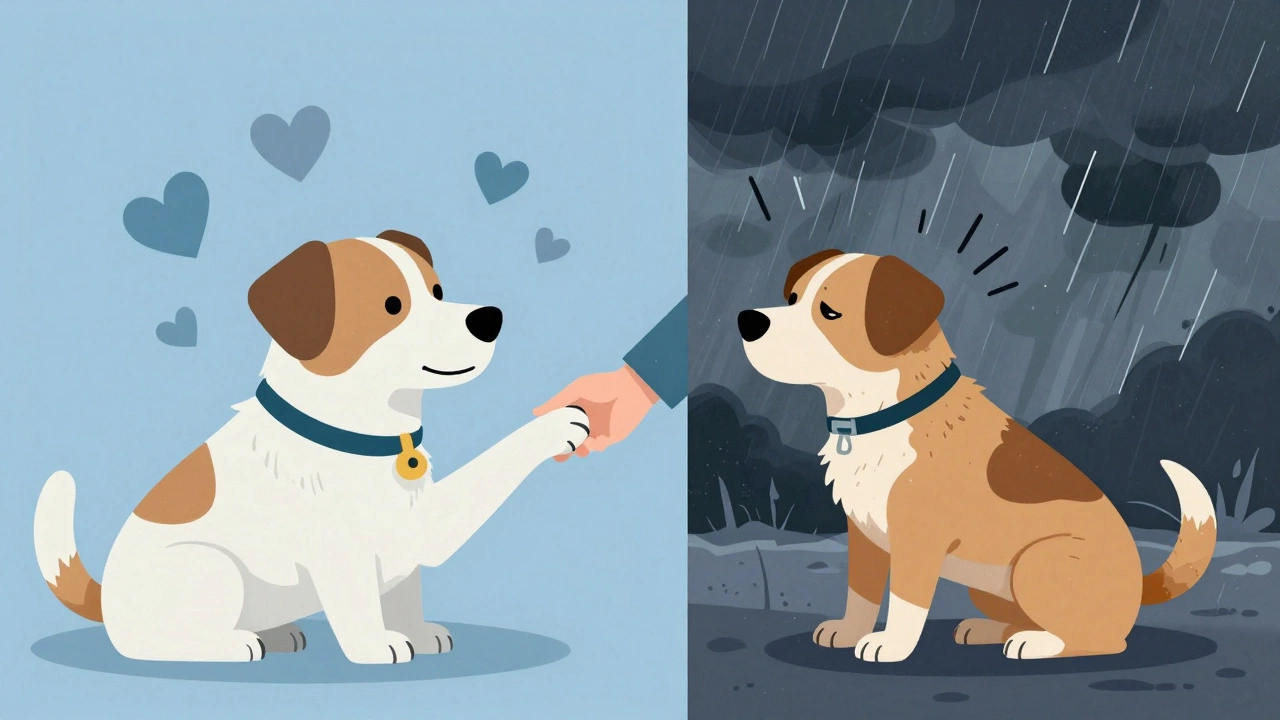
Dogs are sensitive to changes in their environment and their owner’s emotional state. If your dog starts pawing at you during thunderstorms, fireworks, or when you are crying or stressed, they may be seeking reassurance. This is known as "security seeking" behavior.
In these cases, the paw is a way of grounding themselves. By maintaining physical contact with you, their primary source of safety, they reduce their own anxiety. Signs that the pawing is anxiety-driven include:
- Panting or Drooling: Even if the temperature is cool.
- Tucked Tail: The tail may be held low or between the legs.
- Ears Back: Ears pinned flat against the head.
- Pacing: The dog may move around nervously before settling on you with a paw.
If your dog is anxious, offering comfort is appropriate. Petting them calmly and speaking in a soothing voice can help. However, be careful not to reinforce fear-based behavior by over-reacting. Stay calm yourself, as dogs mirror their owner’s emotions.
Dominance and Control Myths
You may have heard old-school trainers claim that a dog putting a paw on you is a sign of dominance or an attempt to assert authority. This idea stems from outdated wolf-pack theories that have been largely debunked by modern animal behaviorists. Domestic dogs do not view their human families as rivals to be dominated in the same way wild wolves might compete for rank within a pack.
While some dogs may use pawing to control access to resources (like keeping you from getting up to leave), this is generally about resource guarding or separation anxiety, not true dominance. Interpreting normal social gestures as aggression can lead to unnecessary conflict and damage the trust between you and your dog. Focus on the overall context rather than assuming a power struggle.
Medical Reasons for Pawing
Sometimes, the behavior is not behavioral at all. If your dog suddenly starts pawing at you more frequently, especially if it seems frantic or uncomfortable, check for medical issues. Pain or discomfort can cause dogs to seek physical contact as a way to self-soothe or ask for help.
| Symptom | Possible Cause | Action Required |
|---|---|---|
| Limping or favoring one leg | Arthritis, injury, or joint pain | Veterinary examination |
| Excessive licking of paws | Allergies, infection, or foreign object | Check paws for debris; consult vet if persistent |
| Restlessness and inability to settle | Cognitive dysfunction (in older dogs) or internal pain | Monitor for other signs of illness; vet visit recommended |
| Sudden change in behavior | Neurological issues or sensory loss | Immediate veterinary assessment |
If the pawing is new, intense, or accompanied by other unusual behaviors, schedule a check-up with your veterinarian. It is always better to rule out physical causes before assuming the issue is purely behavioral.
How to Respond Appropriately
Your response to your dog’s pawing should depend on the context. Here is a quick guide to handling different scenarios:
- If it’s affectionate: Accept the gesture. Pet your dog, speak softly, and enjoy the bonding moment. This reinforces positive social interaction.
- If it’s attention-seeking: Ignore the behavior. Do not look at, touch, or talk to your dog until they remove their paw and settle down. Reward calm behavior later.
- If it’s anxiety-driven: Provide comfort. Offer a safe space, such as a crate with a blanket or a quiet corner. Use calming aids like pheromone diffusers if needed.
- If it’s disruptive: Redirect the energy. Ask your dog to perform a command like "sit" or "go to your bed." This gives them a job to do and breaks the cycle of pawing.
Consistency is key. If you sometimes allow pawing and other times scold your dog, they will become confused. Decide what behavior you want to encourage and stick to it.
Training Alternatives to Pawing
If you prefer not to have your dog’s paw on you, you can train alternative behaviors. Positive reinforcement training is effective for replacing unwanted habits with desirable ones.
For example, teach your dog to "place" or "go to mat." When your dog approaches you with a paw raised, immediately cue them to go to their designated spot. Reward them with treats and praise when they comply. Over time, they will learn that going to their mat gets them attention, while pawing does not.
Another option is teaching a "gentle" command. If your dog tends to jump up or paw aggressively, teach them to keep all four paws on the ground. Reward calm standing or sitting near you. This promotes polite interaction without the physical contact.
Conclusion: Reading the Whole Picture
When your dog puts a paw on you, it is rarely just one thing. It is a combination of instinct, learning, emotion, and biology. By paying attention to the broader context-their body language, the timing, and your own actions-you can decode the message accurately. Whether it’s a request for love, a plea for help, or a bid for attention, understanding the "why" behind the paw allows you to respond with empathy and clarity. This deepens your bond and ensures that both you and your dog feel understood and respected.
Is it bad if my dog puts his paw on me?
No, it is not inherently bad. In most cases, it is a normal social behavior indicating affection, a desire for attention, or a need for reassurance. It only becomes a problem if it is excessive, disruptive, or rooted in anxiety that needs addressing.
Why does my dog put his paw on me when I cry?
Dogs are highly empathetic and can sense human distress through changes in tone, smell, and body language. When you cry, your dog may put a paw on you to offer comfort and support, mirroring the social bonding behaviors seen in wolf packs where members console each other.
Does my dog put his paw on me to show dominance?
Generally, no. Modern animal behavior science suggests that domestic dogs do not view their human owners as pack rivals to be dominated. Pawing is more likely a sign of affection, attention-seeking, or anxiety rather than an attempt to assert authority.
How do I stop my dog from pawing at me constantly?
To stop constant pawing, ignore the behavior completely when it happens. Do not make eye contact, speak, or touch your dog. Wait for them to remove their paw and settle down, then reward them with attention. Consistency is crucial for breaking the habit.
Can pawing be a sign of medical issues?
Yes, sudden changes in pawing behavior can indicate pain, arthritis, or anxiety. If your dog is pawing more than usual, seems restless, or shows other signs of discomfort, consult your veterinarian to rule out underlying health problems.