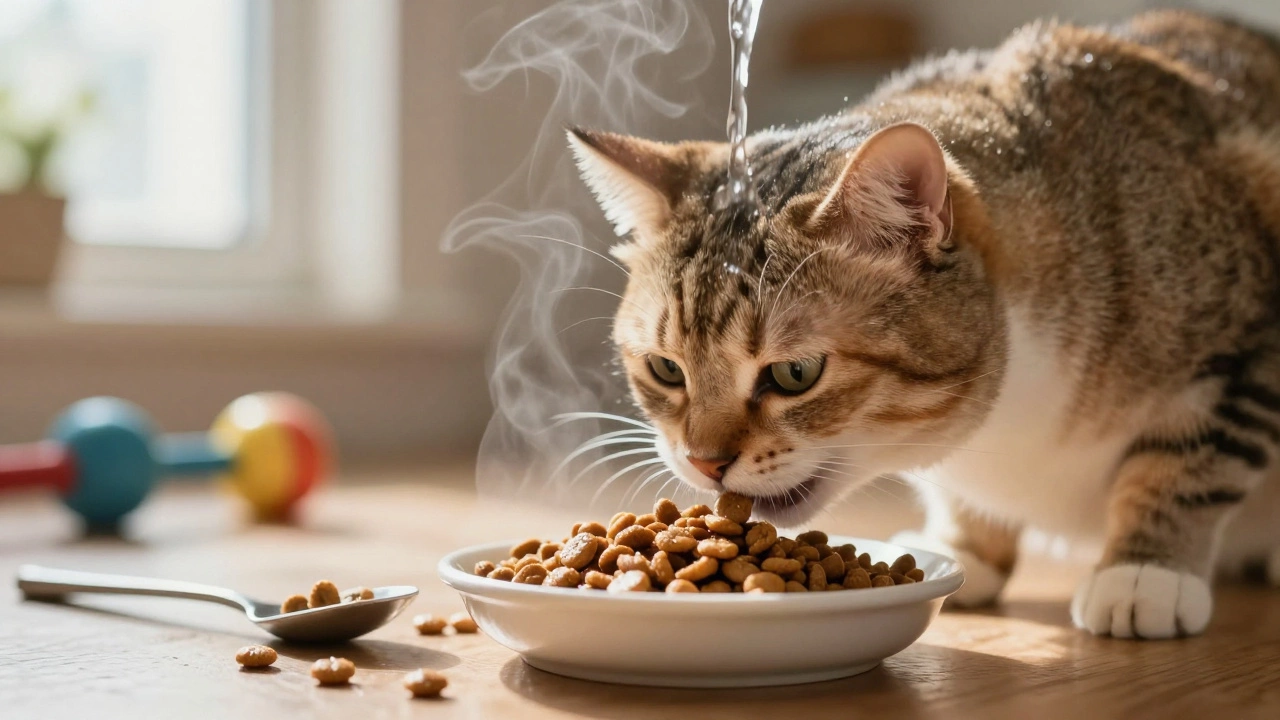
Cat Dry Food Moisture Calculator
How to Use This Tool
Enter the amount of dry food your cat eats daily to calculate the safe amount of moisture to add. This tool uses vet-approved guidelines from the article to ensure your cat gets proper hydration without risking health problems.
Recommended Moisture Amount
Enter your cat's dry food amount to see recommended moisture addition
Safe Options:
Warm water (80-100°F), low-sodium chicken/turkey broth, canned food toppers, cat-safe gravy
Avoid:
Milk, broth with onions/garlic, human soups, soaked food longer than 30 minutes
Most cats don’t drink enough water. It’s not laziness-it’s biology. In the wild, cats get most of their moisture from prey, not from standing water. But when you feed them dry food, you’re stripping away nearly all that natural hydration. A cat on dry food alone can easily become chronically under-hydrated, which puts stress on their kidneys and bladder. That’s why adding moisture to dry food isn’t just a nice idea-it’s a health necessity.
Why Your Cat Needs More Moisture
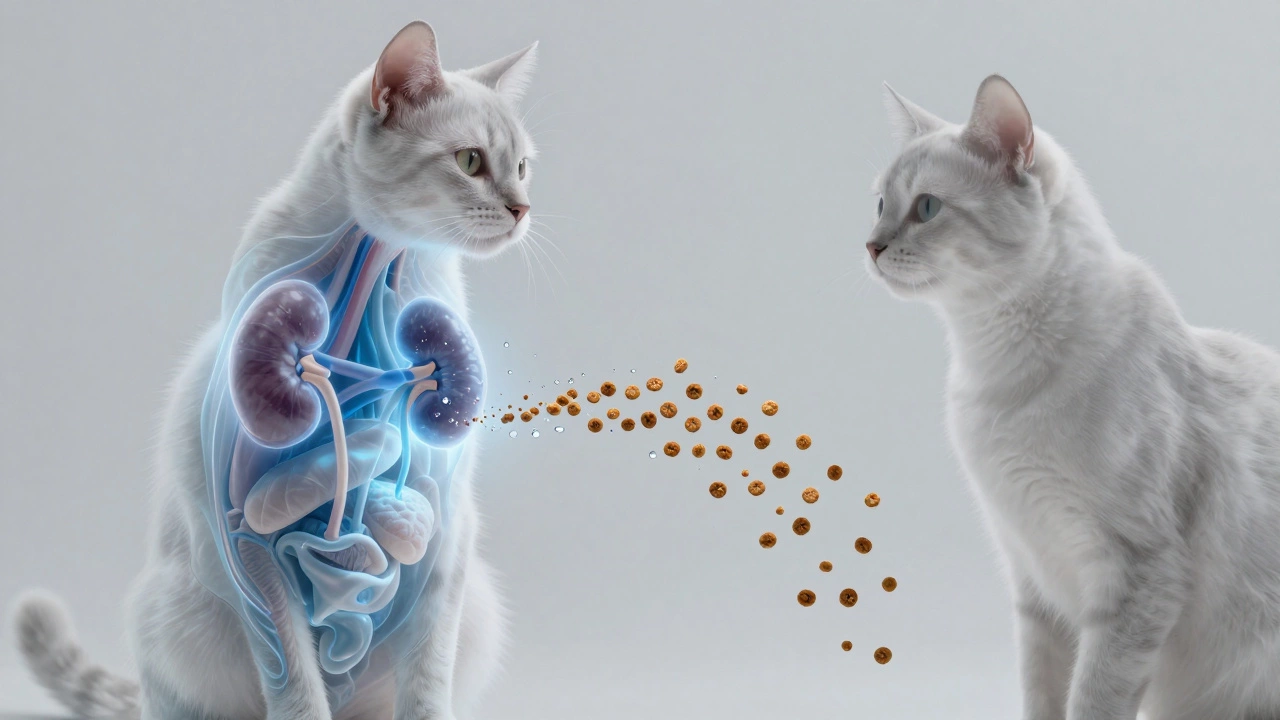
Dry cat food typically contains only 8-10% water. That’s less than a slice of bread. Your cat’s ideal moisture intake? Around 70%. That’s how much they’d get from eating mice, birds, or rabbits. Without that, their urine becomes too concentrated. Over time, this leads to urinary crystals, bladder stones, or even kidney disease. A 2023 study from the University of Edinburgh found that cats fed dry food exclusively were 2.5 times more likely to develop lower urinary tract issues than those eating wet food or moisture-rich diets.
It’s not just about accidents on the rug. Chronic dehydration quietly damages organs. Cats can’t tell you they’re thirsty, and they won’t drink from a bowl unless they’re desperate. Adding moisture to their dry food is the easiest way to fix this without switching foods.
Safe and Simple Ways to Add Moisture
You don’t need fancy gadgets or expensive products. Here’s what actually works:
- Warm water - Add 2-4 tablespoons of warm (not hot) water per cup of dry food. Let it sit for 5-10 minutes. The kibble softens, smells more like real food, and becomes way more appealing. Many cats will eat it right away, even if they ignored wet food before.
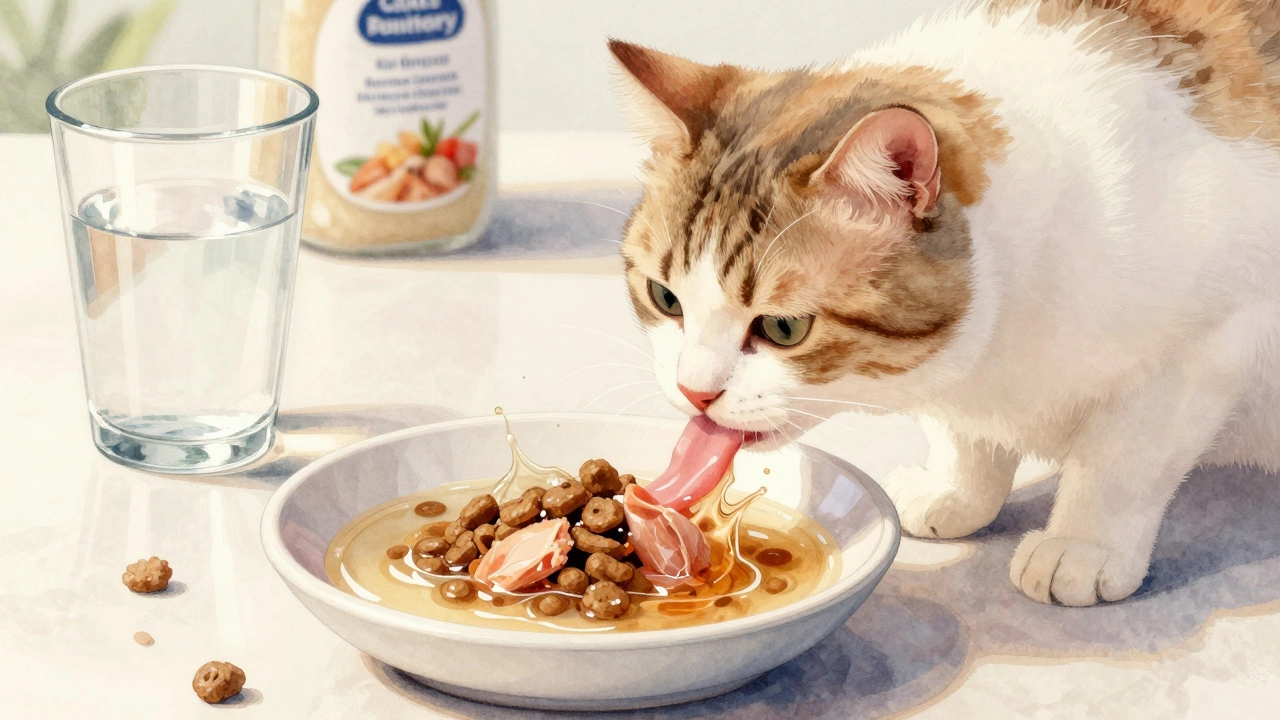
- Low-sodium broth - Use chicken or turkey broth with zero onions, garlic, or salt. Homemade is best. If you use store-bought, check the label: only two ingredients-meat and water. Pour 1-2 tablespoons over the food. The smell draws them in, and the liquid helps them eat more.
- Canned food topper - Mix in a spoonful of wet cat food. Even a small amount adds moisture and flavor. Use the same brand if possible to avoid digestive upset. This works especially well for picky eaters.
- Unsalted tuna juice - Drain a can of tuna packed in water (not oil), and save the liquid. Add a teaspoon to their dry food. It’s a strong smell that most cats love. Use this only a few times a week-it’s not nutritionally complete.
- Cat-safe gravy - Some brands make plain, additive-free gravies made for cats. Look for ones labeled “for hydration” or “low sodium.” These are designed to be mixed with dry food and can increase water intake by up to 40%.
What Not to Add
Not everything that sounds helpful is safe.
- Don’t use milk - Most adult cats are lactose intolerant. Milk causes diarrhea and dehydration-exactly what you’re trying to fix.
- Avoid broth with onions, garlic, or spices - Even small amounts can damage red blood cells. Read labels carefully.
- No human soups or stock cubes - These are loaded with sodium, preservatives, and MSG. Your cat’s kidneys can’t handle it.
- Don’t soak food too long - More than 30 minutes and the food starts to breed bacteria. If your cat doesn’t eat it right away, toss it.
How Much Moisture to Add
Start small. If your cat eats half a cup of dry food per day, add 2 tablespoons of water or broth. Watch how they react. If they lick it up and clean the bowl, you’re on the right track. If they walk away, try warming the water slightly or switching to broth. Cats are drawn to warmth and smell.
Over a week, slowly increase the moisture until you’re adding about 50% of the volume of dry food in liquid. So if they eat 1 cup of kibble, add ½ cup of water or broth. You’ll notice their stools become softer, their coat shinier, and they may even start drinking less from their water bowl.
Signs It’s Working
Hydration isn’t always visible, but these changes tell you it’s making a difference:
- Less frequent litter box visits with more solid, formed urine clumps
- Improved coat texture-less flaky, more glossy
- More energy and playfulness
- No more straining or crying in the litter box
- Reduced hairballs (better hydration helps move fur through the gut)
One cat owner in Wellington told me her 12-year-old tabby, Milo, hadn’t pooped properly in three weeks. After adding warm water to his dry food daily, he had a normal bowel movement the next day. He’s been fine ever since.
When to Consider Switching to Wet Food
Adding moisture to dry food helps-but it’s not a full replacement for wet food. Wet food contains 75-80% water and is closer to a cat’s natural diet. If your cat has a history of urinary problems, kidney disease, or is over 10 years old, aim for at least 50% of their calories to come from wet food.
Still want to use dry food? Mix it. Try a 50/50 blend of dry and wet. Or feed wet food in the morning and dry food with added water at night. This way, you get the dental benefits of kibble and the hydration benefits of wet food.
Pro Tips for Picky Cats
Some cats are stubborn. Here’s how to win them over:
- Use a shallow dish or plate instead of a bowl-cats dislike whisker fatigue.
- Warm the food slightly (microwave for 5 seconds) to release more aroma.
- Offer moisture right after they wake up or after playtime-they’re hungrier then.
- Try different textures. Some cats like mushy food, others prefer just a splash of liquid.
- Keep the water bowl clean and filled. Place it far from the food bowl-cats instinctively avoid drinking near where they eat.
Final Thought: Hydration Is Prevention
Adding water to dry food isn’t a trick. It’s a basic health habit-like brushing your teeth. You’re not just helping your cat eat better. You’re protecting their kidneys, bladder, and overall longevity. Cats don’t live long if they’re dehydrated. But with a few tablespoons of water or broth each day, you can give them years of better health.
Start today. Add a splash. Watch them eat. And notice the difference.
Can I just give my cat more water instead of adding it to food?
Many cats simply won’t drink enough from a bowl, even if it’s fresh and clean. Their instincts tell them that still water might be unsafe. Adding moisture directly to food works better because it’s part of their meal-they don’t have to choose to drink it. Think of it like adding sauce to pasta: you’re getting hydration without having to sip extra.
Is it okay to soak dry food overnight?
No. Soaking food for more than 30 minutes creates a breeding ground for bacteria, especially in warm environments. If your cat doesn’t eat it within 20-30 minutes, throw it out. Fresh is safer than leftover soaked kibble.
Will adding water make my cat’s food go bad faster?
Yes, but only if left out. Dry food stays stable for weeks in the bag. Once you add water, it becomes perishable like wet food. Store unused portions in the fridge for up to 24 hours, but always serve it fresh. Never leave moistened food out all day.
Can I use bone broth for my cat?
Only if it’s homemade and free of salt, garlic, onions, and xylitol. Store-bought bone broth often contains additives that are toxic to cats. If you make it yourself-simmer chicken bones with water, strain it, and cool it-you can safely add a teaspoon to their food a few times a week.
My cat won’t eat anything with water added. What now?
Try switching to a wet food diet gradually. Start by mixing 25% wet food with 75% dry, then increase the wet portion each week. You can also try a pet water fountain-some cats prefer running water. But if your cat refuses all moisture, talk to your vet. Chronic refusal to hydrate can signal illness like kidney disease or dental pain.