Puppy Development Timeline & Difficulty Tracker
Breed size affects how long the "adolescent bump" lasts.
Adjust the slider to see the current challenge level.
Current Status: --
| Stage | Key Characteristics | Training Focus | Tip |
|---|
The "Why So Wild" Phase: Understanding Puppy Energy
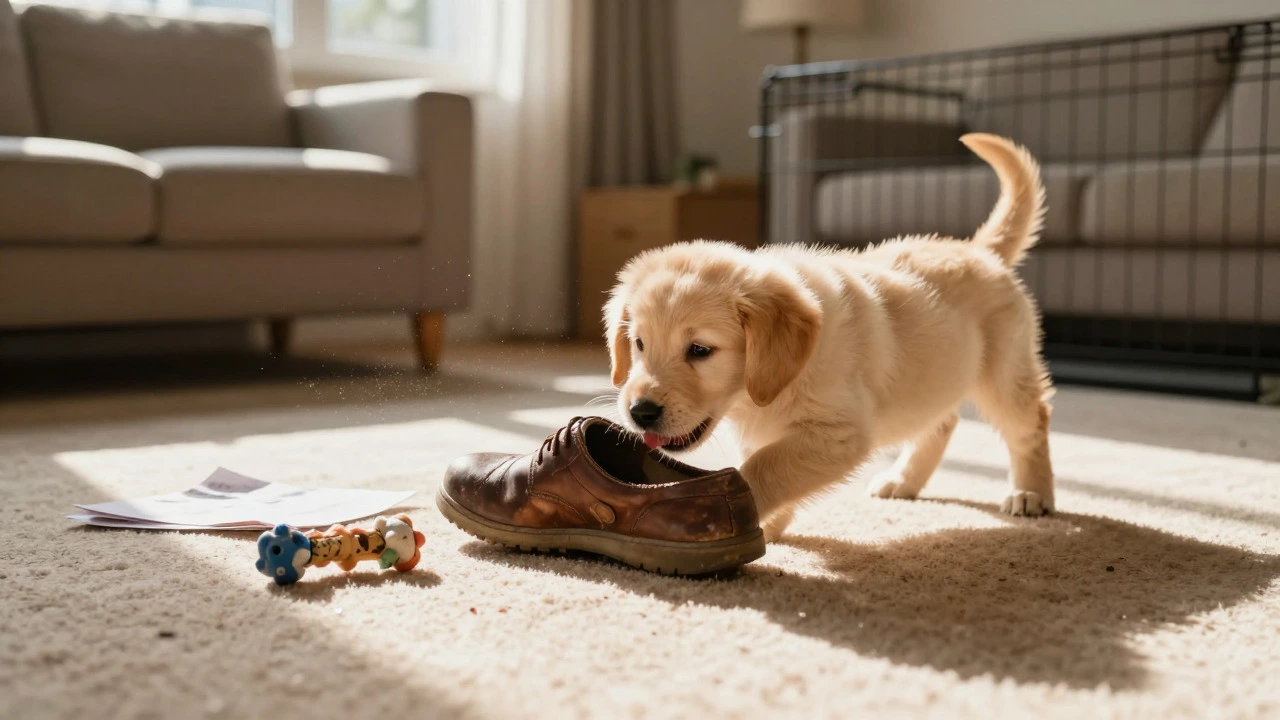
You just brought home a new puppy, and the first two weeks feel like you’re raising a tiny tornado. They chew your shoes, pee on the carpet, and wake up at 3 AM to scream. It’s exhausting, but here is the good news: it does get better. In fact, most owners start seeing significant improvements in behavior and energy levels around the 12-week mark, with major breakthroughs happening by six months.
Puppies aren't being difficult on purpose; they are simply growing. Their brains are developing rapidly, and their bodies are changing every day. To know when things will get easier, you need to understand the specific developmental stages. Each stage has its own set of challenges and victories. Knowing what to expect helps you stay patient and avoid common mistakes that can delay progress.
Weeks 8 to 12: The Adjustment Period
This is usually when you bring your puppy home from the breeder or shelter. If your puppy is under eight weeks old, hold off on bringing them home if possible. They still need their mother and siblings for socialization and bite inhibition. But once they hit the eight-to-twelve-week window, the real work begins.
Socialization is the process of exposing puppies to new people, places, sounds, and experiences during this critical window. This period is often called the "critical socialization period." During these weeks, puppies are most receptive to new experiences. If you miss this window, fear-based behaviors can become harder to fix later.
- Energy Level: High. Puppies sleep a lot (18-20 hours a day) but have bursts of intense activity.
- Training Focus: Basic commands like "sit," "stay," and "come." Keep sessions short (5 minutes).
- Toys: Introduce durable chew toys to redirect chewing away from furniture. Avoid small parts that could be swallowed.
- Sleep: Expect frequent naps. A tired puppy is a well-behaved puppy.
At this stage, house training is inconsistent. Accidents happen because their bladders are small and their control is limited. Don’t punish accidents; just clean them up quickly with an enzymatic cleaner and keep a consistent schedule.
Months 3 to 6: The First Major Shift
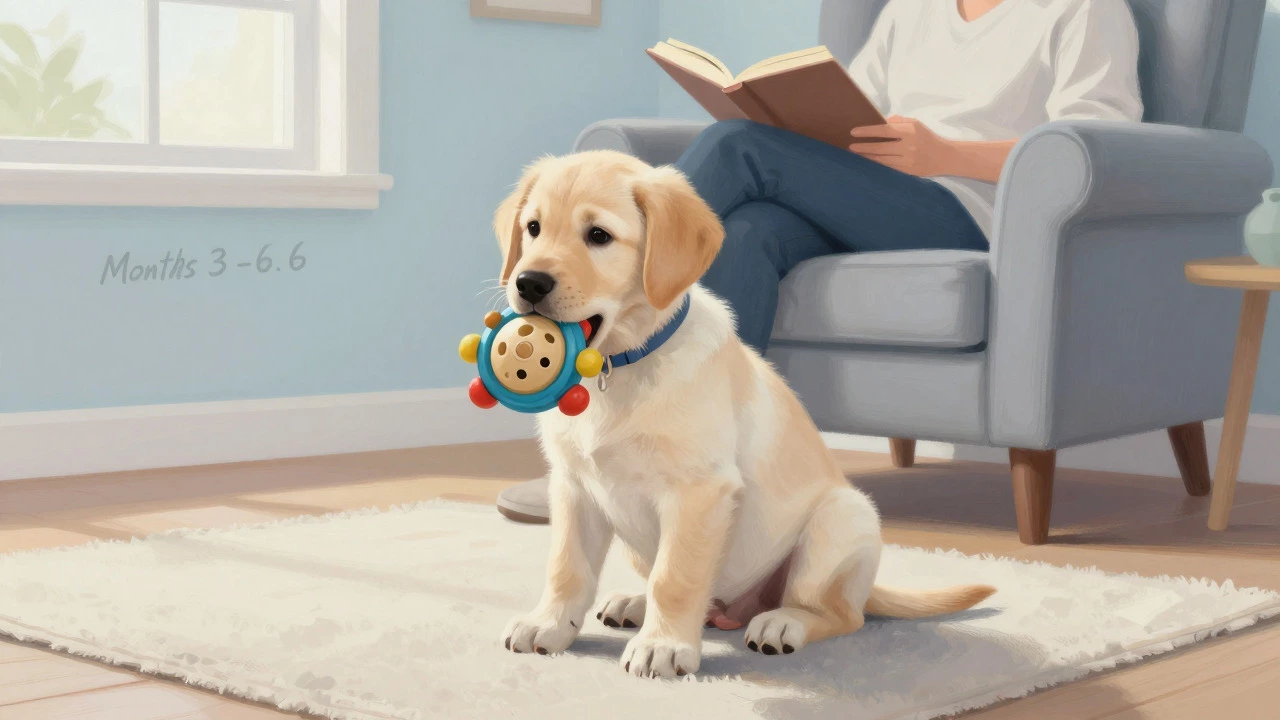
Around three months, something magical happens. Your puppy starts to settle into your routine. By four months, many owners notice a distinct drop in the chaos. This is often referred to as the "calming down" phase.
By five or six months, your puppy should be mostly house-trained. They understand where to go outside and can hold their bladder for longer periods. Training becomes more effective because their attention span increases. You can now introduce more complex commands and start working on leash manners.
| Age | Behavioral Change | Training Difficulty | Recommended Activity |
|---|---|---|---|
| 8-12 Weeks | High energy, frequent accidents, biting everything | Hard (short attention span) | Short play sessions, crate training, socialization walks |
| 3-4 Months | Starting to learn boundaries, fewer accidents | Moderate (better focus) | Basic obedience, introducing interactive toys |
| 5-6 Months | Mostly house-trained, calmer demeanor | Easier (longer focus) | Leash walking, public spaces, puzzle toys |
| 7-9 Months | Adolescence begins, potential regression | Tricky (testing limits) | Consistent rules, mental stimulation, exercise |
During this phase, choose toys that challenge their brain, not just their mouth. Puzzle feeders or treat-dispensing balls keep them occupied while you work or relax. This mental fatigue is just as important as physical exercise.
Months 7 to 12: The Adolescent Bump
Here is where many new owners get tripped up. After the calm period of months 3-6, puppies enter adolescence. This stage can last until they are one year old, depending on the breed. Some owners think their puppy is "regressing" because they suddenly ignore commands or jump on guests again.
This isn’t a failure on your part. It’s normal development. Adolescence is similar to human teenage years. Your dog is testing boundaries to see what rules actually matter. They are also going through a growth spurt, which can make them clumsy and uncoordinated.
During this time, consistency is key. If you let them on the couch one day, they’ll expect it every day. Pick your battles. Focus on high-value behaviors like recall and loose-leash walking. Ignore minor infractions if they aren’t dangerous.
- Physical Changes: Rapid growth, potential joint stress. Avoid excessive jumping on hard surfaces.
- Mental State: Curious but easily distracted. Use high-value treats for training.
- Social Needs: Continue socialization, but watch for fear periods. Some dogs experience secondary fear phases around 6-14 months.
When Does It Actually Get Easier?
So, when is the light at the end of the tunnel? For most dogs, the true "easy" mode kicks in around 12 to 18 months. By this age, their adult size is reached, their bladder control is fully developed, and their temperament stabilizes.
However, "easier" doesn’t mean "boring." Adult dogs still need exercise, mental stimulation, and love. But the constant vigilance required in the first few months fades. You can leave them alone for longer periods without worrying about destroyed furniture. You can take them to restaurants or parks without fearing a sudden accident.
Breed matters here. Large breeds like German Shepherds or Labradors may take longer to mature mentally than smaller breeds like Chihuahuas or Dachshunds. Small breeds often reach their "adult" behavior profile earlier, sometimes as young as nine months. Large breeds might still have adolescent energy until they are two years old.

Tips to Speed Up the Process
You can’t skip stages, but you can make each one smoother. Here are practical ways to help your puppy settle faster.
- Establish a Routine: Dogs thrive on predictability. Feed, walk, and play at the same times every day. This reduces anxiety and helps with house training.
- Use Crate Training: A crate gives your puppy a safe den. It prevents destructive behavior when you’re busy and aids in house training by leveraging their natural instinct to keep sleeping areas clean.
- Provide Mental Stimulation: A tired mind is a quiet mind. Use sniffing games, food puzzles, and short training sessions. Ten minutes of nose work can tire a puppy out more than an hour of running.
- Choose the Right Toys: Rotate toys to keep them interesting. Remove boring toys for a week, then bring them back as if they’re new. This extends the life of your toy collection and keeps your puppy engaged.
- Stay Patient: Setbacks happen. If your puppy has a bad night, don’t panic. It’s likely due to teething, a full bladder, or a change in routine. Adjust and move on.
Frequently Asked Questions
Why does my puppy act worse after 6 months?
This is likely the start of adolescence. Around 6-9 months, puppies test boundaries and may seem to forget training. It’s a normal developmental phase, not a sign of poor training. Consistency and patience will help them get through it.
How long does puppy chaos last?
The most chaotic period is usually the first 3-6 months. Significant improvement is seen by 6 months, with full stability often reached between 12-18 months, depending on the breed and individual dog.
What toys are best for calming a puppy?
Interactive toys like Kongs filled with peanut butter or frozen wet food can keep puppies occupied for extended periods. Durable rubber chew toys help relieve teething pain. Avoid soft plush toys if your puppy is a heavy chomper, as they can be shredded quickly.
Do large breed puppies take longer to mature?
Yes. Large and giant breeds often have a longer adolescence. While small breeds may be settled by 9-12 months, large breeds like Great Danes or Saint Bernards may retain puppy-like energy and behavioral quirks until they are 2 years old.
Is it normal for a puppy to regress in house training?
Yes, especially during adolescence or when there are changes in the household routine. Stress, illness, or excitement can cause temporary setbacks. Go back to basics with a strict schedule and positive reinforcement to re-establish habits.