Cat Food Safety: What You Need to Know to Keep Your Cat Healthy
When it comes to cat food safety, the practice of choosing and handling feline nutrition that doesn’t harm your cat’s health. Also known as feline dietary safety, it’s not just about avoiding spoiled cans—it’s about knowing what ingredients can quietly damage your cat over time. Your cat can’t tell you if their food is making them sick, but their body will. Vomiting, dull fur, or sudden weight loss aren’t just "odd behaviors"—they’re warning signs tied directly to what’s in their bowl.
wet cat food, moist, canned, or pouch-formulated nutrition designed for cats is often recommended by vets because it mimics a cat’s natural diet—high in protein, low in carbs, and full of moisture. But not all wet food is equal. Some brands load it with fillers like corn starch, artificial colors, or even cheap fish by-products that lack real nutrition. Then there’s tuna for cats, a popular treat that can become a health hazard if fed daily. While your cat might beg for it, regular tuna can cause mercury poisoning, thiamine deficiency, or even digestive upset. It’s a snack, not a meal.
And then there’s the fine print: cat food ingredients, the list of components used to make commercial cat food. If you see "meat by-products," "animal digest," or "corn gluten meal" near the top, that’s not a sign of quality—it’s a red flag. Cats are obligate carnivores. They need real meat, not mystery powders. Look for named proteins like "chicken" or "salmon," not just "poultry" or "fish." Also, avoid foods with added sugars, artificial preservatives like BHA/BHT, or vague terms like "natural flavors."
What you’re looking for is simple: high protein, low carbs, no junk. Your cat’s kidneys, liver, and digestive system weren’t built to handle grains, fillers, or artificial additives. They evolved to eat small prey—muscle, organs, and bone. That’s what real cat food should mimic. And while you’re checking labels, remember that "organic," "grain-free," or "premium" are marketing terms—not guarantees of safety or nutrition.
You don’t need to become a pet nutritionist to keep your cat safe. But you do need to read labels like your cat’s life depends on it—because it does. The posts below pull back the curtain on what’s really in popular cat foods, what experts warn against, and how to spot the difference between marketing and real health. You’ll find honest breakdowns of top brands, the truth about tuna, and what to look for when your cat’s food doesn’t agree with them. No fluff. Just what works—and what to avoid.
Posted By Bryndle Redding On 27 Nov 2025 Comments (0)
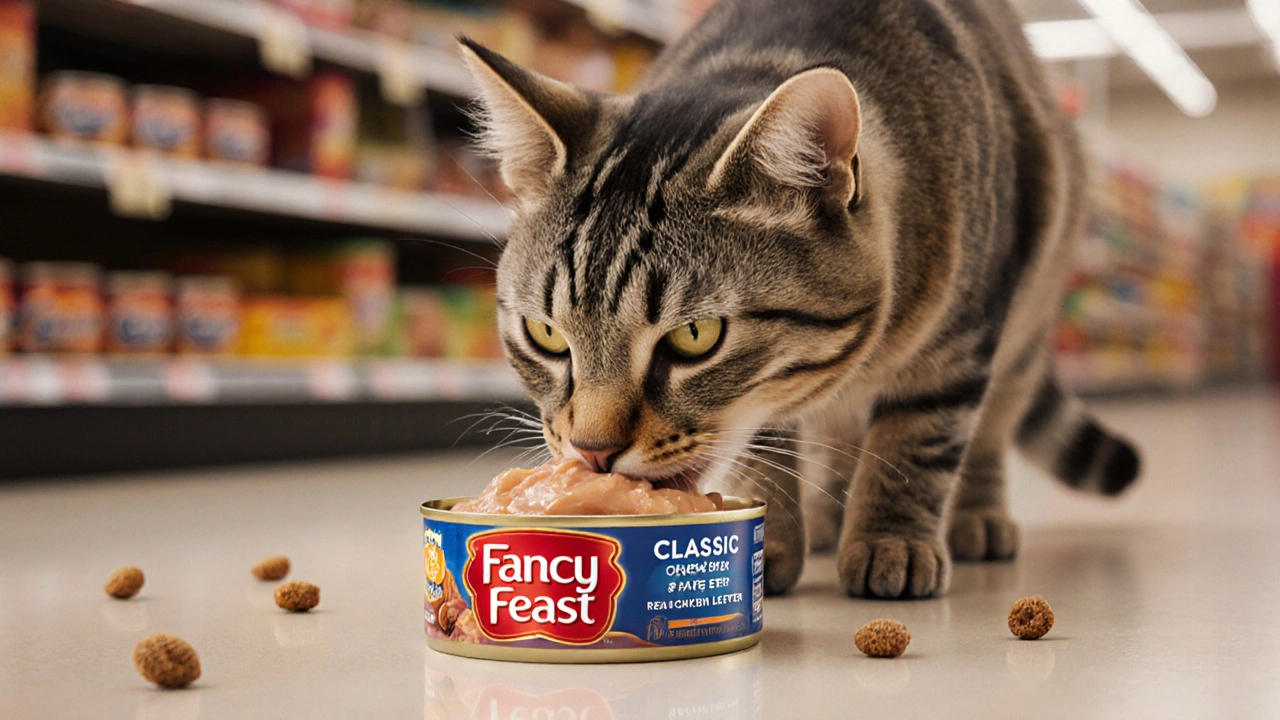
Is Fancy Feast Okay for Cats? Vet-Approved Facts You Need to Know
Fancy Feast isn't all bad, but many formulas are low-quality. Learn which varieties are safe for cats, what to avoid, and better alternatives that won't break the bank.
READ MORE