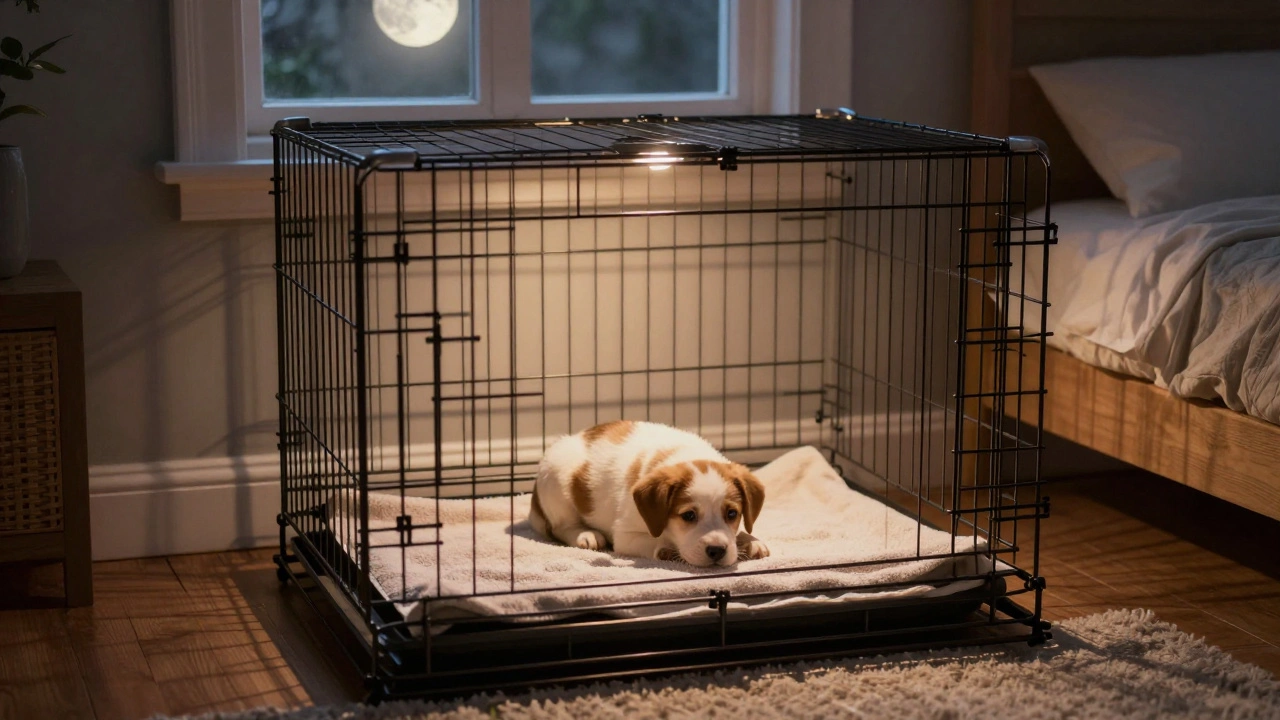
Puppy House Training Timer Calculator
How Long Can Your Puppy Hold It?
Based on the article's recommendation: Age in months + 1 hour is the maximum time your puppy can hold it. This calculator helps you create the right nighttime schedule.
Important Notice:
Using a pee pad in the crate breaks house training. Your puppy needs to learn to hold it. Learn why
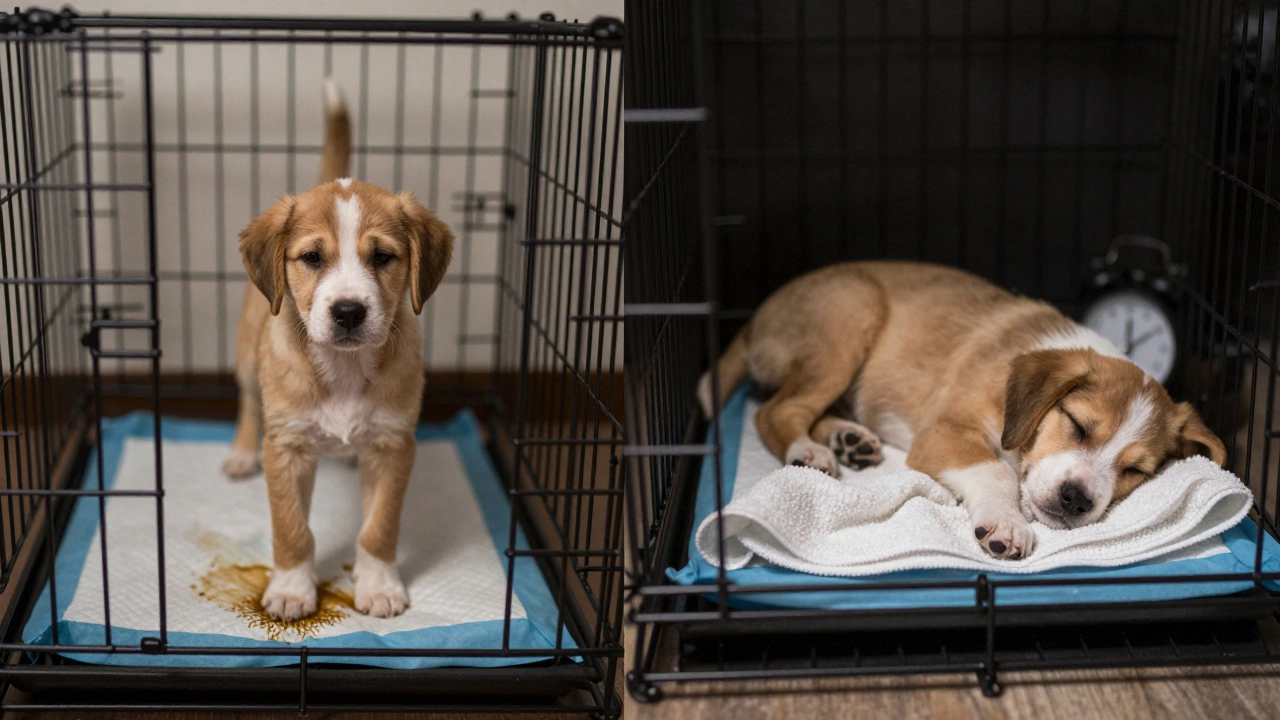
Putting a pee pad in your puppy’s crate at night seems like a smart fix-especially if you’re worried about accidents, messes, or waking up to a wet floor. But here’s the truth: it often backfires. Most experts in puppy training, including veterinary behaviorists and professional dog trainers, advise against it. Why? Because crating is meant to teach your puppy to hold it, not to use the crate as a bathroom.
Why Crates Work for House Training
Dogs are naturally clean animals. In the wild, they avoid soiling their dens. A properly sized crate taps into that instinct. When the crate is just big enough for your puppy to stand, turn around, and lie down comfortably, they’ll usually avoid peeing or pooping inside. That’s why crating is one of the most effective tools for house training.But throw in a pee pad, and you’re sending mixed signals. Your puppy learns that it’s okay to eliminate in their sleeping space. That breaks the core rule of crate training. Once that habit forms, it’s harder to unlearn. Many owners end up with a 6-month-old dog still peeing in their crate because they never taught them to hold it.
What Happens When You Use Pee Pads in the Crate
Let’s say your 10-week-old puppy sleeps in a crate with a pee pad. At first, they might use it. Great, right? But here’s what usually follows:- They start seeing the pad as part of their territory, not just a bathroom spot.
- They begin to associate the crate with elimination, not rest.
- When the pad gets wet or dirty, they may step in it, spread it around, or even chew it.
- Eventually, they’ll pee on the crate floor even without a pad because the space no longer feels like a clean den.
A 2023 study from the University of Melbourne’s Companion Animal Behavior Lab tracked 127 puppies over six months. Those trained with crates alone (no pads) were fully house trained by 16 weeks on average. Puppies with pads in their crates took nearly twice as long-up to 28 weeks-and were 3 times more likely to have nighttime accidents past 6 months.
What to Do Instead
You don’t have to choose between a clean floor and your puppy’s comfort. Here’s what actually works:- Stick to a strict schedule. Take your puppy out right before bed, then again first thing in the morning. Puppies can typically hold it for their age in months plus one hour. So a 3-month-old puppy can hold it for about 4 hours.
- Use a timer or alarm. Set an alarm for every 4-5 hours during the night, especially in the first few weeks. When it goes off, take them outside-even if you think they’re asleep. Most will wake up, do their business, and go right back to sleep.
- Make the crate a safe, quiet space. No toys, no blankets with absorbent fabric, no pee pads. A simple bed or towel is fine. Keep the crate in your bedroom if you can. Your presence helps them feel secure.
- Never punish accidents. If they do have an accident, clean it with an enzymatic cleaner (not just vinegar or bleach). Punishing them after the fact confuses them. They don’t connect the punishment to the accident.
When a Pee Pad Might Be Okay
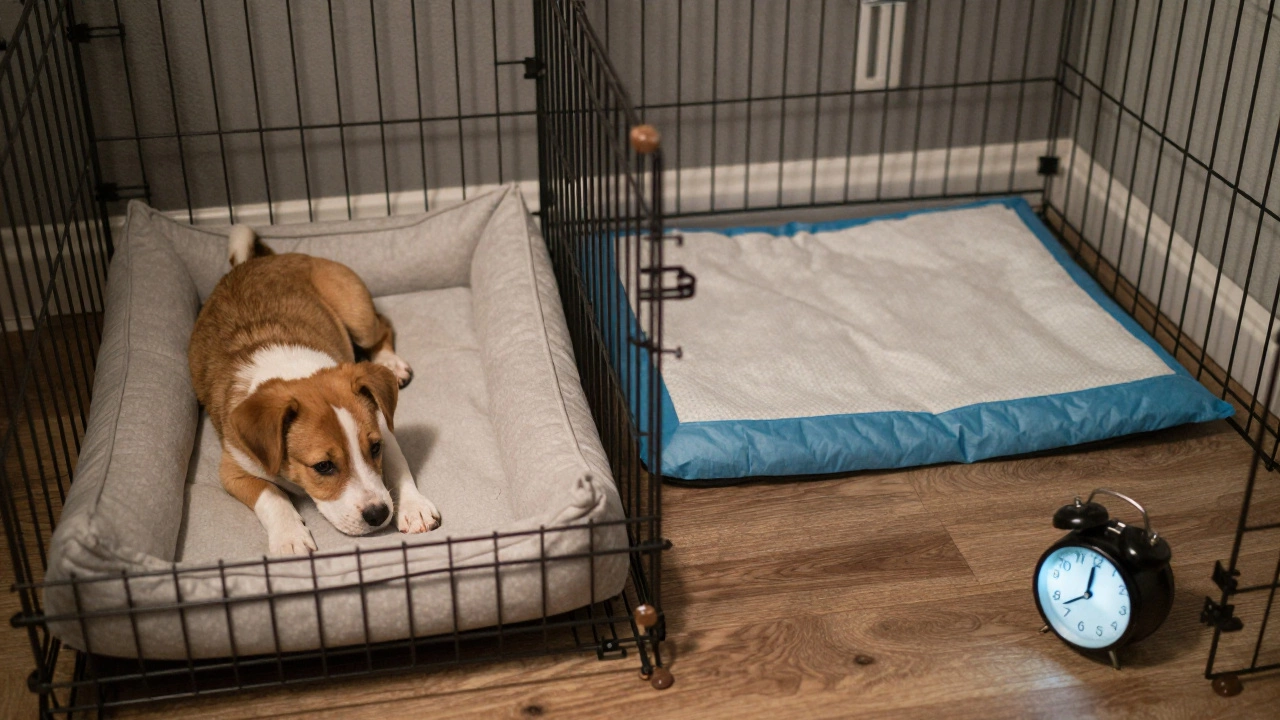
There are rare exceptions. If your puppy has a medical condition-like a urinary tract infection or a congenital bladder issue-your vet might recommend a pee pad temporarily. Same goes if you’re on a 12-hour work shift and can’t get home to let them out. But even then, use it as a short-term fix, not a long-term solution.If you must use a pad, place it outside the crate, near the door. That way, your puppy learns to go to a specific spot, not to eliminate in their sleeping area. You can also try a puppy playpen with a pad in one corner and a bed in another. That’s a better setup than a crate with a pad.
What to Do If You’ve Already Put a Pad in the Crate
If you’ve already tried this and your puppy is now peeing in the crate, don’t panic. It’s fixable, but it takes consistency.- Remove the pad immediately.
- Double-check the crate size. If it’s too big, your puppy might be using one end as a bathroom. Use a divider or a smaller crate.
- Go back to the schedule: bathroom breaks every 4 hours at night, even if you have to wake up.
- Be patient. It might take 1-2 weeks for them to relearn that the crate is clean space.
Many owners report success within 10 days. One dog owner in Wellington, who posted about her 12-week-old Border Collie on a local pet forum, said she removed the pad on a Tuesday and by Sunday night, her pup slept through without a single accident. She didn’t use treats or special gear-just timing and patience.
Common Myths About Pee Pads and Crates
- Myth: Pee pads teach puppies where to go. Truth: They teach them it’s okay to go in their crate. That’s not the same thing.
- Myth: Puppies can’t hold it overnight. Truth: Most can by 12-16 weeks if trained properly. Younger ones need nighttime trips, but that’s temporary.
- Myth: Crating is cruel. Truth: A crate is a den. Dogs feel safe in enclosed spaces. It’s only cruel if used as punishment or left too long.
Final Thoughts
Putting a pee pad in your puppy’s crate at night feels like a quick fix, but it’s a long-term problem. You’re trading short-term convenience for months of extra cleanup, confusion, and delayed training. Your puppy wants to please you. They’re not being stubborn-they’re just learning.Stick with the crate, stick with the schedule, and be consistent. The first few nights might be tough. You might wake up. You might feel tired. But in a few weeks, you’ll both sleep through the night-clean, calm, and confident.
Can I use a pee pad in my puppy’s crate if I’m away all day?
If you’re away for more than 6-7 hours, a crate isn’t ideal for a young puppy. Use a puppy-proofed playpen with a pee pad in one corner and a bed in another. This gives them space to avoid their bathroom area. Crates should only be used for short periods-no longer than the puppy’s age in months plus one hour.
What if my puppy cries at night and I’m tempted to let them out?
Crying at night is normal, especially in the first few days. Don’t assume they need to go potty every time they whine. Wait 5-10 minutes. If they’re still crying, take them out quietly. Use a leash, go straight to the spot, wait, and reward silence-not attention. If they don’t go, bring them back. They’ll learn crying doesn’t always mean a potty break.
Should I use a water bowl in the crate at night?
No. Water in the crate at night increases the chance of accidents. Take water away about 2 hours before bedtime. Most puppies will be fine without it overnight. If your puppy is under 12 weeks, you can offer a small sip right before bed, but don’t leave a bowl inside.
How do I know if my puppy’s crate is the right size?
Your puppy should be able to stand up, turn around, and lie down without touching the sides or top. If they have extra room, they might use part of the crate as a bathroom. Use a divider panel or a cardboard box to block off extra space until they grow into it.
Is it okay to use pee pads for older dogs?
For healthy adult dogs, no-unless they have mobility issues or a medical condition. For senior dogs with incontinence, pee pads are a practical tool. But for puppies, they interfere with natural house training. Always prioritize training over convenience, especially early on.