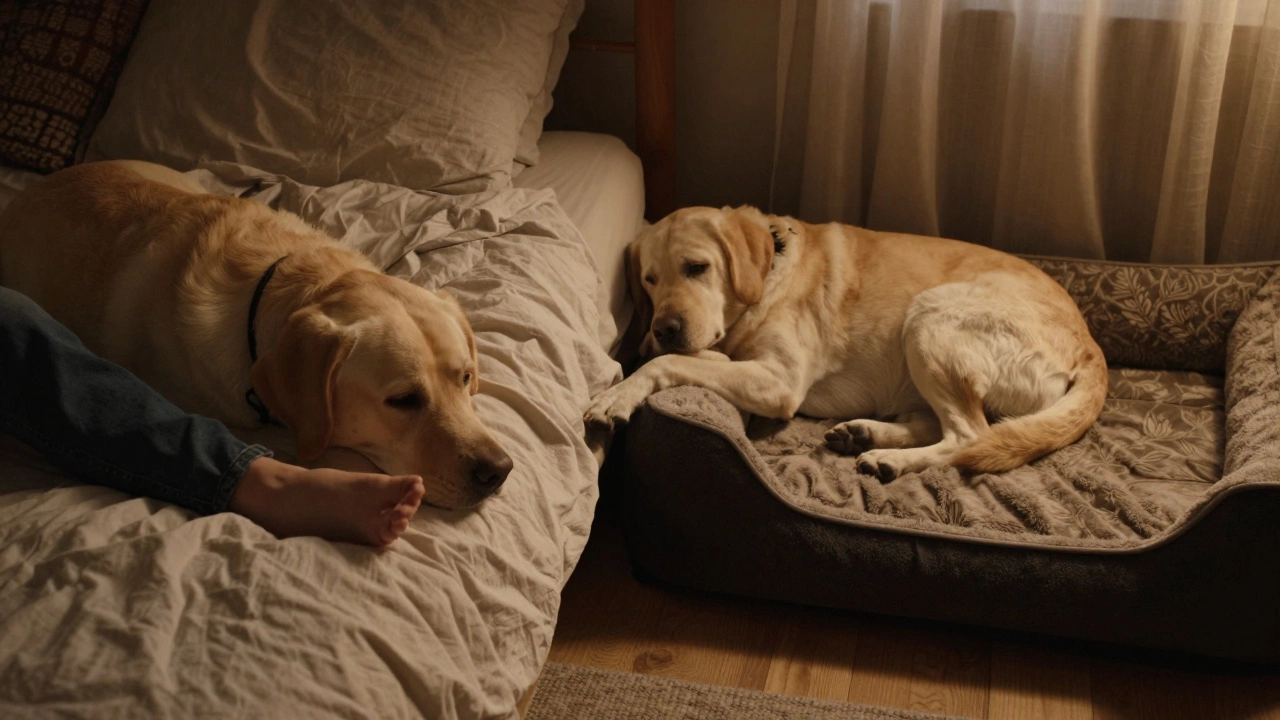
Letting your dog sleep on your bed isn’t just a habit-it’s a decision that affects your sleep, your dog’s behavior, and even your relationship with them. Some people swear by it. Others swear at it. The truth? There’s no universal right or wrong. But there are clear factors you should weigh before making the call.
Why Do Dogs Want to Sleep on Your Bed?
Dogs didn’t evolve to sleep on memory foam mattresses. They evolved to sleep in dens, close to their pack. When your dog jumps up onto your bed, they’re not being disobedient-they’re following an ancient instinct. In the wild, closeness means safety. Your bed smells like you. It’s warm. It’s familiar. To your dog, it’s the safest spot in the house.Studies from the University of Lincoln in 2019 found that dogs who slept with their owners showed lower stress levels during separation tests. That doesn’t mean it’s good for everyone, but it does show that co-sleeping isn’t just a human whim-it’s rooted in canine psychology.
When It’s a Good Idea
There are real benefits to sharing your bed with your dog-if your situation lines up.- Your dog is calm, well-trained, and doesn’t steal the covers or snore like a chainsaw.
- You have a consistent bedtime routine, and your dog doesn’t wake you up at 3 a.m. for a snack or a potty break.
- You’re not a light sleeper. If you wake up every time your dog shifts, you’re both losing rest.
- Your dog is healthy. No fleas, no skin infections, no recent diarrhea episodes.
- You’re not allergic. Even if you’ve never had symptoms before, allergies can develop over time.
Many older adults and people with anxiety report better sleep with their dog nearby. A 2023 Mayo Clinic survey found that 41% of pet owners who shared their bed with their dog said they felt more secure and slept more deeply. That’s not just comfort-it’s measurable emotional support.
When It’s a Bad Idea
Not every dog should be on your bed. Some situations make it a recipe for trouble.- Your dog is territorial or resource-guarding. If they growl when you try to get up, or block your side of the bed, that’s a red flag.
- Your dog has separation anxiety. Letting them sleep with you might make it worse by reinforcing dependence.
- You have a puppy or senior dog with bladder control issues. Nighttime accidents are messy-and expensive to clean from memory foam.
- You have allergies or asthma. Dog dander sticks to sheets, pillows, and blankets. Washing them weekly isn’t always enough.
- Your dog sheds like a vacuum cleaner. If you’re constantly picking fur off your clothes, you’re already losing the battle.
One owner in Wellington told me her Labrador, Max, started stealing her pillow and refusing to move unless she gave him a treat. That’s not cuddling-that’s manipulation. And it’s not uncommon.
The Hygiene Factor
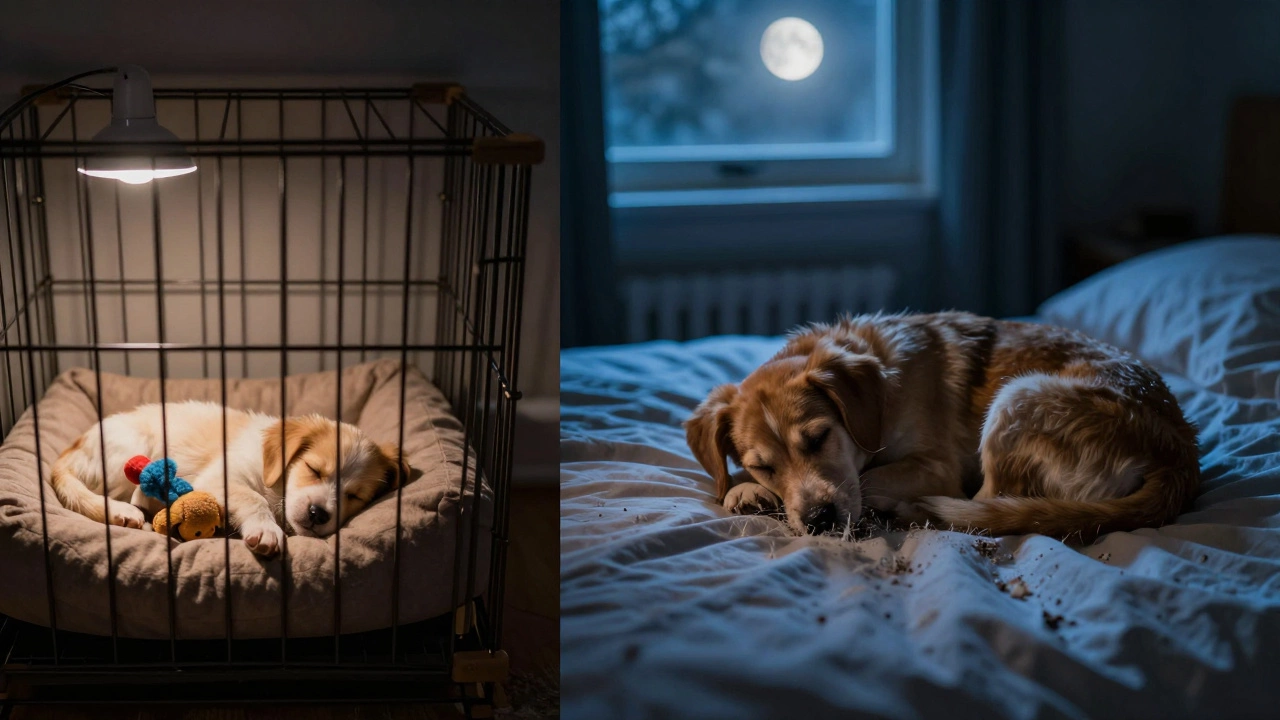
You think your dog is clean because they roll in the grass, not the sewer. But here’s what you’re not seeing: their paws carry dirt, pollen, bacteria, and even parasites from outside. Their fur holds fleas, ticks, and mites. Their mouth? Full of bacteria that can cause gum disease in humans.A 2021 study in the Journal of Applied Microbiology found that dogs sleeping on human beds carried more Staphylococcus and E. coli on their fur than dogs sleeping on their own beds. That doesn’t mean you’ll get sick-but it does mean you’re exposing yourself to more germs than you realize.
Washing your bedding at 60°C weekly helps. Using a washable dog blanket on your bed cuts down direct contact. But if your dog rolls in dead things, digs in the garden, or licks their butt before jumping up? You’re playing Russian roulette with your immune system.
Training and Boundaries
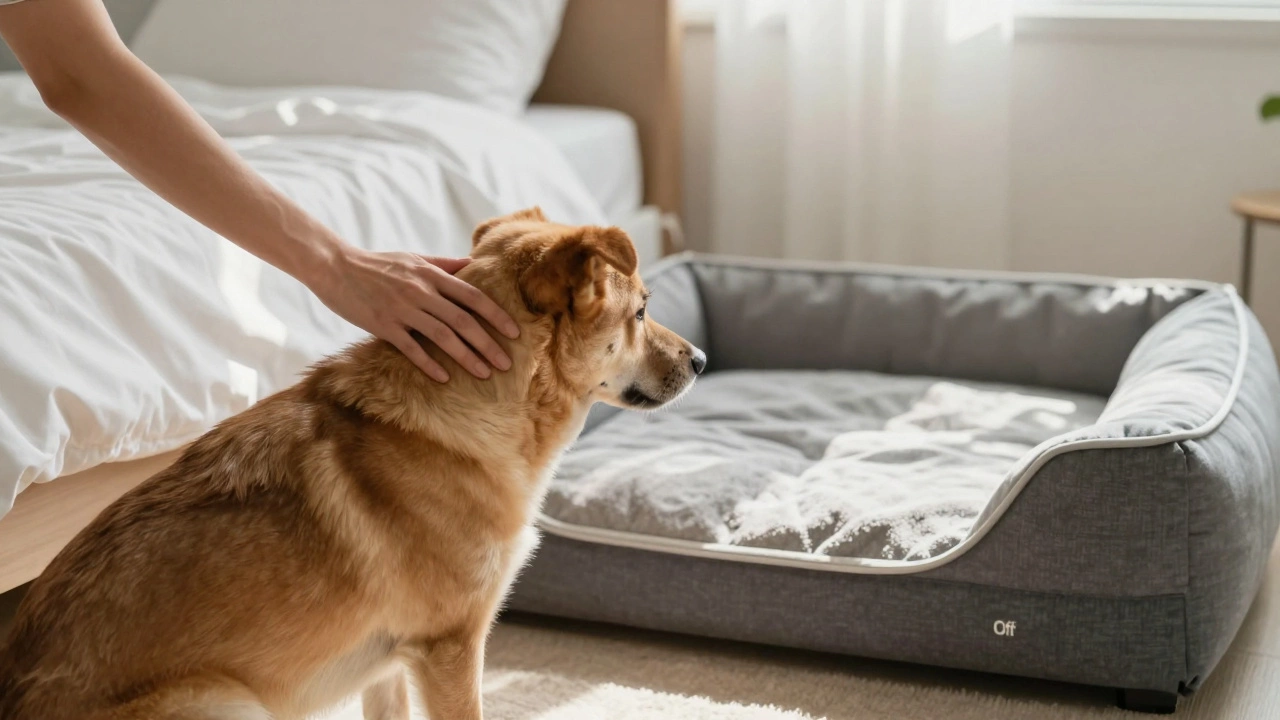
If you let your dog on the bed sometimes, but not other times, you’re confusing them. Dogs don’t understand “sometimes.” They understand patterns.Here’s what works: if you allow your dog on the bed, make it a command. Say, “Up,” only after they’ve sat calmly. If they jump without being invited, gently guide them down and say, “Off.” Be consistent. No exceptions.
Some owners use a “bed rule” system: only on weekends, or only after 9 p.m., or only if the dog is clean. That’s fine-but stick to it. Inconsistent rules lead to behavioral issues. Your dog will test limits. That’s what dogs do.
What About Dog Beds?
You don’t have to choose between your bed and your dog’s bed. You can have both.Place a sturdy, orthopedic dog bed right next to your bed. Make it appealing: add a blanket with your scent, a favorite toy, and maybe a heated pad if it’s winter. Reward your dog when they choose their own bed. Over time, many dogs will prefer it-especially if they know they can still be close to you.
One study from the University of California, Davis found that 72% of dogs given a choice between their own bed and their owner’s bed chose their own bed within two weeks-especially if it was warm, comfortable, and had a familiar smell.
Real-Life Scenarios
Let’s say you’re a single parent with a rescue dog who used to live in a shelter. Letting them sleep with you might help them feel safe. That’s fine.Now imagine you’re a nurse who works night shifts and sleeps during the day. Your dog’s sudden movements at 2 p.m. could ruin your only chance at rest. That’s a problem.
Or you’re pregnant. Your doctor says to avoid close contact with pets due to toxoplasmosis risk. Even if your dog is indoor-only, it’s better to be cautious.
There’s no one-size-fits-all answer. But there are clear signs to watch for:
- Do you wake up tired, even after 8 hours?
- Do you find yourself cleaning fur off your sheets every morning?
- Does your dog seem anxious when you’re not in bed?
- Have you noticed more sneezing, itching, or congestion lately?
If you answered yes to two or more, it’s time to reconsider.
Alternatives That Work
You love having your dog near you. That’s not the issue. The issue is whether the bed is the best place.Try these instead:
- Place a dog bed on the floor beside your bed. Use a raised platform so they’re still at eye level.
- Use a dog crate with a soft bed and a favorite toy. Many dogs feel safer in enclosed spaces.
- Buy a dog-sized lounger that fits under your bed. Your dog stays close, but out of the way.
- Let them sleep in the same room, but not on the bed. Use a baby gate if needed.
One couple in Wellington switched to a dog bed under their window. Their dog now watches the birds, stays cool in summer, and doesn’t steal the blankets. They both sleep better.
Final Decision Checklist
Ask yourself these questions before you say yes:- Is my dog healthy and clean?
- Do I sleep well with them there?
- Do I have allergies or health concerns?
- Is my dog trained and calm?
- Am I okay with cleaning fur and washing sheets weekly?
- Would I feel comfortable if my dog was on the bed when guests come over?
If you answered yes to all six, go ahead. But if you’re unsure on even one, give it another thought.
Your dog doesn’t need your bed to love you. And you don’t need their fur on your pillow to feel close. Sometimes, the best way to show love is giving them their own space-and knowing you’ve made the choice that works for both of you.
Is it unhygienic to let my dog sleep on my bed?
It can be, especially if your dog spends time outside, licks their paws or rear end, or sheds heavily. Dogs carry bacteria like Staphylococcus and E. coli on their fur and paws. Washing bedding weekly at 60°C and keeping your dog clean reduces risk, but it doesn’t eliminate it. If you have allergies, asthma, or a weakened immune system, it’s safer to keep them off the bed.
Will my dog become dominant if I let them on the bed?
No-dominance theory in dogs has been largely debunked by modern behaviorists. What looks like dominance is usually poor boundaries. If you let your dog jump on the bed without permission and don’t correct it, they learn they can do it whenever they want. That’s not dominance-it’s confusion. Consistent rules, not physical dominance, prevent behavioral issues.
Should I let my puppy sleep on my bed?
It’s not recommended. Puppies have poor bladder control and often need to go out during the night. They also chew on bedding, scratch at sheets, and can develop bad habits that are hard to break later. Start with a crate or bed in your room. Once they’re fully potty-trained and calm (usually by 12-18 months), you can reconsider.
Can my dog sleep on my bed if I have allergies?
It’s risky. Dog dander is the main trigger, and it clings to fabric. Even if you don’t react now, prolonged exposure can make allergies worse. If you must, use a HEPA air purifier, wash sheets weekly in hot water, and bathe your dog every 10-14 days. But the safest option is to keep them off the bed entirely.
What’s the best alternative to letting my dog on my bed?
Place a high-quality orthopedic dog bed right next to your bed. Add a blanket with your scent, a favorite toy, and maybe a gentle heat pad. Many dogs prefer this setup once they get used to it. It gives them closeness without the mess, fur, or disruption.