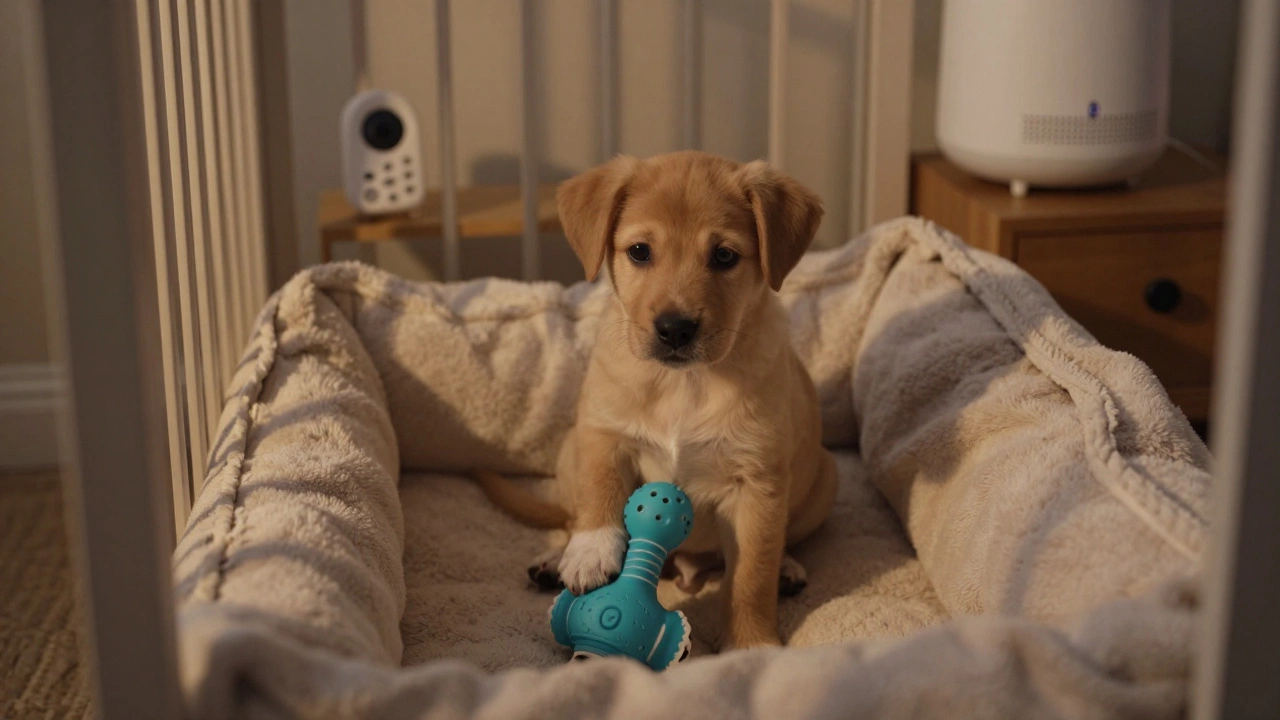
When you first bring a puppy home, the last thing you want is to hear constant barking coming from the crate. It’s loud. It’s stressful. And it makes you wonder - should you just ignore it? Or should you rush in to calm them down? The truth isn’t black and white. Ignoring barking might work… but only if you understand why your puppy is barking in the first place.
Why Do Puppies Bark in Crates?
Puppies don’t bark in crates just to annoy you. Their barking is communication. It’s their way of saying, "I’m scared," "I need to go out," "I’m lonely," or "I don’t understand this." The most common reasons include:- New environment: The crate feels like a prison, not a safe space. Puppies haven’t learned it’s a den yet.
- Separation anxiety: They’ve never been alone. The moment you leave the room, panic sets in.
- Bladder or bowel pressure: A 10-week-old puppy can’t hold it for more than 2 hours. If they’re barking at 2 a.m., they likely need to go.
- Overstimulation or boredom: Too much excitement before crating - like a long play session - leaves them wired.
- Learned behavior: If you’ve ever rushed in when they barked, they learned barking gets attention.
Ignoring barking without understanding the cause is like ignoring a car’s check engine light. The problem doesn’t go away - it gets worse.
When Ignoring Works (and When It Doesn’t)
Ignoring barking can be part of the solution - but only if the puppy is barking for attention, not because they’re in distress.Here’s how to tell the difference:
- Attention-seeking barking: High-pitched, rhythmic, and stops when you walk away. Often happens right after you put them in the crate and leave the room. This is the type you can safely ignore.
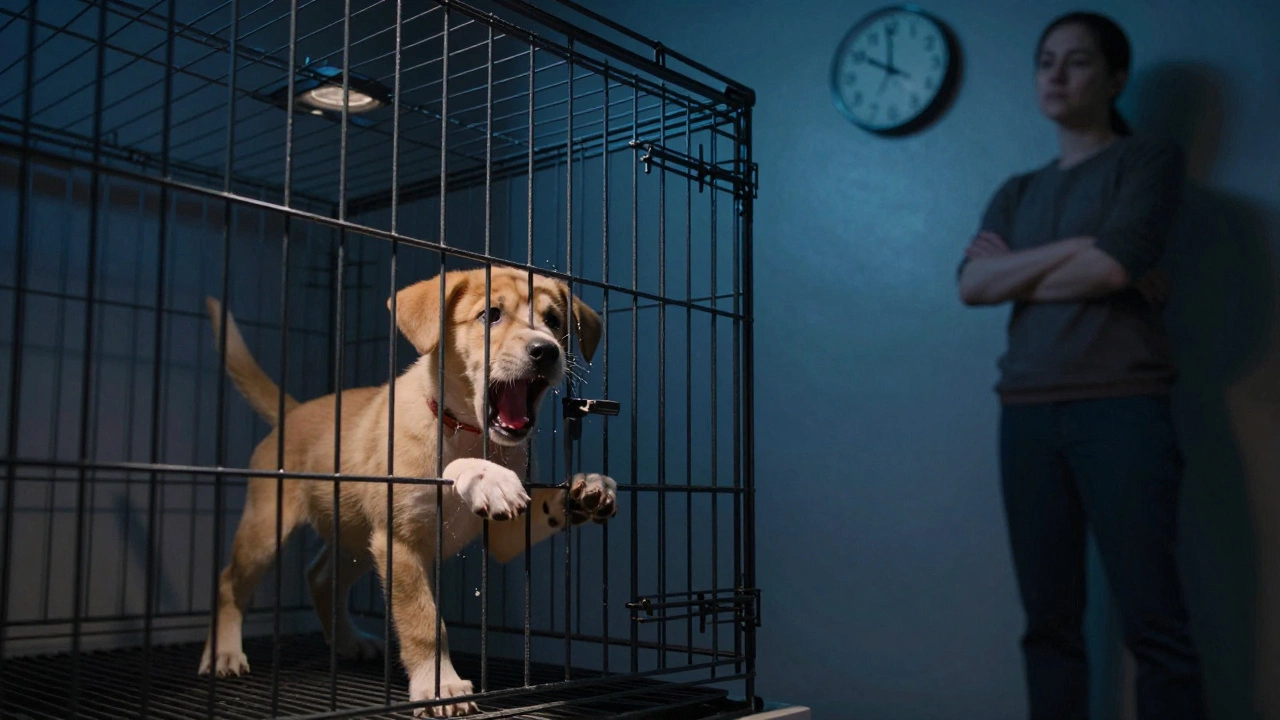
- Distress barking: Continuous, frantic, sometimes accompanied by scratching, whining, or pacing. May include drooling, panting, or accidents. This means they’re overwhelmed. Ignoring this can damage trust and worsen anxiety.
A 2023 study from the University of Edinburgh tracked 200 puppies in crate training. Those whose owners responded to distress barking with calm reassurance (not picking them up) settled faster than those who were ignored entirely. The key? Not ignoring - responding appropriately.
How to Crate Train Without Rewarding Barking
You don’t have to choose between ignoring and coddling. There’s a middle path.- Make the crate inviting: Line it with a soft blanket, add a safe chew toy (like a frozen Kong), and leave the door open during the day. Let them explore it on their own. A crate should smell like home, not isolation.
- Build positive associations: Feed meals inside the crate. Give treats only when they’re quiet inside. This teaches them: "Crate = good things happen."
- Start small: Put them in the crate for 5 minutes while you sit in the same room. Gradually increase time. Never lock them in for the first few days.
- Use a white noise machine: Background sound from a fan or radio helps mask outside noises that trigger barking.
- Don’t rush in: If they bark, wait for a 5-second pause. Then quietly say "quiet" and reward with a treat. Repeat. This teaches them silence = reward.
Never yell. Never punish. Never leave them in for longer than their bladder can hold. A general rule: 1 hour per month of age, plus 1 hour. So a 3-month-old puppy? Max 4 hours.
What to Do If Barking Doesn’t Stop
If after 3-5 days of consistent training, your puppy still barks nonstop:- Check for medical issues: A sudden increase in barking could mean a urinary tract infection or other discomfort. Visit your vet if you’re unsure.
- Try a different location: Some puppies feel safer near you. Try the crate in your bedroom, just outside the door. Gradually move it farther away over days.
- Use a baby monitor: Listen for signs of distress. If you hear panting, whining, or frantic scratching - go check. They may need to go outside.
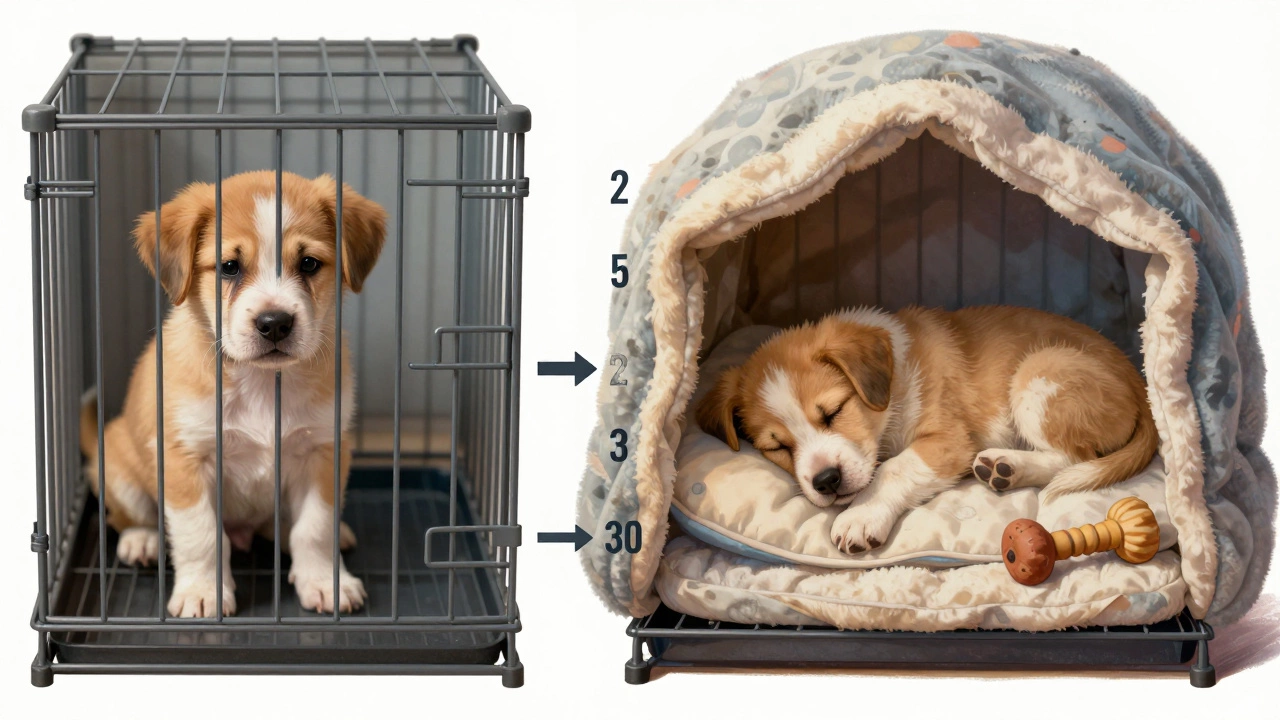
- Consider a crate cover: A light blanket over the crate can mimic a den, reducing visual stimuli that trigger anxiety.
One owner we spoke with had a 4-month-old Labrador who barked for 45 minutes every night. She tried ignoring it for a week - nothing changed. Then she started putting the crate in her bedroom, playing soft music, and only letting them out after 2 full minutes of quiet. Within 4 days, the barking dropped to under 5 minutes. The key? Consistency, not silence.
Common Mistakes That Make Barking Worse
Even well-meaning owners make these mistakes:- Letting them out while barking: This teaches them barking = freedom. Always wait for quiet.
- Using the crate as punishment: If the crate is only used when they’re in trouble, they’ll fear it.
- Leaving them too long: A 12-week-old puppy shouldn’t be crated for 6 hours. They’re not adults.
- Not practicing daytime crating: If you only crate at night, they’ll associate it with abandonment. Practice during the day while you’re home.
One of the biggest errors? Thinking "ignoring" means "no response at all." That’s not training - that’s neglect. Training means teaching. And teaching requires patience, timing, and consistency.
What Success Looks Like
Good crate training doesn’t mean instant silence. It means:- Short bursts of barking (under 5 minutes) when first placed in the crate
- Gradual reduction in barking over days
- Settling down quietly after a few minutes
- Staying calm when you leave the room
By 6 months, most puppies sleep through the night in their crate without a sound. But that doesn’t happen overnight. It happens because you showed up - not to rescue them, but to teach them.
When to Get Help
If your puppy is still barking intensely after 2 weeks of consistent training - or if they’re showing signs of severe anxiety (chewing paws, refusing to eat, vomiting), it’s time to consult a certified dog trainer or veterinary behaviorist. Separation anxiety isn’t something you can outlast. It needs a plan.There’s no magic fix. But there is a clear path: understand the cause, respond with calm consistency, and never rush the process. Your puppy isn’t being "bad." They’re scared. And with the right approach, they’ll learn the crate isn’t a cage - it’s their safe place.
Should I ignore my puppy’s barking in the crate?
Only if the barking is attention-seeking - short, rhythmic, and stops when you walk away. If it’s frantic, continuous, or accompanied by whining or scratching, your puppy is in distress. Ignoring distress can worsen anxiety. Always check for needs like bathroom breaks or medical issues before assuming it’s just attention-seeking.
How long should I let my puppy cry in the crate?
Never leave a puppy crying for more than 10-15 minutes at a time, especially if they’re under 4 months old. Young puppies have small bladders and limited emotional control. If they cry for longer than 15 minutes, they may need to go outside, be too cold/hot, or be in pain. Always rule out physical needs before assuming it’s behavioral.
Is it okay to put a blanket over the crate?
Yes - but only partially. Covering three sides of the crate with a light blanket can create a den-like feel, which many puppies find calming. Never cover the front entirely or block airflow. Use a breathable fabric and always check that your puppy isn’t overheating.
Can crate barking lead to long-term behavior problems?
Yes - if it’s caused by fear or neglect. Repeatedly leaving a puppy alone in distress without help can lead to separation anxiety, destructive behavior, or fear of confinement. On the other hand, if you respond appropriately and teach calmness, crate training builds confidence. The difference is in how you respond.
What’s the fastest way to stop puppy crate barking?
There’s no fast fix - but the most effective method is consistent, gradual exposure. Start by crating your puppy for 5 minutes while you’re home. Reward quiet behavior with treats. Slowly increase time and distance. Pair it with a frozen Kong toy for mental distraction. Most puppies settle within 3-7 days if you avoid rushing and respond calmly.