Puppy Nighttime Bladder Calculator
Estimated Results
--
- Remove water bowl 2-3 hours before bed.
- Feed dinner at least 3-4 hours before bedtime.
Enter your puppy's details to see estimated bladder capacity and sleep recommendations.
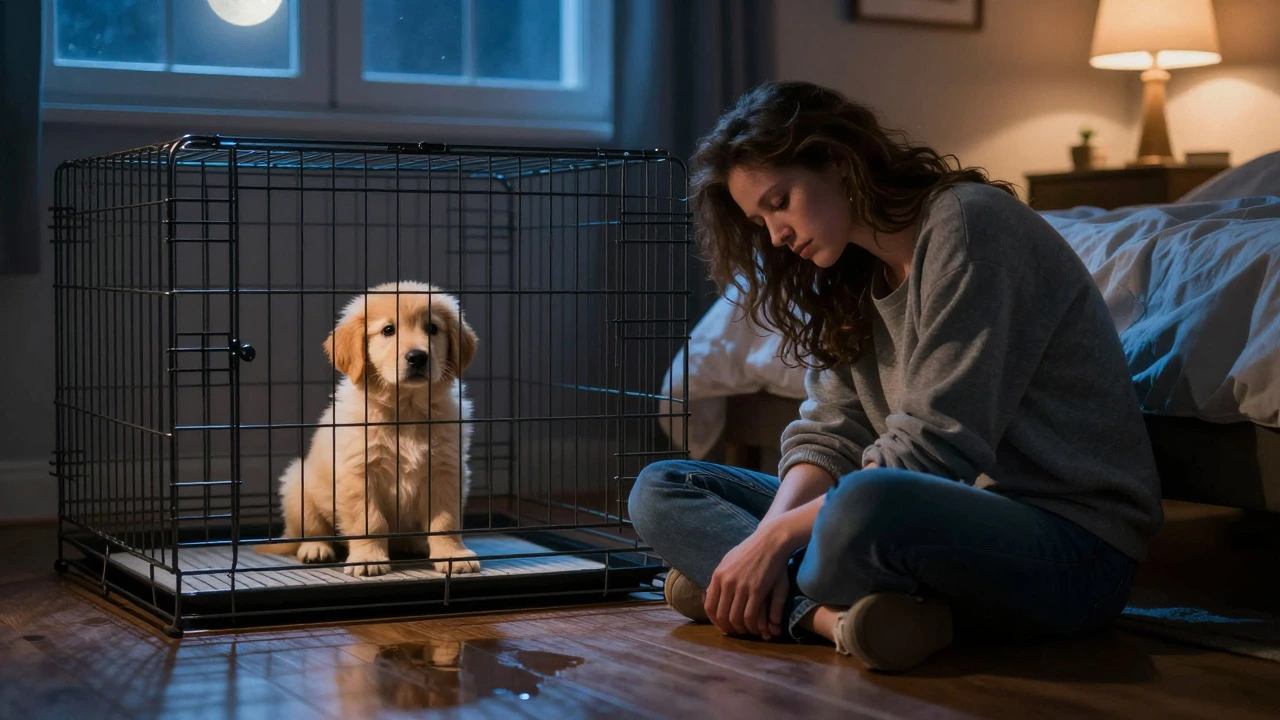
There is nothing quite as exhausting as a new puppy owner who hasn't slept through the night in weeks. You wake up to whining, you rush to the crate or pen, and there it is-a puddle on the floor. The immediate question that burns in your mind is simple but frustrating: when will this stop? Specifically, what age can puppies hold their pee at night without waking you up?
The short answer is that most puppies develop full nighttime bladder control between four and six months of age. However, "most" doesn't help much if you are dealing with a specific breed or a particularly stubborn pup right now. The reality is more nuanced. It depends heavily on the puppy's size, their biology, and how consistently you manage their evening routine.
The General Rule of Thumb for Bladder Capacity
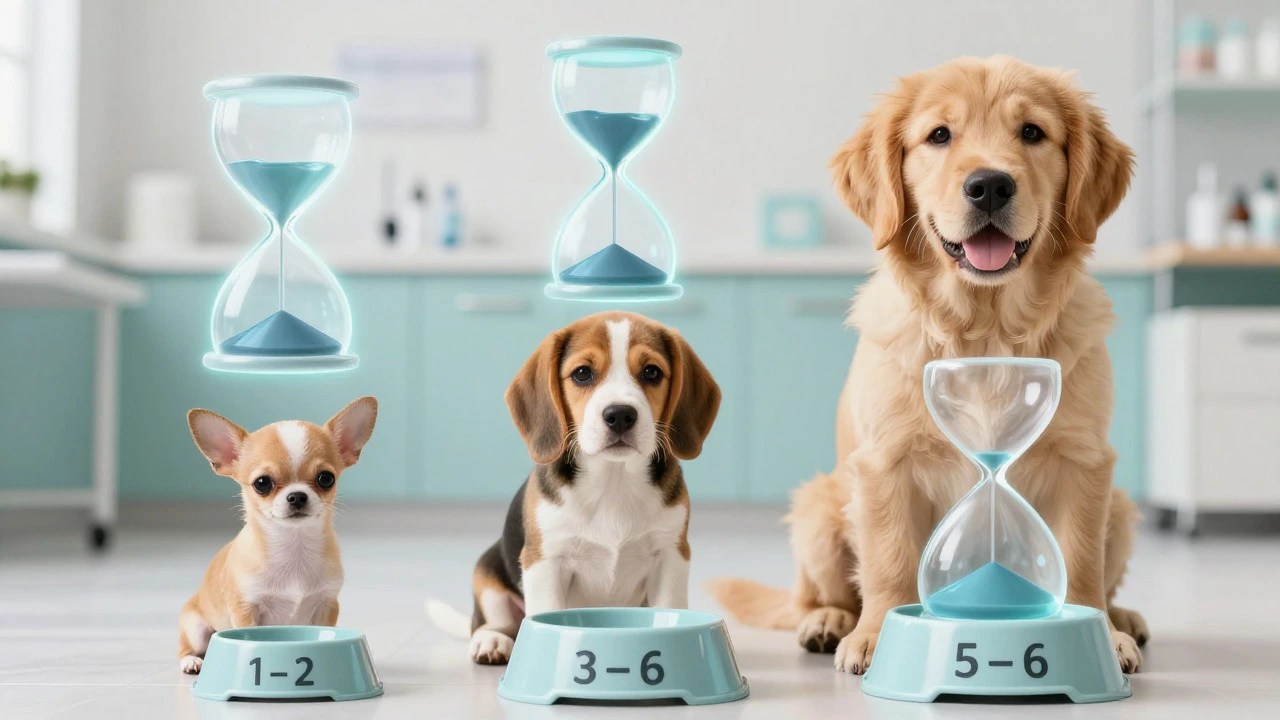
To understand when your dog might finally sleep through the night, you first need to understand the biological limits they are working against. A common guideline used by veterinarians and trainers is the "one hour per month of age" rule. This means a two-month-old puppy can physically hold their bladder for about two hours. A three-month-old can handle three hours, and so on.
However, this rule applies strictly to daytime activity. At night, metabolic rates slow down, and dogs naturally produce less urine. Because of this physiological shift, puppies can often hold their bladder slightly longer during sleep than they can while running around during the day. Generally, you can add one to two extra hours to their capacity for nighttime sleep.
So, a four-month-old puppy, who has a daytime capacity of four hours, might be able to sleep for five or six hours straight. If your puppy is sleeping from 10 PM to 4 AM, that six-hour window is manageable. But if they go to bed at 8 PM, they will likely need a break at midnight. Understanding this math helps you set realistic expectations rather than blaming yourself or the puppy for accidents.
How Size Impacts Bladder Control
Not all puppies follow the same timeline. Size plays a massive role in bladder development. Small breeds like Chihuahuas, Yorkshire Terriers, and Toy Poodles have tiny bladders and faster metabolisms. They simply fill up quicker. It is not uncommon for small breed puppies to take until six or even eight months to achieve consistent nighttime dryness.
In contrast, large breeds like Golden Retrievers, German Shepherds, and Labrador Retrieurs often mature faster in terms of bladder control. While they produce more urine volume, their larger bladder capacity allows them to hold it for longer periods relative to their body size. Many large breed puppies can sleep through the night by four or five months of age.
| Puppy Age | Small Breed (e.g., Chihuahua) | Medium Breed (e.g., Beagle) | Large Breed (e.g., Golden Retriever) |
|---|---|---|---|
| 8 Weeks | 1-2 Hours | 2-3 Hours | 3-4 Hours |
| 12 Weeks | 2-3 Hours | 3-4 Hours | 4-5 Hours |
| 16 Weeks | 3-4 Hours | 4-5 Hours | 5-6 Hours |
| 6 Months | 5-6 Hours | 6-8 Hours | 7-9 Hours |
| 1 Year | Full Night | Full Night | Full Night |
If you have a small breed puppy, patience is your best tool. Do not compare your tiny Yorkie to your friend’s giant Husky. Their developmental clocks are ticking at different speeds.
Setting Up the Evening Routine for Success
You cannot rely on biology alone. To help your puppy reach that milestone of sleeping through the night, you need to engineer their evening environment. The goal is to minimize urine production before bed and maximize the opportunity to empty the bladder completely.
Start by managing water intake. This does not mean depriving your puppy of water, which is essential for health. Instead, time it wisely. Allow free access to water during the day, but begin restricting it two to three hours before bedtime. For example, if you plan to put the puppy down at 10 PM, remove the water bowl at 7 PM. This gives their kidneys enough time to process the fluid and excrete it before sleep begins.
Food timing matters just as much. Digestion triggers urination. If you feed your puppy dinner right before bed, their body will work hard to digest that food, leading to increased bathroom needs. Aim to feed dinner at least three to four hours before bedtime. A light dinner followed by a long walk is far better than a heavy meal right before the crate.
The final step in the routine is the pre-bed potty break. This should not be a quick dash out the door. Take your puppy to their designated spot, use a cue word like "go potty," and wait. Wait until they finish. Then, wait another minute to ensure they are truly done. Only then should you return inside and place them in their sleeping area with zero playtime. Play excites them; excitement leads to accidents.
Managing the Middle-of-the-Night Wake-Up
Even with the best routine, you will likely need to wake up once or twice during the early stages of training. When your puppy whines, act quickly but calmly. Avoid turning on bright lights or engaging in play. Keep the interaction boring. Pick them up if necessary, carry them outside, and let them do their business.
If they go, offer a quiet "good boy" or "good girl" and immediately return them to their crate. If they don’t go within five minutes, bring them back inside and try again in twenty minutes. Sometimes puppies just want attention. By keeping the trip dull, you teach them that nighttime bathroom breaks are functional, not social.
As your puppy ages and their bladder capacity increases, gradually extend the time between these nighttime trips. If they usually wake you at 2 AM, try waiting until 3 AM for a week. If no accidents occur, push it to 4 AM. Slowly stretch the window until they can make it until morning.
Common Mistakes That Delay Progress
Many owners accidentally sabotage their own progress. One major error is punishing accidents after they happen. If you find a puddle in the morning, scolding the puppy is useless. They do not connect your anger with an event that happened six hours ago. They only learn to fear you or hide their accidents. Clean the mess thoroughly with an enzymatic cleaner to remove the scent markers that encourage repeat visits to the same spot.
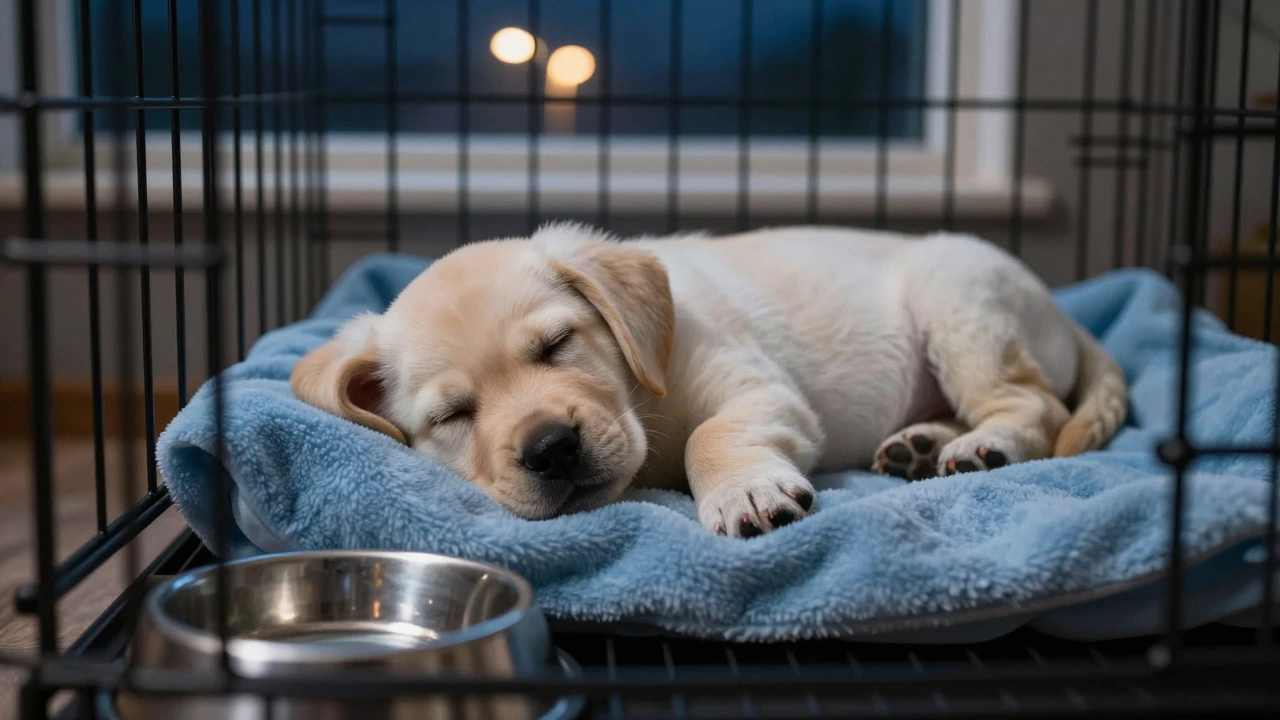
Another mistake is giving too much freedom too soon. Until your puppy is consistently dry for several weeks, they should not have free roam of the house at night. Use a crate or a small exercise pen. Dogs naturally avoid soiling their sleeping space. Confinement leverages this instinct to promote bladder control. Ensure the crate is the right size-large enough to stand and turn around, but not large enough to use one corner as a bathroom and the other as a bed.
Finally, do not skip the morning potty break. Even if your puppy sleeps through the night, they will likely have a full bladder first thing in the morning. Taking them out immediately upon waking reinforces the habit of emptying the bladder at the start and end of the sleep cycle.
When to Worry About Health Issues
Sometimes, accidents are not about training or age. If your puppy was previously reliable and suddenly starts having accidents, or if they seem unable to hold it despite being old enough, consult a veterinarian. Urinary tract infections (UTIs) are common in young dogs and cause frequent, urgent urination. Other issues like diabetes or anatomical abnormalities can also affect bladder control.
Watch for signs like straining to urinate, blood in the urine, excessive thirst, or lethargy. These are red flags that require professional medical attention, not more training. A vet visit can rule out physical causes and give you peace of mind.
Patience Is the Key Ingredient
Housebreaking is one of the most challenging aspects of raising a puppy. There will be bad nights. There will be setbacks. But remember that bladder control is a physical skill that develops over time. Your job is to support that development with consistency, structure, and empathy. By understanding your puppy's age, size, and biological limits, you can navigate this phase with confidence. Soon enough, those middle-of-the-night alarms will become unnecessary, and you’ll both enjoy the gift of uninterrupted sleep.
At what age can a puppy sleep through the night without peeing?
Most puppies can sleep through the night without peeing between four and six months of age. Small breeds may take longer, up to eight months, while large breeds often achieve this by four to five months. Consistency in routine is crucial for reaching this milestone.
How many times should I take my puppy out at night?
For puppies under 12 weeks, expect to take them out every 2-3 hours. As they age, reduce the frequency. A 3-month-old may need one break, while a 5-month-old might not need any. Gradually extend the time between breaks as their bladder capacity grows.
Should I limit my puppy's water at night?
Yes, but do not deprive them. Remove the water bowl 2-3 hours before bedtime to allow their body to process fluids. Ensure they have plenty of water during the day to stay hydrated properly.
Why is my older puppy still having accidents at night?
If a puppy over six months is still having accidents, check for medical issues like UTIs. Also, review your routine: are they drinking too much late in the day? Are they getting enough exercise? Inconsistent training or anxiety can also delay progress.
Does crate training help with bladder control?
Yes, crate training is highly effective. Dogs naturally avoid soiling their sleeping area. Using a correctly sized crate encourages them to hold their bladder until taken outside. It creates a clear boundary between sleeping and eliminating spaces.
What is the "one hour per month" rule?
This rule estimates a puppy's bladder capacity based on age. A 2-month-old puppy can hold it for roughly 2 hours. Add 1-2 hours for nighttime sleep due to slower metabolism. This helps predict when your puppy will need a bathroom break.
Do small breed puppies take longer to potty train?
Yes, small breeds often have smaller bladders and faster metabolisms, meaning they fill up quicker. They may take longer to achieve full nighttime bladder control compared to medium or large breeds, sometimes requiring patience until 6-8 months of age.