Vitamin D Toxicity Calculator for Dogs
How Much Vitamin D is Dangerous for Your Dog?
Vitamin D toxicity is a serious risk for dogs. This calculator shows the toxic threshold based on your dog's weight and the supplement dosage. Never guess - always consult your veterinarian.
Many dog owners think giving their pup a little extra vitamin D is harmless-maybe even helpful. After all, it’s good for humans, right? But here’s the hard truth: vitamin D can be deadly for dogs, even in tiny amounts. Unlike humans, dogs don’t regulate vitamin D the same way. A supplement meant for one person can poison a 20-pound dog. This isn’t a myth. It’s a real, documented danger that vet clinics see every month.
Why Vitamin D Is Dangerous for Dogs
Vitamin D helps regulate calcium and phosphorus in the body. That sounds useful, until you realize what happens when a dog gets too much. Excess vitamin D causes calcium to flood into the bloodstream. That calcium doesn’t just sit there-it deposits in soft tissues like the kidneys, heart, and stomach lining. This isn’t a slow process. Signs of poisoning can show up within 12 to 24 hours after ingestion.
Most cases come from accidental ingestion. Think: a dog chewing through a bottle of human vitamin D pills, licking up a vitamin D-rich topical cream, or eating a supplement meant for another pet. Even a single 50,000 IU tablet can be fatal for a small dog. Some human supplements contain up to 10 times the amount that’s safe for a dog. There’s no safe "dose" for dogs unless it’s prescribed and monitored by a vet.
What Happens When a Dog Eats Too Much Vitamin D
Early signs are easy to miss. You might notice your dog is less playful, eating less, or drinking more water than usual. These look like minor changes-until they’re not. Within a day or two, vomiting and diarrhea set in. Then comes lethargy, weakness, and sometimes seizures. By the time you see these symptoms, damage may already be happening to the kidneys.
Without treatment, vitamin D toxicity leads to acute kidney failure. The kidneys can’t filter the excess calcium, and calcium crystals form in the tubules. This isn’t reversible. In severe cases, dogs die within days. Even if they survive, they may need lifelong medication to manage kidney function. A 2023 study from the Journal of Veterinary Emergency and Critical Care found that 37% of dogs with severe vitamin D poisoning had permanent kidney damage.
Common Sources of Vitamin D Poisoning
It’s not just pills. Here’s where most dogs get poisoned:
- Human vitamin supplements-especially chewable or gummy forms that taste sweet
- Prescription flea treatments-some older topical products contain cholecalciferol (vitamin D3)
- Rodenticides-many rat and mouse poisons use vitamin D3 as the active ingredient
- Fortified foods-some dog foods or treats are overly enriched with vitamin D
- Topical creams-vitamin D creams for human skin conditions can be licked off
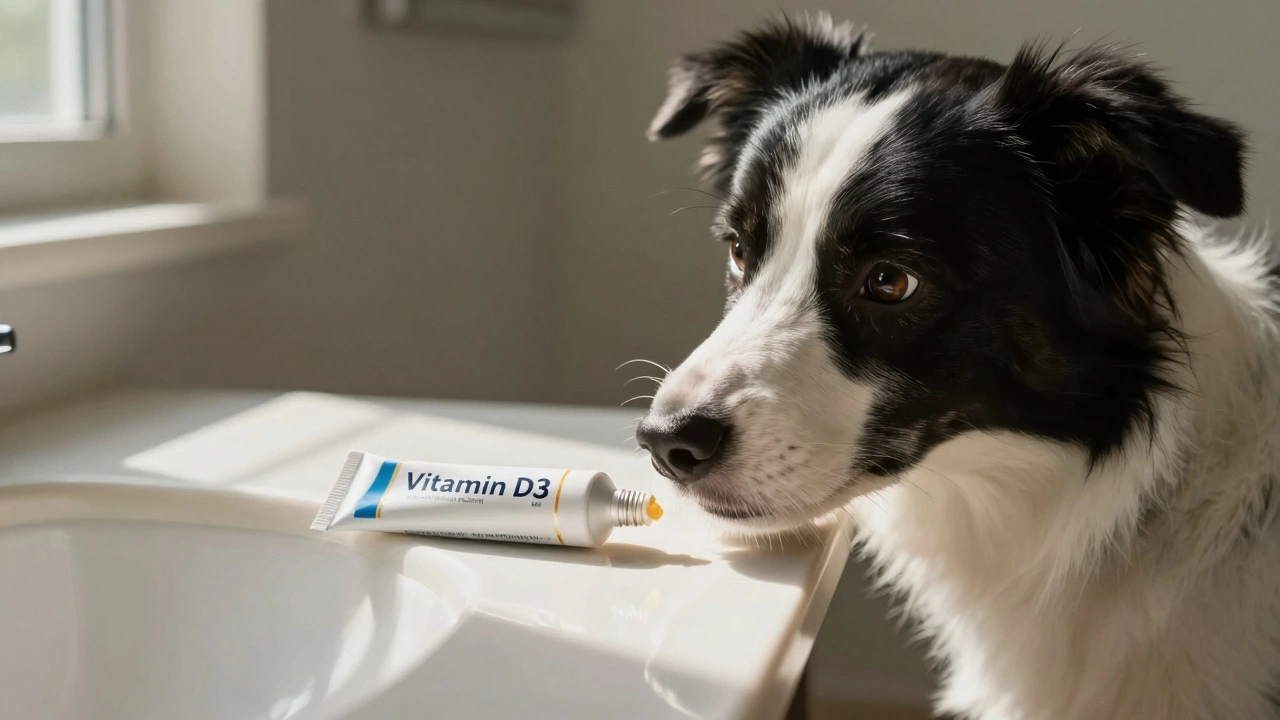
One real case from a Wellington vet clinic in 2025 involved a Border Collie who ate a tube of vitamin D3 cream meant for his owner’s eczema. The dog needed 72 hours of IV fluids and dialysis. He survived, but his kidney function dropped by 40%. That’s not a risk worth taking.
How Much Vitamin D Is Safe for Dogs?
The Association of American Feed Control Officials (AAFCO) says adult dogs need about 500 IU of vitamin D per kilogram of food. That’s roughly 125 IU per 10 pounds of body weight per day-spread across meals. Most quality dog foods already meet this. You don’t need to add anything.
There’s a big difference between dietary needs and toxic levels. The toxic threshold? As low as 0.1 mg per kg of body weight. For a 10-pound dog, that’s less than a single human vitamin pill. There’s no margin for error. Even a vet-prescribed supplement must be dosed precisely. Never guess. Never share.
What to Do If Your Dog Eats Vitamin D
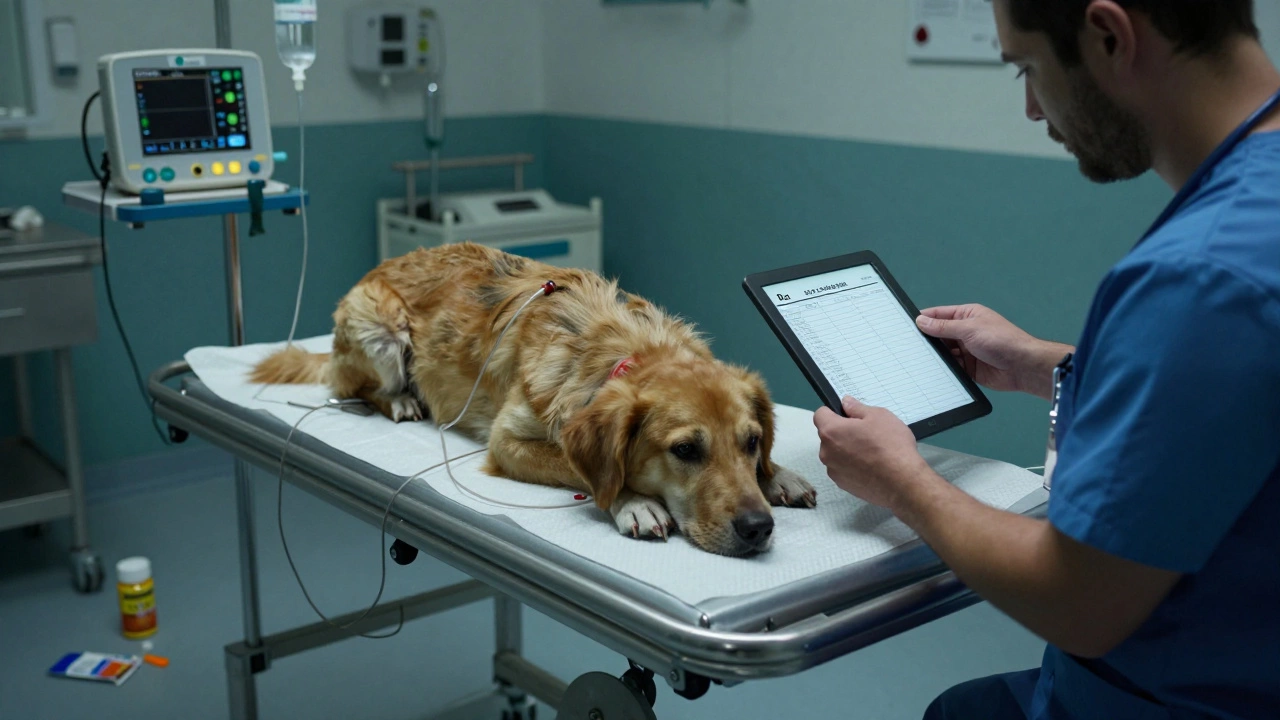
If you catch your dog with a supplement in its mouth, don’t wait. Don’t try to induce vomiting yourself. Don’t call your neighbor. Call your vet or an emergency animal hospital immediately. Time matters. The sooner treatment starts, the better the outcome.
Here’s what vets typically do:
- Run blood tests to check calcium and vitamin D levels
- Give activated charcoal to block further absorption
- Start IV fluids to flush out toxins and protect the kidneys
- Use medications like corticosteroids or bisphosphonates to lower calcium levels
- Monitor for 3 to 7 days-sometimes longer
Even if your dog seems fine, don’t assume it’s okay. Symptoms can be delayed. Always get checked.
Safe Alternatives for Dog Health
If you’re worried your dog isn’t getting enough nutrients, talk to your vet-not Google. Most dogs get all they need from balanced dog food. If your dog has a medical condition (like kidney disease or malabsorption), your vet might prescribe a specific supplement. But it won’t be over-the-counter vitamin D.
For joint support, try glucosamine or omega-3s from fish oil. For skin and coat, look for zinc or biotin supplements made specifically for dogs. Always check labels. Avoid anything with added vitamin D.
Prevention: How to Keep Your Dog Safe
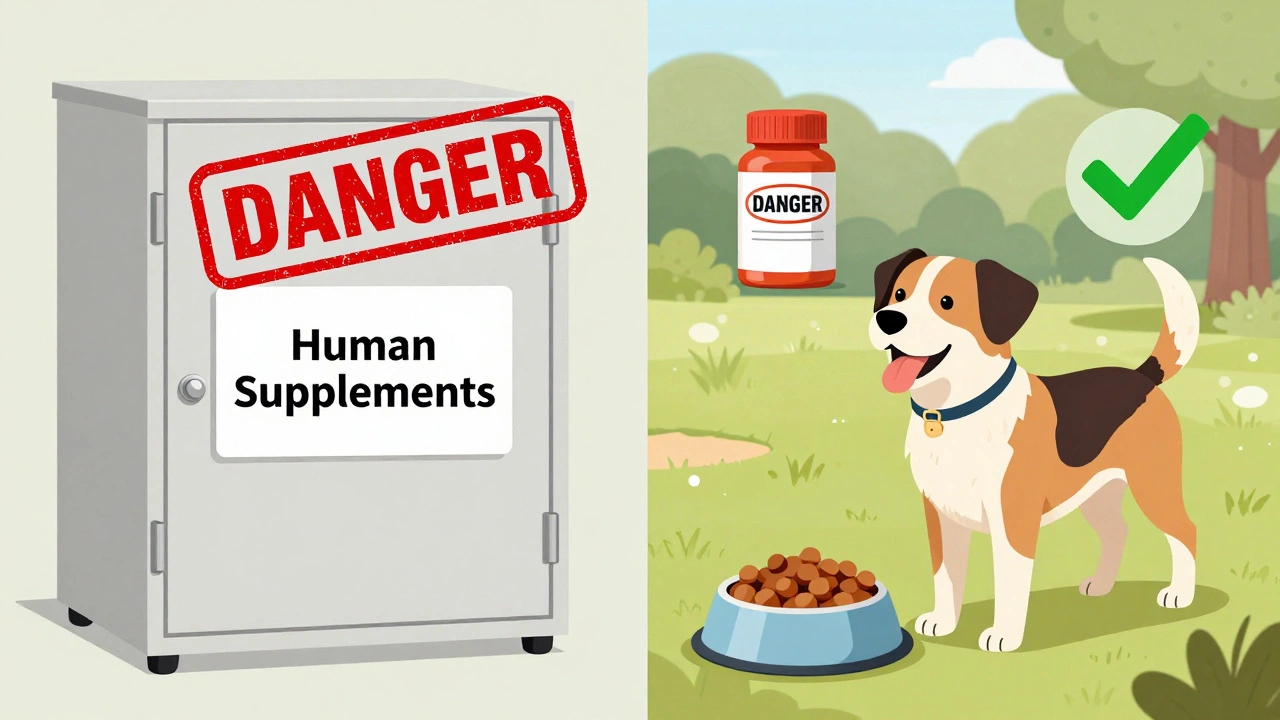
- Store all human supplements in locked cabinets, not on counters
- Never give your dog any supplement without vet approval
- Check the ingredients of dog treats and foods-you’d be surprised how many are over-fortified
- Use pet-safe pest control instead of rodenticides
- Keep topical creams and lotions out of reach
One simple habit: treat all supplements like poison. Because for dogs, they are.
Frequently Asked Questions
Can dogs get vitamin D from sunlight like humans?
No. Dogs don’t make vitamin D from sunlight the way humans do. Their skin lacks the necessary precursor compound. That’s why their vitamin D must come entirely from food. This is why overdosing from supplements is so dangerous-they’re getting all their D from diet, and adding more pushes them into toxic range.
Is vitamin D3 the same as vitamin D in dog poisoning cases?
Yes. Vitamin D3 (cholecalciferol) is the form most commonly involved in poisoning. It’s the type found in human supplements, rodenticides, and some topical creams. It’s more potent and more dangerous than vitamin D2. There’s no safe version for dogs outside of vet-controlled dosing.
Can I give my dog vitamin D if it has low levels?
Only if your vet confirms a true deficiency through blood tests and prescribes a specific dose. Most dogs don’t need extra vitamin D. Even if your vet says yes, they’ll use a veterinary-formulated product with precise measurements. Never use human supplements as a substitute.
How long does vitamin D toxicity last in dogs?
The effects can last weeks. Even after treatment, calcium levels can remain elevated for up to a month. That’s why dogs need follow-up blood tests and often stay on a low-calcium diet during recovery. Some dogs require lifelong monitoring if kidney damage occurred.
Are certain dog breeds more at risk?
No breed is more susceptible to the toxin itself, but smaller dogs are at higher risk simply because they weigh less. A single pill that’s harmless to a Labrador could kill a Chihuahua. Puppies and senior dogs also process toxins less efficiently, so they’re more vulnerable.