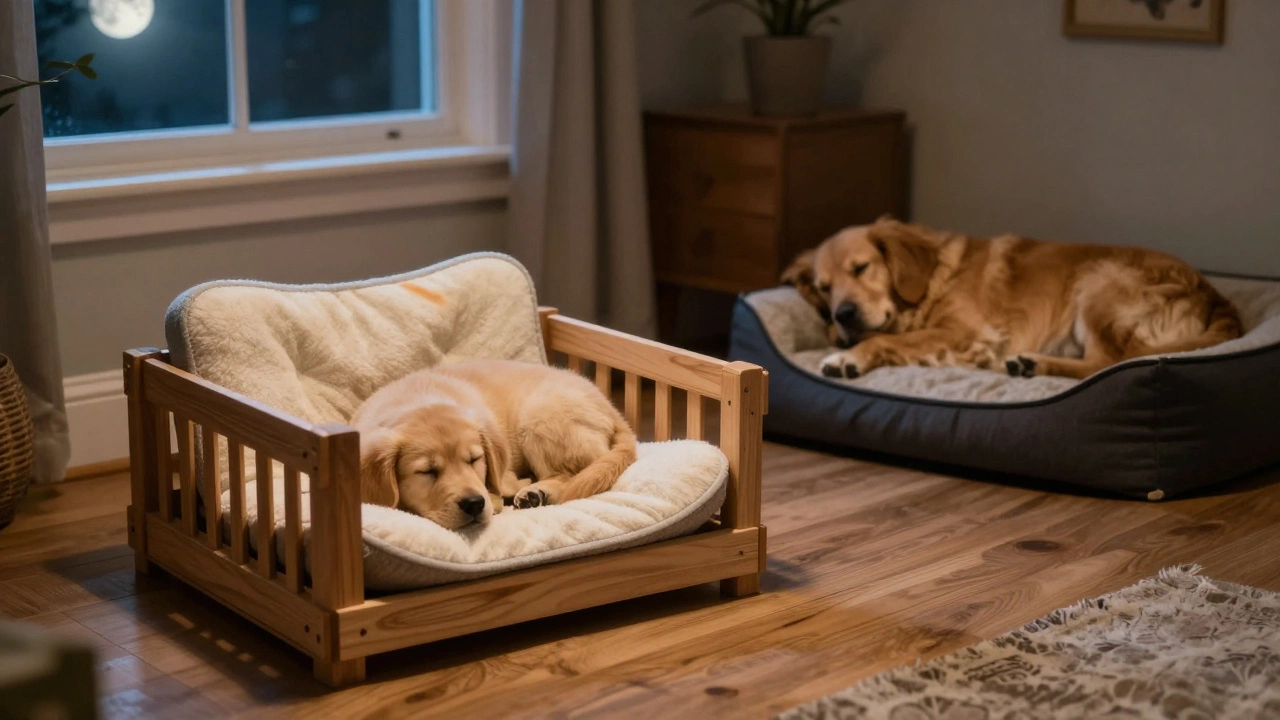
Dog Sleeping Arrangement Selector
Personalized Recommendation Tool
Answer these questions to get a personalized recommendation for your dog's best sleeping arrangement based on the latest veterinary research and expert advice.
Your results will appear here after clicking "Get Recommendation"
When you’re deciding where your dog should sleep at night, the choice between a crate and a bed isn’t just about comfort-it’s about safety, training, and your dog’s natural instincts. Many owners assume a soft bed is always better, but that’s not always true. The right choice depends on your dog’s age, behavior, breed, and home environment. Let’s break down what actually works for most dogs-and why.
Why Crates Work for Dogs
Dogs are den animals. In the wild, they seek out enclosed, secure spaces to rest and raise pups. A crate taps into that instinct. A properly sized crate gives your dog a sense of security, not confinement. Think of it like a cozy cave-just big enough for them to stand, turn around, and lie down fully stretched.Crates are especially helpful for puppies under six months. Without a crate, a young dog is likely to chew shoes, dig carpets, or have accidents because their bladder control isn’t developed yet. A crate prevents those problems and helps them learn house rules. A 2023 study from the University of Edinburgh found that puppies crated overnight had 60% fewer indoor accidents by 12 weeks compared to those left loose in the house.
For adult dogs, crates are a lifesaver during travel, vet visits, or recovery after surgery. They keep your dog safe and calm in unfamiliar places. Even dogs that sleep in beds often do better in crates during storms or fireworks. The enclosed space reduces anxiety by blocking out loud noises and sudden movements.
When a Dog Bed Is the Better Choice
A dog bed wins when your dog is calm, trained, and doesn’t have destructive habits. If your dog sleeps peacefully through the night, doesn’t chew furniture, and stays off the couch, a bed gives them freedom and comfort. Older dogs, especially those with arthritis, benefit from orthopedic beds that cushion joints and reduce pressure points. A study from the Royal Veterinary College showed that senior dogs on memory foam beds moved more easily in the morning and showed fewer signs of pain.Large breeds like German Shepherds or Labradors often prefer beds because crates can feel too small. A 36-inch crate might be fine for a Border Collie, but it’s cramped for a 90-pound dog. A spacious, low-profile bed on the floor lets them stretch out fully, which is important for joint health.
Also, dogs that bond closely with their owners often sleep better near the bed. If your dog follows you everywhere, forcing them into a crate in another room can increase stress. A bed beside your bed, or even on the floor nearby, helps them feel connected without being on your sheets.
The Size and Setup Matter More Than the Type
A crate that’s too big turns into a bathroom. A bed that’s too small turns into a sore back. Both need to fit your dog’s body correctly.For crates: Measure your dog from nose to tail and add 2-4 inches. For height, add 2-3 inches to their standing height. A 24-inch crate works for most medium dogs (like Beagles or Cocker Spaniels). A 42-inch crate fits large breeds like Golden Retrievers. Make sure the door closes securely and the bars are spaced so paws or heads can’t get stuck.
For beds: Choose one that’s at least as long as your dog from nose to tail. Look for memory foam or orthopedic foam-not just polyester stuffing. Beds with raised edges help dogs feel secure, especially if they like to lean against something. Washable covers are a must. Dogs shed, drool, and track in dirt. A bed that can go in the washing machine saves you time and keeps your home cleaner.
Can You Use Both?
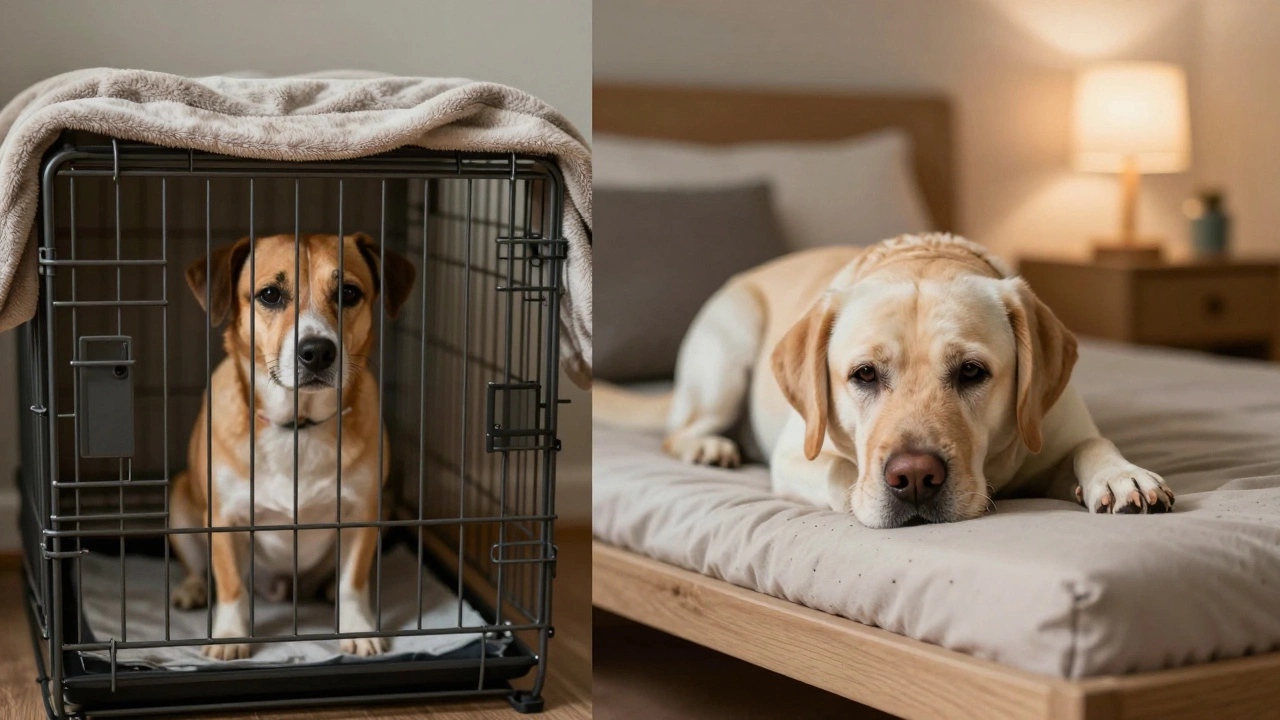
Yes, and many owners do. Use a crate at night for puppies or dogs still learning house rules. Once they’re reliable, switch to a bed. Or use the crate during the day when you’re out, and the bed at night when you’re home.Some dogs have a dual setup: a crate in the bedroom for quiet nights, and a soft bed in the living room for lounging. This gives them choice and control. Dogs that feel in control of their space are less anxious and more relaxed.
Pro tip: Never use a crate as punishment. If your dog associates the crate with being scolded, they’ll fear it. Always make it positive-treats, toys, and praise inside. The same goes for beds. If you only put your dog on the bed when they’re being scolded, they’ll avoid it.
Signs Your Dog Doesn’t Like the Crate
Not all dogs take to crates. Watch for these signs:- Panting or whining for more than 10 minutes after being placed inside
- Trying to escape, scratching at the door, or chewing the crate
- Accidents in the crate despite being house-trained
- Refusing treats or toys inside
If you see these, don’t force it. Try a bed instead. Or adjust the crate setup-cover it with a light blanket to make it feel more den-like, or move it closer to where you are. Some dogs just prefer open spaces. That’s okay.
Signs Your Dog Needs a Better Bed
A bad bed can cause real health problems:- Getting up slowly or limping in the morning
- Shifting positions constantly during sleep
- Choosing to sleep on the floor, tile, or cold spots
- Flattened, lumpy, or stained bedding that hasn’t been washed in months
Older dogs, overweight dogs, and breeds prone to hip dysplasia (like Bulldogs or Rottweilers) need supportive beds. Don’t wait until they’re in pain. Replace a flat, worn-out bed before the damage starts.
Real-Life Scenarios
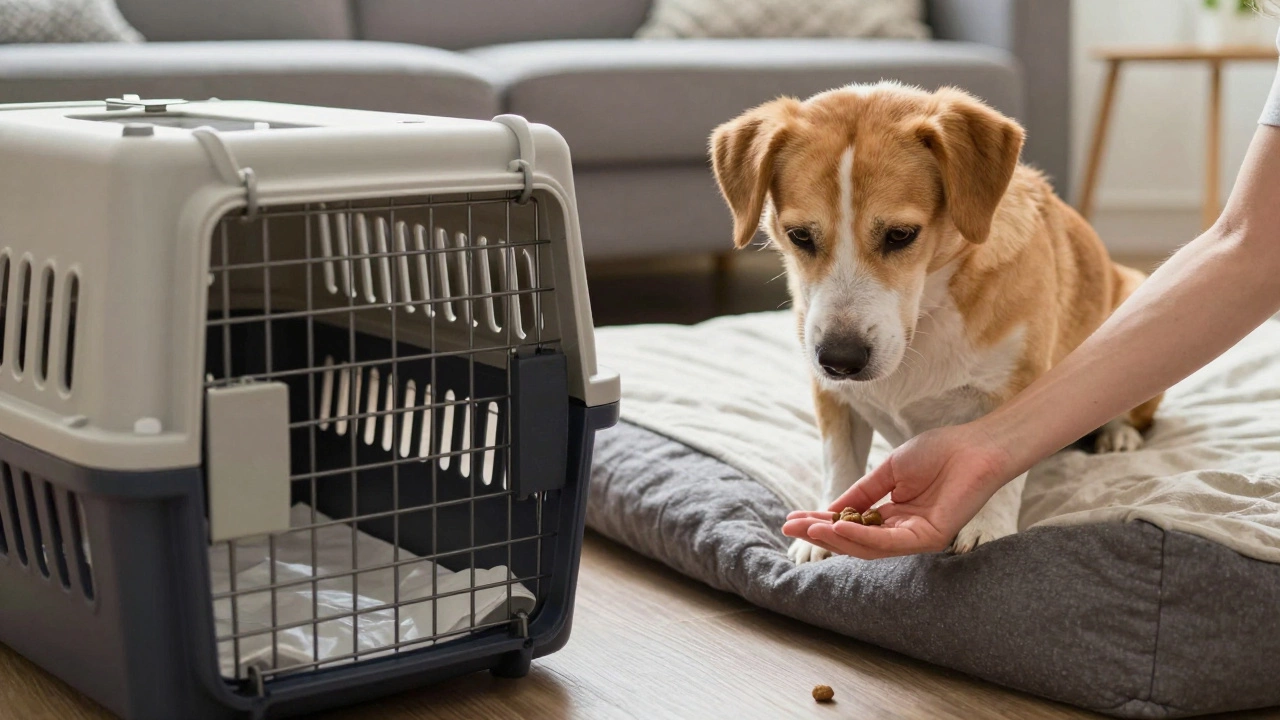
Here’s what works in real homes:- Puppy (4 months): Crate in the bedroom at night. Bed in the living room during the day. Crates help with potty training and prevent chewing.
- Senior Labrador (10 years): Orthopedic bed in the bedroom. No crate needed-they’re calm, house-trained, and their joints need cushioning.
- Rescue Dog (2 years, anxious): Started with a covered crate for security. After three months, switched to a low-sided bed near the couch. Now sleeps peacefully without confinement.
- Border Collie (3 years, high energy): Uses a crate when left alone during the day. At night, sleeps on a large bed beside the owner’s bed. The routine gives them structure and connection.
What Experts Say
Veterinary behaviorists in New Zealand and the U.S. agree: there’s no one-size-fits-all answer. The best sleeping setup is the one that matches your dog’s personality and needs. A crate isn’t a prison. A bed isn’t a luxury. Both are tools.Dr. Elena Mora, a canine behavior specialist in Wellington, says: "I see clients who think a crate is cruel. But the dogs who sleep in them often look more rested and less stressed than those sleeping on the floor. It’s about how you use it, not the box itself."
Final Tip: Let Your Dog Choose
Try this: Set up a crate and a bed in the same room. Put a treat in each. Let your dog go in whichever one they like. Watch where they settle after a long day. Most dogs will tell you what they prefer-if you give them the chance.Your dog’s sleep isn’t about what looks nice on Instagram. It’s about their physical comfort, mental safety, and long-term health. Pick the option that helps them rest deeply, wake up happy, and live well.
Should I let my dog sleep in my bed?
It’s fine if your dog is well-behaved, clean, and doesn’t disrupt your sleep. Many dogs bond better when they sleep near their owners. But if your dog snores, moves a lot, or has allergies, a separate bed nearby is better. Never force your dog into your bed if they seem uncomfortable.
Can a crate be too big for a dog?
Yes. A crate that’s too large lets your dog use one end as a bathroom and sleep in the other. That defeats the purpose. Use a divider panel or choose a crate that fits snugly. For growing puppies, buy a larger crate and block off extra space until they grow into it.
Do dogs need a bed if they have a crate?
Yes. A bare crate floor is cold and uncomfortable. Add a washable mat, foam pad, or small bed inside. Even dogs who sleep on the floor at night often prefer cushioning in their crate. It’s not optional-it’s basic comfort.
What’s the best material for a dog bed?
Memory foam or orthopedic foam is best for joint support. Avoid cheap polyester fill-it flattens fast and offers no cushioning. Look for beds with removable, machine-washable covers. Waterproof liners help with accidents or drooling. For hot climates, breathable fabrics like cotton or mesh are better than thick fleece.
Is it cruel to crate a dog at night?
No, if done right. Crates are safe, secure, and mimic a natural den. Cruelty happens when crates are used as punishment, left open too long, or too small. A well-used crate gives dogs peace of mind. Many dogs choose to go into their crate voluntarily when they’re tired.