
Dog Ground Chicken Portion & Transition Calculator
Dog Profile
Recommended Daily Amount
Max 10% of daily calories
7-Day Transition Plan
Gradually introduce ground chicken to avoid digestive upset.
10% Chicken / 90% Regular Food
25% Chicken / 75% Regular Food
50% Chicken / 50% Regular Food
Safety Checklist
- ✓ Cook to internal temp of 165°F (74°C)
- ✓ Use boneless, unseasoned meat only
- ✓ Avoid garlic, onion, chives, and excessive salt
- ✓ Monitor for allergic reactions (itching, ear infections)
Enter Your Dog's Details
Fill in the form to calculate safe ground chicken portions and get a personalized transition plan.
That bag of ground chicken in your freezer looks like an easy way to add protein to your dog's meals. But before you scoop a bowlful, you need to know the difference between a nutritious treat and a health hazard. Ground chicken is a versatile poultry product that can be a high-quality protein source for dogs when prepared correctly. The short answer is yes, it is good for them-but only if you handle it with care. Raw ground chicken carries risks, while cooked, unseasoned meat offers lean muscle support without the heavy fat load of beef.
The Nutritional Profile: Why Dogs Like It
Dogs are omnivores with a carnivorous bias. They thrive on animal proteins, and chicken is one of the most digestible sources available. When you feed your dog ground chicken, you are providing essential amino acids that build muscle, repair tissue, and support immune function. Unlike processed kibble, which often contains fillers like corn or wheat, pure ground chicken is a single-ingredient powerhouse.
The nutritional value depends heavily on the cut. Lean ground chicken breast provides about 22 grams of protein per 100 grams with minimal fat. Dark meat mixes (thighs and backs) offer more iron and zinc but come with higher saturated fat content. For active working dogs or puppies growing rapidly, the extra calories from dark meat might be beneficial. For senior dogs or those prone to pancreatitis, the leaner white meat is safer. Always check the label for additives; some commercial ground chicken includes skin, bones, or preservatives that aren't ideal for pets.
| Type | Protein (per 100g) | Fat Content | Best For |
|---|---|---|---|
| Lean Breast | High (~22g) | Low (<3g) | Weight management, sensitive stomachs |
| Dark Meat Mix | Moderate (~18g) | High (>10g) | Active dogs, weight gain needs |
| With Skin/Bones | Moderate | Very High | Avoid unless specifically formulated for pets |
Raw vs. Cooked: The Great Debate
This is where opinions split sharply among pet owners. Some swear by the BARF diet (Biologically Appropriate Raw Food, a feeding method using raw meat, organs, and bones) because it preserves natural enzymes and nutrients. Others stick to cooked meat to eliminate bacterial risks. Both approaches have merit, but they require different levels of diligence.
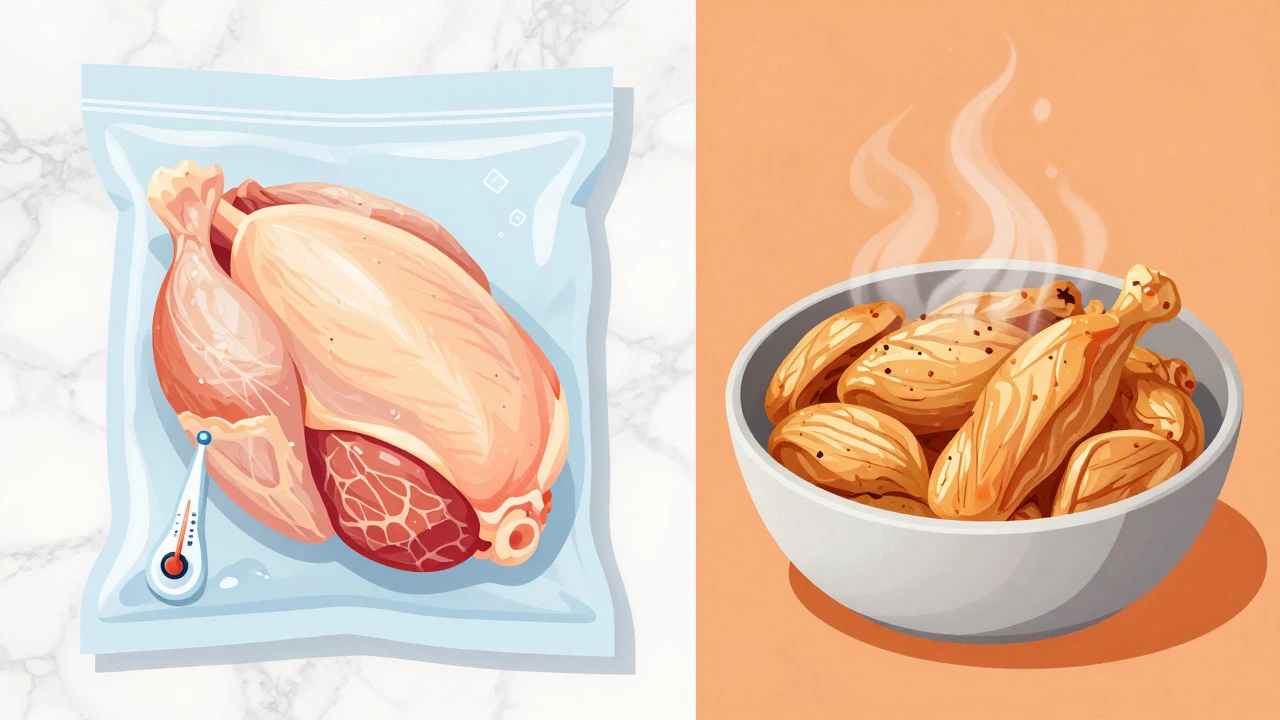
If you choose to feed raw ground chicken, you must accept the responsibility of biosecurity. Raw poultry can harbor Salmonella and Campylobacter. While healthy adult dogs often process these bacteria without issue, they can still shed them in their feces, posing a risk to children, elderly family members, or immunocompromised humans in the household. If you go raw, buy human-grade meat, freeze it for at least 72 hours to kill parasites, and store it separately from human food. Wash all bowls and surfaces with hot, soapy water immediately after feeding.
Cooking ground chicken eliminates almost all bacterial threats. However, you must cook it thoroughly-reaching an internal temperature of 165°F (74°C)-and never add seasoning. Salt, garlic, onion powder, and pepper are common in human recipes but toxic or irritating to dogs. Plain, boiled, or baked ground chicken is the safest route. It loses some heat-sensitive vitamins during cooking, but the safety margin is significantly wider, making it ideal for beginners or cautious owners.
Hiding the Dangers: Bones and Seasonings
One of the biggest mistakes owners make is assuming "ground" means "boneless." Commercially sold ground chicken usually has no bones, but if you grind meat at home, even small bone fragments can remain. Cooked chicken bones splinter into sharp shards that can puncture the esophagus, stomach, or intestines. This is a veterinary emergency. Always inspect homemade ground meat carefully or stick to store-bought boneless packages labeled for human consumption.
Seasonings are another silent killer. A little salt won't kill your dog, but excessive sodium can lead to dehydration or sodium ion poisoning. Garlic and onions, even in powdered form found in many pre-seasoned ground meats, damage red blood cells and cause anemia. Check ingredient lists meticulously. If the package says "Italian Style" or "Spicy," put it back. You want plain, unadulterated meat.
How to Introduce Ground Chicken Safely
Even safe foods can upset a dog's digestive system if introduced too quickly. Sudden changes in diet often result in soft stools or vomiting. Follow this gradual transition plan:
- Day 1-2: Mix 10% ground chicken with 90% of their regular food. Watch for any signs of distress.
- Day 3-4: Increase to 25% chicken, 75% regular food.
- Day 5-7: Move to 50/50 if no issues arise.
- Ongoing: Decide if chicken will be a primary meal component or just a topper. Most vets recommend keeping novel proteins to under 10-15% of daily intake unless supervised by a nutritionist.
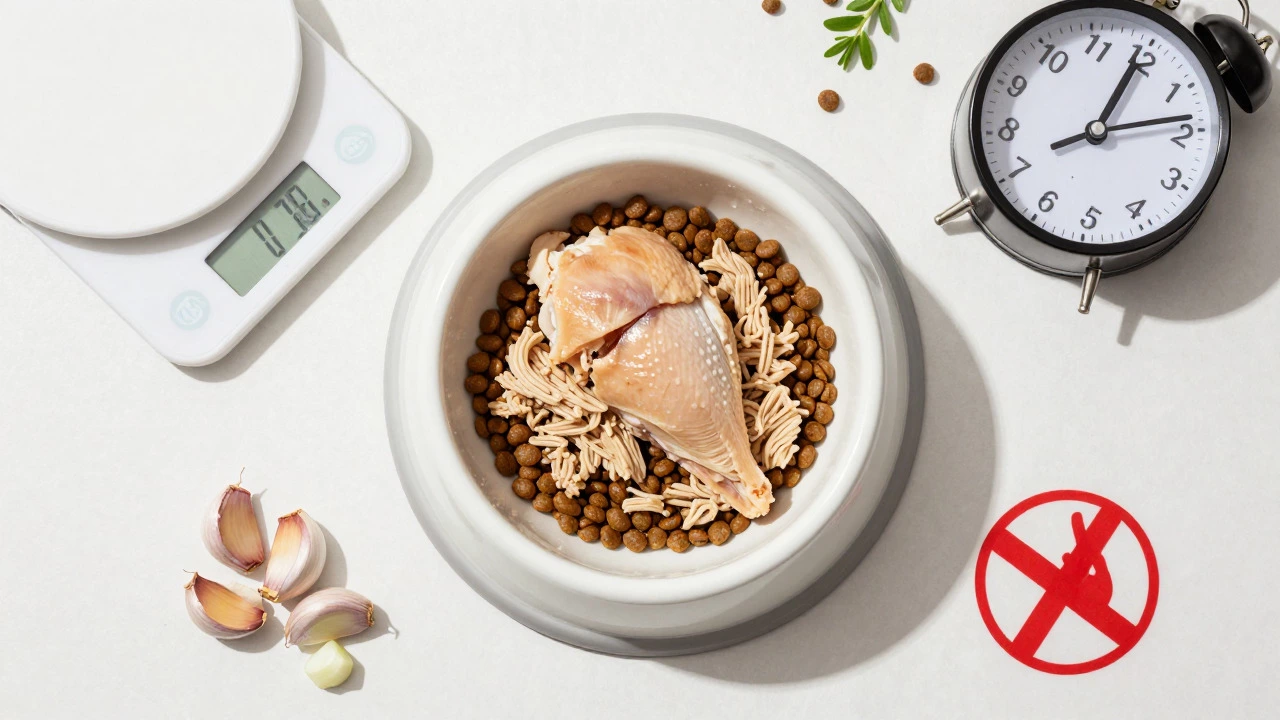
Portion control matters. Ground chicken is calorie-dense. Overfeeding can lead to obesity, which strains joints and increases heart disease risk. Use a kitchen scale to measure portions accurately. A general rule of thumb is that treats and toppers should not exceed 10% of your dog's total daily caloric needs.
Who Should Avoid Ground Chicken?
Not every dog tolerates poultry well. Chicken is a common allergen for dogs, alongside beef and dairy. If your dog exhibits itching, ear infections, or chronic gastrointestinal upset, chicken might be the culprit. In these cases, switch to novel proteins like venison, duck, or rabbit. Consult your veterinarian before making drastic dietary changes, especially if your dog has kidney disease, as high-protein diets can exacerbate certain conditions.
Puppies have specific calcium-to-phosphorus ratios required for proper bone development. Feeding them large amounts of plain ground chicken without balancing minerals can lead to skeletal abnormalities. Puppy diets require precise formulation, so use ground chicken as a supplement rather than a complete replacement for balanced puppy kibble or wet food.
Storage and Handling Best Practices
Food safety extends beyond the plate. Ground chicken spoils faster than whole cuts because the grinding process exposes more surface area to bacteria. Keep it frozen until ready to use. Thaw it in the refrigerator, never on the counter, to prevent bacterial growth. Once thawed, use it within two days. If you prepare larger batches for weekly meals, portion them out into individual servings and freeze them again. Label containers with dates to track freshness.
Can I feed my dog raw ground chicken?
Yes, but with caution. Raw ground chicken can carry Salmonella and Campylobacter. Ensure you buy human-grade meat, freeze it for at least 72 hours to kill parasites, and maintain strict hygiene to protect your household. Cooked chicken is safer for most families.
Is ground chicken better than beef for dogs?
It depends on your dog's needs. Ground chicken is leaner and easier to digest, making it better for overweight dogs or those with sensitive stomachs. Beef is richer in iron and zinc but higher in fat. Rotate proteins to ensure a balanced nutrient profile.
What seasonings are toxic to dogs in ground chicken?
Avoid garlic, onions, chives, leeks, and excessive salt. These ingredients can cause gastrointestinal irritation, anemia, or sodium ion poisoning. Always feed plain, unseasoned ground chicken to your pet.
How much ground chicken should I give my dog?
Treats and toppers should not exceed 10% of your dog's daily caloric intake. For a medium-sized dog, this might mean 1-2 tablespoons as a topper. If replacing part of their meal, consult a vet to ensure nutritional balance, especially regarding calcium and phosphorus.
Can ground chicken help with food allergies?
Only if your dog is allergic to other proteins like beef or lamb. Chicken itself is a common allergen. If your dog shows signs of allergy (itching, ear infections), avoid chicken and try novel proteins like venison or fish instead.