Dog Walking Training Estimator
Predict how long it will take to train your dog to walk without pulling, based on breed, consistency, and distractions.
Ever walked your dog and felt like you’re being dragged down the street? You’re not alone. Pulling on the leash is one of the most common dog behavior problems-and it’s not because your dog is bad. It’s because they haven’t learned what to do instead. The good news? You can fix this. It doesn’t take weeks of training. It takes consistency, the right tools, and a few simple techniques.
Why Dogs Pull on Leashes
Dogs pull because it works. They see a squirrel, a neighbor, or another dog, and when they lunge forward, they get closer to it. That’s reinforcement. They don’t think about manners or obedience. They think, “I pulled, I got what I wanted.” That’s why scolding or yanking the leash rarely helps. It just makes the walk stressful for both of you.The key is to teach your dog that walking calmly beside you gets them where they want to go. Pulling doesn’t. Simple as that.
Use the Right Equipment
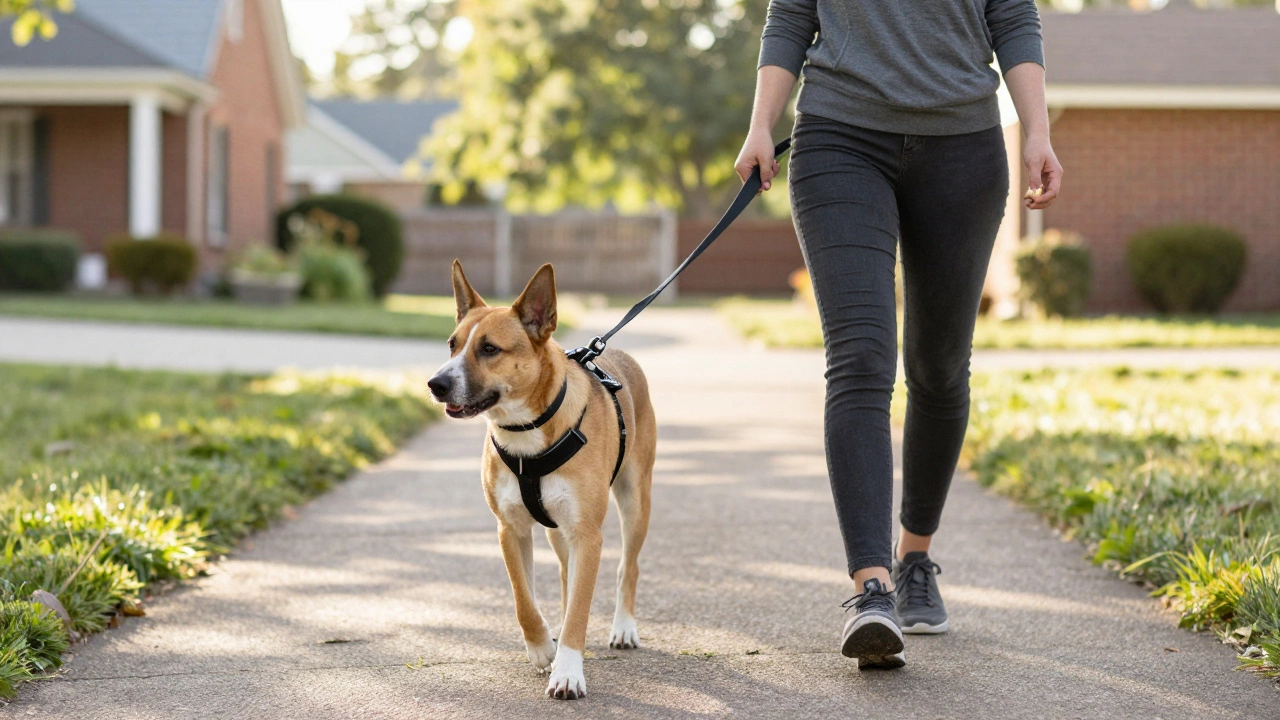
Not all collars and leashes are created equal. If you’re still using a choke chain, prong collar, or a standard flat collar with a stiff leash, you’re fighting an uphill battle. These tools can cause discomfort or even injury, and they don’t teach your dog anything-they just punish.Instead, try a front-clip harness. These harnesses clip to the front of the chest, not the back. When your dog pulls, the harness gently turns them sideways, breaking their momentum. It’s not a correction-it’s redirection. Dogs quickly learn that pulling doesn’t get them anywhere.
Another option is a head halter like the Halti or Gentle Leader. These fit over the muzzle and gently guide the dog’s head toward you when they pull. Some dogs resist them at first, but with gradual introduction and treats, most adapt well.
Pair any of these with a 6-foot leash. No retractable leashes. They give your dog too much freedom, and when they suddenly hit the end, it creates a snap that reinforces pulling.
Start Indoors-Yes, Really
Most people skip this step. But training on a quiet, familiar path won’t help if your dog explodes into pulling the moment you step outside. Start in your living room or backyard.Put the harness on. Let your dog sniff it. Give them a treat. Walk a few steps. If they stay beside you, mark it with a word like “yes!” and give a treat. If they pull, stop walking. Wait. When the leash goes slack, say “yes!” and move forward again.
Repeat this 5-10 times. Keep sessions short-3 to 5 minutes. Do this daily for 3-5 days before going outside. You’re teaching them that a loose leash = rewards. A tight leash = standing still.
The Stop-and-Go Method
This is the most effective technique for outdoor walks. Here’s how it works:- Start walking. As soon as your dog pulls, stop completely.
- Stand still. Don’t talk. Don’t tug. Just wait.
- The moment the leash loosens-even slightly-say “yes!” and walk forward again.
- Repeat. Every time they pull, you stop. Every time they walk calmly, you move.
This teaches them: “My pulling makes the walk stop. My calm walking makes the walk continue.” It’s not about being mean. It’s about being consistent. Dogs learn fast when the consequence is clear.
Don’t expect perfection on day one. Some dogs take 2-3 weeks of daily practice. But after a few sessions, you’ll notice them glancing back at you, checking in. That’s the moment you know it’s working.
Use Treats Strategically
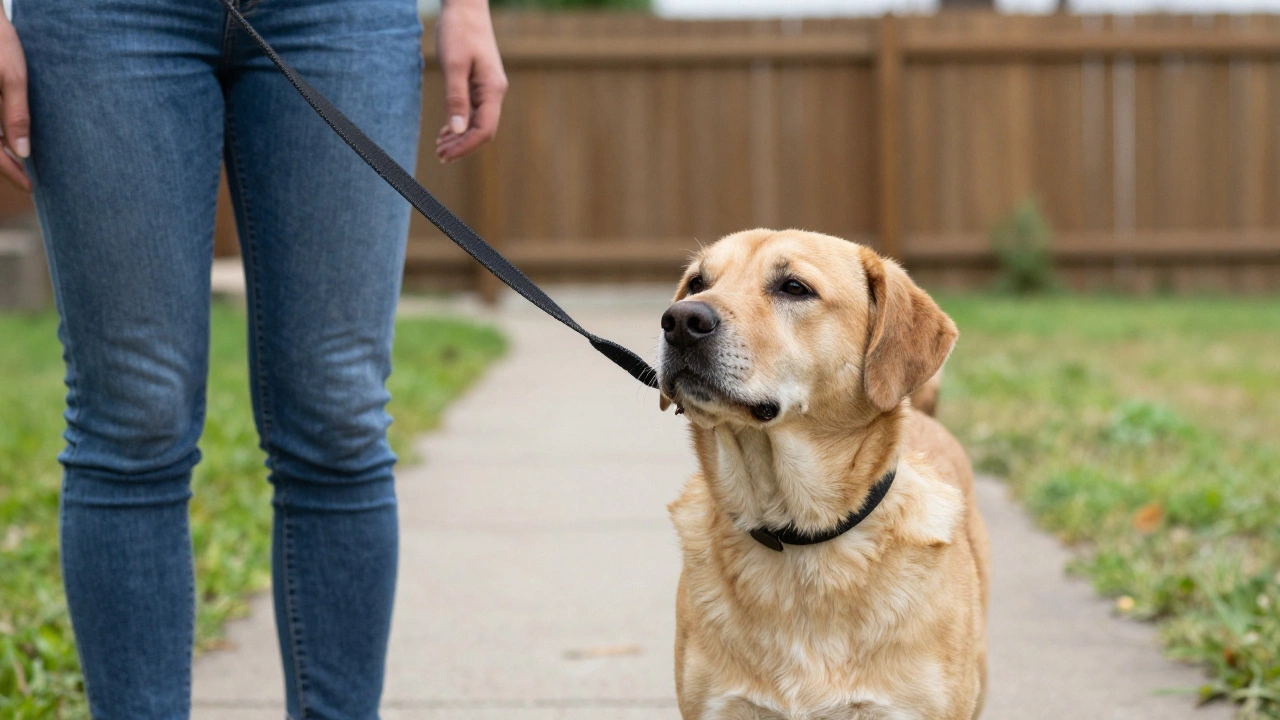
Treats aren’t bribes. They’re communication. Use small, high-value treats-pieces of chicken, cheese, or commercial training treats. Hold them near your side, not in front of your dog’s nose. That way, they learn to stay beside you to earn the reward.Every 5-10 steps, reward them for walking in position. Don’t wait until they’re perfect. Reward effort. Reward glances at you. Reward even a second of calm walking. The more you reward, the faster they learn.
As they improve, reduce treats. Switch to praise. Then to occasional treats. But never stop rewarding completely. Dogs need to know their good behavior still matters.
What Not to Do
There are a lot of bad tips out there. Don’t:- Yank the leash hard. It hurts, and it teaches fear, not obedience.
- Use a choke chain or prong collar. They’re outdated, risky, and don’t teach anything.
- Let your dog drag you. That’s not “letting them explore.” That’s reinforcing pulling.
- Expect results in a few days. Training takes time, even with the best tools.
Also, avoid training when your dog is overexcited. If they’re barking, lunging, or full of zoomies, go back inside. Wait 10 minutes. Try again later. Calm dogs learn faster.
What to Do When They See a Squirrel
This is the big test. You’ve trained calm walking, but now there’s a squirrel. What now?Don’t panic. Don’t yell. Don’t yank.
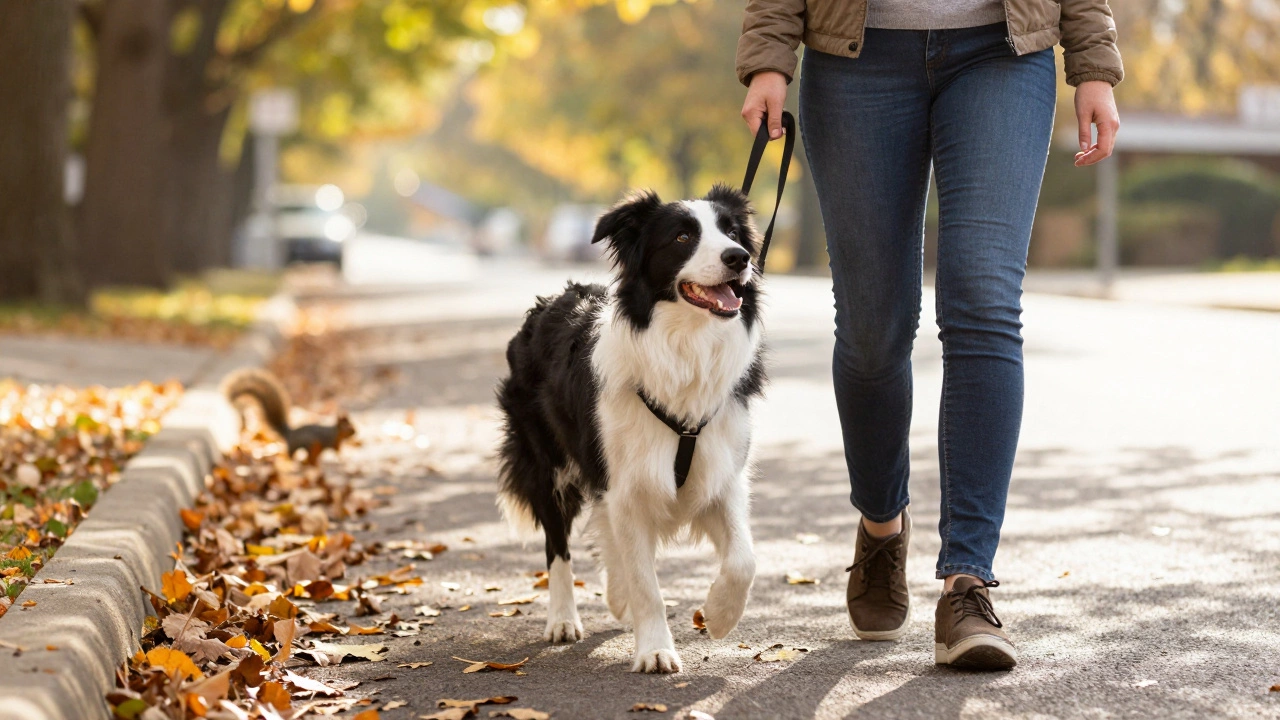
Instead, use a high-value treat or toy. As soon as you see the distraction coming, say “look at me!” in a cheerful tone. When your dog glances at you, mark it with “yes!” and give the treat. Then keep walking. Don’t stop. Don’t freeze. Keep moving forward.
Over time, your dog will learn that when they see something exciting, they get a better reward from you than from chasing it. You become the most interesting thing on the walk.
How Long Until It Works?
Most dogs show improvement in 7-14 days if you practice daily. But full reliability? That takes 3-6 weeks. Why? Because walking is a habit. You’re rewiring a habit that’s been reinforced for months-or years.Think of it like learning to drive. You don’t get perfect at parallel parking after one lesson. You get better with repetition. Same here.
Some dogs, especially young or high-energy breeds like Border Collies, Huskies, or Labradors, will need more time. That’s normal. Be patient. Be consistent. You’ll get there.
When to Get Help
If your dog is still pulling after 4-6 weeks of daily training, or if they’re aggressive, fearful, or overly reactive, it’s time to see a professional. A certified dog trainer who uses positive methods can help identify what’s missing.Look for trainers with certifications like CPDT-KA or KPA-CTP. Avoid anyone who says your dog needs a shock collar or dominance correction. Those methods don’t fix the root problem-they just suppress behavior.
Final Thought: Walks Should Be Fun
Training your dog not to pull isn’t about control. It’s about connection. When your dog walks calmly beside you, you’re not just walking-you’re building trust. You’re showing them you’re a reliable guide. And that makes every walk better-for both of you.It’s not about the collar. It’s not about the leash. It’s about what happens between you and your dog. And that’s worth the effort.
Why does my dog pull on walks even though I’ve tried corrections?
Corrections like yanking or jerking the leash don’t teach your dog what to do-they only punish what they’re doing. Dogs don’t understand punishment the way humans do. They learn best through consequences that make sense to them. If pulling gets them forward, they’ll keep doing it. The solution isn’t harsher corrections-it’s teaching them that walking calmly gets them what they want.
Can I use a head halter for a small dog?
Yes, head halters like the Gentle Leader work well for small dogs too. But make sure you get the right size. A poorly fitted halter can slip or cause discomfort. Introduce it slowly: let your dog sniff it, wear it for short periods indoors with treats, and never force it on. Most small dogs adjust within a week if you take it step by step.
Do I need a special leash for training?
You don’t need a fancy leash, but you should avoid retractable leashes. They give too much slack, making it hard to control the tension. A 6-foot nylon or cotton leash is ideal. It’s long enough for movement but short enough to manage. Look for one with a padded handle-it makes long walks more comfortable for your hands.
My dog walks fine at home but pulls outside. Why?
Outside is full of distractions-sights, sounds, smells-that your home isn’t. Your dog hasn’t learned to generalize the behavior yet. That’s why training starts indoors. You need to practice the same stop-and-go method in low-distraction areas first, then slowly increase difficulty: backyard, quiet street, then busier areas. Progress slowly. Don’t rush to busy streets.
How often should I train my dog to stop pulling?
Daily is best. Even 5-10 minutes counts. Training works best with consistency, not long sessions. Think of it like brushing your teeth-you don’t need 30 minutes, but you need to do it every day. Try to make every walk a training walk. Even if you’re in a hurry, stop and wait for a loose leash. That’s the habit you’re building.