Dog Collar Fit & Type Advisor
Enter Dog Details
--
--
Enter your dog's details to see sizing and safety recommendations.
You’ve probably seen it happen. You’re walking down the street, your dog spots a squirrel, and *yank*-the leash goes taut. If that collar is too tight, you’re choking them. If it’s too loose, they slip out of it and run into traffic. It’s a scary moment that happens because most people pick a collar based on how cute it looks, not how well it works.
Choosing the right dog collar isn’t just about matching their fur color. It’s a safety decision. A bad fit can cause tracheal damage, while the wrong material can chafe sensitive skin. But get it right, and you have a secure way to attach ID tags, control walks, and keep your pet safe if they ever get lost.
Measure First: The Two-Finger Rule
Before you even look at styles, you need numbers. Buying a collar online without measuring is like buying shoes in the dark-you might get lucky, but you probably won’t.
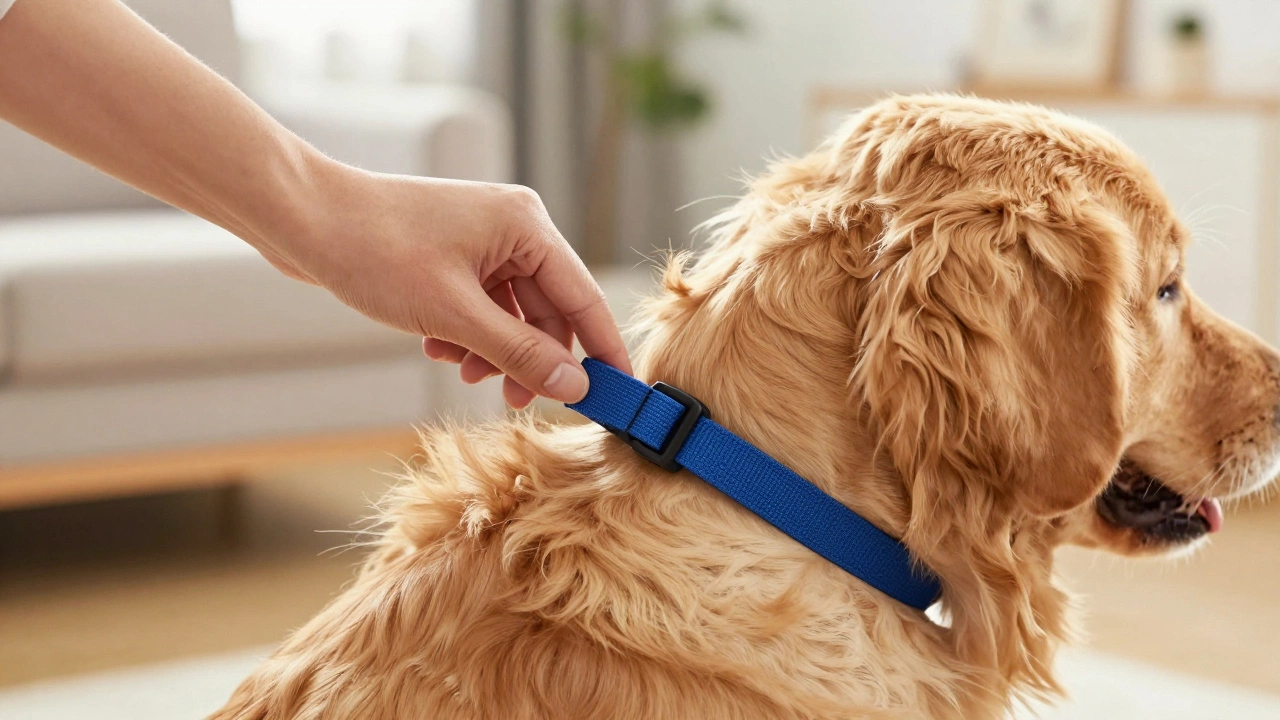
Grab a soft measuring tape (or a piece of string and a ruler) and wrap it around the base of your dog’s neck. This is where the collar sits, usually just above the shoulders. Here is the golden rule:
- Measure snugly but comfortably. You should be able to slide two fingers flat between the tape and your dog’s neck.
- Add an inch. If you don’t have a tape, measure the circumference and add one inch to account for growth or thick coats.
- Check the width. Most collars come in widths ranging from 3/8 inch for tiny Chihuahuas to 1.5 inches for giant breeds like Great Danes.
If you buy a collar that is too small, your dog will grow out of it in weeks. Too big, and it becomes a tripping hazard. For puppies, consider adjustable collars with multiple buckle holes or elastic sections to accommodate rapid growth spurts.
Material Matters: Nylon vs. Leather vs. Biothane
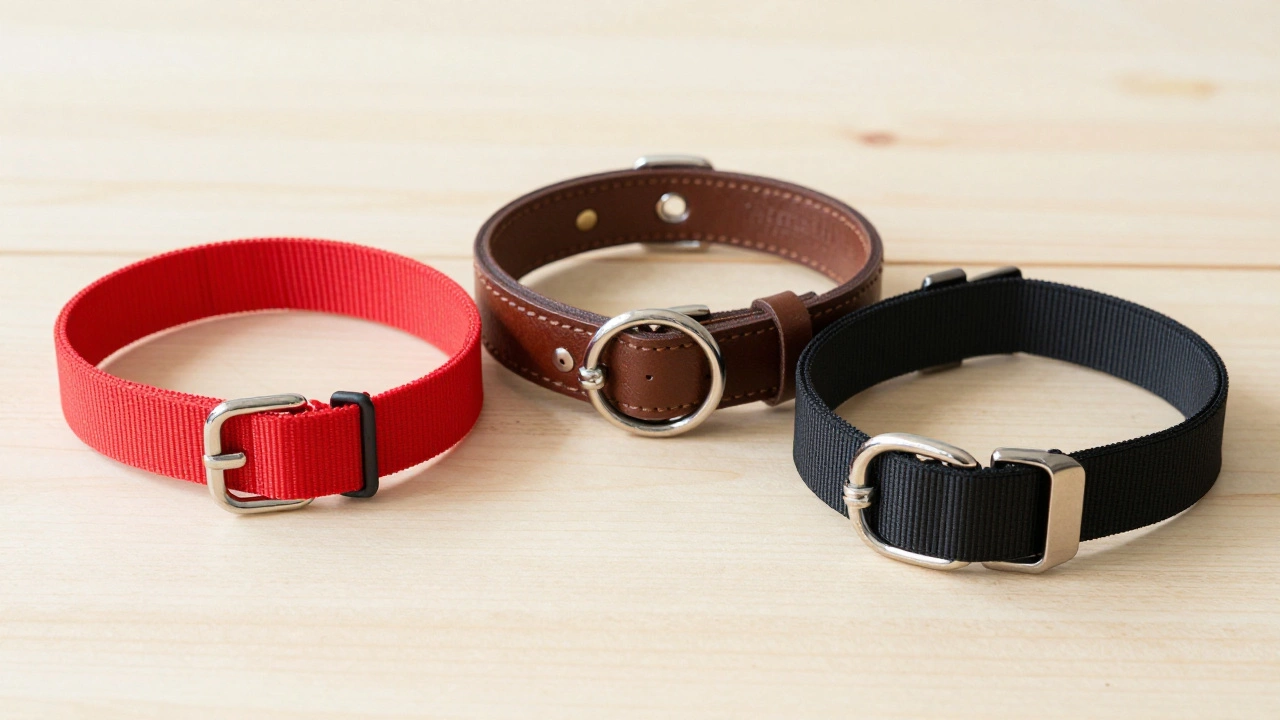
The fabric of the collar dictates durability, maintenance, and comfort. Here is how the three main contenders stack up.
| Material | Durability | Maintenance | Best For |
|---|---|---|---|
| Nylon | High | Easy (machine washable) | Active dogs, daily wear, budget-friendly options |
| Leather | Very High | Medium (needs conditioning) | Show dogs, older dogs, classic style |
| Biothane | High | Very Easy (wipe clean) | Hunting, muddy environments, water-loving breeds |
Nylon is the most popular choice for everyday use. It’s lightweight, comes in every color imaginable, and dries quickly. However, cheap nylon can fray over time. Look for reinforced stitching at the D-ring attachment points.
Leather is a durable, long-lasting material that molds to the dog's neck over time. It looks great and ages well, but it requires regular conditioning to prevent cracking. It’s also heavier, which might bother small dogs. Avoid genuine leather if your dog has severe allergies, as the tanning process can sometimes irritate sensitive skin.
Biothane is a synthetic rubber-like material that is waterproof and odor-resistant. If your dog loves swimming in lakes or rolling in mud, this is your best friend. It wipes clean with a damp cloth and doesn’t absorb smells. It’s slightly more expensive than nylon but lasts longer in harsh conditions.
Hardware: Buckles and D-Rings
The strap is only half the equation. The hardware holds everything together. If the buckle fails, your dog is off-leash whether you want them to be or not.
Snap Buckles: These are standard for nylon collars. They are quick to put on and take off. Make sure the plastic is thick and rigid. Thin plastic snaps can break under sudden pressure, like when a dog bolts after a ball.
Side-Release Buckles: Often found on leather collars, these offer a bit more security than simple snaps but require a bit more dexterity to fasten.
D-Rings: This is where you attach the leash and ID tags. Never buy a collar with a weak metal ring. Look for stainless steel or nickel-free brass. Nickel can cause allergic reactions in some dogs, leading to red, itchy patches around the neck. The D-ring should be riveted or stitched securely into the collar, not just looped through.
Safety Features: Breakaways and Martingales
Not all dogs need the same type of restraint. Understanding your dog’s behavior is key here.
Breakaway Collars: These have a special clasp that pops open if pulled with significant force. If your dog gets snagged on a fence or tree branch, the collar releases, preventing strangulation. These are essential for cats and small dogs, but also recommended for any dog that runs off-leash in parks. The downside? If your dog pulls hard during a walk, the collar might pop open unexpectedly.
Martingale Collars: Also known as limited-slip collars, these tighten slightly when the dog pulls but stop before they choke. They are perfect for dogs with narrow heads, like Greyhounds or Whippets, who can easily slip out of standard collars. They provide better control without the cruelty of a choke chain.
Avoid Chain Collars: Traditional choke chains and prong collars are controversial and often banned in many regions, including parts of New Zealand and Europe. They rely on pain to correct behavior, which can lead to aggression and fear. Positive reinforcement training with a well-fitted flat collar or harness is always the safer, kinder route.
Identification: The Non-Negotiable Tag
A collar is useless if it doesn’t help someone find your dog if they wander off. Always attach a sturdy ID tag with your current phone number. Consider adding a secondary contact, like a neighbor or vet, in case you’re unreachable.
For extra security, pair the physical tag with a microchip. While the collar provides immediate contact info, the microchip is permanent and cannot be lost. Update your microchip registry details annually. Think of the collar as the first line of defense and the microchip as the backup plan.
Special Needs: Harnesses vs. Collars
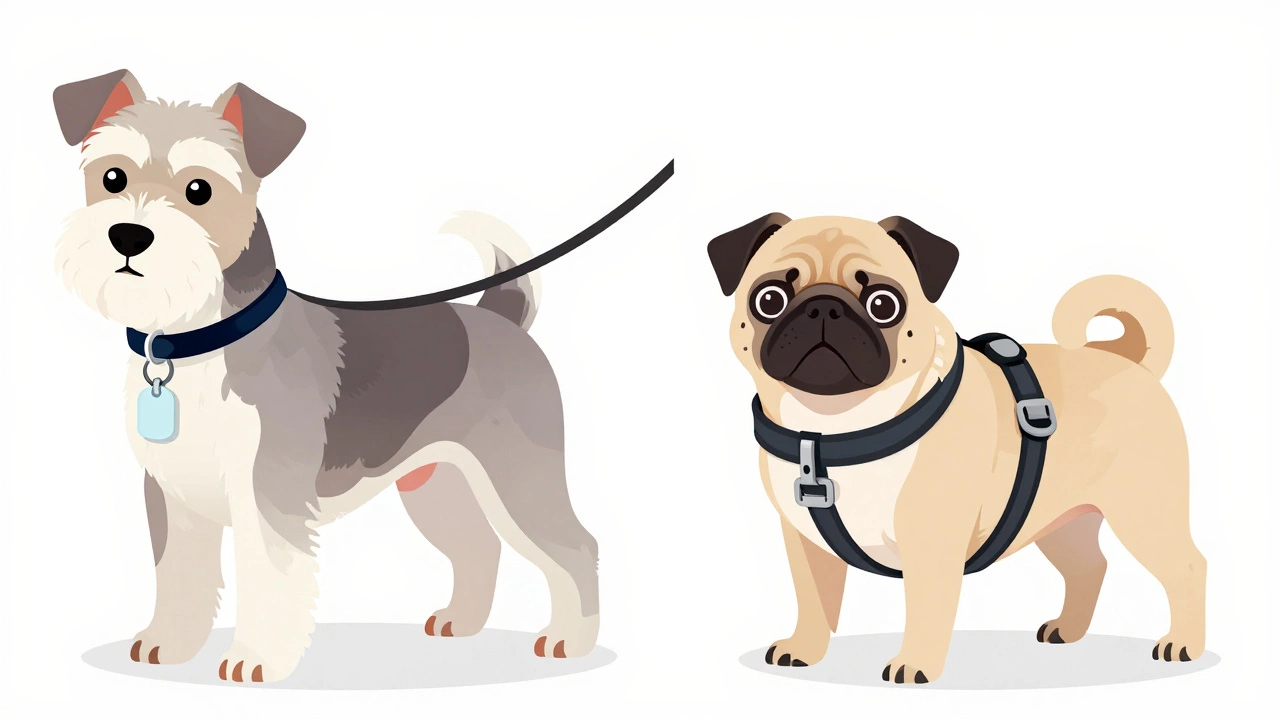
Some dogs simply shouldn’t wear collars for walking. If your dog pulls heavily, has respiratory issues, or suffers from tracheal collapse (common in Pugs and Yorkies), a collar can cause serious injury. In these cases, switch to a front-clip harness. The leash attaches to the chest, steering the dog gently rather than yanking their neck. You can still wear a collar for ID tags, but leave the leash attached to the harness.
Maintenance and Inspection
Your dog’s collar is a piece of equipment that wears out. Check it weekly.
- Look for fraying. Cut away loose threads on nylon collars immediately; they can unravel completely.
- Check the buckle. Does it click shut firmly? Is there rust on the metal?
- Smell test. If your leather collar starts smelling musty, it’s time to condition it or replace it. Bacteria buildup can cause skin infections.
- Fit check. As your dog gains or loses weight, adjust the collar. A collar that was perfect six months ago might now be digging in.
Replacing a worn-out collar costs $20. Treating a neck injury or searching for a lost dog costs thousands. Don’t skimp on this basic accessory.
How tight should a dog collar be?
A dog collar should be snug enough that it doesn't slip off over the ears, but loose enough to slide two fingers comfortably underneath. If you can only fit one finger, it's too tight. If you can fit three or more, it's too loose and may catch on objects.
Should I leave my dog's collar on 24/7?
It depends on the collar type. Flat collars with ID tags can stay on 24/7 for safety. However, breakaway collars should be removed during supervised play to prevent accidental release. If your dog sleeps with the collar on, ensure it doesn't rub against bedding or furniture, which could cause strangulation hazards.
What is the best collar for a puppy?
The best collar for a puppy is an adjustable nylon or biothane collar with a breakaway buckle. Puppies grow quickly, so adjustability is key. The breakaway feature ensures safety if they get stuck while exploring. Avoid heavy leather collars until they are fully grown.
Can I use a martingale collar for training?
Yes, martingale collars are excellent for training dogs that slip out of regular collars. They provide gentle correction by tightening slightly when pulled, but they do not choke the dog. They are ideal for sighthounds and other breeds with narrow heads. Always combine with positive reinforcement techniques.
How often should I replace my dog's collar?
Inspect your dog's collar monthly. Replace it if you see fraying, cracked buckles, rusted metal, or stretched-out material. Generally, nylon collars last 6-12 months with daily use, while high-quality leather can last several years with proper care. Never wait for it to break; replace it proactively.