Cat Wet Food Calculator
Daily Wet Food Calculator
Recommended Daily Intake
Calories200 - 250 calories
Portion Breakdown
A 10 lb cat isn’t just a small pet - it’s a precise machine that needs just the right amount of food to stay healthy, energetic, and at a perfect weight. Too little, and your cat loses muscle and energy. Too much, and you’re setting them up for obesity, diabetes, or joint problems. So how much wet food should a 10 lb cat eat per day? The answer isn’t one-size-fits-all, but with a few simple rules, you can nail it.
Start with calories, not cans
Most people look at a can of wet food and think, "This is one serving." But cans vary wildly in size and calorie content. A standard 5.5 oz can might have 180 calories, while a 3 oz can could have just 90. The key is calories, not container size.
A healthy 10 lb adult cat needs about 200 to 250 calories per day. That’s the sweet spot for maintaining weight without extra fat buildup. If your cat is very active - climbing, playing, hunting toys like a pro - they might need up to 280. If they’re more couch-based, stick closer to 200.
Check the label on your cat’s wet food. Most brands list calories per can or per ounce. For example, if a 5.5 oz can has 180 calories, your cat needs about 1.1 to 1.4 cans per day. That’s roughly one full can and a little extra. If the food is 90 calories per 3 oz can, they’ll need about 2.2 to 2.8 cans daily - which means splitting meals helps avoid overfeeding.
Break it into meals
Cats are natural grazers. In the wild, they eat 10 to 20 small meals a day. That’s why feeding once a day often leads to begging, overeating, or digestive upset. Splitting your cat’s daily food into two or three meals works better.
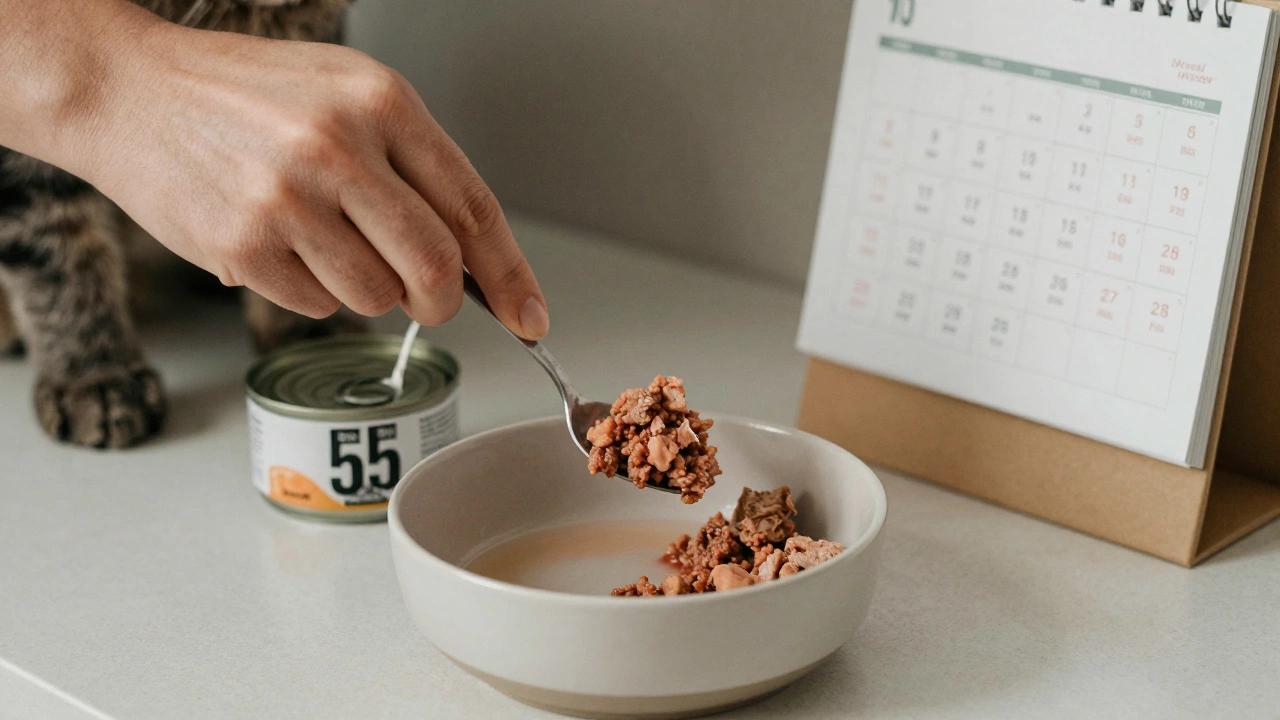
For a 10 lb cat eating 220 calories a day:
- Two meals: 110 calories each - say, half a 5.5 oz can in the morning and half at night.
- Three meals: 70 to 75 calories each - perfect if you’re using 3 oz cans. One full can split into three portions.
Feeding twice a day also helps control hunger and reduces begging. It mimics their natural rhythm and keeps their metabolism steady.
Watch the ingredients
Not all wet food is created equal. A food with high meat content and low carbohydrates is better for cats. Cats are obligate carnivores - they need protein from animal sources, not plant fillers like corn, rice, or wheat.
Look for labels that list meat (chicken, turkey, salmon, beef) as the first ingredient. Avoid foods where "broth," "gravy," or "vegetables" are listed before real meat. The best wet foods have at least 40% protein and less than 10% carbohydrates on a dry matter basis. That means even if the label says "10% protein," you have to adjust for moisture. Wet food is 75-80% water, so the real protein percentage is higher than it looks.
For example: A wet food labeled "10% protein, 5% fat" with 78% moisture actually has about 45% protein and 22% fat on a dry matter basis. That’s ideal. If it’s 6% protein and 15% carbs? Skip it.
Adjust for age, health, and activity
A 10 lb kitten? They need more. Growing kittens need 300-400 calories a day. A senior cat? Their metabolism slows. They might need only 180-200 calories if they’re less active. A cat with kidney disease? Their vet may recommend a lower-protein, higher-moisture diet. A diabetic cat? They often do better with low-carb, high-protein wet food.
Always check with your vet if your cat has health issues. But for a healthy, average 10 lb adult cat? Stick to 200-250 calories a day. That’s your baseline.
Use a food scale - yes, really
Guessing with a spoon or eyeballing a can? You’re probably off by 20-30%. That’s 40-75 extra calories a day. Over a month, that’s 1,200-2,250 extra calories - enough to put your cat on the road to obesity.
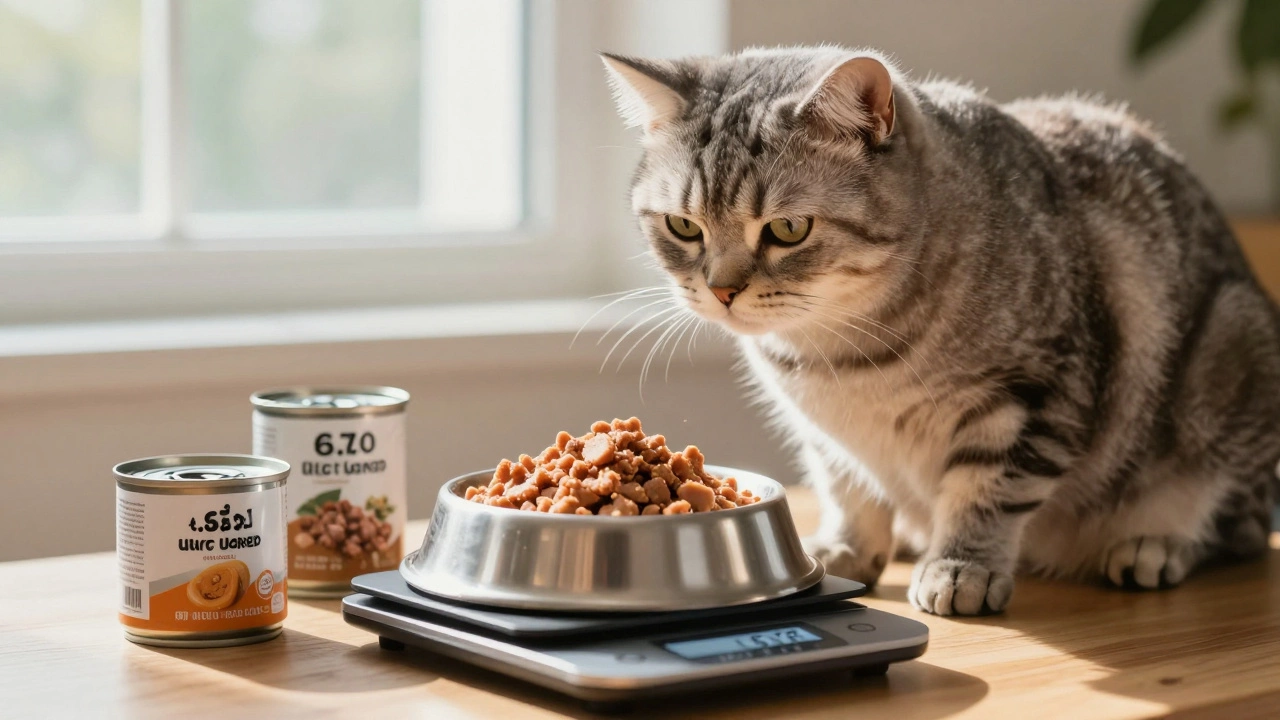
Buy a small digital kitchen scale (under $20). Weigh the food you’re giving. If your cat needs 220 calories and your food is 180 calories per 5.5 oz can, you need 1.22 cans. That’s 6.7 oz. Weigh out 6.7 oz on the scale. Done. No guesswork. No waste. No overfeeding.
Even if you’re using a can, weigh the whole can first, then weigh what’s left after feeding. That way, you know exactly how much they ate.
Monitor body condition - not just weight
Just because your cat is 10 lbs doesn’t mean they’re at the right weight. Some 10 lb cats are lean and muscular. Others are soft and padded. The best way to tell is by touch.
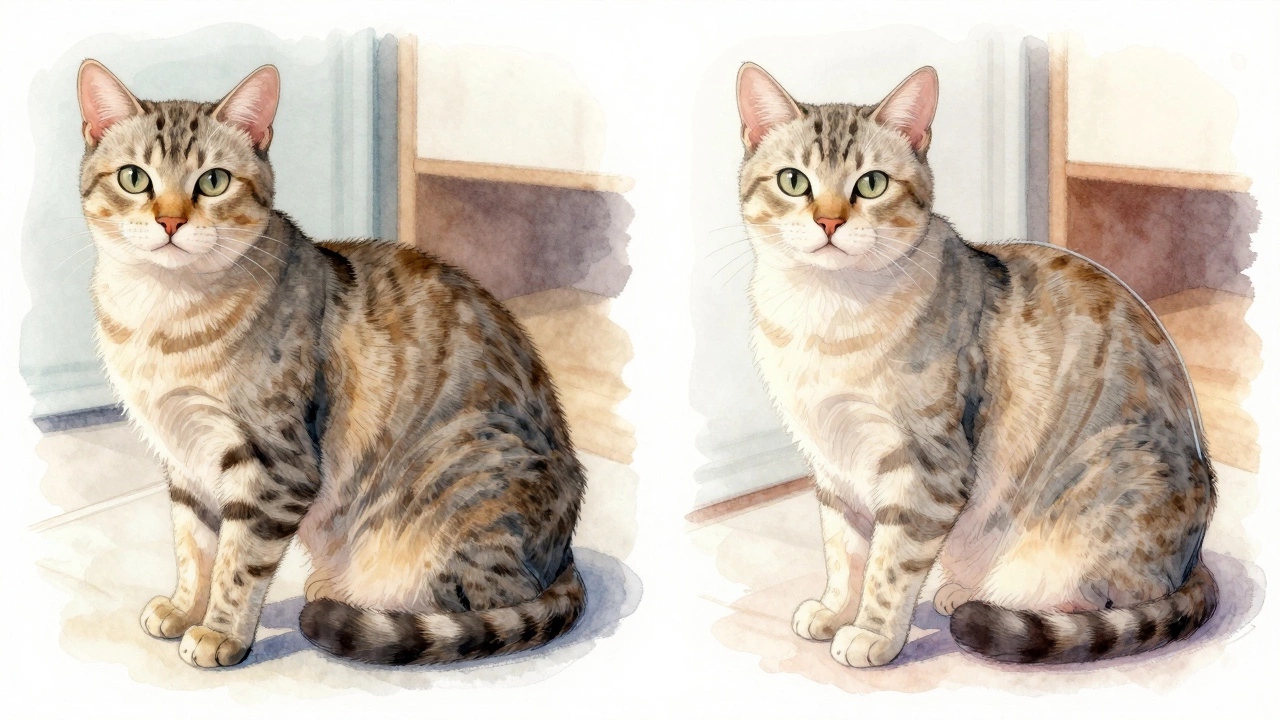
Place your hands on your cat’s ribs. You should feel them easily under a thin layer of fat - like the back of your hand. If you have to press hard, they’re overweight. If you can see the ribs, they might be underweight.
Look from above: Do they have a waist? A healthy cat has a slight hourglass shape. If their belly hangs low or they look like a tube, they need less food.
Check every 2-4 weeks. Adjust portions up or down by 10% if you notice changes.
What about treats and snacks?
Treats shouldn’t be more than 10% of daily calories. That means if your cat eats 220 calories a day, treats should be under 22 calories. One small piece of cooked chicken (about 10g) is around 15 calories. A commercial treat? Often 5-10 calories each. So one or two a day is fine.
Avoid human food. Even small bits of cheese, tuna, or salmon can throw off their balance. Tuna in particular is high in mercury and can lead to nutrient deficiencies if given often.
Common mistakes to avoid
- Feeding based on the can size, not the calories.
- Assuming "all wet food is healthy" - check labels.
- Leaving food out all day - cats will overeat.
- Not adjusting for activity level - a lazy cat needs less than a playful one.
- Ignoring body condition - weight alone doesn’t tell the full story.
One last thing: if your cat suddenly stops eating, loses weight fast, or drinks way more water, see a vet. These can be signs of kidney disease, diabetes, or hyperthyroidism - common in cats around this age and weight.
Quick reference: 10 lb cat daily wet food guide
Here’s a simple cheat sheet based on common can sizes:
| Can Size | Calories per Can | Daily Portions (200-250 cal) |
|---|---|---|
| 3 oz | 90 | 2.2 to 2.8 cans |
| 5.5 oz | 180 | 1.1 to 1.4 cans |
| 12 oz | 300 | 0.7 to 0.8 cans |
Split portions into two meals. Weigh the food. Watch their body. Adjust as needed.
Can I mix wet and dry food for my 10 lb cat?
Yes, but count the calories from both. Dry food is much more calorie-dense - a single cup can have 300-500 calories. If you feed 1/4 cup of dry food (about 125 calories), reduce wet food to about 75-125 calories. Always track total daily intake. Mixing can help transition cats or add moisture, but don’t assume dry food is "free." It can easily push them into obesity.
How do I know if my cat is getting too much wet food?
Signs include weight gain, a round belly that doesn’t tuck up, difficulty jumping, and lethargy. If you’re feeding 1.5 cans of 5.5 oz food daily (about 270 calories) and your cat is gaining more than 0.5 lb per month, you’re overfeeding. Cut back by 10% and recheck in two weeks.
Should I feed wet food every day?
Wet food is ideal for daily feeding, especially for cats who don’t drink much water. It helps prevent urinary issues and keeps kidneys healthy. If you feed dry food, make sure they have constant access to fresh water. But wet food alone is perfectly fine - and often better.
My cat is always begging. Does that mean they’re hungry?
Not always. Cats beg for attention, routine, or because they’re bored. If you’ve measured their food correctly and they’re at a healthy weight, their begging isn’t hunger. Try interactive play before meals, or use puzzle feeders to slow them down. Never give in to begging with extra food - it teaches them to demand.
How long does opened wet food last?
Once opened, wet food should be covered and refrigerated. It stays fresh for up to 5 days. Always warm it to room temperature before serving - cold food turns cats off. If it smells sour or looks off, toss it. Don’t risk it.