Grooming Restraint Safety Checklist
Select each step below to confirm you have implemented these professional safety measures for your dog's grooming session.
0 of 6 steps completed
Ready to Start
Complete the checklist on the left to generate a personalized safety assessment and tips.
✔ Safety Assessment Complete!
You are well-prepared for a safe grooming session.
Key Takeaways:
- Environment: Ensure the area is quiet and non-slip.
- Restraint: Use loops or towels only to prevent falling, not to choke.
- Muzzles: If used, ensure they allow panting and treat-giving.
Red Flags to Watch For:
- Growling, trembling, or freezing behavior.
- Attempting to bite when sensitive areas are touched.
- Excessive panting unrelated to heat/exercise.
If you notice these signs, stop immediately and consult a professional.
Watching a professional groomer handle a wiggly terrier or a anxious golden retriever can look like magic. One moment the dog is pacing nervously; the next, they are sitting calmly while their nails are clipped. You might wonder if they use special drugs or secret tricks. The truth is simpler: it comes down to proper **dog grooming restraint** techniques that prioritize safety without causing fear.
If you have ever tried to dry your own dog after a bath, you know how slippery and unpredictable wet fur can be. Professional groomers deal with this daily. They don't just hold dogs still by force; they use specific tools, body language, and environmental cues to keep both the animal and themselves safe. Understanding these methods helps you see why certain practices are standard in salons and how you can apply similar principles at home.
The Grooming Loop: The Backbone of Table Safety
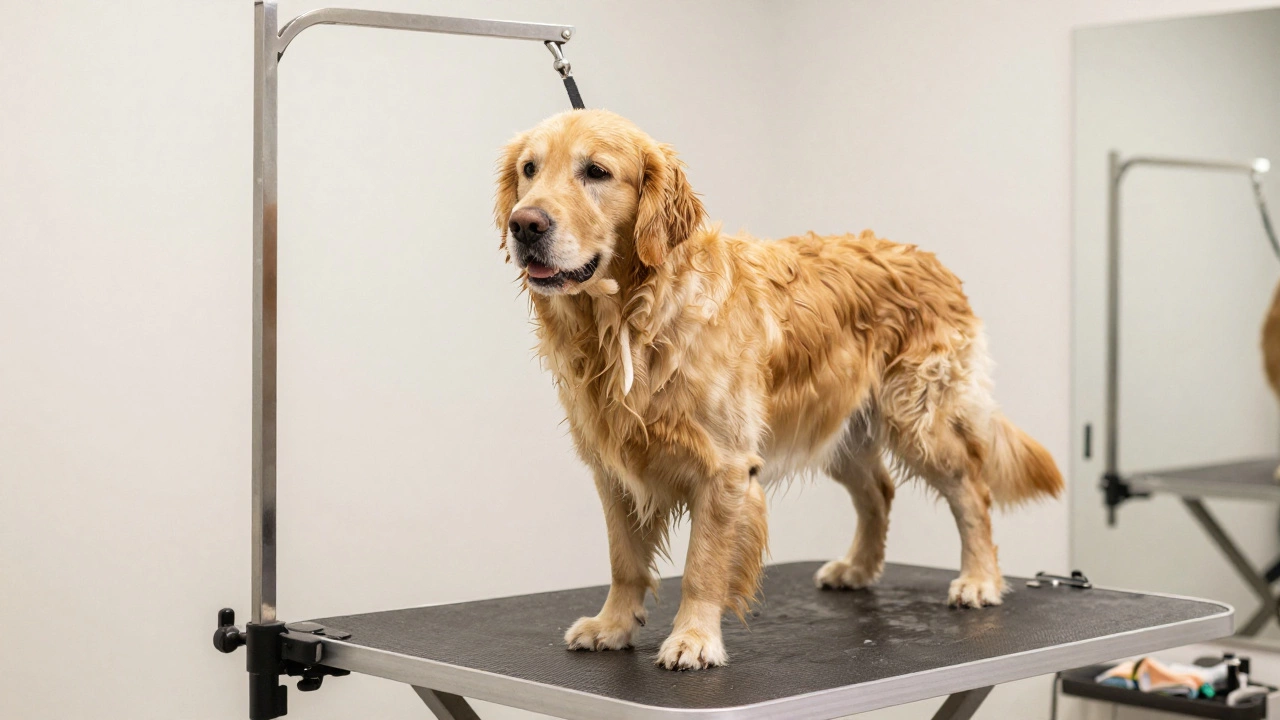
The most common tool you will see in any salon is the grooming arm and loop. This setup looks like a metal pole attached to the table with a adjustable noose hanging from it. It sounds restrictive, but when used correctly, it is one of the safest ways to manage a dog on a raised surface.
| Equipment | Primary Function | Safety Consideration |
|---|---|---|
| Grooming Loop | Prevents jumping/falling off table | Must fit snugly but not choke; never leave unattended |
| Non-Slip Mat | Provides traction for paws | Reduces anxiety caused by slipping on smooth surfaces |
| Muzzle | Prevents biting during sensitive tasks | Allows panting; must be properly fitted to avoid pressure points |
The loop attaches to a collar or a specially designed harness around the dog's neck or chest. Its main job is not to strangle or punish, but to limit vertical movement. If a dog gets startled by a dryer noise or a clipper vibration, they might instinctively jump. On a high table, that jump could lead to a serious injury. The loop keeps them grounded. Experienced groomers adjust the length so the dog can stand comfortably but cannot rear up or bolt. Crucially, the groomer always stays within reach of the release mechanism, ensuring immediate freedom if the dog becomes overly stressed.
Body Positioning and Leverage
Tools are only half the equation. How a groomer positions their own body matters just as much. You will notice professionals rarely stand directly behind a dog’s head unless necessary. Instead, they position themselves slightly to the side, often near the shoulder or flank. This angle prevents the dog from turning quickly to nip and allows the groomer to use their hip and leg as a barrier.
This technique relies on leverage rather than brute strength. For example, when clipping nails, a groomer might gently press their knee against the dog’s ribcage to stabilize the torso. This isn’t about pinning the dog down; it’s about creating a stable base so the dog doesn’t have to fight gravity to stay balanced. When a dog feels secure and supported, they tend to relax more. Conversely, rough handling or gripping too tightly triggers the "fight or flight" response, making the dog more resistant and dangerous.
When Muzzles Are Necessary
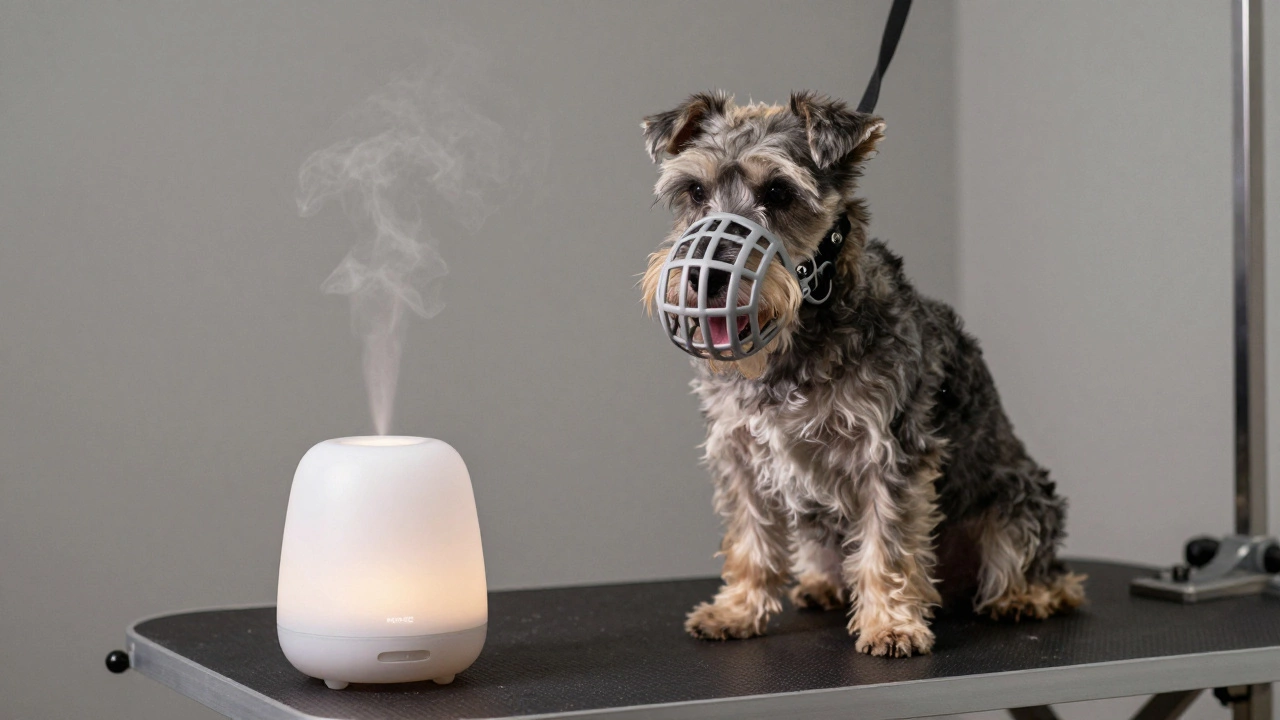
Muzzles often get a bad reputation, but in professional grooming, they are essential safety gear. Not every dog needs one, but many do-especially those with a history of nipping, resource guarding, or extreme anxiety. A well-fitted basket muzzle allows the dog to pant, drink water, and receive treats, which is critical for thermoregulation and positive reinforcement.
Groomers choose muzzles based on the dog’s snout shape and temperament. Soft fabric muzzles are good for short-term procedures where biting is unlikely but possible, like ear cleaning. Basket muzzles, made of wire or plastic, are preferred for longer sessions because they offer better airflow and visibility. The key is acclimation. A skilled groomer introduces the muzzle gradually, pairing it with high-value treats so the dog associates it with good things rather than punishment. Never force a muzzle onto a struggling dog; this creates trauma and makes future visits harder.
Sensory Management: Calming the Environment
Restraint isn’t just physical; it’s mental. A chaotic environment makes even the calmest dog jumpy. Professional salons manage sensory input carefully. Dryers are loud, clippers vibrate, and mirrors can be distracting. To counteract this, many groomers use white noise machines or calming pheromone diffusers (like Adaptil) to lower baseline anxiety levels.
They also control visual stimuli. Some dogs get agitated seeing other animals through windows. In these cases, groomers may cover mirrors or move the dog to a quieter room. Touch is another factor. Rough drying can feel abrasive, so groomers use soft towels first to remove excess water before applying heat. By minimizing negative sensory inputs, the need for strict physical restraint decreases significantly. A relaxed dog requires less holding.
Handling Sensitive Areas: Ears, Paws, and Face
Certain parts of the body trigger stronger defensive reactions. Ears, paws, and the face are highly sensitive. When working on these areas, groomers change their approach entirely. They stop using the loop for tension and rely on gentle manual support.
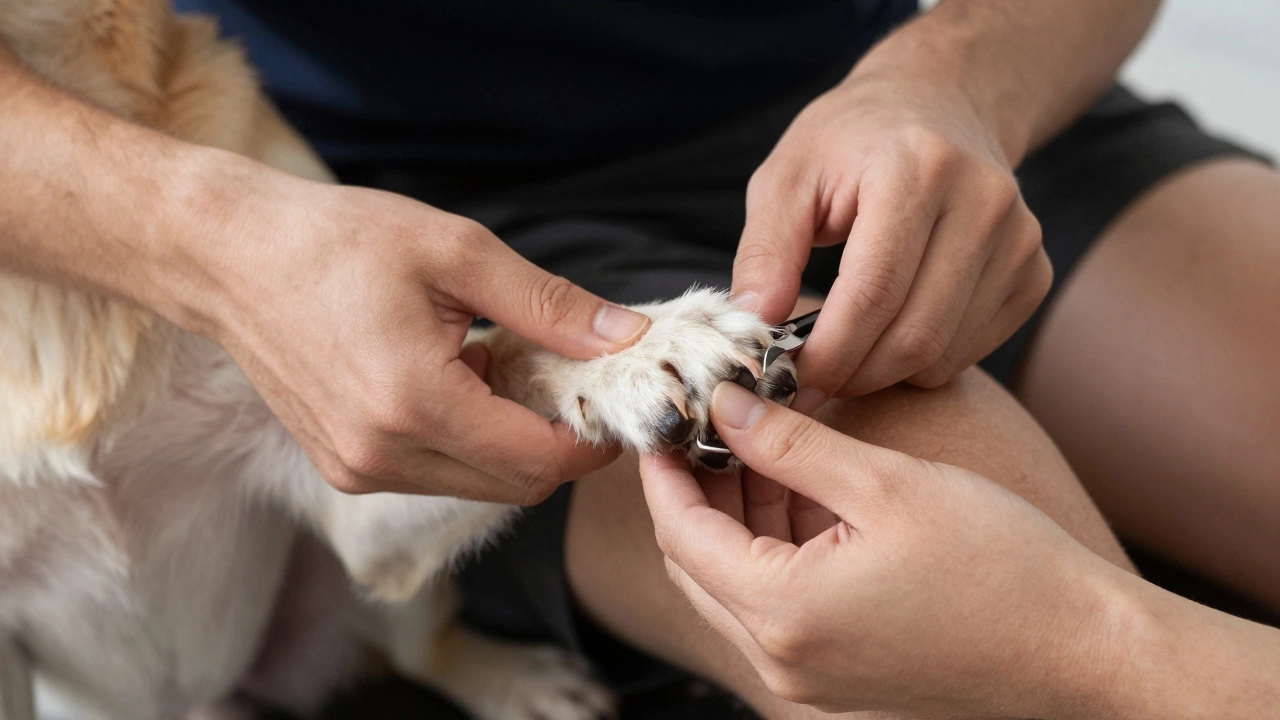
For nail trimming, the groomer holds the paw firmly but softly, supporting the wrist joint to prevent hyperextension. They work quickly and reward immediately. For ear cleaning, they may ask the dog to lie on their side, using their body weight to gently stabilize the head without grabbing the jaw. Facial brushing requires slow, predictable movements. If a dog pulls away, the groomer stops, resets, and tries again later. Pushing through resistance teaches the dog that grooming is something to endure, not enjoy.
What You Can Do at Home
You don’t need a professional table to practice safe restraint at home. Start by desensitizing your dog to handling. Touch their paws, ears, and tail daily while giving treats. Use a non-slip mat in your bathtub or shower to give them confidence. If you must restrain them, use a towel wrap technique: wrap a large towel loosely around their body to limit movement without suffocation. Always keep sessions short and positive. If your dog shows signs of severe stress-growling, trembling, freezing-stop and consult a trainer or groomer. Safety comes first, for both you and your pet.
Is it cruel to use a grooming loop?
No, when used correctly, a grooming loop is a safety device, not a punishment tool. It prevents falls and injuries by limiting vertical movement. The loop should be adjusted to allow comfortable standing and breathing. Cruelty occurs only when the loop is left tight for extended periods, used as a leash for dragging, or applied to a panicked dog without proper acclimation.
Why do groomers put muzzles on friendly dogs?
Even friendly dogs can bite out of pain, fear, or surprise. Clippers vibrating near the skin or sudden touches in sensitive areas can trigger a reflexive snap. Muzzles protect the groomer’s hands and ensure the session continues smoothly without escalating stress. It’s a precaution, not an assumption of aggression.
Can I train my dog to accept grooming restraint?
Yes. Start young and go slow. Practice handling their paws, ears, and mouth daily with treats. Introduce tools like dryers and brushes at low volumes or distances, rewarding calm behavior. Gradually increase exposure time. Positive association is key-if your dog links grooming with rewards, they will tolerate restraint much better.
What if my dog fights back during grooming?
Stop immediately. Forcing a resistant dog increases trauma and risk of injury. Break the session into smaller steps over multiple days. Consult a certified fear-free groomer or a veterinary behaviorist. Sometimes underlying medical issues cause pain during handling, which manifests as aggression. Rule out health problems first.
Do all grooming salons use loops and muzzles?
Most professional salons use loops for safety on tables. Muzzle usage varies by policy and individual dog needs. Reputable groomers assess each dog’s temperament before deciding. Some mobile groomers may skip loops if working on floor-level tables, but they still employ body positioning and verbal cues to maintain control. Ask your groomer about their restraint philosophy beforehand.