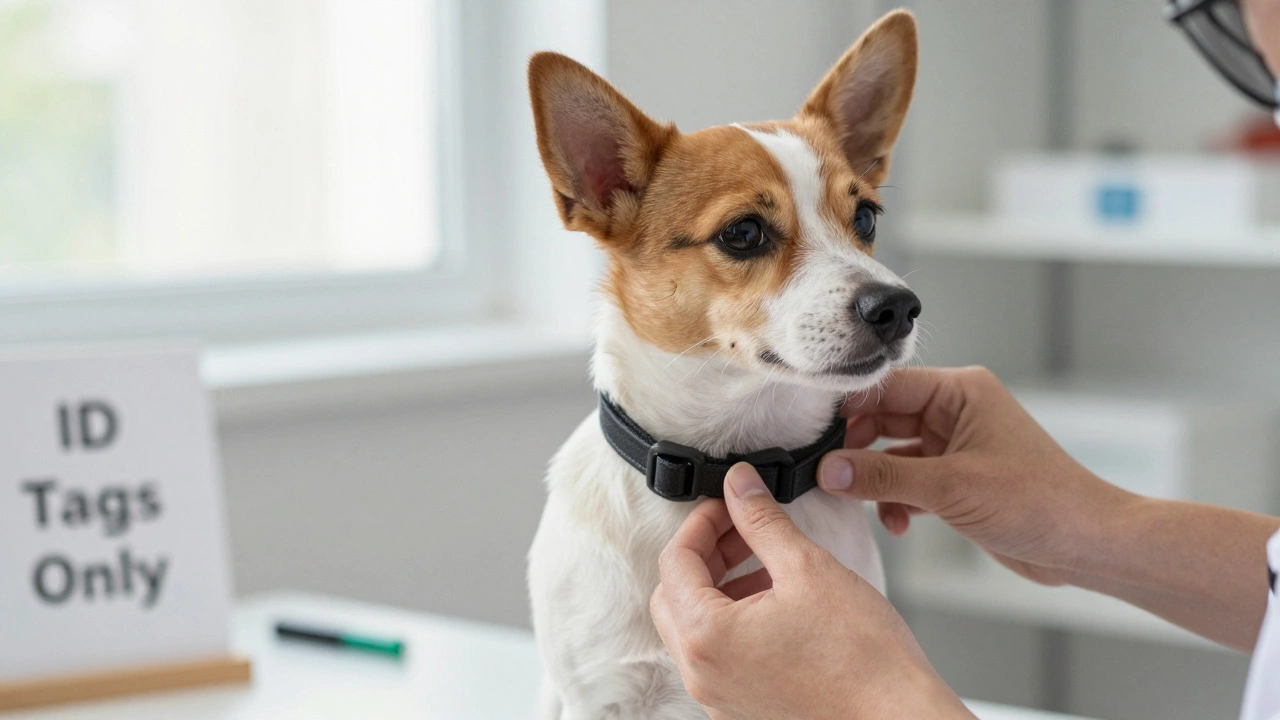
Most dog owners assume that if a collar fits, it’s fine. But vets don’t just look at size-they look at how it affects your dog’s neck, spine, and behavior. The truth? Not all dog collars are created equal, and many common ones are actively discouraged by veterinary professionals.
Why Vets Care About Dog Collars
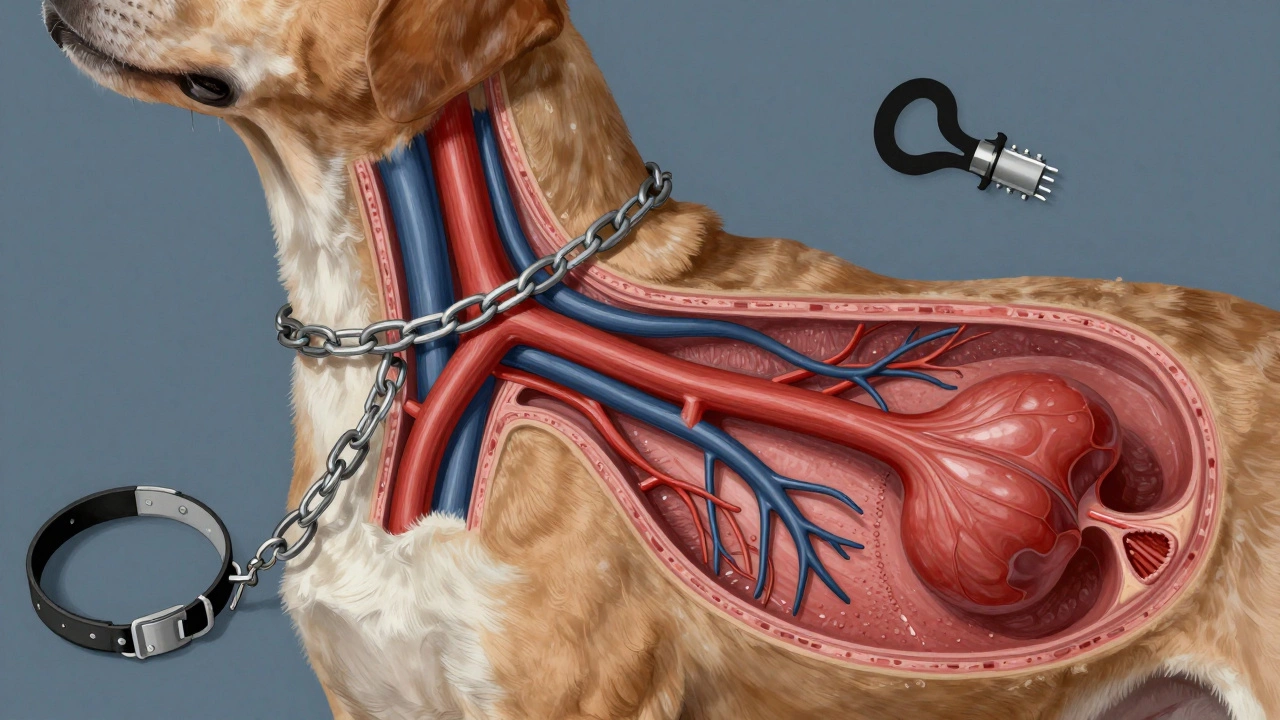
A dog collar isn’t just for holding a leash or tagging your pet. It’s a tool that can cause long-term harm if chosen poorly. Vets see the results every day: dogs with tracheal damage from choke chains, skin infections from tight nylon collars, and even nerve damage from constant pulling.
It’s not about being picky. It’s about physics. A dog’s neck is delicate. Their trachea is a soft tube, not a rigid pipe. When you yank on a collar, you’re compressing blood vessels, nerves, and airways. That’s why vets in New Zealand, the UK, and the US are shifting away from recommending traditional buckle collars for everyday use-especially for dogs that pull.
Collars Vets Actually Recommend
When a vet says “use a collar,” they’re usually thinking of one of two things: a properly fitted flat collar for ID tags, or a harness for walking.
Flat buckle collars are still fine-if they’re fitted right. You should be able to slide two fingers under the collar snugly. Too loose? Your dog can slip out. Too tight? You’re cutting off circulation. Vets see this mistake all the time, especially with growing puppies.
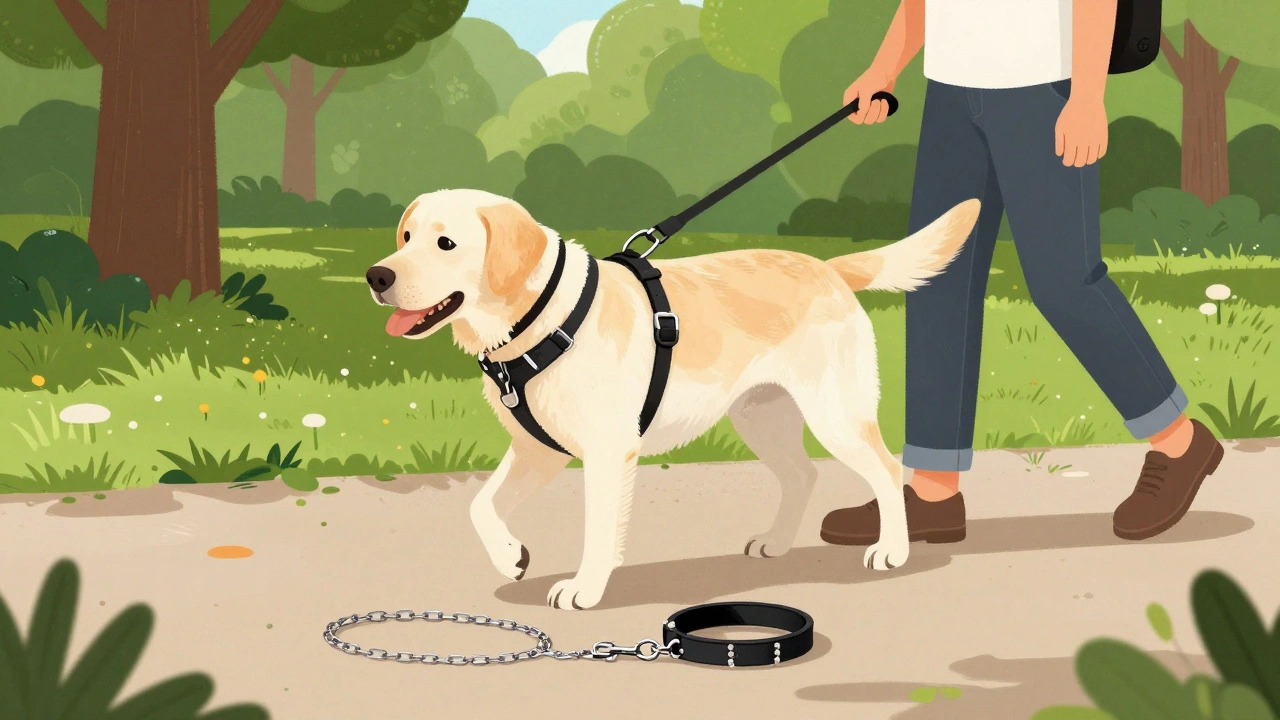
For walks, most vets recommend front-clip harnesses. Brands like EasyWalk or Freedom No-Pull are common in clinics because they redirect pulling force away from the neck. Studies from the University of Bristol show that dogs wearing front-clip harnesses have significantly lower neck pressure than those on collars.
Another option is the head halter, like the Halti or Gentle Leader. These aren’t for every dog-they take training-but for strong pullers or dogs with respiratory issues (like bulldogs or pugs), they’re often the only safe option.
Collars Vets Warn Against
There are three types of collars most vets will tell you to avoid:
- Choke chains - These tighten when pulled, causing pain and potential tracheal collapse. Vets in Wellington report seeing at least one dog per month with tracheal damage linked to choke chains.
- Prong collars - Even though some trainers swear by them, vets see the bruising, skin tears, and behavioral issues they cause. A 2023 study in the Journal of Veterinary Behavior found prong collars increased stress markers in dogs by 37% compared to harnesses.
- Electronic collars (shock collars) - These are banned in New Zealand and many European countries. Vets here don’t just disapprove-they refuse to work with owners who use them. The pain and fear they cause can lead to aggression, anxiety, and long-term trust issues.
Even some “tactical” or “metal” collars sold online are problematic. Heavy metal studs can catch on fences or other dogs’ fur. They’re not dangerous by design, but they add unnecessary risk during play or walks.
When Is a Collar Actually Necessary?
There’s one non-negotiable reason to use a collar: identification. If your dog gets lost, a tag with your phone number is their best shot at coming home. Vets say that 80% of lost dogs without ID never return.
But here’s the catch: you don’t need to leave the collar on 24/7. Many vets suggest removing the collar at night or when your dog is in a secure yard. Why? Because dogs can get tangled in their own collar while sleeping, especially long-haired breeds. It’s a silent risk.
Instead, consider a breakaway collar for home use. These are designed to snap open under pressure, preventing strangulation. They’re perfect for indoor wear or when your dog is off-leash in a fenced area.
What About GPS Collars?
GPS trackers built into collars are popular-and expensive. Vets don’t oppose them, but they don’t see them as essential. A simple ID tag is more reliable. GPS collars can fail: batteries die, signals drop, or the collar slips off.
Instead of relying on tech, vets recommend a three-part safety plan:
- Microchip (registered to your current phone number)
- Breakaway collar with ID tag
- Photo of your dog on your phone, plus a recent description
One vet clinic in Christchurch tracked 300 lost dogs over two years. Of the 220 that returned, 198 had microchips. Only 87 had collars with tags. The microchip was the deciding factor in 90% of cases.
Choosing the Right Collar for Your Dog’s Breed
Not all dogs need the same collar. Here’s what vets see working best for common types:
- Small breeds (Chihuahuas, Yorkies) - Lightweight flat collars or harnesses. Their tracheas are fragile. Even a small tug can cause damage.
- Brachycephalic breeds (Pugs, Bulldogs, Shih Tzus) - Harnesses only. Their shortened airways make collar pressure dangerous.
- Large, strong pullers (Huskies, Labradors) - Front-clip harnesses. Avoid any collar that encourages pulling.
- Long-haired dogs (Sheepdogs, Poodles) - Avoid thick collars that trap fur. Use a breakaway collar indoors.
One thing vets repeat: no collar should ever be used as a training tool. If your dog pulls, you need training-not a tighter collar.
What to Do If Your Dog Already Has Collar Damage
Signs your dog’s collar is hurting them:
- Coughing after walks
- Redness, hair loss, or sores behind the neck
- Reluctance to move their head
- Wincing when you touch their neck
If you see any of these, stop using the collar immediately. See your vet. Mild cases heal with rest and a change in gear. Severe cases can lead to permanent tracheal collapse or nerve damage.
Don’t wait for symptoms. If you’re using a choke, prong, or shock collar, switch now. There’s no benefit that outweighs the risk.
Final Takeaway
Vets don’t hate collars. They hate harmful collars. The right collar is simple: a flat, well-fitted one for ID, and a harness for walks. Everything else is optional-and often dangerous.
Your dog doesn’t need a flashy collar. They need to breathe. They need to move without pain. They need to come home safely.
Choose based on safety, not style. Your vet will thank you-and so will your dog.