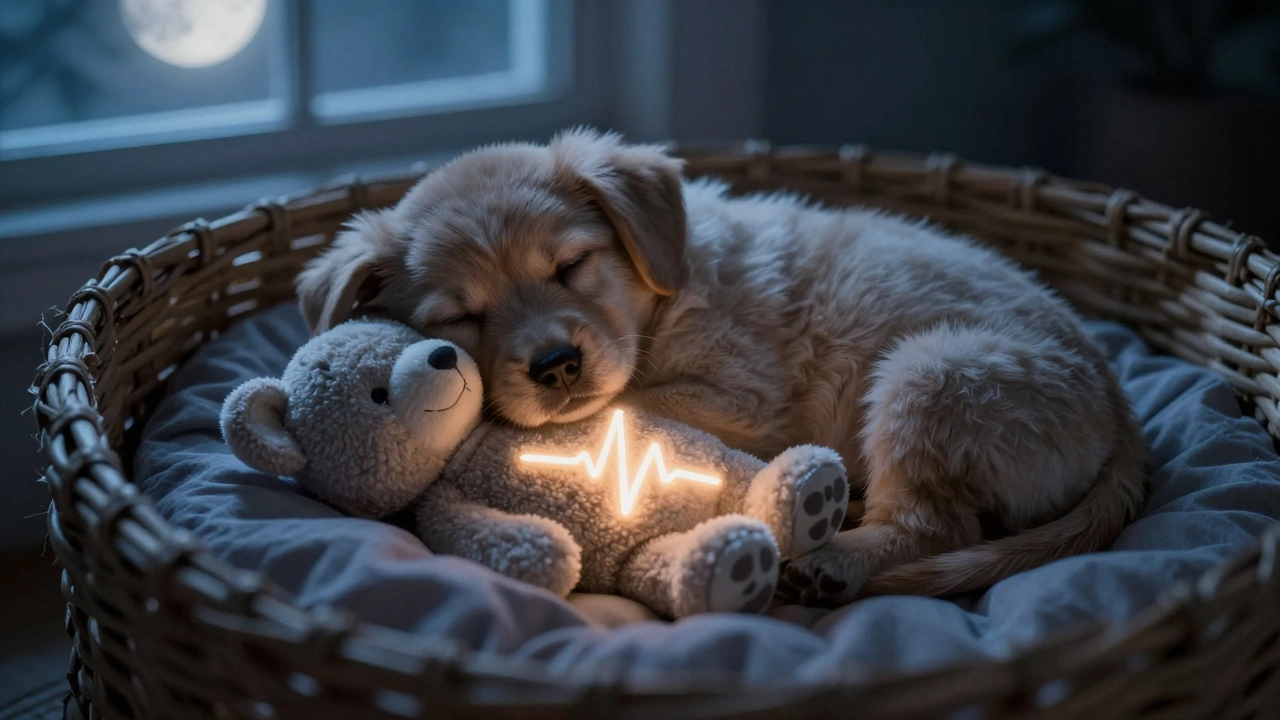
When you bring home a new puppy, everything feels urgent. Potty training. Chewing. Sleep schedules. And then there’s that little ball of fur curling up at night, whining softly, eyes wide open. You wonder: should I get them a cuddle toy? It’s not just about being cute. It’s about whether this small thing actually helps your puppy grow into a calm, confident dog.
Why Puppies Cry at Night
Puppies don’t cry because they’re being stubborn. They cry because they’re scared. For the first time in their lives, they’re alone. No littermates pressing against them. No mother’s warmth. Just silence, cold floors, and unfamiliar smells. Their tiny bodies are wired for survival-and being alone triggers a primal stress response. Studies from the University of Bristol show that puppies separated from their mothers before 8 weeks show higher cortisol levels, the stress hormone, than those who stayed longer. That’s not just fussiness. It’s real anxiety.What a Cuddle Toy Actually Does
A cuddle toy isn’t a blanket or a stuffed animal for decoration. It’s a stand-in for the physical comfort they lost. The best ones mimic the feel of a littermate: soft, warm, slightly textured, and safe to chew. Some even have a heartbeat simulator or a removable heat pack. These aren’t gimmicks-they’re tools. A 2023 study in the Journal of Veterinary Behavior found that puppies given a warm, soft toy with a slow heartbeat rhythm slept 47% longer and woke up less frequently than those without. They weren’t just quieter. They were calmer. Their heart rates dropped. Their breathing slowed. Their bodies relaxed.Not All Toys Are Created Equal
You can’t just grab any stuffed animal from the toy aisle. Puppies are mouthy, curious, and sometimes destructive. A toy with buttons, plastic eyes, or thin fabric can become a choking hazard. A toy that’s too big won’t fit under their chin. One that’s too small can be swallowed whole. The right cuddle toy has a few key features:- Size: Small enough to cradle, large enough to hug-about the size of a human fist.
- Material: Plush with a dense, non-shedding fabric. Avoid fleece; it unravels fast.
- Filler: Polyester fiberfill, not beans or pellets. These can leak and cause blockages.
- Sound: Optional heartbeat or gentle rustle. No bells or squeakers-they’ll overstimulate.
- Washable: Machine washable at 30°C. Puppies drool, pee, and roll in dirt.
Brands like Calming Buddy a puppy-specific cuddle toy with a removable heat pack and heartbeat module and Snuggle Puppy a synthetic warmth and heartbeat device designed for puppies are built for this exact purpose. They’re not expensive-usually under $30-but they’re made to last through weeks of chewing and cuddling.
How to Introduce the Toy
Don’t just drop it in the crate and walk away. That’s like giving a newborn a bottle and leaving them to figure it out. Here’s how to make it work:- Place the toy in your lap for 10 minutes before bedtime. Your body heat and scent will transfer to it.
- Put it in the crate with your puppy. Tuck it near their chest, not at the bottom.
- If the toy has a heat pack, warm it in the microwave for 15 seconds (test on your wrist first).
- Leave it there for 7-10 nights. Don’t remove it too soon. The goal is consistency, not speed.
Some puppies bond instantly. Others ignore it for days. That’s normal. Don’t force it. Just keep it there. By day 5, most will start nuzzling it, licking it, or sleeping with it pressed against their belly. That’s the sign it’s working.
When It Doesn’t Work
Not every puppy needs a cuddle toy. Some are naturally more independent. Others are too overstimulated by noise or movement. If your puppy:- Chews the toy into pieces within hours
- Shows signs of aggression around it (growling, guarding)
- Stops sleeping entirely even with the toy
Then it’s not the toy’s fault. It might be a sign of deeper anxiety, pain, or a medical issue. Talk to your vet. A puppy that won’t sleep after 10 nights with a proper cuddle toy might need behavioral support, not another toy.
What Happens If You Don’t Use One
You can raise a perfectly healthy dog without a cuddle toy. But you might be missing a simple, low-cost way to reduce stress during their most vulnerable weeks. Puppies that experience chronic stress early on are more likely to develop separation anxiety, noise phobias, or compulsive behaviors like tail-chasing or paw-licking later in life. A cuddle toy doesn’t fix everything-but it lowers the barrier to calm. It gives them something safe to hold onto while their brain learns the world isn’t scary.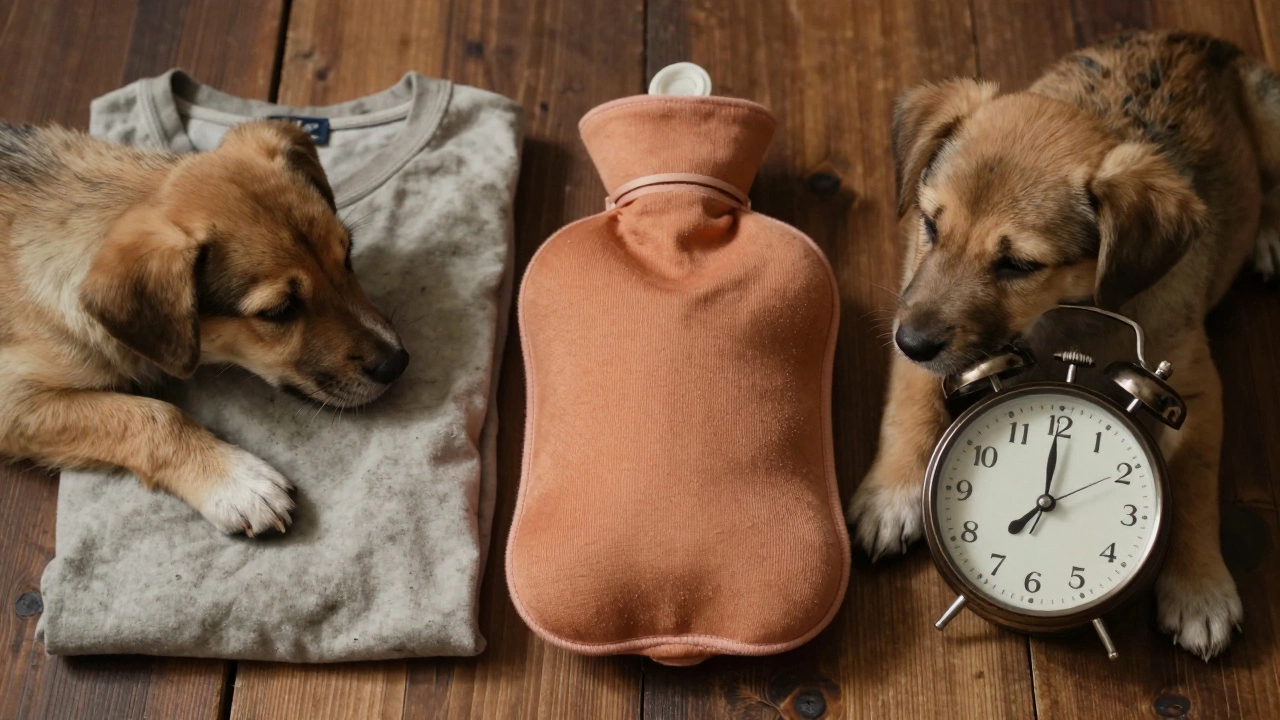
Alternatives to Cuddle Toys
If you’re not ready to buy a special toy, here are three low-cost alternatives:- Your old T-shirt: Put on a clean shirt, let it absorb your scent, then tuck it in their crate. It’s not the same as a heartbeat, but it’s familiar.
- A warm water bottle: Wrap it in a towel and place it near their paws. Make sure it’s not too hot.
- A ticking clock: Place a wind-up clock (not digital) under the crate. The steady tick mimics a heartbeat.
These work for some-but they don’t offer the same tactile comfort. A real cuddle toy gives them something to grip, nuzzle, and chew. That physical interaction is key to releasing calming hormones like oxytocin.
How Long Do They Need It?
Most puppies stop needing the cuddle toy by 4-6 months. That’s when their brains mature enough to self-soothe. But don’t rush it. If your 5-month-old still sleeps with it, leave it. For some dogs, that toy becomes a lifelong security object. That’s not weird-it’s normal. Many adult dogs sleep with a worn-out stuffed animal. It’s their version of a blanket.When you do retire it, don’t throw it away. Store it in a drawer with your clothes so it keeps your scent. Then, if your dog ever gets anxious during thunderstorms or vet visits, you can bring it out again. That’s not dependence. That’s emotional intelligence.
Final Thought: It’s Not a Luxury. It’s a Lifeline.
A cuddle toy isn’t about spoiling your puppy. It’s about giving them the same thing you’d give a human baby: safety, warmth, and a sense of connection. You wouldn’t leave a newborn alone in a cold room with no blanket. Don’t do it to a puppy either. They’re not too young to feel fear. And they’re not too small to need comfort.One of the most common things new owners say weeks later: "I didn’t think it would make a difference… until I saw them sleep." That’s the moment you realize: sometimes, the smallest things matter the most.
Can I use any stuffed animal as a cuddle toy for my puppy?
No. Most store-bought stuffed animals are made for children, not puppies. They often have plastic eyes, buttons, or thin fabric that can be easily chewed off and swallowed. Use only toys designed for puppies with safe materials, no small parts, and a durable, washable cover.
Should I leave the cuddle toy in the crate all day?
Only at night or during quiet rest times. During play or training, remove the toy so your puppy learns to focus on you and doesn’t become overly attached to it as a distraction. Constant access can lead to resource guarding or overstimulation.
My puppy won’t touch the toy. What should I do?
Try rubbing the toy with your clothing to transfer your scent. You can also warm it slightly or gently place it against their chest when they’re sleepy. Some puppies take 3-5 days to warm up to it. Don’t force it-just keep it available.
Is a heartbeat toy better than a plain one?
Studies show yes. Puppies exposed to a slow, rhythmic heartbeat (like 60-80 beats per minute) show lower stress levels and better sleep quality than those with silent toys. But if your puppy ignores a heartbeat toy, a simple, warm, scented one still helps.
Can a cuddle toy help with separation anxiety later on?
It can help prevent it. Puppies who learn to self-soothe with a comfort object early are less likely to develop full-blown separation anxiety as adults. But if your dog already shows signs of panic when left alone-barking, destruction, pacing-a cuddle toy alone won’t fix it. You’ll need behavior training.