Dog Supplement Dosage Calculator
Enter Dog's Weight
Daily Recommendation
Target EPA/DHA Intake:
Approximate Fish Oil Volume (assuming 30% concentration):
- ⚠ Check Concentration: Not all fish oils are equal. Check the label for total EPA + DHA amounts, not just "total fish oil."
- ⚠ Side Effects: Excessive doses can cause loose stools, weight gain, or impaired blood clotting.
- ✓ Vet Consultation: Always confirm with your veterinarian before starting a new regimen, especially if your dog is on medication.
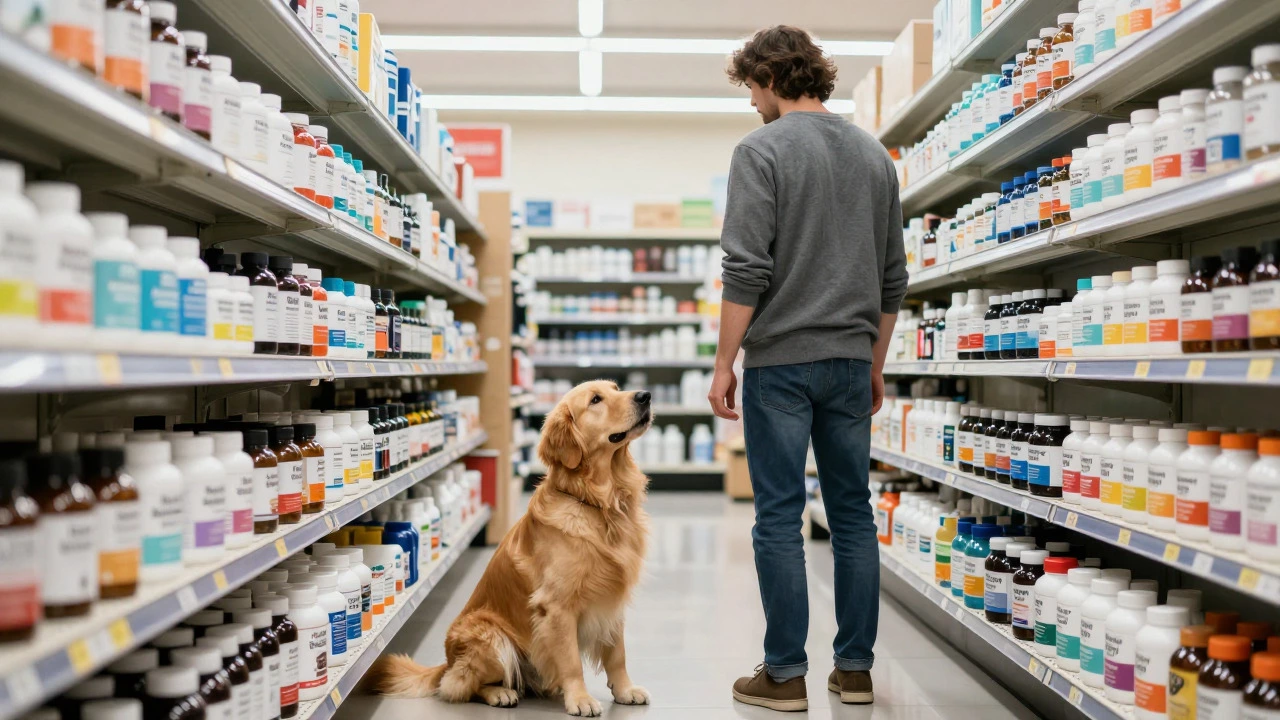
You walk into the pet store aisle, and it looks like a pharmacy exploded. Bottles of glucosamine, jars of fish oil, powders for gut health, and chews for anxiety line the shelves. The marketing is aggressive: 'Boost immunity,' 'Shiny coat guaranteed,' 'Joint support for seniors.' It’s easy to feel like you’re failing your dog if you aren’t buying every bottle on that rack. But here is the hard truth: most dogs do not need supplements at all.
In fact, giving unnecessary supplements can sometimes cause more harm than good. Before you spend hundreds of dollars on products that might just be expensive urine, you need to understand what your dog actually needs, what they are already getting, and when a supplement is genuinely medically necessary. Let’s cut through the noise and look at the science behind dog health supplements.
The Myth of the 'Complete' Diet vs. Reality
To understand whether your dog needs extra help, you first have to look at their bowl. For decades, the standard advice was simple: buy a high-quality commercial dog food labeled as 'complete and balanced,' and you’re done. That label means the food meets the nutritional profiles set by the Association of American Feed Control Officials (AAFCO). If you feed a reputable brand that follows these guidelines, your dog is likely getting everything they need from kibble or canned food alone.
However, the landscape has shifted. Many owners are moving away from mass-produced kibble toward homemade diets, raw feeding, or boutique brands with questionable quality control. This is where the gap appears. A homemade diet, no matter how well-intentioned, is notoriously difficult to balance without professional guidance. You might think you’re providing a healthy meal of chicken and rice, but you could be missing critical amounts of calcium, iodine, or zinc. In these specific scenarios, supplements aren't optional; they are essential to prevent severe deficiencies.
If you are feeding a commercially prepared food, check the packaging. Does it say 'meets AAFCO nutrient profiles'? If yes, adding random vitamins is usually redundant. Your dog’s body regulates nutrient absorption tightly. Flooding them with extra Vitamin C or B-complex won’t make them smarter or faster; their kidneys will simply filter out the excess. The exception is when a specific health issue arises, which brings us to the real reasons vets prescribe supplements.
When Supplements Are Actually Necessary
There are distinct clinical situations where supplements move from 'nice-to-have' to 'must-have.' These aren't about optimizing performance in a healthy animal; they are about managing disease or correcting a deficit. Here are the most common scenarios where a veterinarian will recommend specific additions to your dog's diet.
| Health Issue | Recommended Supplement | Purpose |
|---|---|---|
| Arthritis & Joint Degeneration | Glucosamine, Chondroitin, Omega-3s | Reduce inflammation and support cartilage repair |
| Dry Skin & Dull Coat | Fish Oil (EPA/DHA) | Improve skin barrier function and reduce itching |
| Gastrointestinal Issues | Probiotics/Prebiotics | Restore gut flora after antibiotics or during stress |
| Senior Cognitive Decline | MCT Oil, Antioxidants | Support brain energy metabolism |
| Hip Dysplasia (Puppies) | Calcium/Vitamin D (only if deficient) | Ensure proper bone mineralization |
Let’s break down the big three: Joints, Skin, and Gut.
Glucosamine and Chondroitin are compounds found naturally in cartilage that help maintain joint structure and reduce pain. While older dogs often benefit from these, recent studies suggest that oral glucosamine has variable bioavailability. Meaning, not all of it reaches the joints. However, combining it with high-dose Omega-3 fatty acids creates a synergistic effect that many vets find effective for managing osteoarthritis pain, potentially reducing the need for NSAIDs.
Omega-3 Fatty Acids, specifically EPA and DHA from fish oil, are powerful anti-inflammatory agents that support heart, brain, and skin health. Unlike plant-based oils (like flaxseed), which dogs struggle to convert, marine sources provide the active forms directly. If your dog eats a lot of chicken-based kibble, they are likely getting plenty of Omega-6s (pro-inflammatory) but very few Omega-3s. Adding fish oil helps rebalance this ratio, leading to a shinier coat and less scratching.
Probiotics are live beneficial bacteria that aid digestion and support the immune system. They are particularly useful after a course of antibiotics, which wipes out both bad and good gut bacteria. They can also help with mild diarrhea or travel-related stomach upset. However, probiotics are strain-specific. Just because a product says 'probiotic' doesn't mean it contains the right strains for your dog’s specific issue.
The Risks of Over-Supplementation
We tend to think of supplements as harmless because they are sold over the counter. But 'natural' does not always mean safe. Fat-soluble vitamins (A, D, E, K) accumulate in the body. Too much Vitamin D can lead to fatal calcium deposits in the kidneys and heart. Excessive Vitamin A can cause bone deformities in growing puppies. Even minerals like iron and zinc can be toxic in high doses.
One major risk is the lack of regulation. In the United States, the FDA regulates supplements as food, not drugs. This means manufacturers do not need to prove efficacy or safety before selling their products. Independent testing has repeatedly shown that many commercial pet supplements contain significantly different amounts of active ingredients than what is listed on the label. Some even contain contaminants like heavy metals or undeclared pharmaceuticals.
Another hidden danger is drug interactions. If your dog is on medication for seizures, heart conditions, or blood thinning, certain supplements can interfere. St. John’s Wort, for example, can render many medications ineffective. Garlic powder, often touted for parasite prevention, can cause hemolytic anemia in dogs if given in large quantities. Always disclose every supplement you give to your vet during annual checkups.

How to Choose Safe and Effective Products
If your vet recommends a supplement, or you decide to try one for general wellness, you need to know how to pick a quality product. Not all bottles are created equal. Look for third-party certification seals. The National Animal Supplement Council (NASC) Quality Seal is a strong indicator that the product has been tested for purity and potency. Other trusted certifications include USP Verified or NSF International.
Check the ingredient list closely. You want specific dosages, not vague terms like 'proprietary blend.' If a label says 'Joint Support Blend: 500mg' but doesn't tell you how much of that is glucosamine versus MSM versus turmeric, put it back. You cannot dose accurately without knowing the exact amount of the active ingredient.
Consider the form. Liquid fish oil is often more potent and easier to dose accurately than soft chews, which may contain fillers, sugars, or artificial flavors to mask the taste. Powders can be mixed into food, ensuring ingestion, but ensure they dissolve completely to avoid digestive irritation. For dogs who are picky eaters, prescription-grade supplements often come in palatable forms designed specifically for veterinary patients.
Natural Sources vs. Pills
Before reaching for a pill, consider if you can get the nutrient from whole foods. This is often safer and more bioavailable. For example, instead of a multivitamin, add a small amount of cooked blueberries (antioxidants), pumpkin puree (fiber), or plain yogurt (probiotics) to their meal. Fresh vegetables like carrots and green beans provide fiber and micronutrients without the processing risks of supplements.
For Omega-3s, feeding your dog sardines or mackerel twice a week can provide significant benefits. Just ensure the fish is low in mercury and free of bones. For joint health, bone broth (low sodium, no onion or garlic) provides collagen and minerals that support connective tissue. These dietary additions are gentle, natural, and less likely to cause gastrointestinal upset than concentrated pills.

Questions to Ask Your Veterinarian
Never start a new supplement regimen without a quick chat with your vet. Bring the product label with you. Ask these specific questions:
- Is this supplement necessary for my dog's current health status?
- Are there any potential side effects or interactions with current medications?
- What is the correct dosage based on my dog's weight and age?
- How long should I continue this supplement before re-evaluating?
- Are there dietary changes I can make instead?
Your vet knows your dog’s medical history, blood work results, and breed-specific predispositions. A Golden Retriever might need different joint support than a Border Collie due to activity levels and genetic risks. Personalized advice beats generic internet recommendations every time.
Conclusion: Less Is Often More
The bottom line is that supplements are tools, not magic bullets. They are meant to address specific gaps or issues, not to replace a balanced diet. For the vast majority of dogs eating high-quality commercial food, supplements are an unnecessary expense. Save your money for regular vet visits, preventive care, and high-quality food.
If your dog has a diagnosed condition like arthritis, allergies, or GI sensitivity, then targeted supplements under veterinary guidance can significantly improve their quality of life. Focus on evidence-based products with clear labeling and third-party verification. And remember, the best supplement for any dog is a consistent routine, regular exercise, and a diet tailored to their individual needs.
Can I give human vitamins to my dog?
Generally, no. Human vitamins are formulated for human physiology and often contain toxic additives like xylitol (an artificial sweetener) or excessive doses of certain vitamins that can be harmful to dogs. Always use products specifically designed for canines and consult your vet before giving any human medication or supplement.
How long does it take for dog supplements to work?
It depends on the supplement. Probiotics may show improvement in stool consistency within a few days. Fish oil for skin and coat health typically takes 4 to 8 weeks to notice a difference. Joint supplements like glucosamine can take 6 to 8 weeks to build up in the system and provide noticeable pain relief. Patience and consistency are key.
Are raw eggs good for dogs?
Cooked eggs are excellent sources of protein and biotin for dogs. Raw eggs carry a risk of Salmonella and E. coli, and they contain avidin, a protein that can interfere with biotin absorption if fed in large quantities over time. Occasional raw eggs are usually fine for healthy dogs, but cooked is safer and more nutritious.
Does my senior dog need a multivitamin?
Not necessarily. If your senior dog is eating a complete and balanced senior formula, they likely don't need a general multivitamin. However, they may benefit from targeted supplements like Omega-3s for joint and cognitive health, or probiotics if their digestion has slowed. Focus on specific needs rather than broad-spectrum vitamins.
Can too much fish oil hurt my dog?
Yes. Excessive fish oil can lead to weight gain, loose stools, and impaired blood clotting. In rare cases, it can cause vitamin A toxicity if the source is liver-based oil rather than muscle-tissue oil. Stick to the recommended dosage based on your dog's weight, usually around 20-55 mg of combined EPA/DHA per pound of body weight.