
Dog Supplement Selector: Fish Oil vs. Coconut Oil
Not sure which supplement your dog needs? Answer these questions to get a personalized recommendation.
Recommendation
Best Choice:
Why?
Suggested Dosage Guide
*Always consult your veterinarian before starting new supplements, especially if your dog is on medication or has pancreatitis history.*You’re standing in the pet aisle, holding two bottles. One promises a shiny coat and fewer allergies with fish oil. The other claims it’s the natural cure-all for everything from bad breath to joint pain: coconut oil. You want what’s best for your dog, but marketing hype makes it hard to tell fact from fiction. Here is the blunt truth: they aren’t competing for the same job. Fish oil handles inflammation; coconut oil handles energy and skin barriers. Choosing one over the other depends entirely on what your dog actually needs right now.
The Core Difference: Omega-3s vs. Medium-Chain Triglycerides
To understand which supplement wins, you have to look at what’s inside. Fish oil is packed with omega-3 fatty acids, specifically EPA and DHA, which are essential nutrients that dogs cannot produce efficiently on their own. These fats act like fire extinguishers for inflammation throughout the body. On the flip side, coconut oil consists mostly of medium-chain triglycerides (MCTs), particularly lauric acid. Your dog’s liver converts MCTs directly into energy rather than storing them as fat. It also has antimicrobial properties that can help with skin issues, but it doesn’t do much for internal inflammation.
Think of it this way: if your dog is limping or itching due to an allergic reaction, you need the anti-inflammatory power of fish oil. If your dog is lethargic, has dry flaky skin, or needs a quick energy boost, coconut oil is the better tool. They serve different biological functions. Using coconut oil to treat arthritis is like putting a bandage on a broken leg-it might feel nice, but it doesn’t fix the underlying problem.
When Fish Oil Wins: Inflammation and Joint Health
If your vet has diagnosed your dog with arthritis, hip dysplasia, or severe allergies, fish oil is the clear winner. Research consistently shows that EPA (eicosapentaenoic acid) reduces the production of inflammatory compounds in the body. A study published in the Journal of Veterinary Internal Medicine found that dogs with osteoarthritis who received high doses of omega-3s showed significant improvement in mobility compared to those given a placebo.
Beyond joints, fish oil supports heart health and cognitive function in senior dogs. DHA (docosahexaenoic acid) is a primary structural component of the brain. As dogs age, maintaining adequate DHA levels can help slow the progression of canine cognitive dysfunction, often called doggy dementia. If you have a puppy, fish oil is also critical for brain development during the first year of life.
- Best for: Arthritis, hip dysplasia, itchy skin from allergies, heart disease, and senior brain health.
- Key Benefit: Reduces systemic inflammation and supports neural pathways.
- Dosing Tip: Look for combined EPA/DHA content, not just "total fish oil." Aim for 10-50 mg per pound of body weight daily, depending on severity.
When Coconut Oil Wins: Skin Barrier and Energy
Coconut oil shines when the issue is superficial or metabolic. The lauric acid in coconut oil breaks down into monolaurin, which fights bacteria, fungi, and viruses. This makes it surprisingly effective for topical application on hot spots, minor cuts, or fungal infections like ringworm. Many owners report that adding a teaspoon of virgin coconut oil to their dog’s food helps reduce bad breath by killing oral bacteria.
For working dogs or active breeds, the MCTs in coconut oil provide a rapid source of fuel. Unlike long-chain fats, MCTs bypass normal digestion processes and go straight to the liver for energy conversion. This can improve endurance without adding excess calories that lead to weight gain. However, be careful-too much too fast causes diarrhea. Start with a quarter teaspoon for small dogs and work up slowly.
- Best for: Dry flaky skin, minor wound care, bad breath, and low-energy dogs.
- Key Benefit: Antimicrobial action and immediate energy source.
- Dosing Tip: Use only unrefined, cold-pressed virgin coconut oil. Refined versions lack the beneficial antioxidants.

Side-by-Side Comparison: Key Attributes
Deciding between these two isn't about which is "better" globally, but which fits your specific situation. Here is how they stack up against each other on critical metrics.
| Feature | Fish Oil | Coconut Oil |
|---|---|---|
| Primary Active Compound | EPA & DHA (Omega-3) | Lauric Acid (MCT) |
| Main Health Benefit | Reduces inflammation | Antimicrobial & Energy |
| Best For Conditions | Arthritis, Allergies, Heart Disease | Dry Skin, Bad Breath, Wounds |
| Taste/Acceptance | Can be fishy; some dogs refuse | Sweet/nutty; usually loved |
| Risk of Side Effects | Fishy breath, loose stool | Stomach upset, pancreatitis risk |
| Caloric Density | High (9 kcal/g) | High (9 kcal/g) |
Can You Give Both? The Synergy Approach
Here is where many owners get confused. Do you have to choose? Not necessarily. In fact, combining them can offer comprehensive support. Since they work through different mechanisms, there is no direct conflict. Fish oil lowers the inflammatory markers in the blood, while coconut oil strengthens the outer skin barrier and provides clean energy.
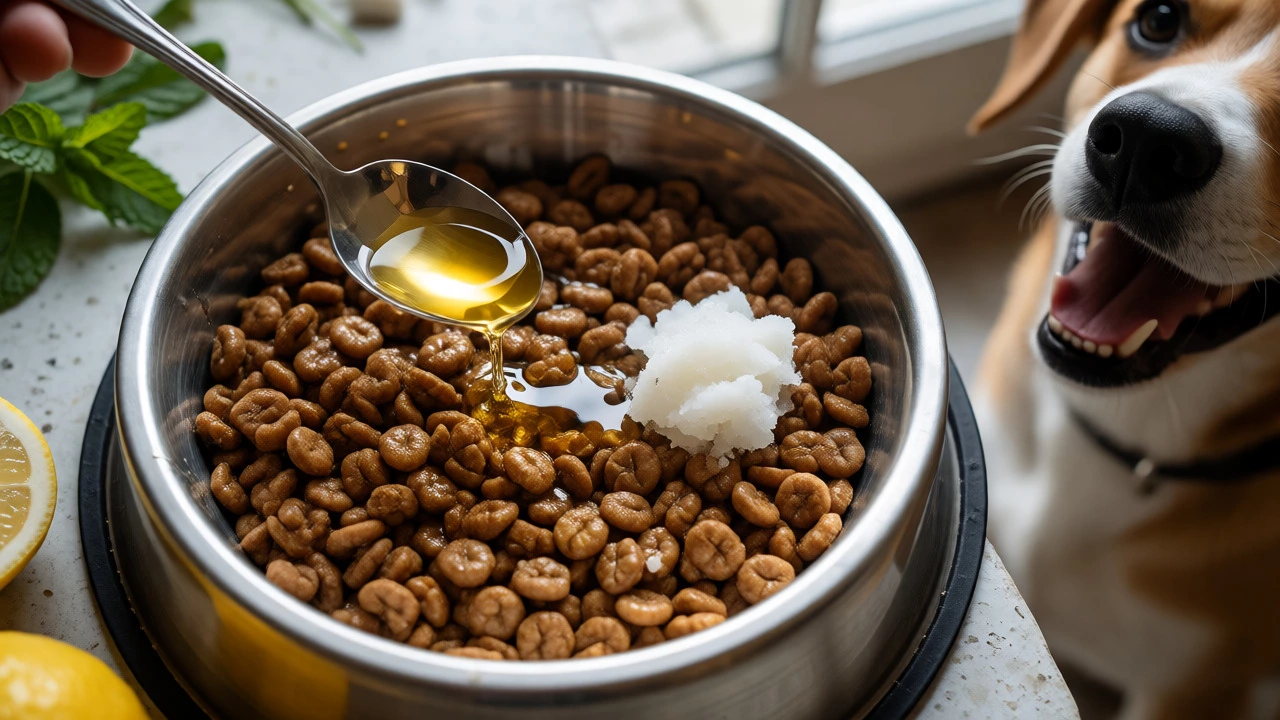
However, both are pure fats. Adding a tablespoon of each to a small dog’s diet adds nearly 250 calories-that’s almost half a meal for a Chihuahua. If you plan to use both, you must reduce the amount of kibble or wet food slightly to prevent obesity. A common protocol for an adult medium-sized dog might include 1 pump of fish oil and ½ teaspoon of coconut oil daily. Always introduce one new supplement at a time so you can spot any digestive upset immediately.
Quality Matters: Avoiding the Junk
The market is flooded with poor-quality supplements. For fish oil, oxidation is the enemy. Rancid fish oil creates free radicals that cause more harm than good. Check the expiration date and smell the oil; it should smell fresh, like the ocean breeze, not like rotting fish. Look for brands that provide third-party testing results for heavy metals like mercury and lead. IFOS (International Fish Oil Standards) certification is a gold standard indicator of purity.
For coconut oil, avoid anything labeled "hydrogenated" or "fractionated," as these processing methods strip away the beneficial lauric acid. Stick to "virgin" or "extra-virgin" cold-pressed options. If buying in bulk, store it in a cool, dark place. While coconut oil is solid below 76°F (24°C), liquid versions exist but often contain additives to keep them fluid, which may dilute the potency.
Potential Risks and Contraindications
Neither supplement is safe for every dog. Dogs with a history of pancreatitis should approach coconut oil with extreme caution. Because it is high in saturated fat, it can trigger a flare-up in sensitive individuals. Similarly, dogs on blood-thinning medications (like aspirin or warfarin) should consult a vet before starting fish oil, as omega-3s have mild anticoagulant effects that could increase bleeding risk.
Also, consider breed sensitivities. Some deep-chested breeds are prone to bloat, and sudden dietary changes involving high-fat supplements can sometimes contribute to gastric distress. Monitor your dog’s stool consistency closely for the first two weeks. If you see mucus or undigested fat, cut the dosage in half.
Which is better for my dog's dry, itchy skin?
It depends on the cause. If the itchiness is due to environmental allergies (pollen, dust), fish oil is generally more effective because it reduces the internal inflammatory response. If the skin is simply dry, flaky, or has a mild fungal issue, coconut oil applied topically or fed orally can restore moisture and fight surface microbes.
How much coconut oil should I give my dog?
Start small. For dogs under 20 lbs, begin with ¼ teaspoon daily. For dogs 20-40 lbs, try ½ teaspoon. Over 40 lbs, you can go up to 1 teaspoon or 1 tablespoon. Gradually increase over two weeks to assess tolerance. Too much too soon causes diarrhea.
Is fish oil safe for puppies?
Yes, and it is highly recommended. DHA in fish oil supports brain and eye development in growing puppies. Ensure the product is formulated for pets and check the label for appropriate dosing based on the puppy's weight and age.
Can coconut oil help with my dog's bad breath?
It can. Lauric acid has antibacterial properties that may reduce the bacteria responsible for halitosis. However, if bad breath persists, it could signal dental disease or gastrointestinal issues, so a vet checkup is still necessary.
Do I need to refrigerate coconut oil for dogs?
No. Virgin coconut oil is shelf-stable at room temperature for months. It will turn solid in cool environments and liquid in warm ones, which is normal. Just keep it out of direct sunlight to preserve its antioxidants.