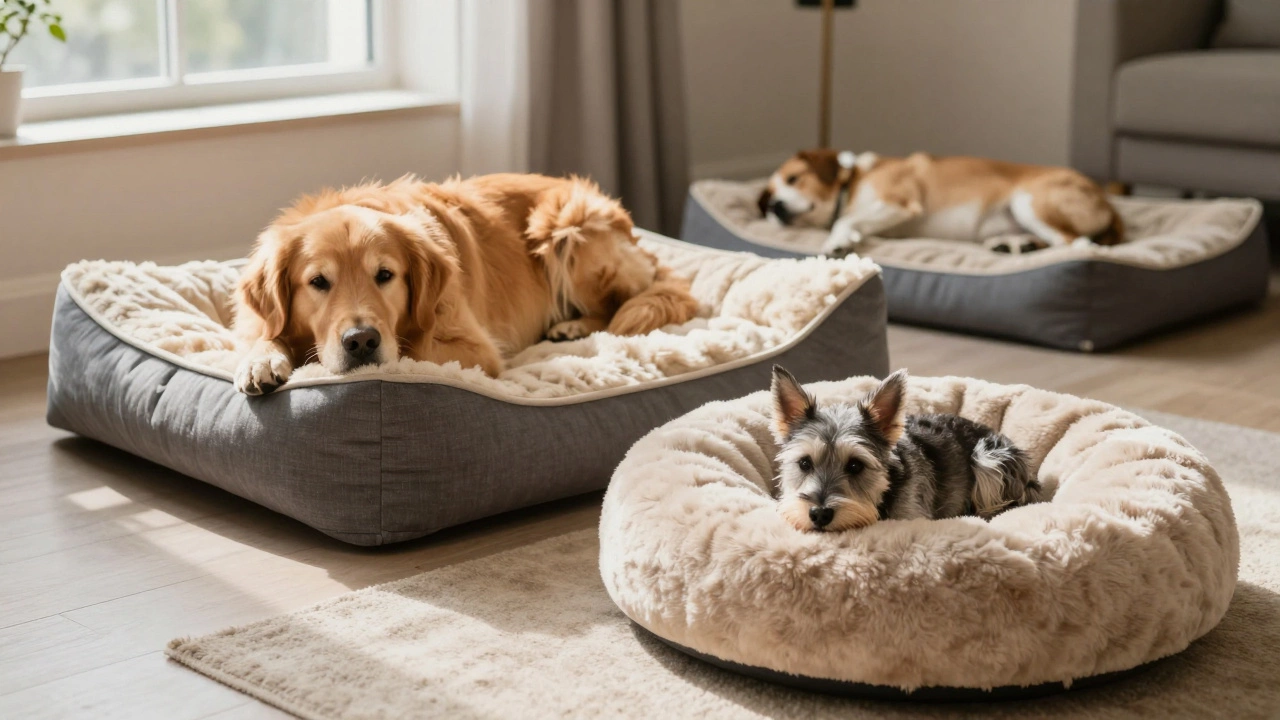
Dog Bed Recommendation Finder
Answer a few questions about your dog's habits to find the perfect match for their comfort and health.
Curls up like a shrimp or burrows into blankets.
Rests their head on a pillow or leans against walls.
Stretches out fully, often on their back.
Joint pain, arthritis, or hip dysplasia.
Loves to dig, chew, or bring in mud.
No major joint or chewing issues.
Your Perfect Match:
Key Takeaways
- Match the bed shape (bolster, donut, flat) to your dog's natural sleeping position.
- Prioritize memory foam or orthopedic materials for senior dogs or large breeds.
- Choose washable, heavy-duty fabrics for chewers and muddy paws.
- Ensure the bed is sized so the dog can fully stretch out without hanging off the edge.
Decoding the Different Bed Shapes
Before you buy, watch your dog sleep. Do they curl up like a shrimp, or do they sprawl out like they're owning the entire room? This tells you exactly what the bed should look like.
Bolster Beds is a type of bed with raised edges or "walls" around three sides. These are perfect for dogs who love to lean against something or use a pillow for their head. If your dog tends to nest or circle before lying down, the raised edges provide a sense of security and a cozy place to rest their chin.
Donut Beds, often called caling beds, are circular and plush. They are designed for the "curlers." These beds use high walls to create a burrowing effect, which triggers a feeling of safety in many breeds. If you have a small dog or a nervous rescue, the cocoon-like shape helps reduce anxiety by mimicking the feeling of sleeping with a littermate.
Mat or Flat Beds are essentially oversized pillows without edges. These are the go-to for "sprawlers"-dogs who sleep on their backs with legs in the air. Because there are no walls to restrict them, they can stretch fully. These are also the easiest to travel with and fit perfectly inside crates.
| Sleeping Style | Recommended Shape | Primary Benefit |
|---|---|---|
| The Curler | Donut / Round Bed | Security and Warmth |
| The Leaner | Bolster / Rectangular | Head and Neck Support |
| The Sprawler | Mat / Flat Bed | Maximum Stretching Space |
The Science of Stuffing: Foam, Fiber, and Support
What's inside the bed is even more important than how it looks from the outside. A thin layer of polyester fiberfill might look fluffy in the store, but it collapses under the weight of a 70-pound Golden Retriever within weeks. To find the best dog bed, you need to look at the density of the materials.
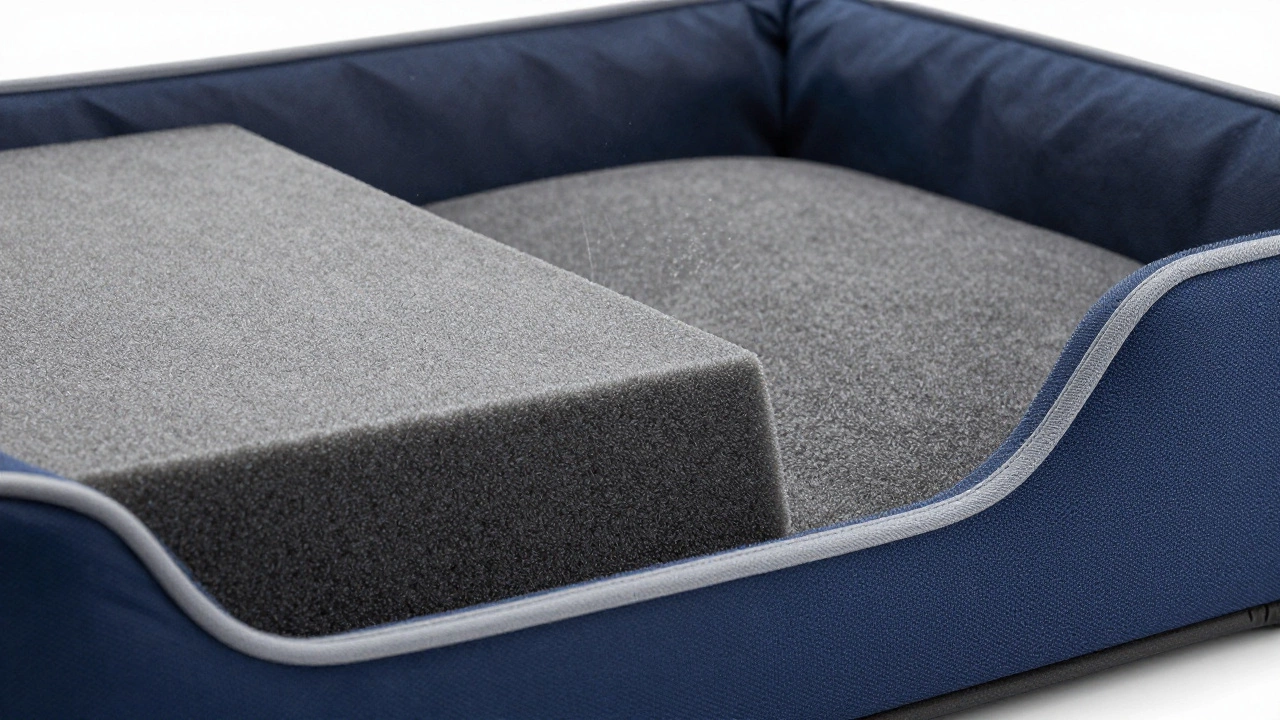
Orthopedic Foam is high-density foam designed to support joints and prevent pressure points. Unlike cheap foam, orthopedic versions don't bottom out. For senior dogs or breeds prone to hip dysplasia, like German Shepherds, this is non-negotiable. It distributes the dog's weight evenly, which reduces the pain they feel when getting up from a nap.
Memory foam is a great step up, but be careful with the "temperature" of the foam. Some dense foams trap heat, which can make a thick-coated dog overheat. Look for gel-infused memory foam or beds with breathable top layers if your dog tends to pant even in a cool room.
For puppies or low-energy dogs, polyester filling is fine, but it's prone to clumping. If you choose a fiber-filled bed, make sure the filling is sewn into chambers. This prevents the stuffing from shifting to one side, leaving a hard lump in the middle and a hollow dip where the dog actually sleeps.
Fabric Choices for Real-Life Dog Messes
Your dog bed will inevitably encounter mud, drool, and the occasional "accident." If the fabric isn't durable or washable, you're basically buying a giant sponge for bacteria. You want a material that balances comfort with ruggedness.
Canvas and nylon are excellent for high-energy dogs or those who like to dig. They resist punctures and can handle the friction of a dog scratching at the bed to "nest." However, these can feel cold. A common pro-tip is to find a bed with a removable, machine-washable cover and a separate soft fleece blanket you can throw on top for winter months.
Avoid fabrics with long loops or loose threads. Dogs love to chew, and a loose thread can quickly turn into a giant hole. Check for reinforced stitching, especially at the corners where the fabric is most likely to rip. If you have a "shredder," look for ballistic nylon-the same stuff used in heavy-duty luggage.
Sizing It Right: The "Full Stretch" Rule
One of the biggest mistakes owners make is buying a bed based on the dog's weight category rather than their actual length. A "Large" bed for a Greyhound is very different from a "Large" bed for a Bulldog. Both might weigh 60 pounds, but the Greyhound needs three times as much length to be comfortable.
To get the size right, measure your dog while they are sleeping in their favorite position. Measure from the tip of the nose to the base of the tail. Then, add about 6 to 10 inches to that measurement. This ensures they don't end up with a paw hanging off the edge, which can lead to joint strain or simply a restless night's sleep.
If you're choosing a bolster bed, remember that the "usable" space is only the flat part in the middle. If a bed is 30 inches wide but has 6-inch bolsters on each side, your dog only has 18 inches of flat space. Always check the interior dimensions, not just the outer footprint.
Placement and Environmental Factors
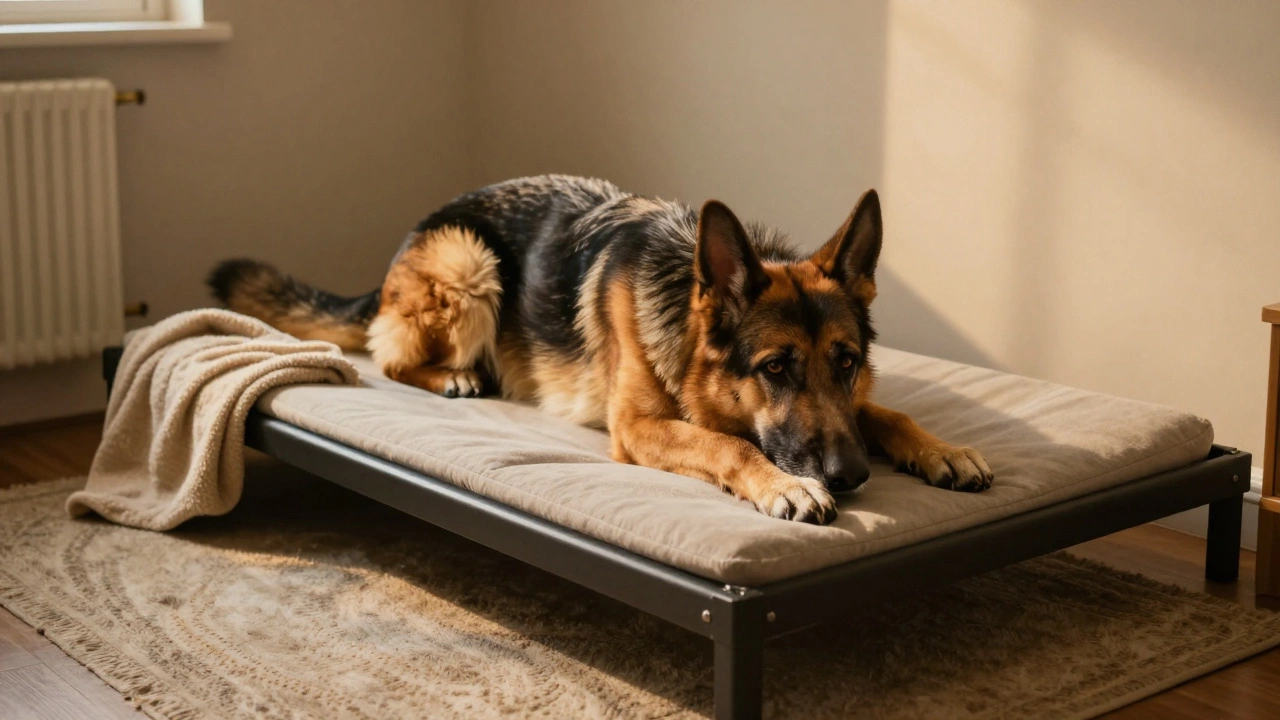
Where you put the bed changes what the bed should look like. A bed placed in a drafty hallway needs higher walls and thicker materials to keep the dog warm. A bed placed in a sunny spot by the window should have a breathable, light-colored fabric to avoid absorbing too much heat.
Consider the "territory" of your home. If your dog likes to be near you while you're on the couch, a low-profile mat that fits snugly against the furniture is better than a giant, fluffy donut that takes up the whole walkway. For dogs that suffer from separation anxiety, placing their bed in a corner or a recessed area of the room can make them feel more secure, as it limits the number of directions they have to keep an eye on.
How do I know if my dog hates their bed?
If your dog consistently sleeps on the hardwood floor next to their bed, or if they spend ten minutes circling and scratching the bed before finally lying down on the rug instead, the bed isn't meeting their needs. This usually means the bed is either too hot, too small, or lacks the support they need for their joints.
Is memory foam actually better than regular foam?
Yes, for most dogs. Regular foam is often too soft and compresses fully under weight, meaning the dog is essentially lying on the floor. Memory foam contours to the body and pushes back, which keeps the joints from pressing directly against the hard ground. This is critical for larger breeds and older dogs.
How often should I wash a dog bed?
You should wash the removable cover every two to four weeks. Dog beds collect dander, outdoor allergens, and oils from the skin that can lead to odors and skin irritation. Vacuuming the interior foam once a week helps remove the deeper grit that the wash cycle doesn't reach.
Can I use a human pillow as a dog bed?
In a pinch, yes, but human pillows aren't designed for the weight and claw-action of a dog. They lack the density to provide real orthopedic support and usually rip much faster than a dedicated pet bed. If you do use one, put it inside a heavy-duty pillowcase or wrap it in a blanket.
What if my dog chews through every bed I buy?
Look for beds made from ballistic nylon or Cordura fabric. These are heavy-duty materials used in outdoor gear. Avoid any beds with tassels, fringes, or exposed zippers, as these are "invitations" to chew. Providing a separate chew toy nearby can also distract them from their bedding.
Next Steps for a Happier Dog
If you're still unsure, try the "blanket test." Lay a few different types of blankets or pillows on the floor and see which ones your dog gravitates toward. If they pile up three blankets to make a mound, they want a bolster or donut bed. If they spread one flat blanket across the floor, a mat is their best bet.
Once you've picked a bed, give them time to adjust. Some dogs are suspicious of new smells. Rubbing the new bed with a t-shirt you've worn or placing a familiar old toy on it can help them realize this new spot is a safe place to crash. If your dog is a senior, consider placing the bed on a non-slip rug to help them get in and out without sliding.