Cat Food Mixing Calculator
It’s 6:00 AM. Your cat is staring at you with that intense, unblinking gaze that screams hunger. You reach for the pantry and grab both the crunchy kibble and the savory pouch of wet food. A thought crosses your mind: why not just dump them together in one bowl? It seems convenient. It seems like a way to give your pet the best of both worlds. But before you create that soggy mixture, you need to know if it’s actually good for your cat-or if it’s setting up a recipe for digestive trouble.
The short answer is yes, you can mix wet and dry cat food is a combination of moisture-rich canned or pouch food with dehydrated kibble. Many veterinarians and pet nutritionists support this approach because it balances hydration benefits with dental convenience. However, how you do it matters immensely. Mixing them incorrectly can lead to bacterial growth, food aversion, or upset stomachs. This guide breaks down exactly how to combine these diets safely, why it helps, and what pitfalls to avoid.
Why Combine Wet and Dry Food?
Cats are obligate carnivores, meaning their bodies are designed to process meat. In the wild, they get most of their water from prey. Domestic cats often don’t drink enough plain water, leading to chronic dehydration. This is where wet food shines. It typically contains about 70-80% water, which supports kidney function and urinary tract health. Dry food, on the other hand, usually has only 10% moisture. Relying solely on kibble requires cats to actively seek out and drink significant amounts of water, which many simply refuse to do.
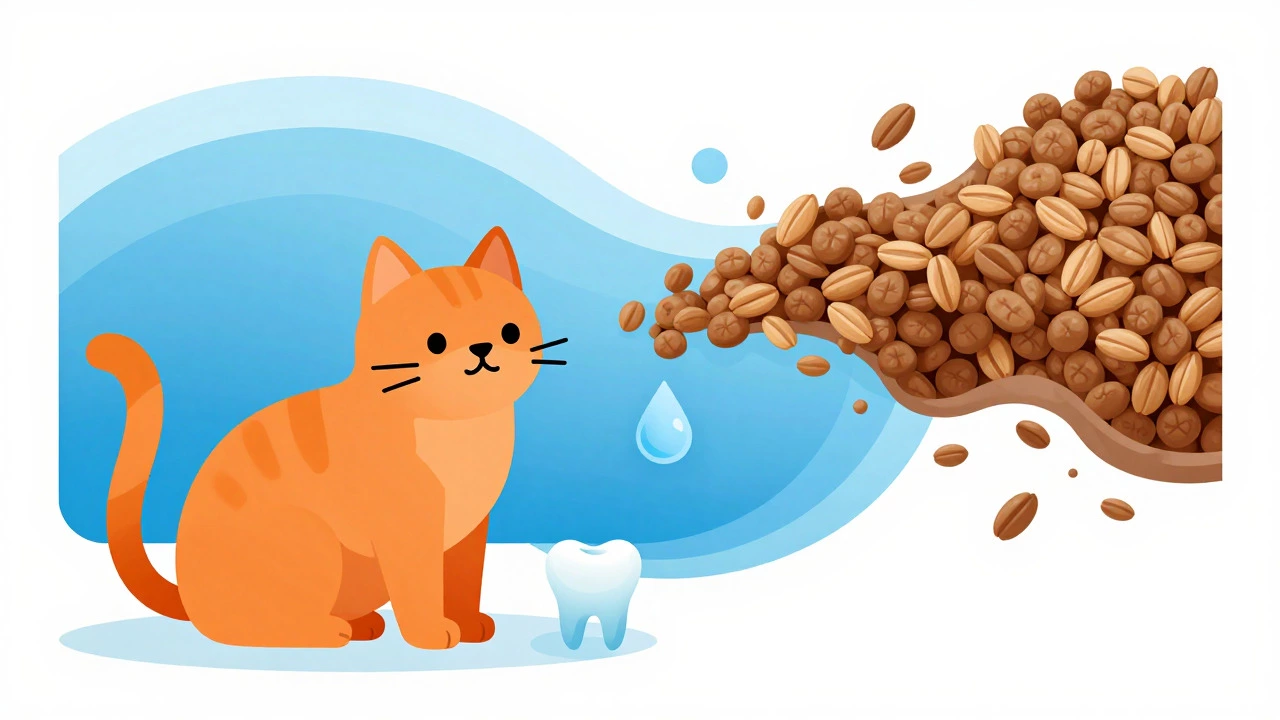
So why keep the dry food in the rotation? There are practical reasons. Kibble is calorie-dense, inexpensive, and easy to store. It also offers a mechanical cleaning action as cats crunch through it, which can help reduce tartar buildup compared to soft foods alone. By mixing the two, you aim to capture the hydration benefits of wet food while maintaining the cost-efficiency and dental perks of dry food. It’s a strategy aimed at creating a more balanced nutritional profile without breaking the bank.
| Attribute | Wet Cat Food | Dry Cat Food (Kibble) |
|---|---|---|
| Moisture Content | 70-80% | 10-12% |
| Calorie Density | Lower (requires larger volume) | Higher (smaller volume needed) |
| Dental Impact | No mechanical cleaning; sticks to teeth | Some abrasive action against plaque |
| Cost per Calorie | Higher | Lower |
| Shelf Life (Open) | 24-48 hours refrigerated | Weeks if stored properly |
The Risks of Mixing Foods in One Bowl
While the idea of a mixed meal sounds great, biology doesn’t always cooperate. The biggest issue isn’t the nutrients themselves, but how your cat perceives texture and smell. Cats are highly sensitive to changes in their environment, including their food. If you mix wet and dry food thoroughly so that the kibble becomes soggy, you change the texture entirely. Some cats love this "soup" consistency. Others find it repulsive and may reject the meal completely.
Another major concern is bacterial growth. When you introduce liquid from wet food into dry kibble, you create a moist environment perfect for bacteria to thrive. If the bowl sits out for more than an hour, especially in warm weather, that mixture can become a breeding ground for pathogens. Unlike dry food left out all day, which remains relatively stable, mixed food spoils quickly. Leaving a wet-dry mix out overnight is risky and can lead to gastrointestinal issues like vomiting or diarrhea.
There’s also the risk of nutrient imbalance. Not all brands are formulated to be fed together. If you pick a high-protein wet food and pair it with a carb-heavy dry food, you might accidentally skew the protein-to-carb ratio too far in one direction. While occasional variation is fine, long-term imbalances can affect weight management and metabolic health, particularly in cats prone to diabetes or obesity.
How to Mix Wet and Dry Food Safely
If you decide to proceed with mixing, follow these steps to ensure safety and acceptance:
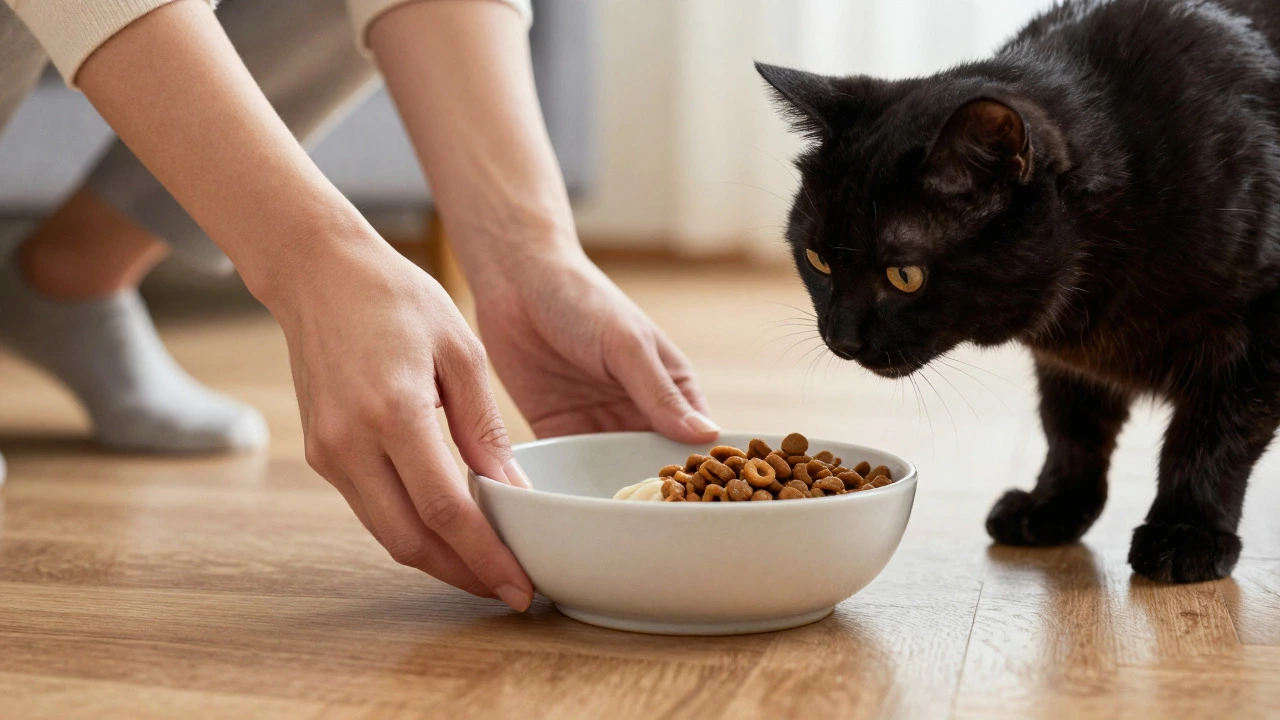
- Start Slowly: Don’t switch abruptly. Begin by adding a small amount of wet food (a teaspoon) to their regular dry portion. Gradually increase the wet food ratio over 7-10 days. This allows their gut bacteria to adjust to the new moisture and ingredient levels.
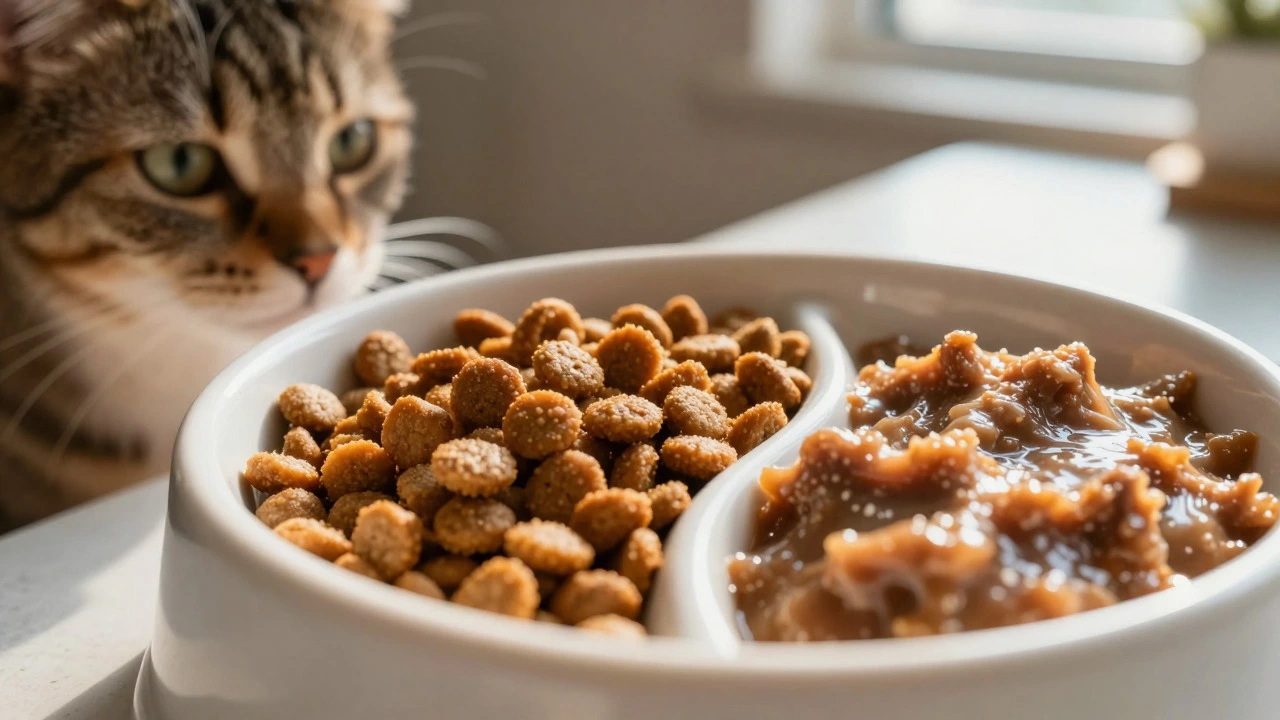
- Serve Separately First: Instead of stirring them into a mush, place the wet food in one part of the bowl and the dry food in another. This lets your cat choose how they want to eat. Many cats prefer to eat the wet food first while it’s fresh, then snack on the dry food later.
- Watch the Clock: If you do mix them together, remove any uneaten food after 30-60 minutes. Do not leave mixed meals out for more than two hours during the day. Refrigerate leftovers immediately if your cat leaves some behind.
- Match Brands or Formulations: Try to use wet and dry foods from the same brand or line. These products are often formulated to complement each other nutritionally, ensuring that vitamins and minerals align correctly when combined.
Alternative Feeding Strategies
Mixing isn’t the only way to benefit from both types of food. Consider these alternatives if your cat rejects the mixed bowl:
- Top-Dressing: Sprinkle a small amount of crushed dry kibble over wet food. This adds crunch and variety without making the entire meal soggy. It’s a great way to encourage picky eaters to try new textures.
- Separate Meals: Feed wet food in the morning and evening, and leave a measured amount of dry food available during the day. This mimics natural hunting patterns-larger meals followed by grazing-and ensures consistent hydration.
- Puzzle Feeders: Use interactive toys for dry food and standard bowls for wet food. This separates the functional benefits: mental stimulation from the kibble and hydration/nutrition from the wet food.
Signs Your Cat Is Struggling with the Mix
Pay close attention to your cat’s behavior and health after introducing mixed feeding. Watch for these red flags:
- Vomiting or Diarrhea: Sudden changes in stool consistency or frequent vomiting indicate the digestive system is overwhelmed. Revert to the previous diet and consult a vet if symptoms persist.
- Food Aversion: If your cat sniffs the bowl and walks away, they likely dislike the texture or smell combination. Try serving them separately instead of mixing.
- Weight Changes: Monitor your cat’s weight weekly. Wet food is less calorie-dense, so if you replace half the dry food with wet food without adjusting portions, your cat might lose weight unexpectedly. Conversely, adding wet food on top of full dry rations can cause weight gain.
- Increased Thirst: Paradoxically, if the transition causes stress or illness, your cat might drink more water. Track water intake alongside food changes.
Special Considerations for Health Conditions
Certain medical conditions require specific dietary approaches. If your cat has Chronic Kidney Disease (CKD), wet food is almost always recommended due to its high moisture content, which reduces strain on the kidneys. In these cases, dry food should be minimized or eliminated unless prescribed otherwise. For cats with diabetes, low-carbohydrate wet foods are often superior to high-starch kibble. Always consult your veterinarian before changing the diet of a cat with known health issues. They may recommend therapeutic diets that are specifically balanced for mixing or exclusive feeding.
Frequently Asked Questions
Is it safe to mix wet and dry cat food every day?
Yes, it is generally safe to mix wet and dry cat food daily, provided you manage freshness and hygiene. Remove uneaten mixed food within 1-2 hours to prevent bacterial growth. Ensure the total caloric intake matches your cat's needs to avoid obesity or underweight issues.
Does mixing wet and dry food help with dental health?
Mixing can offer some dental benefits if the dry kibble retains its crunch. The abrasive action of chewing kibble helps reduce plaque buildup. However, if the kibble becomes completely soggy from the wet food, it loses this mechanical cleaning effect. For optimal dental health, consider serving dry food separately or using dental-specific treats.
Will my cat get used to eating mixed food?
Most cats adapt well to mixed food if introduced gradually over 7-10 days. Start with a small amount of wet food added to dry kibble and slowly increase the ratio. Some cats may prefer the foods served side-by-side rather than stirred together, allowing them to control the texture experience.
How long can mixed cat food sit out?
Mixed cat food should not sit out for more than 1-2 hours. The moisture from the wet food creates an ideal environment for bacteria to multiply rapidly at room temperature. After this window, discard any uneaten food to prevent spoilage and potential digestive upset.
Should I feed wet and dry food from the same brand?
It is recommended to use wet and dry foods from the same brand or product line. Manufacturers formulate these pairs to complement each other nutritionally, ensuring balanced vitamins and minerals. Mixing different brands may result in nutrient imbalances or conflicting ingredient profiles.
Can mixing food cause digestive issues?
Sudden changes in diet can cause digestive upset like vomiting or diarrhea. To minimize risk, transition slowly over a week. Also, ensure the mixed food is fresh; spoiled food is a common cause of gastrointestinal distress in cats.
Is wet food better than dry food for indoor cats?
Wet food is often preferred for indoor cats due to its higher moisture content, which supports kidney and urinary health. Indoor cats tend to be less active and may drink less water, making the hydration from wet food beneficial. However, a mixed diet can provide variety and cost savings while still offering hydration benefits.
How do I calculate calories when mixing wet and dry food?
Check the calorie count per cup (dry) or per can/pouch (wet) on the packaging. Add the calories from both sources to ensure the total matches your cat's daily requirement based on age, weight, and activity level. Adjust portion sizes accordingly to maintain a healthy weight.