Service Dog Rights Checker
Check if this business request is legal
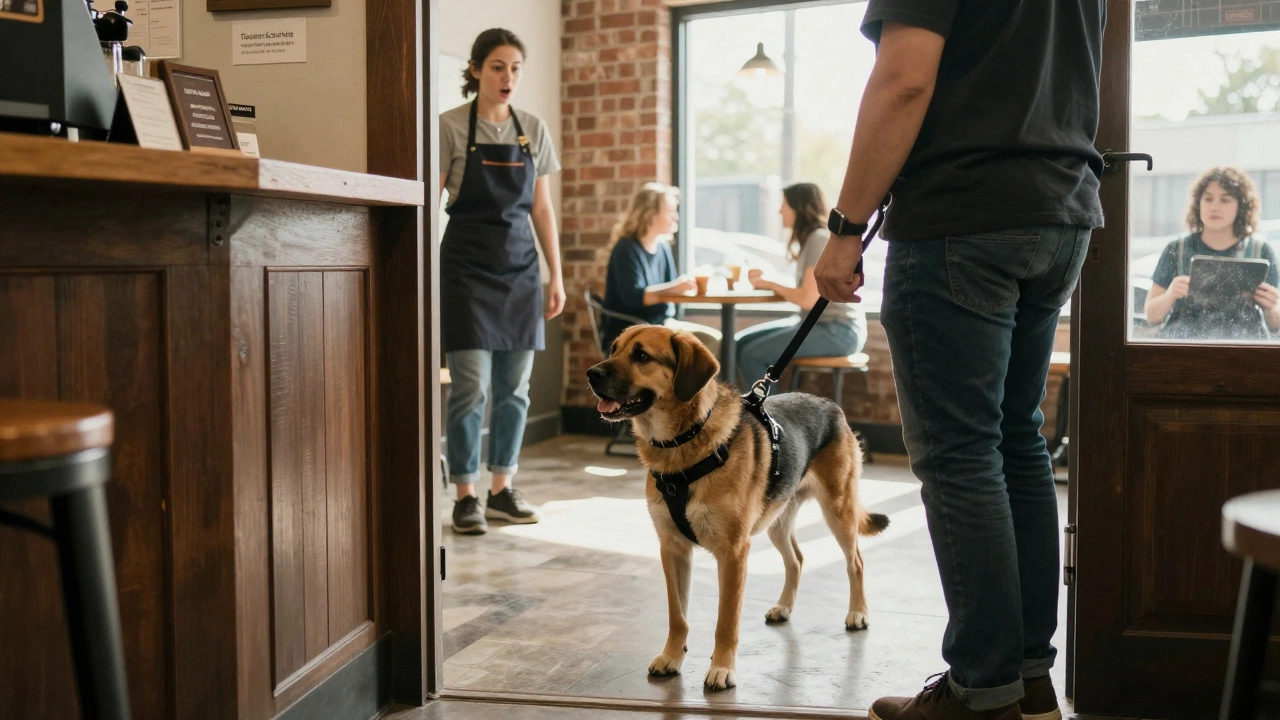
In Virginia, businesses can only ask two questions about service dogs under the ADA. Select what you're being asked and check if it's legal.
Result
Remember: Only two questions are legally allowed: 1) Is the dog required because of a disability? and 2) What work or task has the dog been trained to perform?
Traveling with a service dog in Virginia feels simple-until someone asks for papers. You’ve trained your dog, they work for you daily, and now you’re being questioned at a hotel, restaurant, or airport. What can they legally ask? What can’t they? And what happens if you don’t have a certificate?
Service dogs aren’t pets-and the law treats them that way
In Virginia, as in every U.S. state, service dogs are protected under the Americans with Disabilities Act (ADA). The ADA doesn’t require service dogs to wear vests, carry ID cards, or have certification. That’s not a loophole-it’s the law. A service dog is defined as a dog trained to perform specific tasks for a person with a disability. That could be guiding someone who’s blind, alerting to seizures, retrieving dropped items, or interrupting panic attacks. The task must be directly tied to the person’s disability.
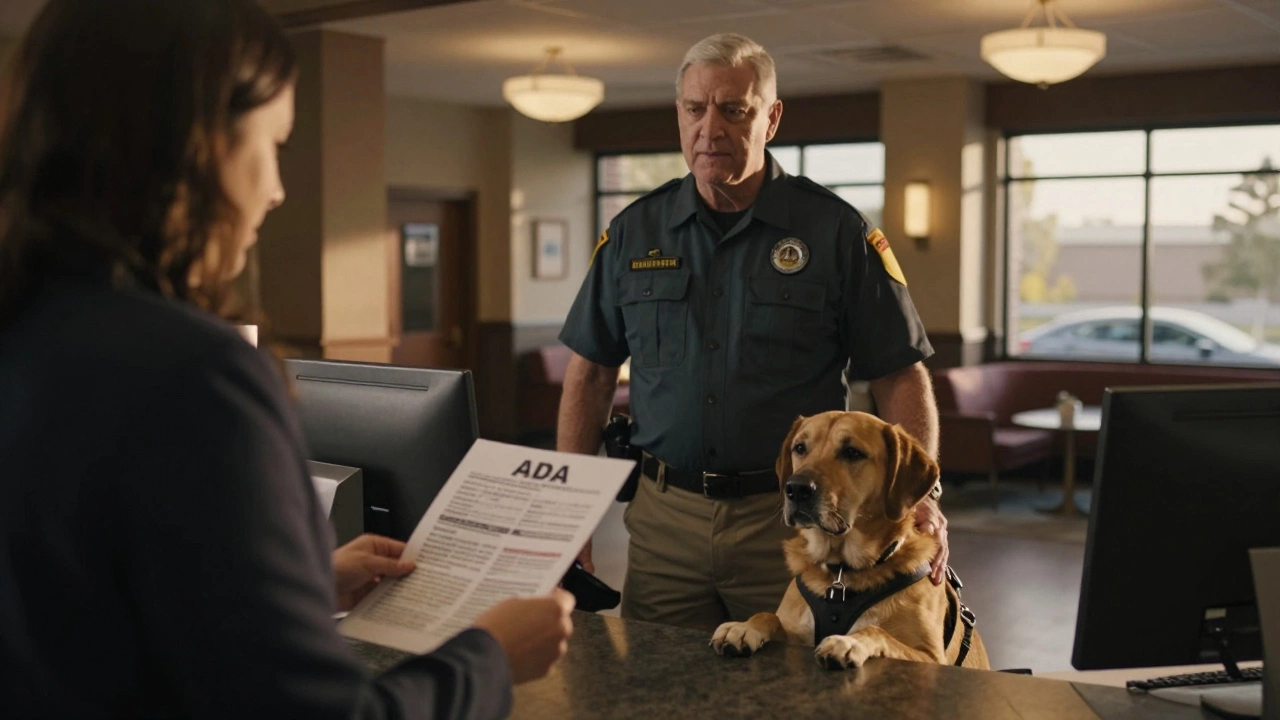
Businesses can’t ask for proof. Not a certificate. Not a registration number. Not a vet record. Not even a photo of your dog in training. That’s not just rude-it’s illegal under federal law. The only two questions staff are allowed to ask are: “Is this dog required because of a disability?” and “What work or task has the dog been trained to perform?” That’s it.
What you’ll see in Virginia-and why it’s wrong
Despite the clear rules, you’ll still run into people asking for paperwork. Hotels in Virginia Beach might hand you a form. A restaurant manager in Richmond might say, “We need documentation.” A flight attendant at Reagan National might ask for your dog’s “service animal ID.” These requests are common, but they’re also violations of the ADA.
Why does this keep happening? Because many businesses confuse service dogs with emotional support animals (ESAs). ESAs provide comfort but aren’t trained for specific tasks. They don’t have the same public access rights. And yes-there are websites selling fake “service dog certificates” for $50. Those are worthless. No legitimate organization in the U.S. issues service dog certification. The Department of Justice has said so repeatedly.
What you can do if someone asks for proof
If you’re asked for documentation, stay calm. You’re not required to provide it. You can say: “Under the ADA, I’m not required to show proof. The only questions you can ask are whether the dog is needed because of a disability and what task it performs.” Then repeat the two permitted questions if needed.
Most people asking don’t know the law. They’re just trying to follow what they think is right. If they push back, politely say you’re happy to explain the ADA rules. If they still refuse entry, ask to speak to a manager. If the issue isn’t resolved, you can file a complaint with the U.S. Department of Justice’s ADA hotline (1-800-514-0301) or through their website. Virginia’s Human Rights Commission also handles disability discrimination complaints.
What’s allowed-and what’s not
Here’s what businesses in Virginia can and cannot do when you arrive with a service dog:
- Can ask: Is the dog required because of a disability? What task does it perform?
- Cannot ask: What’s your disability? Can I see your certification? Do you have a doctor’s note? Can I see your dog’s training records?
- Can require: The dog must be under your control-leashed, harnessed, or tethered unless that interferes with its work.
- Cannot charge: Extra fees, pet deposits, or cleaning fees for a service dog. Even if they charge $100 for pets, service dogs get in free.
- Can ask to remove: Only if the dog is out of control and you don’t fix it, or if the dog isn’t housebroken.
That last point matters. A service dog barking nonstop at a restaurant? That’s a problem. A dog calmly lying under your table while you eat? That’s normal. A dog whining because it’s tired after a long car ride? That’s not a violation. The dog’s behavior must be disruptive-not just inconvenient.
Emotional support animals are different
Many people mix up service dogs and emotional support animals. ESAs help with anxiety, depression, or PTSD through companionship. They’re not trained for specific tasks. That means they don’t have the same rights under the ADA. A landlord might have to allow an ESA under the Fair Housing Act, but a hotel doesn’t have to. An airline doesn’t have to let an ESA on board anymore-since 2021, the Department of Transportation no longer requires airlines to accommodate them.
If your dog provides emotional comfort but doesn’t perform a trained task, it’s not a service dog under federal law. That doesn’t make your dog less important-it just means different rules apply. Don’t buy a fake service dog vest or certificate for an ESA. It won’t help you get into a restaurant, and it could hurt your credibility if you’re ever questioned.
Virginia-specific rules don’t add anything
Virginia doesn’t have its own service dog law that overrides the ADA. State law (§ 51.5-37) just mirrors federal rules. It says service dogs must be allowed in all public places, and businesses can’t charge extra. There’s no state registry. No state-issued ID. No state training requirements beyond what the ADA already requires.
Some local governments in Virginia, like Arlington or Fairfax, have passed ordinances about dog waste or leash laws-but none of them change service dog access rights. You’re protected by federal law everywhere in the state.
What to carry when traveling
You don’t need to carry anything. But if it helps you avoid conflict, you can bring a printed copy of the ADA service dog rules from the Department of Justice website. Or a simple card that says: “My dog is a service animal trained to assist with [task]. I am protected under the ADA.”
Some people use service dog vests with patches that say “Service Dog-No Certification Required.” That’s fine. But don’t rely on it. A vest doesn’t make your dog a service dog. Training does. And if someone asks for proof, your answer is still the same: “I’m not required to show it.”
Real-world examples from Virginia travelers
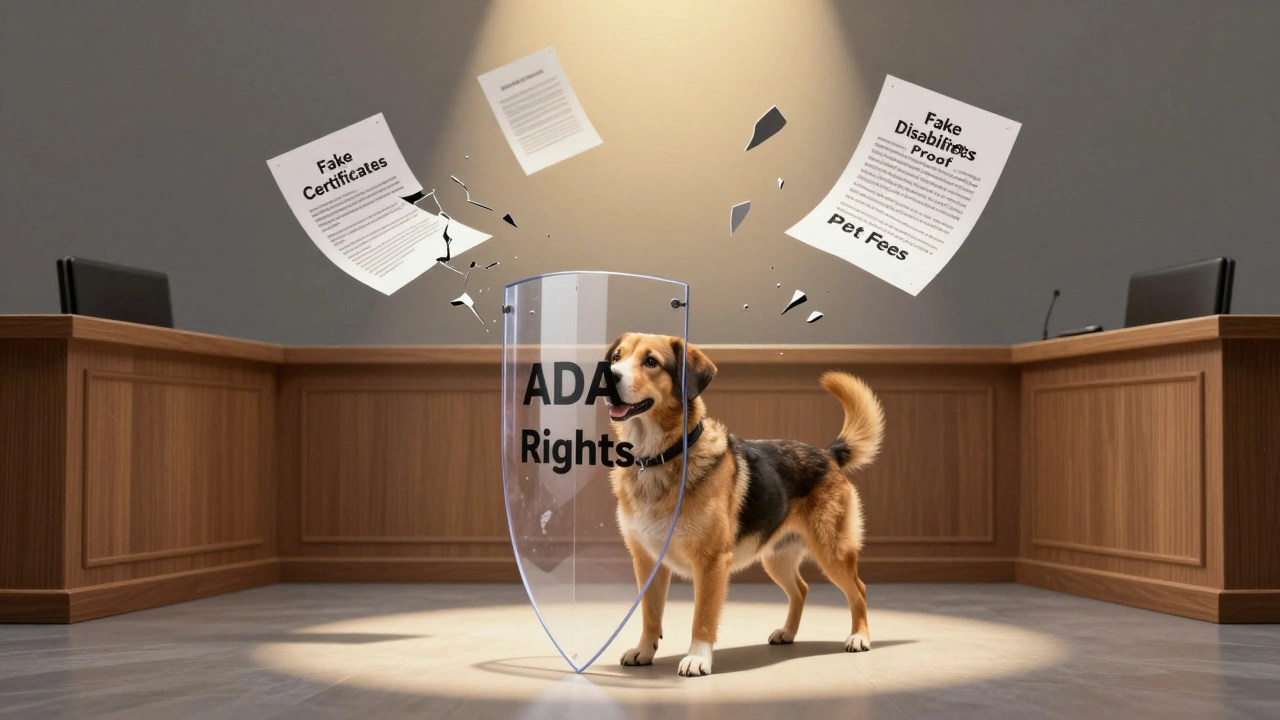
A woman in Charlottesville was denied entry to a coffee shop because the barista said she needed a “service dog license.” She calmly asked the two ADA questions back. The manager came over, checked the rules on their phone, and apologized. The woman got her latte-and a free pastry.
A veteran in Roanoke was asked for his VA disability paperwork at a hotel. He didn’t have it with him. He said, “My dog retrieves my medication when I’m having a panic attack.” The front desk staff let him check in. He didn’t say a word about his PTSD diagnosis.
These aren’t rare cases. They happen every week. The key isn’t having paperwork-it’s knowing your rights and speaking up calmly.
What happens if you lie?
It’s tempting to say your dog is a service dog if you just want to bring it into a store. But misrepresenting an ESA as a service dog is illegal in Virginia. Under state law (§ 3.2-6500), it’s a Class 4 misdemeanor. Fines can reach $250. More importantly, it harms people who truly need service dogs. When businesses see fake service dogs acting up, they start doubting everyone.
Don’t risk it. If your dog isn’t trained for a specific disability task, don’t call it a service dog. You can still take it places where pets are allowed. Just don’t pretend it has public access rights it doesn’t have.
Final reminder: You don’t need proof
There is no national registry. No government-issued ID. No certificate that makes your dog a service dog. Only training does. And in Virginia, you’re fully protected under federal law whether you have paperwork or not.
If you’re asked for proof, remember: you’re not obligated to show it. You’re not required to explain your disability. You’re not required to prove your dog’s training. You only need to answer two simple questions-and if you’re denied entry anyway, you have clear legal options.
Traveling with a service dog shouldn’t feel like a battle. But if it does, you’re not alone. And you’re not wrong.
Can a business in Virginia ask for a service dog certificate?
No. Under the ADA, businesses in Virginia cannot ask for any form of certification, registration, or documentation for a service dog. They can only ask two questions: whether the dog is required because of a disability and what task it has been trained to perform.
Can a hotel charge a pet fee for a service dog in Virginia?
No. Hotels in Virginia cannot charge extra fees, deposits, or cleaning charges for service dogs. This includes any fees labeled as “pet fees,” “animal fees,” or “cleaning fees.” Service dogs are not pets under the ADA, and charging for them is illegal.
Is an emotional support dog the same as a service dog in Virginia?
No. Emotional support animals (ESAs) provide comfort but are not trained to perform specific tasks related to a disability. They do not have public access rights under the ADA. Only dogs trained to do work or tasks for a person with a disability qualify as service animals.
Can a business ask what my disability is?
No. Under federal law, businesses are prohibited from asking about the nature or extent of a person’s disability. They can only ask if the dog is required because of a disability and what task it performs. You are not required to disclose your diagnosis.
What if a business refuses entry to my service dog?
If a business refuses entry, ask to speak to a manager and calmly explain your rights under the ADA. If they still refuse, you can file a complaint with the U.S. Department of Justice’s ADA hotline (1-800-514-0301) or Virginia’s Human Rights Commission. Document the incident, including names, dates, and what was said.