Airplane Pet Eligibility & Cost Calculator
Dog Details
Flight Info
Travel Requirements
Cost Estimate
*Prices vary by airline and aircraft type.
Pro Tip:
...
Picture this: you’re at the gate, boarding group called, and you’re holding your anxious pup. You look at the empty middle seat next to you and think, "Surely they can sit here?" It’s a common hope for any dog owner who loves their companion too much to leave them in a crate under the seat. But here is the hard truth that most airlines will tell you immediately: no, your dog cannot legally or safely occupy an airplane seat as a passenger.
While it feels natural to want your furry friend close by, aviation safety regulations are strict. Seats are designed for human passengers with specific weight distributions and restraint systems. A dog, even a small one, does not meet these criteria. However, that doesn’t mean your dog has to be stuck in the cargo hold. There are ways to keep them in the cabin with you, but you have to play by the rules.
The Short Answer: No, But They Can Be Under the Seat
If you are looking for a quick yes or no, the answer is no. Your dog cannot sit on an airplane seat. Not on your lap, not in a booster seat, and not strapping into the seatbelt themselves. The Federal Aviation Administration (FAA) and international equivalents like EASA (European Union Aviation Safety Agency) do not recognize pets as passengers entitled to seating.
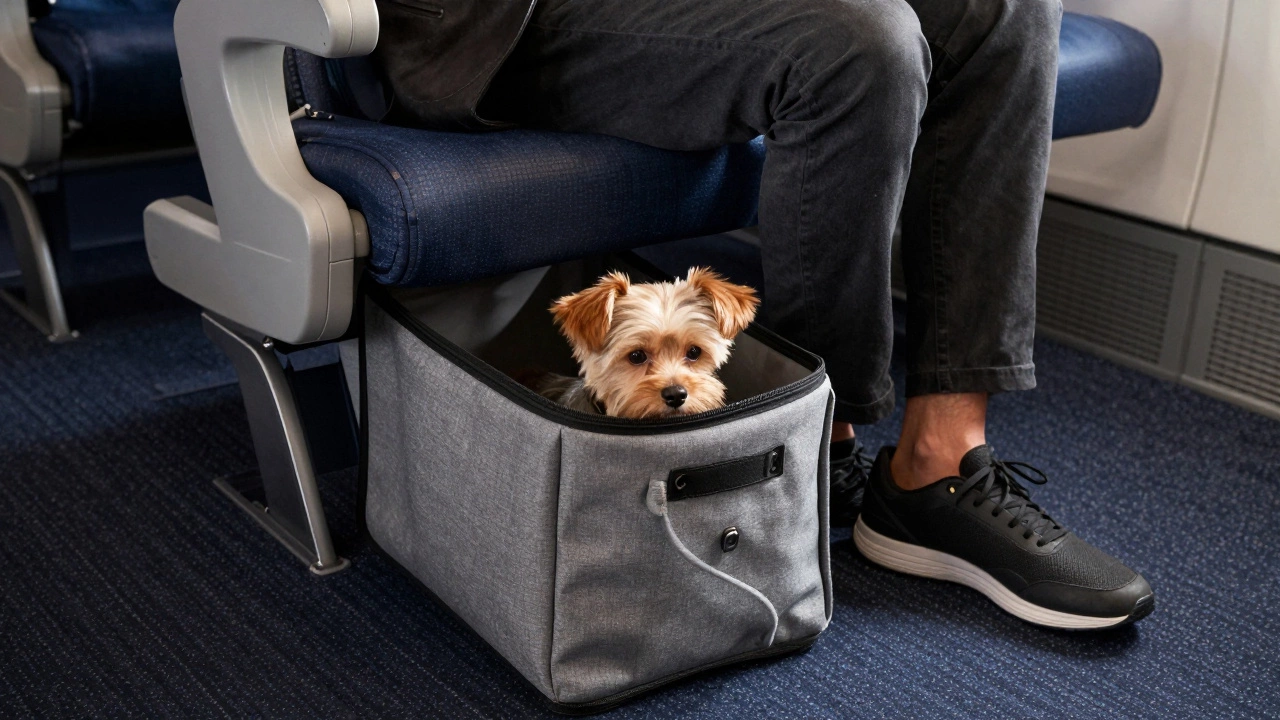
So, where do they go? In almost all commercial flights within the United States and many other countries, small dogs must remain in an approved soft-sided carrier that fits completely under the seat in front of you. This is the golden rule of pet travel. If the carrier sticks out, blocks the aisle, or prevents the seat in front from reclining fully, the flight attendants will ask you to move seats or, in worst-case scenarios, check the animal into the cargo hold against your will.
Why such a rigid rule? Emergency evacuations. In a crash or rapid decompression, every second counts. Obstacles in the aisles or footwells can delay evacuation. An unsecured animal could also become a projectile during turbulence, injuring you or others. Keeping the dog contained and low to the ground is the only way to satisfy safety protocols.
Exceptions: Service Animals vs. Emotional Support Animals
Here is where things get confusing because the landscape changed drastically in recent years. You might have heard stories of people bringing large dogs onto planes without carriers. Those were likely service animals, and even those rules have tightened significantly.
| Type of Animal | Allowed on Seat? | Requires Carrier? | Documentation Needed |
|---|---|---|---|
| Service Dog | No (but allowed at feet) | No | DOT Form (US), Handler attestation |
| Emotional Support Animal (ESA) | No | Yes (if small) or Cargo (if large) | Treated as regular pet now |
| Pet (Companion) | No | Yes | Health certificate, vaccination records |
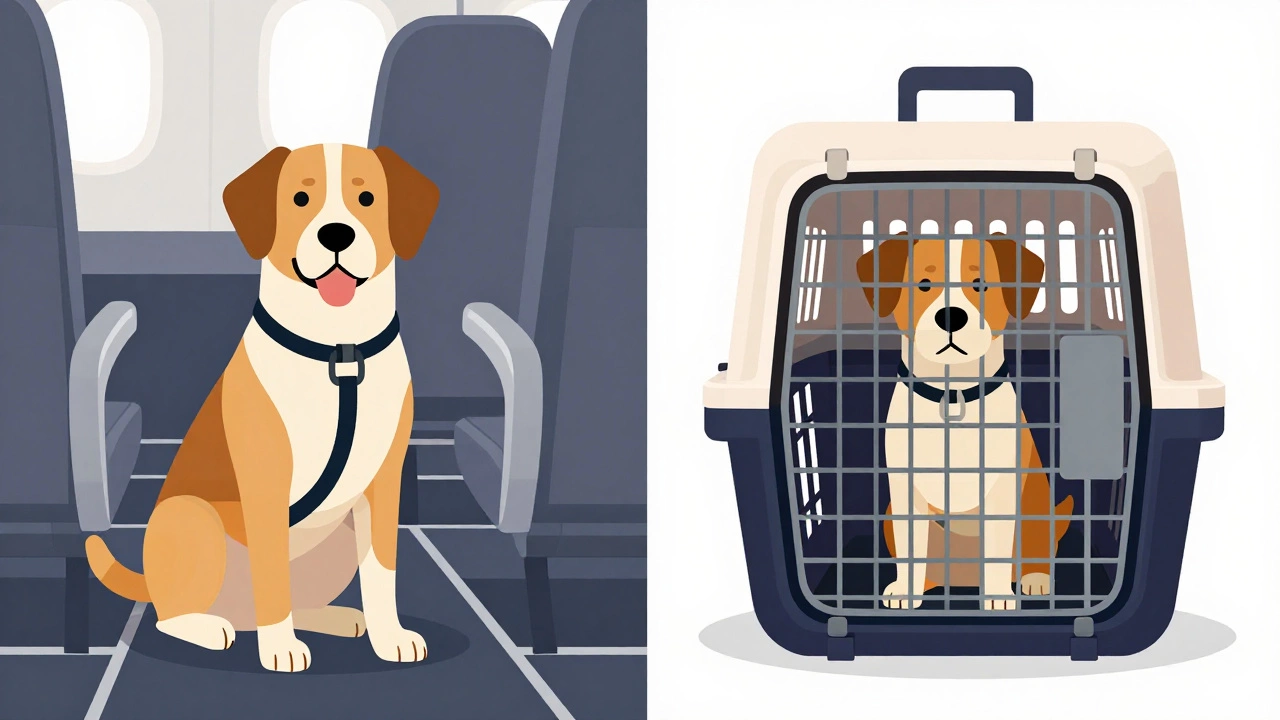
Service dogs are trained to perform specific tasks for individuals with disabilities. Since 2021, the US Department of Transportation (DOT) updated its rules. Service dogs are no longer guaranteed free access if they are disruptive, but they are still allowed to travel in the cabin without a carrier. They must stay at your feet or beside you, but they do not occupy the seat itself. They are considered part of your mobility aid, not a passenger.
Emotional support animals, on the other hand, lost their special status. Airlines now treat ESAs exactly like regular pets. This means if your ESA is small enough to fit in a carrier, it goes under the seat. If it’s too big, it goes in the cargo hold. Don’t fall for scams selling "ESA letters" that promise seat privileges; they don’t work anymore.
Choosing the Right Carrier for Under-Seat Storage
Since your dog isn’t getting a seat, their comfort depends entirely on the carrier. Many owners buy the first soft bag they see online, only to find out at the gate that it’s two inches too tall. This is a nightmare scenario you want to avoid.
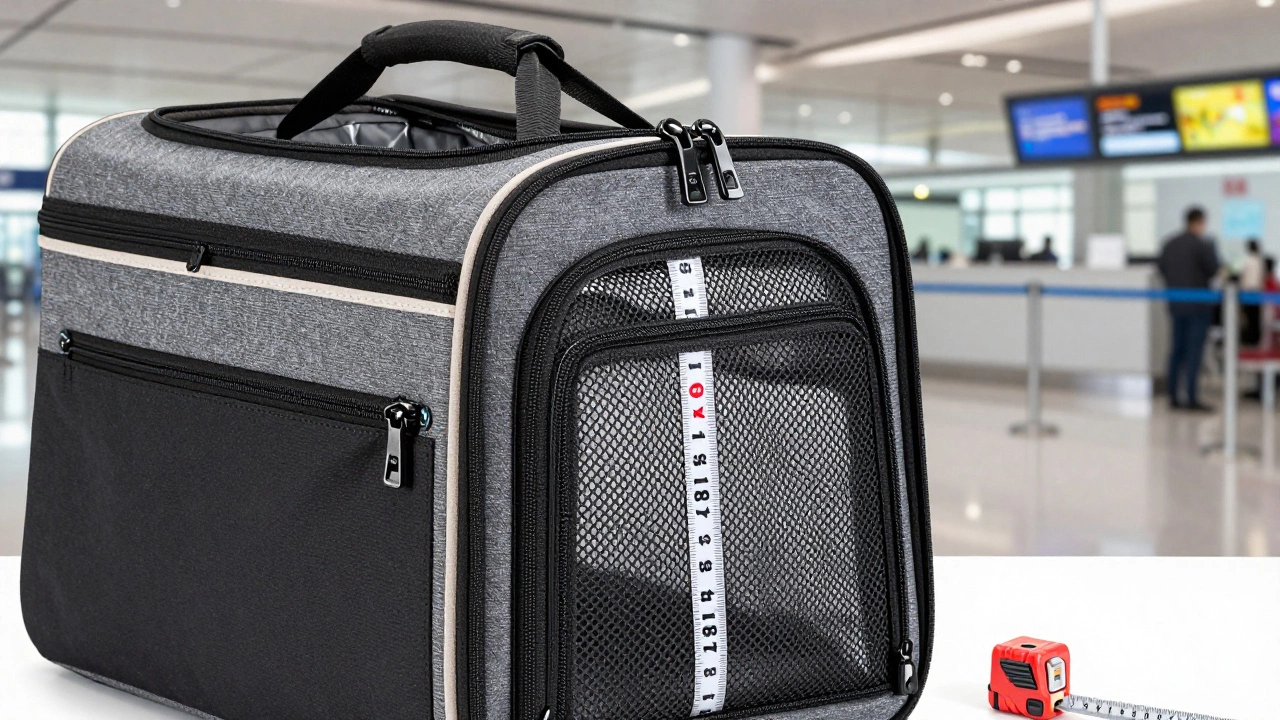
Airlines have specific dimensions for under-seat storage. These vary by aircraft type. A Boeing 737 has different space than an Airbus A320 or a wide-body 777. Generally, the maximum dimensions hover around 18 x 11 x 11 inches (45 x 28 x 28 cm), but you must check your specific airline’s website.
Look for a carrier that is:
- Soft-sided: Rigid plastic crates often don’t compress enough to fit under seats. Soft fabric allows you to squeeze it in slightly if needed.
- Ventilated: Mesh panels on at least two sides ensure airflow. Cabin air conditioning is strong, but dogs can overheat quickly in enclosed spaces.
- Leak-proof: Accidents happen. A waterproof lining saves you from embarrassment and potential fees.
- Secure zippers: Make sure the zippers have locks or toggles so your dog can’t unzip them from the inside.
Pro tip: Measure the actual under-seat space if possible, or call the airline and ask for the dimensions of the specific plane you are flying. Some newer economy seats have less legroom, which translates to less under-seat height.
Fees and Booking: Don’t Wait Until Check-In
You cannot just show up with a dog and expect to fly. Most airlines limit the number of pets allowed in the cabin per flight-usually between 4 and 6, depending on the aircraft size. Once those spots are taken, your dog gets bumped to cargo or denied boarding.
You need to book your dog’s spot when you book your ticket. Or at least, call the airline immediately after booking. The fee for carrying a small dog in the cabin typically ranges from $95 to $150 each way in the US. International flights can charge more, sometimes upwards of $200.
Keep these receipts. Unlike checked baggage, pet fees are rarely refundable. Also, note that some budget airlines do not allow pets in the cabin at all. Always verify the policy before purchasing your ticket.
Preparing Your Dog for the Flight
Even if your dog is calm at home, the airport environment is chaotic. Loud announcements, rolling luggage, and crowds can trigger anxiety. Here is how to prepare them:
- Acclimate to the carrier early: Start weeks before the trip. Leave the carrier open in the house with treats inside. Take short car rides with the dog in the carrier. Make it a safe haven, not a prison.
- Exercise before the flight: Take your dog for a long walk or play session before heading to the airport. A tired dog is a quiet dog.
- Manage feeding: Feed your dog a light meal 4-6 hours before the flight. This reduces the risk of nausea and accidents. Offer water sparingly right before boarding to prevent bladder issues.
- Consult your vet: If your dog has severe anxiety, talk to your veterinarian about non-sedating anti-anxiety medications or supplements. Never sedate a dog for air travel without explicit veterinary approval, as high altitude can affect breathing and heart rate dangerously.
What Happens If Your Dog Is Too Big?
If your dog weighs more than 20 pounds (including the carrier), they generally cannot fly in the cabin. They must travel as checked baggage or cargo. This involves a hard-sided kennel that meets IATA (International Air Transport Association) standards.
Cargo travel is safe for most healthy dogs, but it adds stress. You’ll need to provide food and water dishes attached to the inside of the crate, absorbent bedding, and clear identification tags. Ensure your dog’s microchip information is up-to-date. In the rare event of separation, a microchip is the best way to reunite.
Some airlines offer "premium pet" services where the animal travels in a climate-controlled compartment monitored by staff. This costs extra but provides peace of mind. Look for airlines known for good pet handling records.
Navigating Layovers and Connections
Flights with layovers add complexity. When you deplane, your dog comes out of the carrier. You must keep them leashed and controlled at all times. Do not let them roam the terminal. Security checkpoints require you to remove the dog from the carrier and walk them through the metal detector while carrying the empty carrier. Have a leash ready and ask TSA officers if they prefer you hold the dog or walk it through.
If you have a tight connection, inform the gate agents. They may escort you to your next gate. Keep your dog’s documents (health certificates, vaccination records) easily accessible in your pocket, not buried in your backpack.
Can I buy a separate seat for my dog on a plane?
No. Airlines do not sell seats for pets. Even if you pay for an extra seat, your dog must remain in a carrier under the seat in front of you. The purchased seat would simply remain empty or be used for your luggage, but the dog cannot occupy it due to safety regulations regarding seatbelts and emergency procedures.
Is it safe for my dog to sleep under the seat during takeoff and landing?
Yes, it is safe and required. The space under the seat is secure during normal flight operations. During takeoff and landing, ensure the carrier is placed securely on the floor, preferably between your feet or wedged against the seat in front, so it doesn't slide forward during sudden movements. The pressure changes are minimal at cabin level compared to cargo holds.
What if my dog needs to pee during a long flight?
You cannot take your dog out of the carrier once seated. For long flights, use puppy pads or absorbent liners inside the carrier. Before boarding, take your dog to the airport relief area. Limit water intake slightly before the flight to reduce urgency, but ensure they stay hydrated overall.
Do I need a health certificate to fly with my dog?
For domestic flights within the US, a health certificate is usually not required unless traveling to Hawaii or certain states with strict quarantine laws. For international travel, a health certificate issued by a USDA-accredited vet within 10 days of travel is mandatory. Always check the destination country's import requirements.
Which airlines are most pet-friendly?
Airlines like JetBlue, Delta, and American Airlines are often cited as having robust pet programs. JetBlue offers a larger under-seat space on some aircraft. Delta has a dedicated pet page with detailed guidelines. Always compare current fees and carrier dimensions, as policies change frequently.