Dog Flight Safety Calculator
Assess your dog's flight safety
Enter details to determine if your dog can safely travel on an airplane based on veterinary guidelines
Your Dog's Flight Safety Assessment
Thousands of dogs fly every day-some as emotional support animals, others as cargo, and many as beloved family members moving across the country or overseas. But if you’ve ever wondered whether your dog can survive a long flight, you’re not alone. The truth isn’t simple. It’s not just about the length of the flight. It’s about your dog’s health, the airline’s rules, the weather, the crate, and how well you prepare. A 12-hour flight can be safe for one dog and deadly for another. Here’s what actually matters.
Not All Dogs Are Built for Air Travel
Brachycephalic breeds-dogs with short noses like Bulldogs, Pugs, and Shih Tzus-are at higher risk during flights. Their airways are narrower, and they struggle to cool down. In 2023, the U.S. Department of Transportation reported that 82% of all dog deaths during air travel involved brachycephalic breeds. Airlines like Delta, United, and American have banned these breeds from flying in cargo during hot months. Even if your dog is healthy, their anatomy puts them at risk. If your dog has a flat face, talk to your vet before booking. They might recommend against flying altogether.Age and Health Matter More Than You Think
A 10-year-old Labrador with arthritis and mild heart disease isn’t the same as a 2-year-old Border Collie in peak condition. Most airlines require a health certificate from a vet within 10 days of travel. That’s not just paperwork-it’s a screening tool. Vets check for respiratory issues, dehydration risk, and signs of stress. Dogs under 8 weeks old can’t fly. Older dogs, especially those on medication, need extra planning. One owner in Wellington flew her 14-year-old rescue dog to Australia. Her vet ran bloodwork, adjusted her pain meds, and suggested a sedative-free travel plan. The dog made it fine. But only because every detail was handled correctly.Choose the Right Way to Fly Your Dog
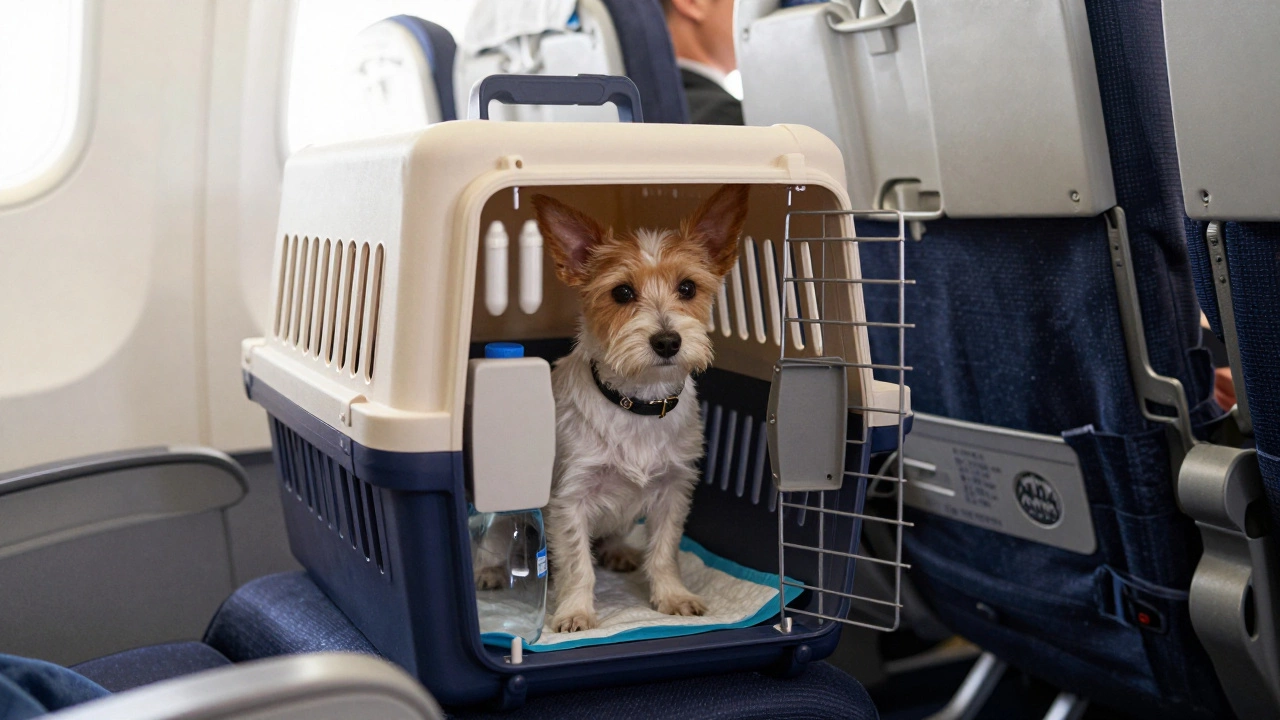
There are three ways dogs fly: in-cabin, as checked baggage, or as cargo. In-cabin is best-if your dog fits under the seat. Most airlines allow small dogs (under 20 lbs) in carriers that fit under the seat. This is the safest option. Your dog stays with you, gets water, and isn’t exposed to extreme temperatures or loud noises. If your dog is too big, you’ll need to check them as baggage or cargo. Checked baggage means your dog rides in a pressurized, temperature-controlled area near the passenger cabin. Cargo is farther away, often in the belly of the plane, and can be subject to delays. Cargo is riskier. In 2024, a study by the FAA found that cargo incidents were 3.5 times more likely to result in injury or death than checked baggage. If you must use cargo, pick a direct flight. No layovers. No waiting on hot tarmacs.The Crate Isn’t Just a Box-It’s Your Dog’s Lifeline
Airlines require IATA-compliant crates. That means the crate must be large enough for your dog to stand, turn, and lie down. It must have a leak-proof bottom, secure latches, and ventilation on at least three sides. Many owners buy cheap crates online and regret it. One dog in Texas broke free from a flimsy crate during turbulence and was found injured hours later. Line the crate with an absorbent pad. Attach a water bottle with a spout that your dog can reach. Tape a photo of your dog and your contact info to the outside. Label it clearly: “LIVE ANIMAL,” “THIS SIDE UP,” and “NO FOOD OR WATER.” Some airlines require you to attach a food and water schedule inside the crate. Don’t skip this. If your dog is in cargo for 10 hours, they need to know someone has planned for their needs.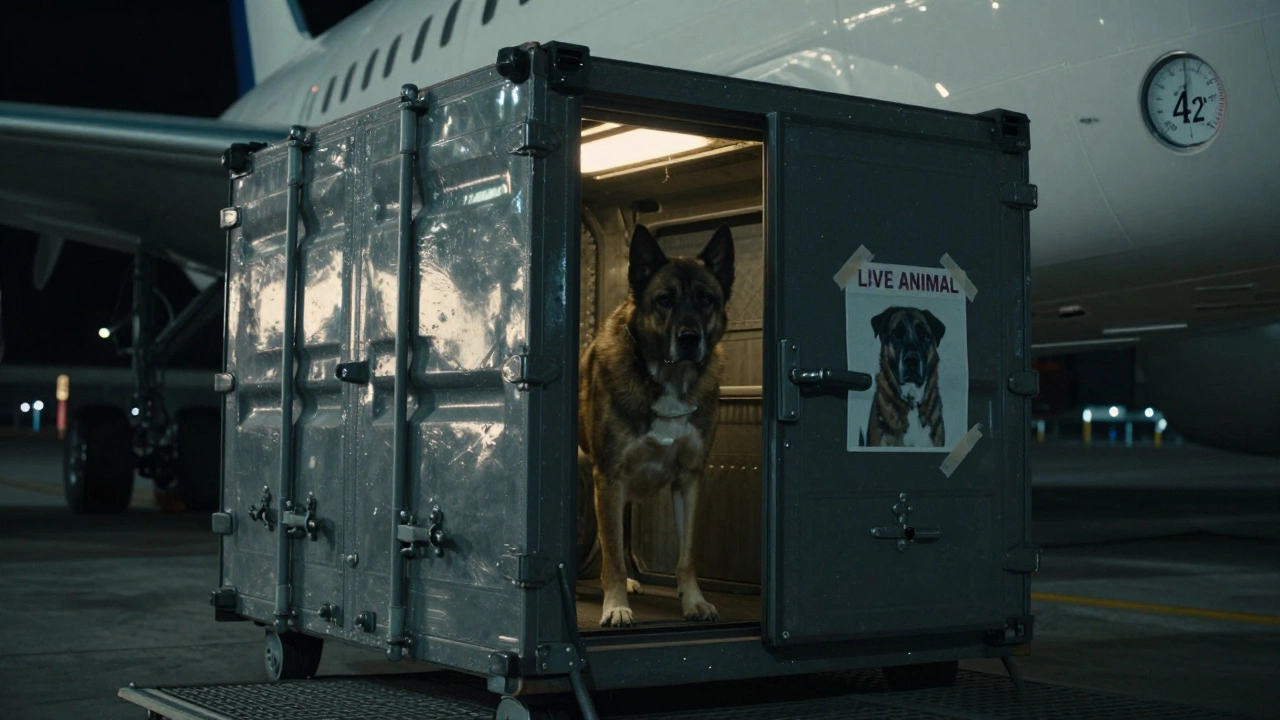
What About Sedatives? Don’t Do It
You might think a sleeping pill will calm your dog down. Don’t. The American Veterinary Medical Association (AVMA) and the FAA both warn against sedating dogs before flights. Tranquilizers can interfere with breathing and temperature regulation. At high altitudes, your dog’s body already works harder. Add a sedative, and you increase the risk of heart failure or overheating. One dog in Florida died during a flight because the owner gave him a benzodiazepine. The vet later said the drug suppressed his ability to pant-a natural cooling method. Instead, use behavior training. Start early. Get your dog used to the crate. Leave the door open at home. Feed meals inside. Play with toys in it. Make it a safe space. On the day of the flight, take your dog for a long walk. Tire them out. A tired dog is a calmer dog.Weather Is a Silent Killer
Airlines won’t let dogs fly in cargo if the temperature at the airport is above 85°F (29°C) or below 45°F (7°C). But that doesn’t mean it’s safe just because they let you book. Your dog might sit on a hot tarmac for 90 minutes before loading. Or wait in an unheated hangar overnight. In 2024, a dog in Atlanta died after being left in a cargo hold at 10°F for six hours while the plane was delayed. Book flights during mild weather. Avoid summer afternoons. Don’t fly during holidays-delays are common. Choose early morning or late evening flights when temperatures are stable. If you’re flying to a place with extreme weather, like Dubai in July or Minnesota in January, consider delaying your trip. Your dog’s safety isn’t worth the convenience.What Happens During the Flight?
If your dog is in-cabin, they’ll be under your seat. You can’t take them out, but you can check on them. Some airlines let you give water through the carrier’s spout. If your dog is in cargo, they’re alone. The crew doesn’t check on them. The plane’s cabin is pressurized like a 6,000- to 8,000-foot altitude. That’s lower oxygen than at sea level. Your dog’s body adjusts-but only if they’re healthy. Noise levels can hit 85 decibels. That’s as loud as a lawnmower. Most dogs adapt. But dogs with noise anxiety might panic. If your dog barks loudly at fireworks or thunder, they might scream the whole flight. That doesn’t mean they’re in danger-but it does mean they’re stressed. Consider a calming vest or pheromone spray (like Adaptil) applied to the crate before travel. These aren’t magic, but they help some dogs feel safer.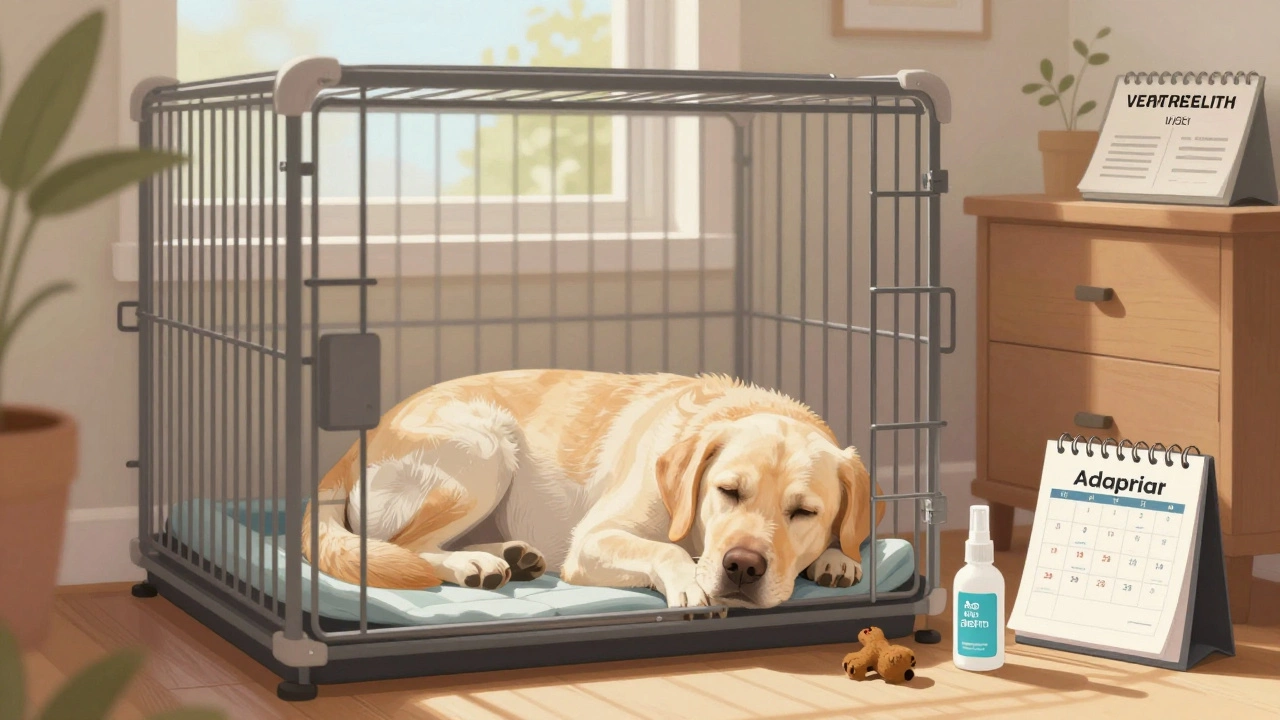
What to Do After the Flight
Your dog is exhausted. They’ve been confined, stressed, and possibly dehydrated. Don’t rush them into food or water. Wait 30 minutes. Then offer small sips of water. Wait another hour before feeding. Watch for signs of trouble: rapid breathing, vomiting, lethargy, pale gums, or collapse. These aren’t normal. Take them to a vet immediately. One owner in New Zealand flew her dog from Auckland to Sydney. When she picked him up, he was trembling and wouldn’t stand. She rushed him to a local vet. He had mild dehydration and stress-induced colitis. He recovered in two days. But if she’d waited until she got home, it could’ve been worse.Is It Worth It?
Flying with a dog is stressful. It’s expensive. It’s risky. But for many families, it’s necessary. If your dog is young, healthy, and not a brachycephalic breed, and you’ve done your homework-then yes, they can survive. And even thrive. Plan early. Talk to your vet. Choose the safest flight option. Use the right crate. Avoid sedatives. Skip extreme weather. And never assume your dog will be fine because they’ve flown before. Every trip is different.Some dogs hate flying. Others nap through it. It depends on the dog, the plan, and the care you put in. Don’t guess. Don’t rush. And don’t treat your dog like luggage. They’re family. Treat them that way.
Can small dogs fly in the cabin with me?
Yes, if they fit under the seat in an approved carrier. Most airlines allow dogs up to 20 pounds (9 kg) in-cabin. Check the airline’s exact size limits-some require the carrier to be no taller than 8 inches. Always book this option early-it’s limited and fills up fast.
How much does it cost to fly a dog?
In-cabin fees range from $100 to $200 USD one-way. Checked baggage costs $200-$400. Cargo can be $500-$1,500+, depending on size, distance, and airline. International flights often include customs fees and health paperwork. Budget at least $500 for a medium-sized dog flying overseas.
Do dogs need a passport to fly internationally?
Yes. Most countries require a pet passport-a document that includes proof of rabies vaccination, a microchip, and a health certificate signed by a vet. Some countries, like Australia and New Zealand, require a 10-day quarantine. Check the destination’s rules at least 3 months ahead. Delays in paperwork can cancel your trip.
Can I bring my dog’s favorite toy on the flight?
If flying in-cabin, yes-just make sure it’s not a choking hazard. For cargo, you can tape a small, soft toy to the inside of the crate. Avoid hard toys, bones, or anything with strings. Airlines may remove items that could injure your dog during turbulence.
What if my dog has to pee during the flight?
Use puppy pads or absorbent bedding in the crate. Most dogs hold it during flights, especially if they’re tired. Never give your dog food or water right before takeoff-this reduces the chance of accidents. If your dog is in-cabin, you can’t take them out, so plan accordingly. A long walk before the flight helps.
Next Steps: What to Do Today
1. Call your vet and ask: Is my dog healthy enough for a long flight? Ask for a written health certificate. 2. Pick your airline and check their pet policy. Look for direct flights only. 3. Buy an IATA-approved crate. Test it at home for a week. 4. Avoid booking during summer heatwaves or winter cold snaps. 5. Don’t sedate your dog. Train them to love their crate instead.If you follow these steps, your dog won’t just survive the flight-they’ll come out the other side with you, safe and sound.