Pet Travel Eligibility & Cost Estimator
Enter Pet Details
Please enter details.
Fly in Cabin (Under Seat)
Checking...Most airlines require a combined weight of under 20 lbs.
- Combined Weight: -
- Average Fee: $125 one-way
Fly as Excess Baggage (Cargo)
Checking...Temperature-controlled hold. Requires IATA-compliant crate.
- Estimated Cost: $100 - $200
- Crate Required: Yes (Heavy Duty)
Ground Transport Service
AvailableClimate-controlled van transport. Best for long distances without flight stress.
- Est. Cost: $250 - $600+
- Stress Level: Low
Enter your dog's details to see travel options.
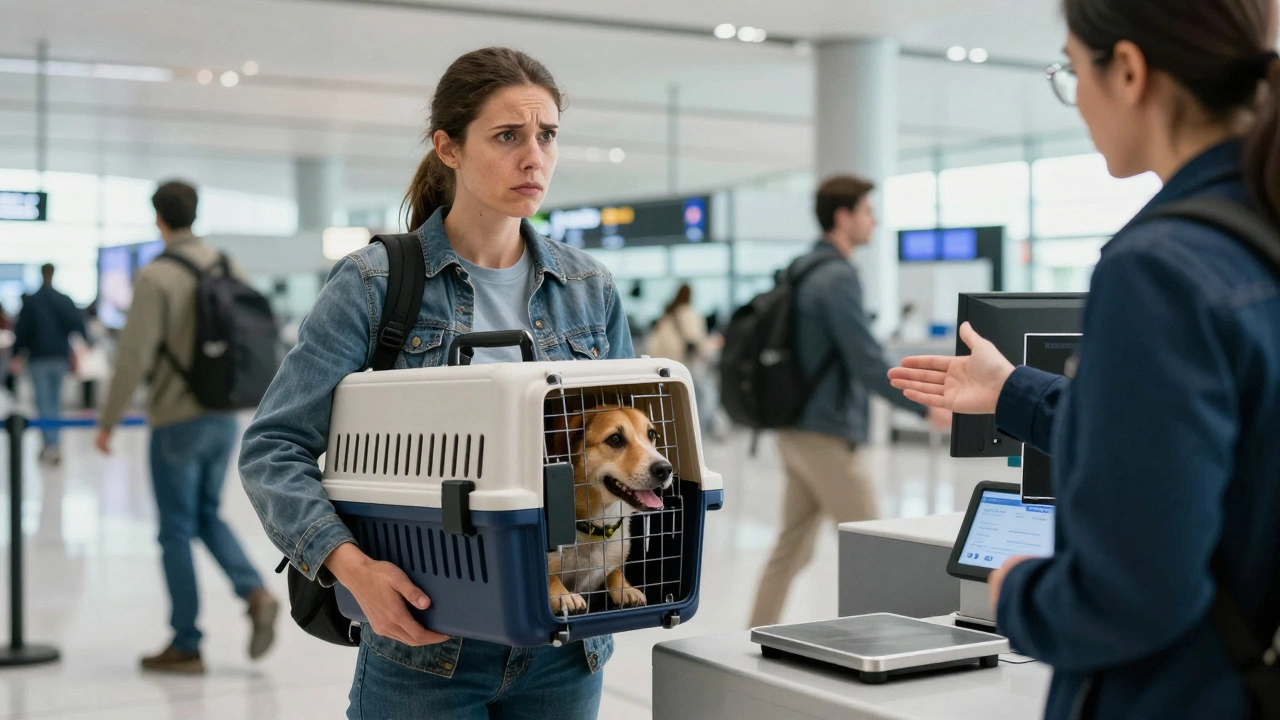
Picture this: you’ve booked your dream vacation, packed your bags, and are ready to head to the airport. But there’s one heavy-hearted problem left at home-your beloved 50-pound dog. You want him by your side, not crated in the belly of the plane. It’s a natural instinct for any devoted pet parent. However, if you’re hoping to sneak a medium-to-large breed into the cabin under your seat, the short answer is almost certainly no. Most airlines have strict weight limits that make this impossible without special circumstances.
The reality of air travel with pets is governed by rigid safety regulations and space constraints. While it might feel like an arbitrary rule, airlines enforce these limits to ensure emergency evacuation procedures remain viable and to prevent overcrowding in the cabin. Understanding exactly where the line is drawn-and what your options are when you cross it-is crucial for planning a stress-free trip for both you and your furry companion.
The Hard Numbers: Why 50 Pounds Is Usually Too Heavy
To understand why your dog can’t sit next to you, we need to look at the specific metrics airlines use. When you book a pet to fly in the cabin, you aren’t just booking the animal; you’re booking a container. The pet carrier must fit entirely under the seat in front of you. This physical constraint dictates everything else.
Most major carriers, including American Airlines, Delta, United, and JetBlue, set a combined weight limit for the pet and the carrier between 15 and 20 pounds. Some international carriers might push this to 25 or even 30 pounds, but 50 pounds is significantly above the threshold. Even if your dog is small-boned and agile, the soft-sided carrier required for cabin travel adds bulk. A 40-pound dog in a sturdy carrier will easily weigh 50-60 pounds total.
Airlines measure this strictly at check-in. They don’t guess. If you show up with a carrier that looks bulky, they will ask you to step on the scale together. If the number exceeds their limit, your options vanish instantly. There is rarely wiggle room here because these limits are tied to federal aviation safety standards regarding emergency exits and seating capacity.
| Airline | Max Weight (lbs) | Carrier Dimensions (L x W x H) |
|---|---|---|
| American Airlines | 20 lbs | 19" x 13" x 10" |
| Delta Air Lines | 20 lbs | 18" x 11" x 11" |
| United Airlines | 20 lbs | 17.5" x 12" x 7.5" |
| JetBlue | 20 lbs | 17" x 13" x 8" |
| Southwest Airlines | No strict weight limit* | Must fit under seat |
*Note: Southwest does not list a specific poundage, but the carrier must physically fit under the seat. A 50-lb dog usually cannot curl up in a bag small enough to fit under a standard airplane seat.
The Service Dog Exception: What Counts?
You may have heard stories of large dogs flying in cabins for free. These are almost always service animals, not emotional support animals (ESAs). In recent years, regulations have tightened dramatically. Under the Air Carrier Access Act (ACAA) in the United States, only trained service dogs are guaranteed access to the cabin.
An ESA is no longer considered a service animal by most airlines. ESAs provide comfort through their presence, while service dogs perform specific tasks for a disability, such as guiding a blind person, alerting to seizures, or interrupting panic attacks. If your 50-pound dog is not professionally trained to mitigate a disability, he does not qualify for this exemption.
If you do have a legitimate service dog, you still need to complete paperwork. Most airlines require an attestation form signed by a licensed mental health professional or physician, confirming the dog’s training and behavior. The dog must also be housebroken and able to behave appropriately in public spaces without disrupting other passengers. Even then, some airlines may request proof of vaccination and rabies tags.
Flying Cargo: Is It Safe for Your Dog?
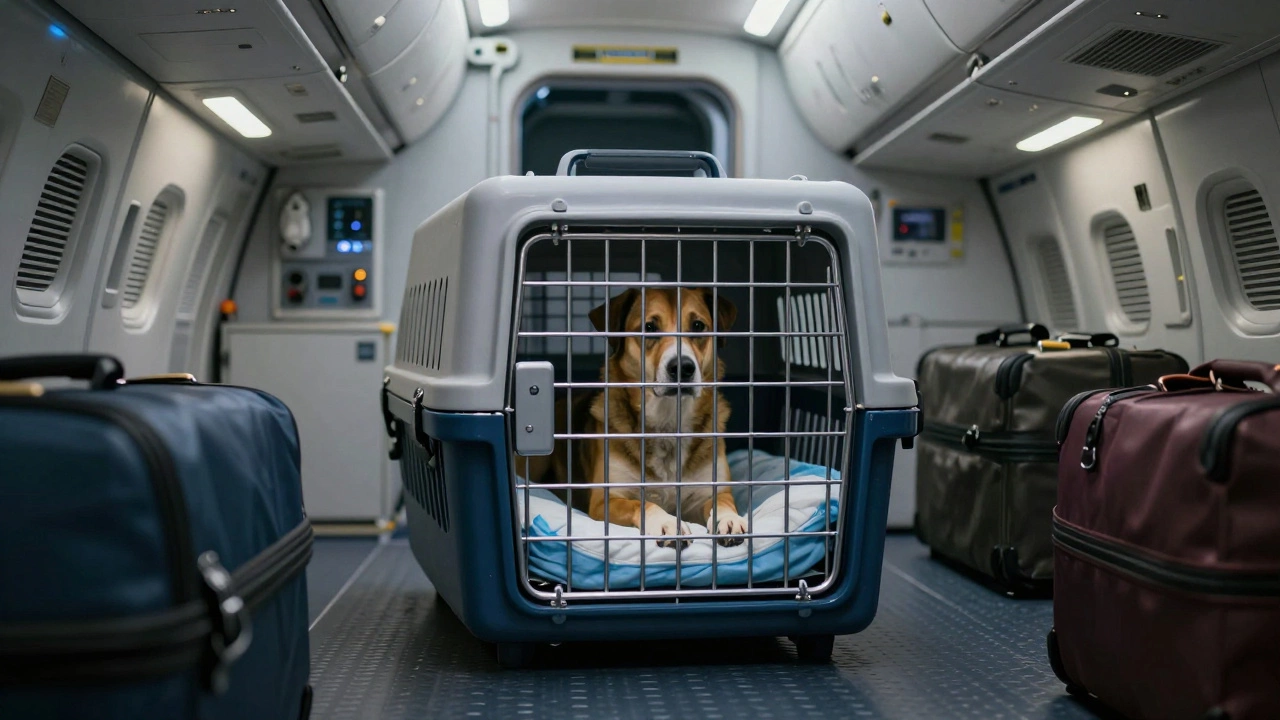
If your dog doesn’t qualify as a service animal, the alternative is traveling as "excess baggage" or cargo. This means your dog travels in the pressurized, temperature-controlled hold of the aircraft. While the word "cargo" sounds ominous, modern commercial planes maintain comfortable conditions for animals. The area is heated or cooled based on external temperatures, and oxygen levels are monitored.
However, it’s not without risks. Stress is the biggest factor. Dogs can become anxious due to noise, vibration, and separation from their owners. To mitigate this:
- Use an IATA-compliant crate: The crate must be sturdy, well-ventilated, and large enough for your dog to stand, turn around, and lie down comfortably. Line it with absorbent bedding.
- Attach identification: Include multiple ID tags on the crate with your name, phone number, destination address, and the dog’s name. Take a photo of your dog and his crate before handing it over.
- Feed lightly: Offer a small meal 4 hours before the flight to prevent accidents in the crate, but ensure he has water available.
- Book direct flights: Layovers increase handling time and exposure to extreme temperatures on the tarmac.
Some airlines offer "pet-friendly" cargo services where staff check on animals during layovers. Always ask about this option when booking. Also, be aware of "temperature embargoes." Many airlines refuse to transport dogs in cargo during extreme heat or cold (typically above 85°F or below 45°F) to protect their health.
Alternatives to Flying: Ground Transport Options
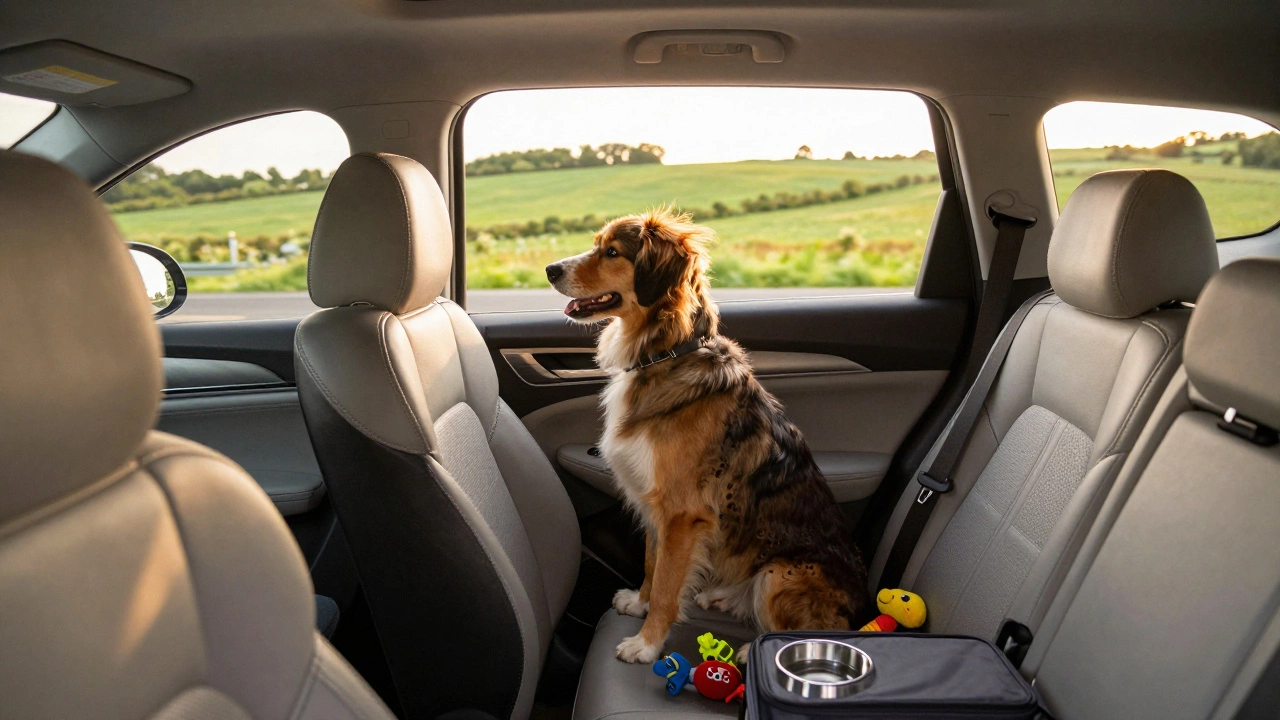
If the idea of sending your dog through cargo stresses you out, consider ground transportation. For distances under 1,000 miles, driving is often safer and less stressful for both parties. You can stop for potty breaks, adjust the temperature, and keep your dog close.
For longer distances, professional pet shipping companies specialize in ground transport. Services like Pet relocator services use climate-controlled vans and experienced drivers who monitor the animals throughout the journey. These services can be expensive, often costing several hundred dollars depending on distance, but they provide peace of mind. You can track the shipment via GPS and receive updates along the way.
Another option is leaving your dog with a trusted sitter or boarding facility. While this isn’t ideal if you’re gone for more than a few days, it eliminates travel stress entirely. Look for facilities that offer webcams so you can check in on your pup remotely.
How to Prepare Your Dog for Any Travel Method
Whether your dog flies in the cabin (if he were smaller), goes in cargo, or rides in a car, preparation is key. Start desensitizing him to his crate weeks before the trip. Make the crate a positive space with treats and toys. Gradually increase the time he spends inside with the door closed.
Visit the vet for a pre-travel checkup. Ensure vaccinations are up to date and discuss anti-anxiety medication if your dog is prone to stress. Never sedate a dog for air travel unless explicitly prescribed by a vet, as altitude changes can affect breathing and heart rate dangerously.
Finally, pack a travel kit: leash, collar with ID, poop bags, favorite toy, familiar blanket, and enough food for the journey plus extra days. Familiar scents can calm a nervous dog in unfamiliar environments.
Can I bring a 50 lb dog in the cabin on Southwest Airlines?
Southwest Airlines does not specify a weight limit, but the carrier must fit under the seat. A 50 lb dog typically cannot fit in a carrier small enough to slide under a standard airplane seat. Therefore, it is highly unlikely you can bring a 50 lb dog in the cabin on Southwest.
Is it safe for dogs to fly in cargo?
Yes, flying in cargo is generally safe when done correctly. The hold is pressurized and temperature-controlled. Risks arise mainly from extreme weather delays on the tarmac or improper crate preparation. Choosing direct flights and reputable airlines minimizes these risks.
What is the difference between a service dog and an emotional support animal?
A service dog is trained to perform specific tasks for a person with a disability, such as detecting seizures or guiding the visually impaired. An emotional support animal provides comfort through its presence but is not trained for specific tasks. Only service dogs are legally allowed in the cabin on most airlines today.
How much does it cost to fly a dog in cargo?
Costs vary by airline and route. Domestic flights in the US typically range from $100 to $200 each way. International flights can cost $500 or more. Additional fees may apply for oversized crates or special handling.
Can I drive my 50 lb dog across the country instead?
Yes, driving is a popular alternative for long-distance travel with larger dogs. It allows for regular breaks, easier temperature control, and keeps the dog with the owner. Plan for rest stops every 2-3 hours and secure the dog with a harness or crate in the vehicle.