Homemade Dog Food Calculator
Your Dog's Information
Recipe Ingredients
Feeding your dog homemade food isn’t just a trend-it’s a choice many owners make to take control of what goes into their pet’s bowl. But not all homemade meals are created equal. A bowl of chicken and rice might seem harmless, but it could be missing critical nutrients your dog needs to thrive. The question isn’t just what to feed, but how to feed it safely and completely.
Why Homemade Dog Food? The Real Reasons
People turn to homemade food for different reasons. Some want to avoid processed ingredients. Others have dogs with allergies or digestive issues that store-bought kibble doesn’t fix. A few just want to give their pup something they’d eat themselves. All of these are valid-but they come with risks if you don’t know the basics.
Dogs aren’t small humans. Their bodies process food differently. They need specific ratios of protein, fat, calcium, and vitamins. Too much liver can cause vitamin A toxicity. Too little calcium can lead to bone problems, especially in growing puppies. A 2023 study from the University of California, Davis found that 95% of homemade dog food recipes shared online were nutritionally incomplete. That’s not a typo. Almost all of them were missing something essential.
What Dogs Actually Need: The Core Nutrients
Your dog’s diet should hit four key targets:
- Protein (25-30% of calories): Comes from meat, fish, eggs, or dairy. Chicken, turkey, lean beef, and sardines are great. Avoid fatty cuts like bacon or sausage.
- Fat (10-15% of calories): Needed for energy and healthy skin. Use fish oil, flaxseed oil, or chicken fat-not butter or fried scraps.
- Calcium (1-1.5% of diet): Critical for bones. Ground eggshells (1 teaspoon per pound of meat) or calcium carbonate supplements work. Never skip this.
- Vitamins and minerals: Vegetables like carrots, broccoli, and spinach add fiber and micronutrients. But they’re not the main event-meat is.
Here’s a simple rule: For every pound of cooked meat, add 1/2 cup of vegetables and 1/2 teaspoon of calcium powder. That’s your baseline. Then adjust based on your dog’s size, age, and activity level.
Top 5 Safe Homemade Dog Food Ingredients
Not everything human-friendly is dog-safe. Here are the five most reliable, vet-approved ingredients:
- Lean ground turkey or chicken: Low in fat, high in protein. Cook without seasoning.
- White rice or sweet potatoes: Easy to digest carbs. Sweet potatoes add beta-carotene and fiber.
- Carrots and green beans: Low-calorie veggies packed with vitamins. Chop or steam them for easier digestion.
- Plain, unsweetened yogurt: Adds probiotics for gut health. Skip flavored or sugar-laden versions.
- Salmon or sardines (cooked): Rich in omega-3s for skin and joints. Feed 1-2 times a week.
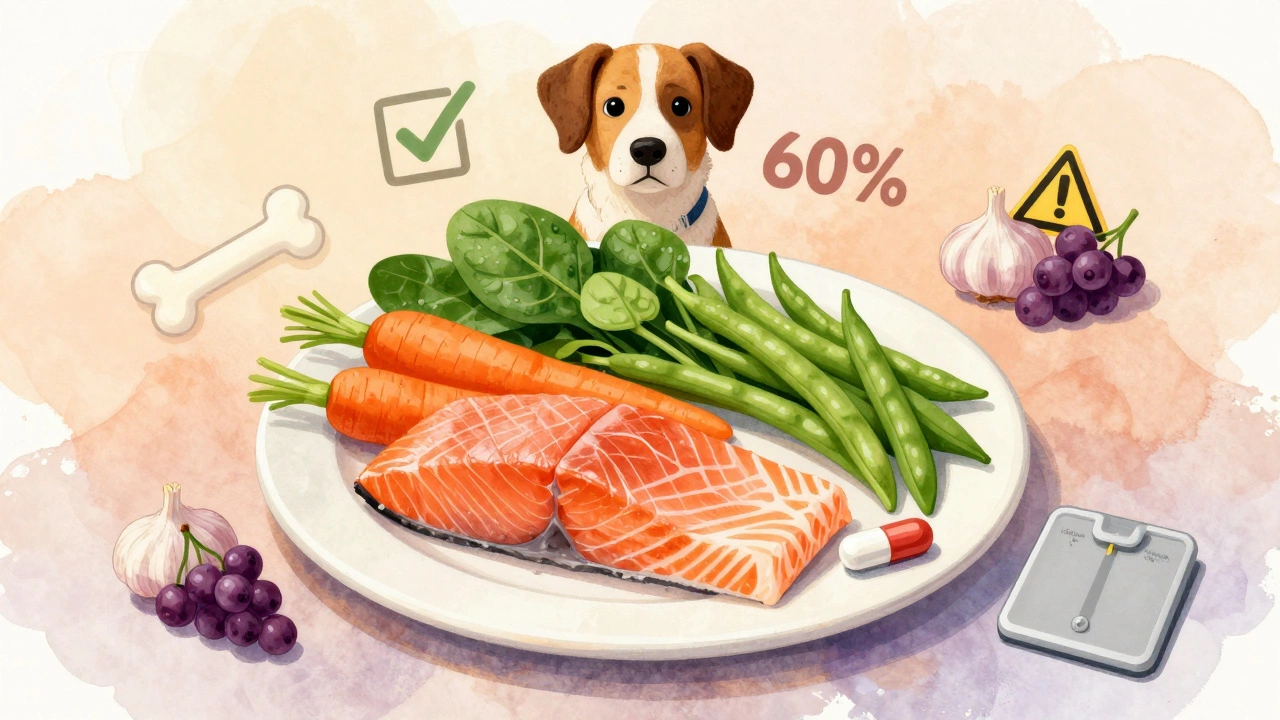
Stay away from onions, garlic, grapes, raisins, chocolate, xylitol, and raw eggs. These are toxic-even in tiny amounts.
Simple Homemade Dog Food Recipe (Weekly Batch)
Here’s a balanced recipe that works for a 40-pound adult dog. Adjust portions based on your dog’s weight.
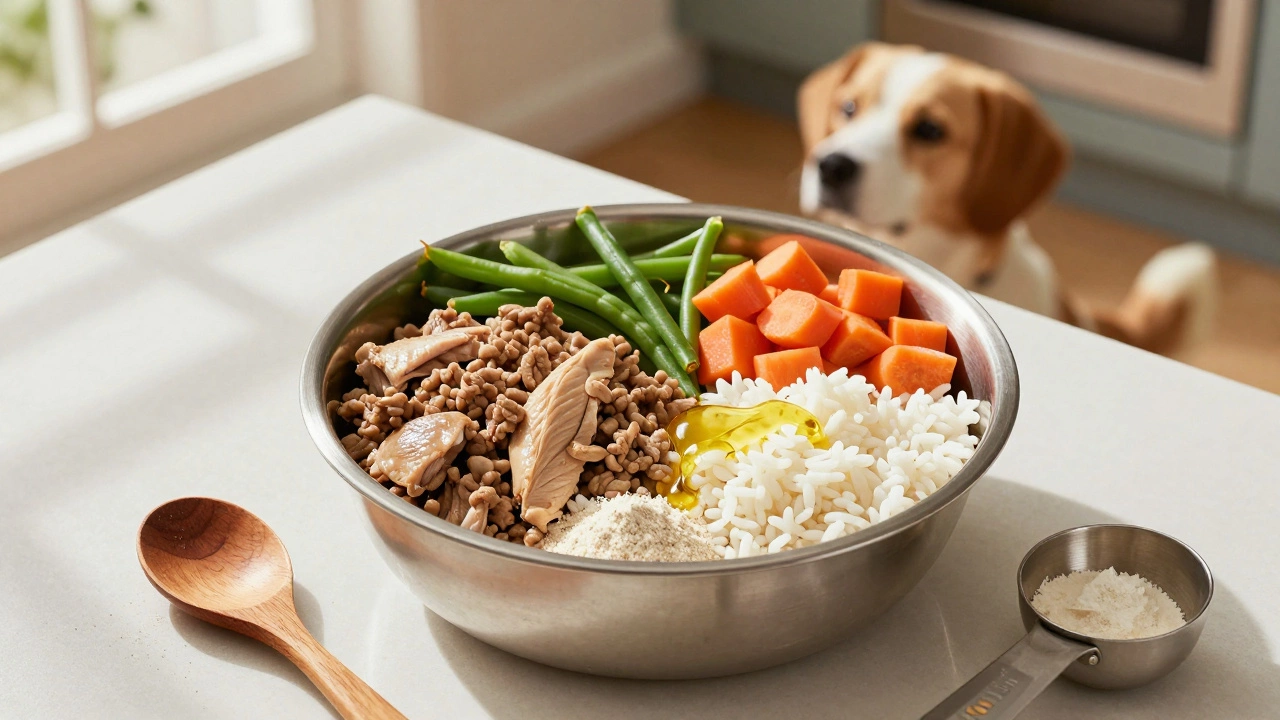
- 2 pounds lean ground turkey
- 1 cup white rice (cooked)
- 1 cup chopped carrots
- 1 cup chopped green beans
- 1 tablespoon fish oil
- 2 teaspoons ground eggshell (or 1/2 teaspoon calcium carbonate powder)
Instructions:
- Brown the turkey in a pan with no oil. Drain excess fat.
- Cook the rice according to package directions.
- Steam or lightly boil the carrots and green beans until soft.
- Mix everything together in a large bowl.
- Add fish oil and calcium powder. Stir well.
- Let cool, then portion into 1-2 cup servings. Freeze extras.
This batch lasts about a week in the fridge or 3 months in the freezer. Feed 1-2 cups per day, split into two meals.
When Homemade Food Falls Short
Even the best homemade meals can miss key nutrients like taurine, zinc, or iodine. That’s why most vets recommend adding a canine-specific vitamin-mineral supplement. Look for one labeled “complete and balanced” for homemade diets. Brands like BalanceIT or PetVitalityPro are designed for this purpose.
Also, avoid switching recipes too often. Your dog’s gut needs consistency. Stick with one formula for at least 6-8 weeks before making changes.
Special Cases: Puppies, Seniors, and Sick Dogs
Not all dogs handle homemade food the same way.
- Puppies: Need more calories and calcium. Feed 3-4 small meals a day. Use a vet-approved supplement. Never feed adult recipes to puppies.
- Seniors: May need less fat and more joint support. Add glucosamine-rich foods like green-lipped mussels or fish oil.
- Dogs with kidney disease: Need low-phosphorus diets. Avoid organ meats and dairy. Consult a veterinary nutritionist before making changes.
- Overweight dogs: Cut carbs. Replace rice with more green veggies and lean protein.
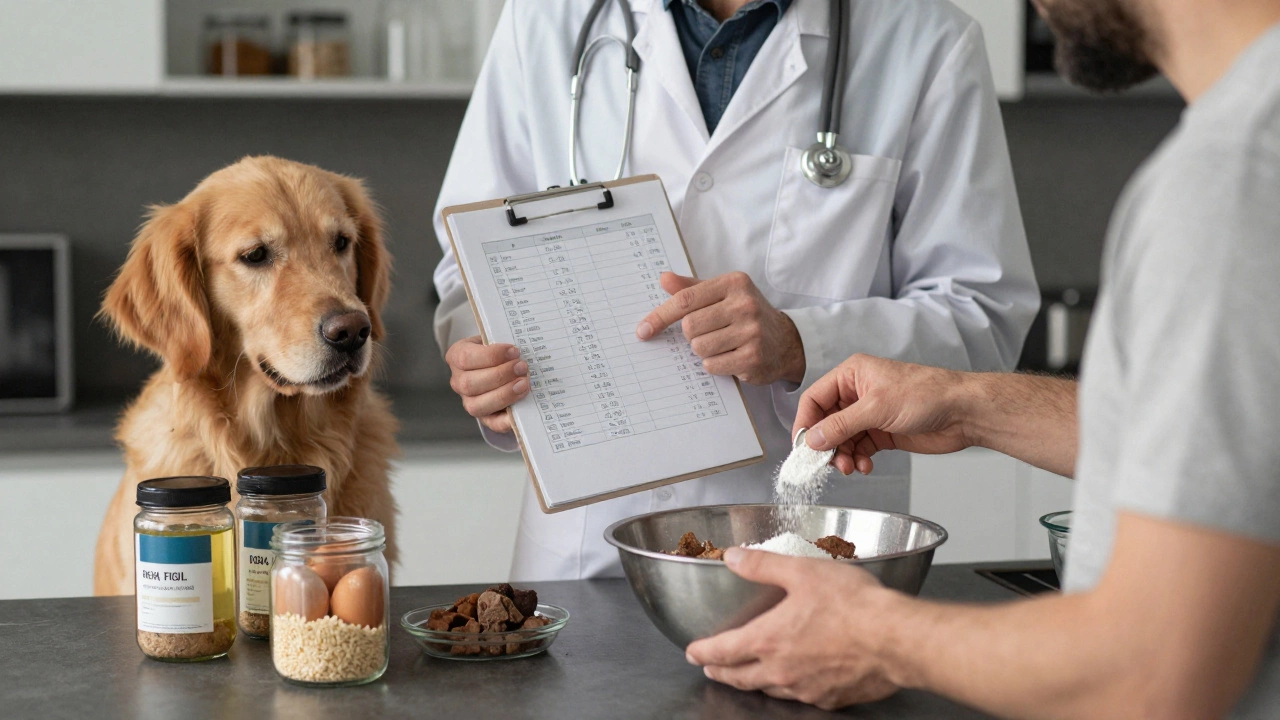
If your dog has a medical condition, don’t guess. Talk to a board-certified veterinary nutritionist. They can create a custom plan based on blood work and weight.
Common Mistakes (And How to Avoid Them)
Here are the top 5 errors people make with homemade dog food:
- Using too many carbs: Rice and pasta fill the bowl but don’t provide real nutrition. Meat should be the star.
- Skipping calcium: This is the #1 reason homemade diets fail. Bones don’t dissolve in the stomach. You need added calcium.
- Feeding raw meat without knowing the risks: Raw diets can carry salmonella or parasites. If you go raw, freeze meat for 3 weeks first and use a vet-approved supplement.
- Adding salt, spices, or garlic: Even “natural” seasonings can be toxic. Plain is always safest.
- Not tracking weight: Weigh your dog monthly. If they’re losing or gaining too fast, the diet isn’t working.
When to Stick with Store-Bought
Homemade food isn’t for everyone. If you’re short on time, unsure about nutrition, or your dog has complex health needs, high-quality commercial food is a better choice. Look for AAFCO-certified brands with real meat as the first ingredient. Brands like Hill’s Science Diet, Royal Canin, or Orijen meet strict standards and are tested for safety.
There’s no shame in using kibble. What matters most is that your dog gets complete, balanced nutrition-not whether it came from your kitchen or a factory.
Final Checklist Before You Start
Before you cook your first batch, run through this:
- ✅ Do you know your dog’s ideal weight and daily calorie needs?
- ✅ Are you adding calcium? (Not optional.)
- ✅ Are you using a canine-specific supplement?
- ✅ Are you avoiding toxic foods?
- ✅ Have you consulted your vet, especially if your dog is older or has health issues?
If you answered yes to all five, you’re ready. If not, pause. Talk to your vet or a nutritionist. A healthy dog is worth the extra step.
Can I feed my dog rice and chicken every day?
Rice and chicken are safe, but not complete. Feeding them daily for weeks or months can lead to nutrient deficiencies, especially in calcium, zinc, and certain vitamins. Use them as a short-term bland diet for upset stomachs, not a long-term solution. Add a vet-approved supplement and other ingredients like vegetables and fish oil to make it balanced.
Is homemade dog food cheaper than commercial food?
Not usually. High-quality meat, supplements, and calcium powder add up. A 40-pound dog on a homemade diet can cost $3-$5 per day. Premium kibble runs $1.50-$2.50 per day. Homemade isn’t cheaper-it’s more time-intensive and requires more planning.
Can I use raw meat in homemade dog food?
Yes, but with caution. Raw diets carry risks of bacterial contamination like salmonella and E. coli, which can affect both dogs and humans. If you choose raw, freeze meat for at least 3 weeks to kill parasites, use a balanced supplement, and wash all surfaces and hands thoroughly. Most vets recommend cooked meals for safety.
How do I know if my dog’s homemade diet is working?
Look for steady weight, shiny coat, firm stools, and good energy. If your dog is losing weight, has diarrhea, or seems lethargic, the diet isn’t balanced. Get a blood test from your vet and review your recipe. A veterinary nutritionist can help adjust it.
Should I cook vegetables for my dog?
Yes. Dogs can’t break down raw plant cell walls well. Steaming or lightly boiling vegetables like carrots, broccoli, and spinach makes nutrients easier to absorb. Don’t puree them-chopping into small pieces works best.
Next Steps
If you’re ready to try homemade food, start slow. Mix 25% homemade with 75% kibble for a week. Watch your dog’s digestion and energy. Slowly increase the homemade portion over two weeks. Keep a journal: what you fed, how much, and how your dog reacted.
And remember: nutrition isn’t about perfection. It’s about consistency, safety, and balance. A slightly imperfect meal fed regularly is better than a perfect one you never make because it feels too hard.