
Dog Development Stage Calculator
That moment when your fluffy ball of energy suddenly looks like a full-sized dog can be jarring. One day you are carrying them everywhere; the next, they are too big to hold and too strong for gentle handling. You might look at your four-legged friend and wonder: at what point is a puppy not a puppy? The answer isn't just about their birthday cake candles. It is a complex mix of biology, behavior, and breed genetics.
Most people think a dog becomes an adult at one year old. While that is a common legal and veterinary benchmark, it doesn't tell the whole story. A Chihuahua hits adulthood much faster than a Great Dane. Furthermore, physical growth often outpaces mental maturity. Understanding these distinct phases helps you adjust your training, diet, and expectations so you don't feel blindsided by teenage rebellion or sudden changes in energy levels.
The Physical Timeline: When Growth Stops
Physically, a puppy stops being a puppy when they reach their mature height and weight. However, this timeline varies drastically based on one major factor: size. Small breeds mature significantly faster than giant breeds. This difference is crucial for feeding schedules and joint health management.
| Breed Size Category | Examples | Skeletal Growth Ends | Full Muscle Mass Reached |
|---|---|---|---|
| Toy & Small (under 20 lbs) | Chihuahua, Yorkshire Terrier, Pomeranian | 9-10 months | 12 months |
| Medium (20-50 lbs) | Beagle, Bulldog, Cocker Spaniel | 10-12 months | 12-15 months |
| Large (50-90 lbs) | Labrador Retriever, German Shepherd, Boxer | 12-14 months | 18-24 months |
| Giant (over 90 lbs) | Great Dane, Saint Bernard, Mastiff | 14-18 months | 24-36 months |
If you own a large breed, do not rush to switch them to adult food too early. Their growth plates-the areas of developing cartilage at the ends of long bones-remain open longer. Switching to high-calorie adult formulas before 12 months can cause rapid growth rates, leading to developmental orthopedic diseases like hip dysplasia. Conversely, small breeds need higher calorie densities earlier because their metabolisms burn fuel quickly as they compact into their final frame.
The Behavioral Shift: Navigating Adolescence
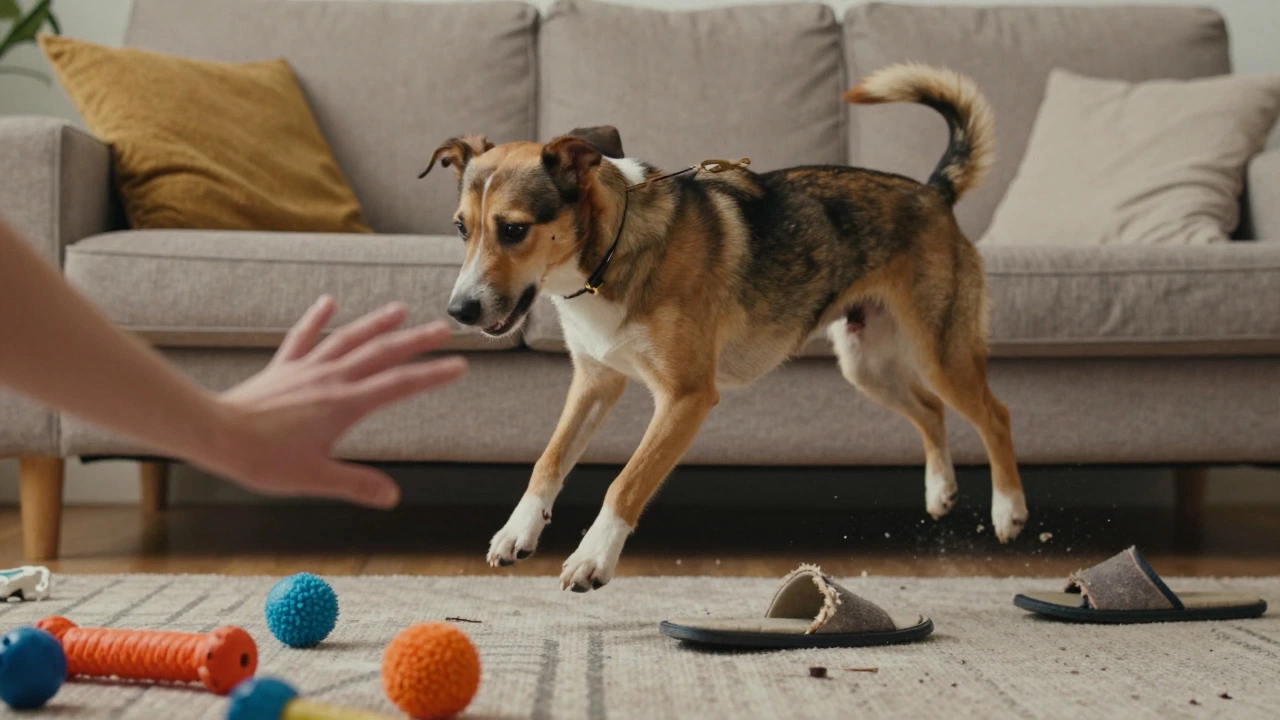
Just when you think you have trained a well-behaved companion, something shifts. Your dog starts ignoring commands, jumping on guests, and testing boundaries. This is not regression; it is adolescence. In humans, this phase lasts years. In dogs, it is compressed but intense.
Adolescence typically begins around six months for small breeds and eight to nine months for larger breeds. It can last until 18 months or even two years for giants. During this window, hormonal surges occur. Even if your dog is spayed or neutered, residual hormones and brain development play a role. They are essentially figuring out who they are independent of you.
- Selective Hearing: Commands that worked perfectly at three months may now be ignored. This is often misinterpreted as stubbornness, but it is actually a lack of impulse control.
- Mouthing and Nipping: As permanent teeth come in (usually between 4 and 7 months), chewing intensifies. If teething pain coincides with adolescent energy, destructive chewing spikes.
- Social Testing: They may lunge at other dogs or become overly excited during walks. Their social skills from puppyhood haven't fully cemented yet.
This behavioral turbulence is why many trainers argue that a dog is not truly "adult" in mindset until they pass the 18-month mark. Until then, consistency is your best tool. Short, positive reinforcement sessions work better than long lectures, which adolescents tune out.
Dental Milestones: A Clear Visual Indicator
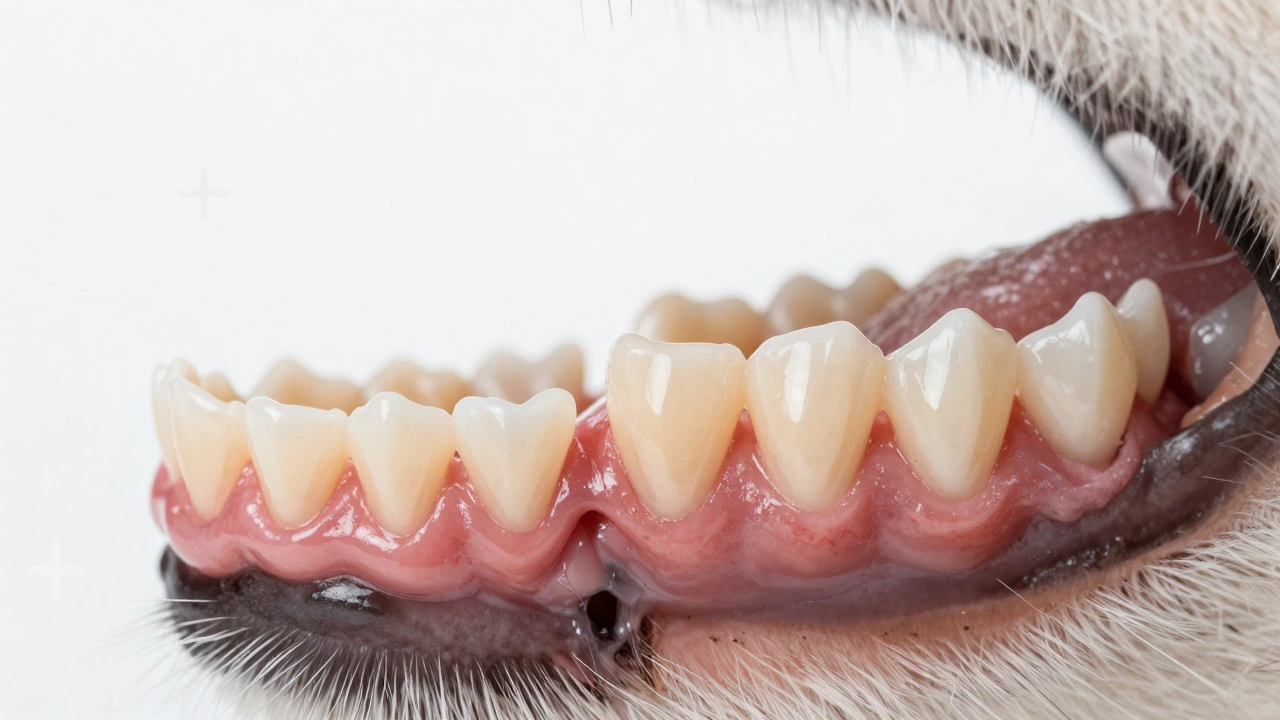
If you want a concrete, biological sign that puppyhood is ending, look inside their mouth. Dental development provides a reliable clock for a dog's age.
Puppies are born without teeth. Deciduous teeth (baby teeth) erupt around three weeks of age. By four months, all 28 baby teeth should be present. Then comes the swap. Around five to seven months, baby teeth fall out, and 42 permanent adult teeth emerge. Once that full set of sharp canines and flat molars is in place, the physical marker of puppyhood is gone.
Veterinarians use dental wear to estimate age in older dogs, but the initial eruption of adult teeth is a definitive line in the sand. If your dog still has wobbly baby teeth, they are unequivocally a puppy. If they have a full set of polished adult teeth, they are physically equipped for adult life, even if their brain hasn't caught up.
Metabolic Changes and Diet Transitions
Your dog's nutritional needs change dramatically as they cross the threshold from puppy to adult. Puppy food is formulated to support rapid growth: it is higher in calories, protein, fat, calcium, and phosphorus. Adult food is designed for maintenance.
Feeding puppy food to an adult dog leads to obesity. Feeding adult food to a growing puppy leads to stunted growth or skeletal issues. So, when do you switch?
For most medium and large breeds, the transition happens at 12 months. For small breeds, it can happen as early as 9 months. Giant breeds might stay on puppy food until 18 or 24 months. Watch your body condition score. If your dog is maintaining a lean waistline and healthy energy on puppy food, they might still be growing. If they are gaining unexplained weight despite portion control, they may have reached metabolic maturity.
Transition slowly over two weeks. Mix increasing amounts of adult food with decreasing amounts of puppy food to avoid gastrointestinal upset. Sudden changes can cause diarrhea, which is stressful for any dog.
Mental Maturity: The Final Frontier
Physical size and teeth are easy to measure. Mental maturity is harder to pin down, but it is the true definition of an "adult" dog. A mentally mature dog has impulse control, emotional regulation, and the ability to focus amidst distractions.
Studies in canine cognition suggest that the prefrontal cortex-the area responsible for decision-making and impulse control-continues to develop well past the first year. This is why a two-year-old Labrador might still chase squirrels with reckless abandon while a same-aged Border Collie seems more composed. Breed purpose plays a huge role here.
Herding and working breeds often retain high-drive behaviors longer. Companion breeds tend to settle down quicker. Regardless of breed, most dogs reach a state of consistent calm and reliability between ages 2 and 3. Before that, they are young adults, not puppies, but they are not fully seasoned either.
How to Support the Transition
Recognizing that your dog is no longer a puppy requires adjusting your lifestyle. Here is how to navigate this shift smoothly:
- Re-evaluate Exercise Needs: Adolescent dogs have boundless energy but poor judgment. Structured exercise (fetch, agility, long walks) burns mental and physical steam better than free roaming.
- Refresh Training: Assume they have forgotten everything. Go back to basics. Reinforce recall, leash manners, and settle cues. Use higher-value treats during this rebellious phase.
- Adjust Socialization: Continue exposing them to new environments, but manage interactions carefully. An adolescent dog reacting poorly to another dog needs distance, not correction.
- Monitor Health: Schedule your first adult wellness exam. Discuss vaccination boosters, parasite prevention, and dental care plans. Adult dogs require different preventive measures than puppies.
Patience is key. The awkward teenage phase will pass. With consistent leadership and love, your adolescent will blossom into a reliable, joyful adult companion.
Is a 1-year-old dog still considered a puppy?
Legally and medically, a 1-year-old dog is often classified as an adult. However, behaviorally, they are usually in adolescence. Large and giant breeds are definitely not fully mature at one year, both physically and mentally. Small breeds are closer to adulthood but may still exhibit teenage behaviors.
When should I stop feeding puppy food?
Small breeds can switch to adult food at 9-12 months. Medium breeds should switch at 12 months. Large breeds typically switch at 12-18 months. Giant breeds may need puppy food until 24 months. Consult your veterinarian to determine the exact timing based on your dog's growth rate and breed.
Why does my dog act worse after turning one?
This is likely adolescent rebellion. Hormonal changes and brain development cause dogs to test boundaries and ignore previously learned commands. It is a normal phase that usually peaks between 8-18 months. Consistency and positive reinforcement help navigate this period.
Do all dogs lose their baby teeth at the same time?
Most dogs lose their deciduous teeth between 4 and 7 months of age. There can be slight variations depending on the individual dog and breed, but if a dog still has baby teeth after 8 months, it is worth mentioning to a vet to ensure proper dental development.
How long does dog adolescence last?
Adolescence typically lasts from 6-8 months until 18-24 months, depending on the breed size. Small breeds have shorter adolescent phases, while giant breeds may behave like teenagers well into their second year. Mental maturity often lags behind physical maturity.