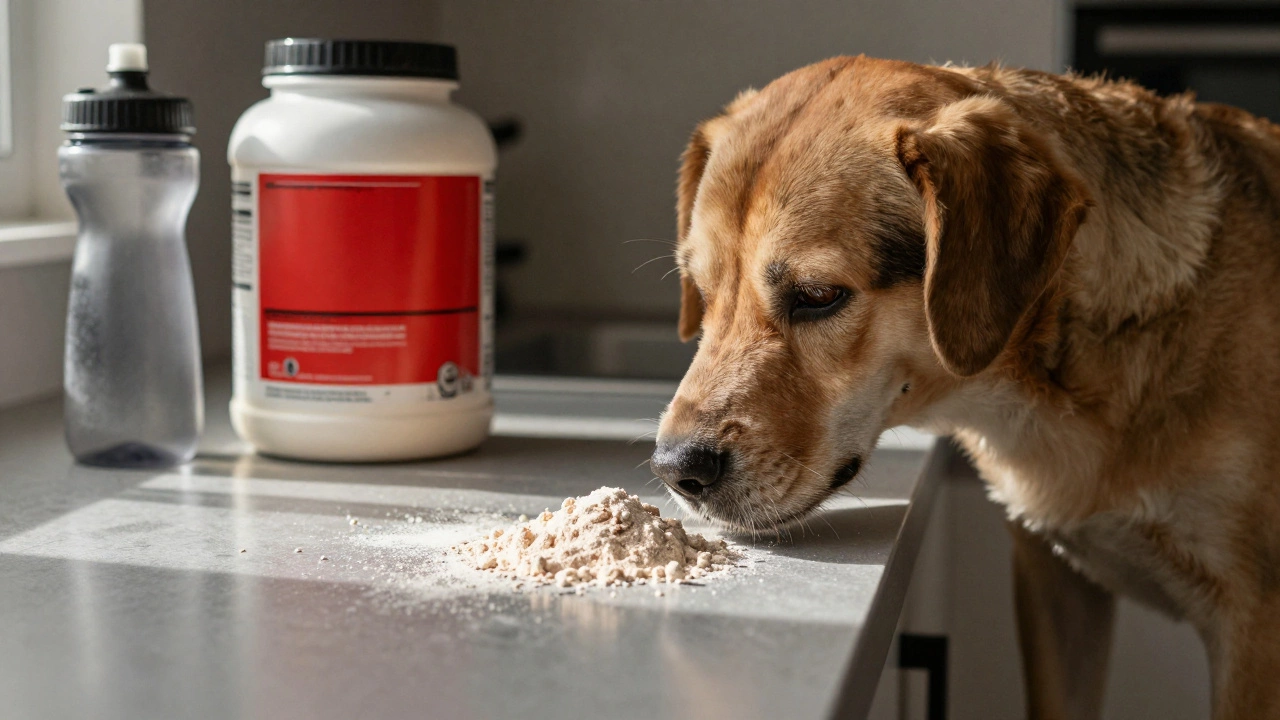
Many dog owners wonder if protein shakes-popular with humans for muscle gain and recovery-are safe for their pets. The short answer: protein shakes aren’t designed for dogs, and giving them one can do more harm than good. While protein itself is essential for your dog’s health, the ingredients in most human protein powders are risky, unnecessary, and sometimes toxic.
Why Dogs Don’t Need Human Protein Shakes
Dogs get all the protein they need from balanced dog food. A healthy adult dog requires about 18-25% protein in their diet by dry matter content, depending on breed, age, and activity level. Puppies, pregnant dogs, or working dogs like sled or police dogs may need more-but even then, they get it from whole food sources like chicken, beef, eggs, or fish, not powders.
Human protein shakes are made for people with different digestive systems, metabolism, and nutritional needs. They often contain artificial sweeteners, thickening agents, and flavorings that are unsafe for dogs. Even a small amount of xylitol, a common sugar substitute in protein powders, can cause a dangerous drop in blood sugar, liver failure, or death in dogs.
Common Ingredients in Protein Shakes That Are Toxic to Dogs
Let’s break down what’s often in those tubs of powder you’re sipping after the gym-and why your dog shouldn’t touch it:
- Xylitol: Found in sugar-free shakes. Toxic at just 0.1 grams per kilogram of body weight. A single scoop can be lethal to a small dog.
- Artificial flavors and colors: No nutritional value. Can trigger allergies or upset stomachs.
- High levels of calcium or vitamin D: Added to human supplements for bone health, but dogs can overdose easily. Too much causes vomiting, weakness, or kidney damage.
- Whey protein isolate: While not toxic, it’s concentrated and hard for dogs to digest. Can cause diarrhea or gas.
- caffeine or stimulants: Some shakes contain green tea extract or guarana. Even small amounts can cause tremors, rapid heart rate, or seizures in dogs.
One 2023 study from the ASPCA Animal Poison Control Center found that over 300 cases of dog poisoning from human dietary supplements were reported in the previous year-nearly 40% involved protein powders. Most of these dogs recovered with treatment, but several required hospitalization.
When Might a Dog Actually Need Extra Protein?
There are rare cases where a vet might recommend extra protein:
- Recovering from surgery or serious illness
- Senior dogs with muscle wasting
- High-performance dogs (agility, herding, search-and-rescue)
In these situations, a vet won’t hand you a tub of vanilla whey. They’ll suggest vet-formulated supplements like Canine Protein Support or ProPlan Performance, which are designed with canine-safe ingredients, correct ratios, and no hidden toxins. These products are available by prescription or through veterinary clinics.
Some holistic vets also recommend adding cooked egg whites, plain Greek yogurt, or lean ground turkey to meals as natural protein boosts. These are safer, more digestible, and come with other nutrients your dog needs-like omega-3s, zinc, and B vitamins.
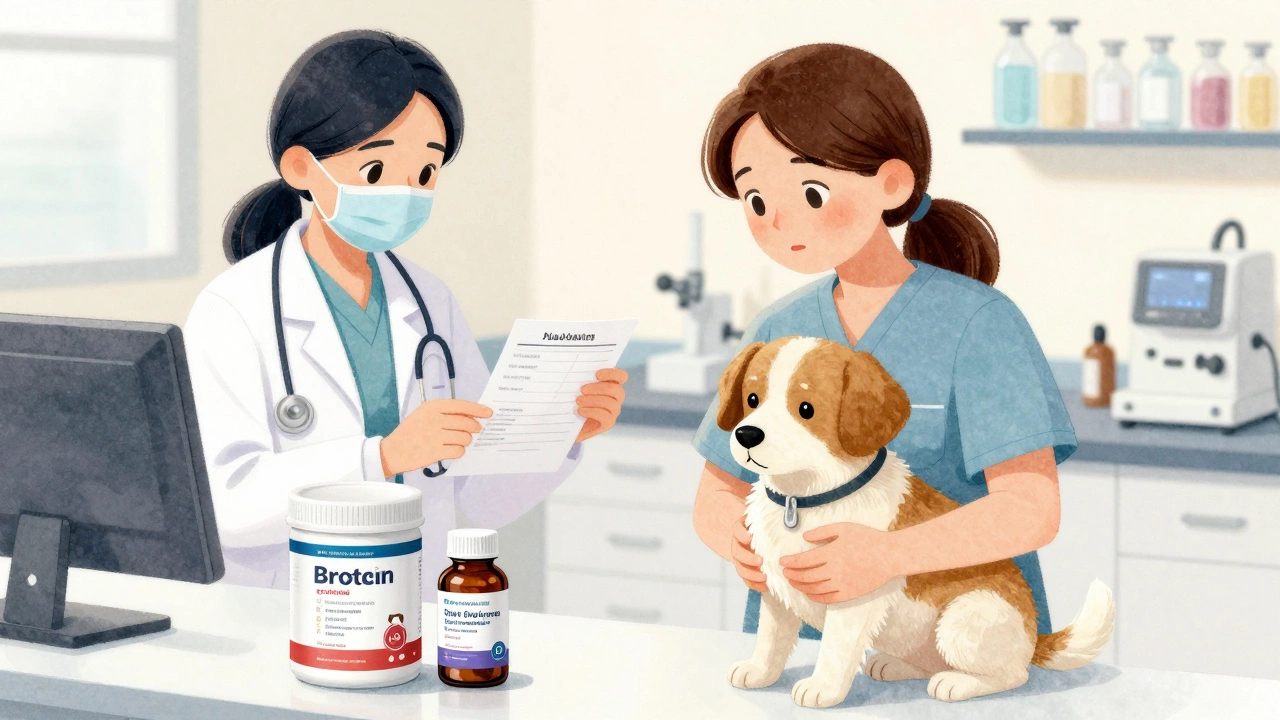
What Happens If Your Dog Accidentally Eats a Protein Shake?
If your dog licks or swallows even a small amount of a protein shake, watch for these signs:
- Vomiting or diarrhea
- Loss of appetite
- Restlessness or pacing
- Tremors or seizures
- Extreme thirst or urination
If you suspect xylitol ingestion-especially if the label says "sugar-free" or "diet"-call your vet or an emergency pet poison hotline immediately. Time matters. Don’t wait for symptoms to appear.
Even if the shake doesn’t contain xylitol, the high fat or salt content can trigger pancreatitis in dogs, especially in breeds like Miniature Schnauzers or Cocker Spaniels. This condition is painful and expensive to treat.
Safe Alternatives to Protein Shakes for Dogs
You want your dog strong and healthy. That’s great. But skip the gym tub. Try these vet-approved, real-food alternatives:
- Cooked chicken breast: Plain, unseasoned, and shredded into meals.
- Boiled eggs: One or two per week for most dogs. High in biotin and amino acids.
- Plain cottage cheese: Low-fat, easy to digest. Good for sensitive stomachs.
- Green-lipped mussel powder: A natural supplement from New Zealand that supports joint health and provides digestible protein.
- Commercial canine protein supplements: Look for brands like Nutramax, VetriScience, or Hill’s Prescription Diet. Always check with your vet first.
These options don’t come in flashy tubs with celebrity endorsements-but they’re proven, safe, and backed by decades of veterinary science.
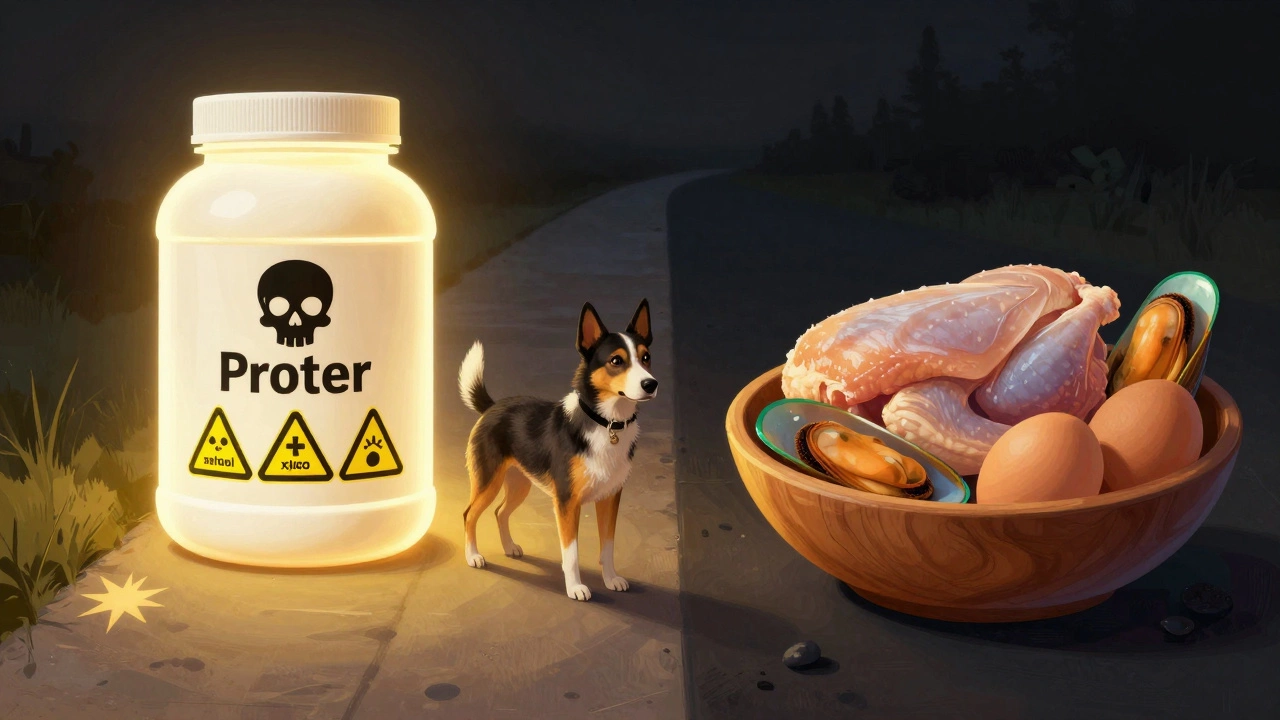
What to Look for on Dog Supplement Labels
If you’re considering any supplement for your dog, read the label like a detective:
- Check for AAFCO statement: This means the product meets nutritional standards for dogs.
- Look for "made for dogs" or "veterinary formulated" on the front.
- Avoid anything with artificial sweeteners, preservatives like BHA/BHT, or "natural flavors" without listing what they are.
- Confirm the protein source: Whole meat (chicken, beef) is better than "meat meal" or "hydrolyzed protein."
Just because something is labeled "natural" doesn’t mean it’s safe. Some plant-based protein powders use pea protein and added iron-both can cause digestive upset or even anemia in dogs if overused.
Bottom Line: Skip the Shakes, Stick to Food
Protein shakes aren’t bad because protein is bad-they’re bad because they’re full of human junk. Your dog doesn’t need the same supplements you do. Their bodies evolved to thrive on whole animal-based foods, not lab-made powders.
If you’re worried your dog isn’t getting enough protein, talk to your vet. They can run a blood test, check muscle mass, and recommend safe, targeted options. Don’t guess. Don’t wing it. And definitely don’t pour your post-workout shake into your dog’s bowl.
Healthy dogs get their protein from food. Period. No shakes. No powders. Just good, simple, real nutrition.
Can dogs have whey protein powder?
Whey protein powder isn’t toxic by itself, but most brands contain additives like xylitol, artificial flavors, or high levels of calcium that can harm dogs. Even pure whey can cause digestive upset because dogs don’t digest dairy the same way humans do. It’s not worth the risk.
Is plant-based protein safe for dogs?
Plant-based proteins like pea, soy, or lentil aren’t inherently toxic, but they’re incomplete-they lack key amino acids dogs need, like taurine and methionine. Dogs are carnivores by biology. While a small amount in a balanced commercial food is okay, using plant protein powders as supplements can lead to nutritional gaps over time.
What if my dog ate a whole scoop of protein powder?
Call your vet or the ASPCA Animal Poison Control Center immediately. If the powder contains xylitol, this is a medical emergency. Even without xylitol, a large amount can cause pancreatitis, electrolyte imbalances, or kidney stress. Don’t wait for symptoms-act fast.
Can puppies have protein supplements?
Puppies get all the protein they need from high-quality puppy food. Adding extra protein supplements can cause rapid, unhealthy growth, leading to joint problems later in life. Never give protein powders to puppies unless your vet specifically prescribes it for a diagnosed condition.
Are there any vet-recommended protein supplements for dogs?
Yes. Brands like Nutramax’s Cosequin DS, Hill’s Prescription Diet j/d, and VetriScience’s Canine Probiotics include added protein in safe, balanced forms. These are designed for specific needs-like joint repair or muscle maintenance-and are only sold through veterinarians. Always consult your vet before starting any supplement.